

Logo Reisemagazin
Sunday, September 6, 2026
Home Blog Page 200

Mysterious Borneo

0

A trip to Borneo is the realization of an absolute vacation dream for every nature lover with a little thirst for adventure. Dense, tropical rainforests, colorful plants and rare animal species such as orangutans, macaques, proboscis monkeys and Irawadi dolphins await travelers.

Borneo – Geographical location and climate

Borneo is more than twice the size of Germany and is located in the Pacific Ocean. Surrounded by the South China Sea, the Java Sea and the Strait of Makassar, it is the third largest island in the world and covers a length of about 1366 km and a width of 1026 km.

Geographically, it belongs to the large Sunda Islands and is politically divided into three states: Indonesia in the south and Malaysia with the Sultanate of Brunei in the north. A mountain range, in which the highest elevation in Borneo is located, the 4095 m high Kinabalu, stretches from the northeast to the southwest.

Borneo is crossed by the equator approximately in the middle and thus belongs to the tropical climate zone with high humidity and relatively constant temperatures between an average of 27.7° C in May and 26.7° C in December. The rainiest months are March and October. However, since it rains frequently during the rest of the year, there is no so-called “best time to travel”. Borneo is a year-round destination and precipitation is part of a stay here.

The National Parks

Those who travel to Borneo usually want to get as big an impression as possible of the indescribable flora and fauna of the region. There are numerous national parks on the island, which correspond to the idea of untouched nature with exotic animals, colorful birds and flowering orchids to a great extent.

Bako National Park

The city of Kuching in the state of Sarawak is a very good starting point for trips to several of the region’s fantastic national parks. The Bako National Park is only about 40 km away. However, the trip to this peninsula is only possible by boat. It is recommended to stay there for at least two days in order to hike through the pure rainforest wilderness on different routes. A night safari with a good guide is a unique experience. There are some simple lodges in the park for overnight stays, but they should be reserved in good time.

Semenggoh National Park
Orangutans in Semenggoh National Park khamkhor / Pixabay

National park

Semenggoh National Park is also easily accessible from Kuching. One of the attractions here is the orangutan rehabilitation station, where animals found injured and freed from captivity are prepared for their life in the wild. For the once-daily feeding, they come close to the visitor center and can thus be observed up close.

Gungung Mulu National Park

The Gungung Mulu National Park should not be missing on any excursion program of a Borneo vacation. The most impressive sights here are the gigantic caves of a huge, partly unexplored system.

Deer Cave

One of the most beautiful caves open to visitors is the “Deer Cave”. Here, with the help of a local guide, you can spot millions of bats. If you choose the “Clearwater Cave”, which is believed to be more than 60 km long, you can refresh yourself before or after the tour in the natural swimming pool with crystal clear water, which is located in front of the entrance to the cave.

The Gungung Mulu National Park offers such a variety of natural wonders that tourists should definitely take part in a multi-day trekking tour. So you can experience the fascinating rainforest with all its images, sounds and smells “around the clock”. One of the most popular activities is climbing the pointed limestone cliffs, the so-called Pinnacles. However, you should already have a good level of fitness to master this challenge without any problems.

Kinabalu, Borneo
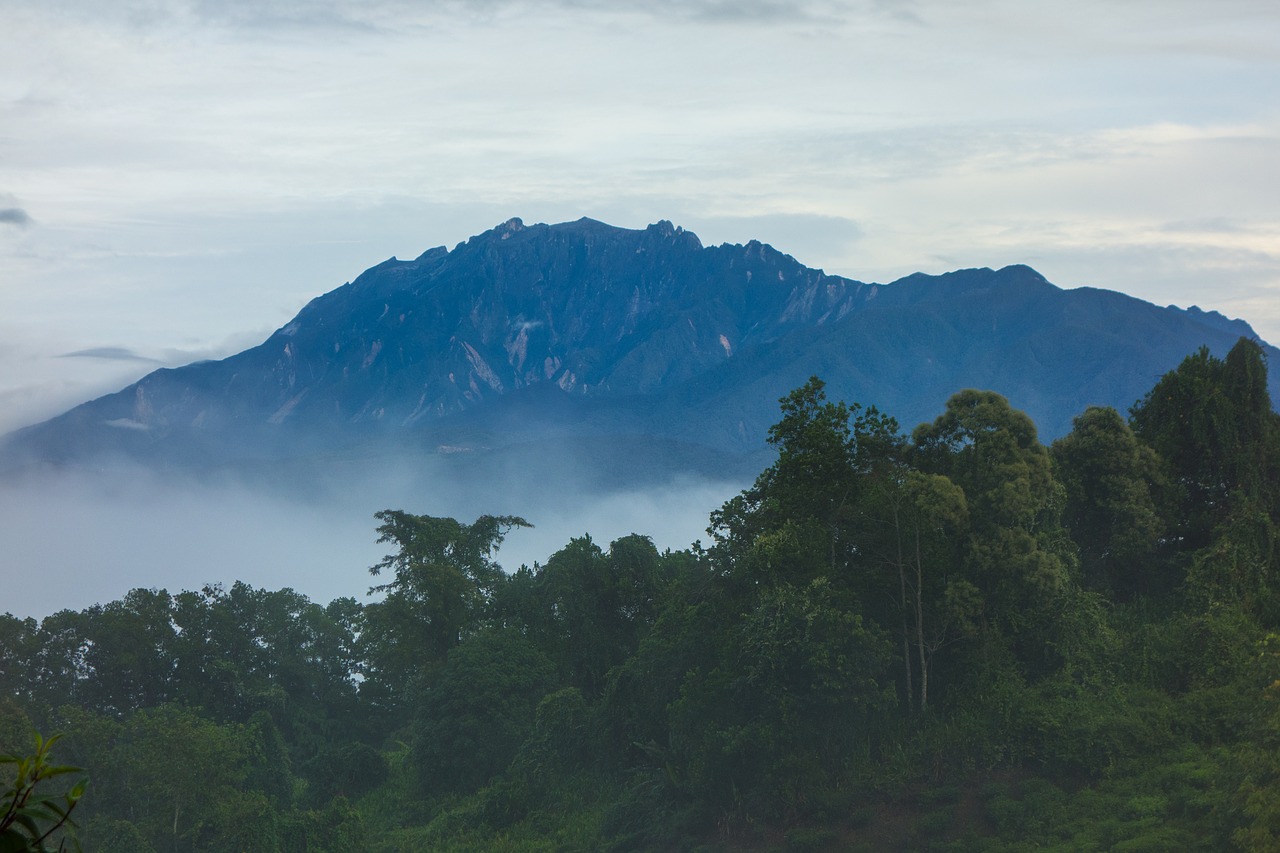
Mount Kinabalu is the highest mountain in Malaysia, Image: KBaucherel / Pixabay

If you decide to climb the 4095 m high Kinabalus, you should plan 2 to 3 days, depending on your physical condition. This activity is particularly worthwhile for plant, bird and butterfly lovers to experience the flora and fauna of the mountains in this region up close. If you are lucky, you will get to see the largest flower in the world here – the Rafflesia.

Since the weather on Kinabalu is often unpredictable, hikers should inform themselves well in advance about the prevailing conditions. On a clear day, a fantastic view from above compensates for the efforts of the ascent. You can also get a spectacular impression of the rainforest on the Conopy Skywalk. Here you walk at a height of 41 m over swaying suspension bridges through the treetops of the national park.

The Danum Valley

This very remote area in the state of Sabah is one of the few areas in Borneo where the primeval, dense forest still prevails. This is also where the last specimens of the extremely rare Borneo pygmy elephants and Borneo rhinos are hidden. The probability of seeing the shy animals is very low, but since the valley is also one of the regions with a very high plant and animal diversity, it is of great interest to zoologists and botanists.

In the Crocker Range Mountains in the north of Sabah, the legendary cloud forests are located at an altitude of 2000 m. In certain weather conditions, when clouds cover the mountain peaks, the observer is presented with a fairytale sight. In these extremely humid conditions, the legendary carnivorous pitcher plants also thrive very well.

Connecting stays in Borneo

Many travellers relax after the eventful but also strenuous tours through the national parks on one of Borneo’s magnificent dream coasts.
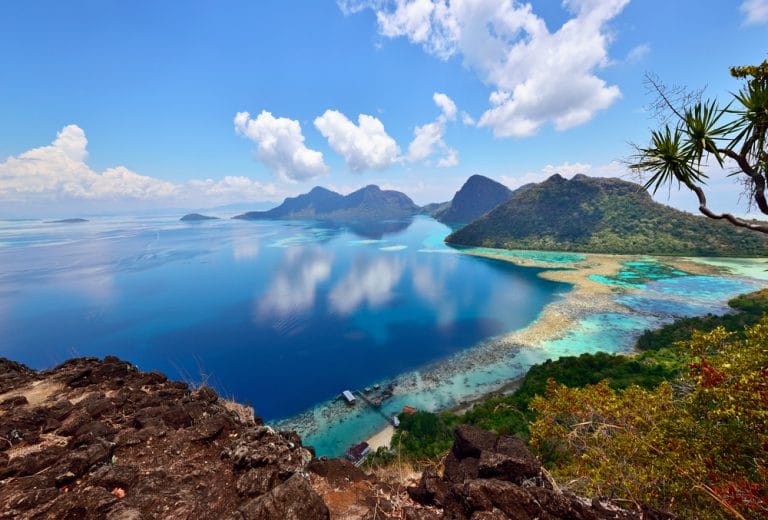
On the islands off Kota Kinabalu, wonderful sandy beaches await the beach vacationers. The 50-hectare Tunuk Abdul Rahman Marine Park and Sipadan Island are among the best diving areas on earth with their fascinating and diverse underwater world.

If you feel like going to a real city again after several weeks in untouched nature, you can visit the lively port town of Sandakan, for example. Here, it’s worth taking a leisurely shopping spree at the colourful markets or stopping off at local or western restaurants. Not far from the city, in Sepilok, are the last almost untouched primary rainforests in northern Borneo.

Less strenuous than a trekking tour, but at least as interesting is a river safari. For example, the Kinabatangan River, which is over 600 km long, offers boat trips with local guides that offer a completely different perspective on the tropical landscape.

Food and Drink in Borneo

The cuisine in Borneo is influenced by numerous different countries and cultures and is therefore extremely diverse. Freshly caught fish in many variations is on the menu in most restaurants here. Another speciality are the small satay meat skewers, which are served with sweet-spicy peanut sauce.

THE national dish in Indonesia“>Indonesia and Malaysia is, of course, nasi goreng (fried rice). Rice in combination with vegetables and meat is eaten by the locals at any time of the day, even for breakfast, and is available everywhere.

A vegetarian dish is roti canai, which consists of a flat flatbread with several different curry sauces. When it comes to the ubiquitous curry dishes, Europeans should rather try the milder variants first, because the spicy versions are almost impossible to enjoy even for people who like to eat well-seasoned dishes.

For nature lovers and adventurous travelers, there is hardly a more interesting and diverse destination in Asia than Borneo. Untouched nature, friendly locals and exciting activities await them.

The five most beautiful sights in Reykjavik

0

The island of Iceland has only developed into a real hotspot for tourists in recent years. It received special attention at the beginning of the new millennium. This is also due to the fact that the island offers a real change from the cities on the mainland flooded with tourists. Iceland can be explored in a few days and yet offers the adventure of discovering untamed nature with the comfort of a modern European city. All tourists who visit the island first land in Reykjavik. Since this is the highest density of hotels and there are only a few tourist offers outside the capital, you should first take a look at the sights of the Icelandic capital before the trip to the geysers and volcanoes.

1. Hallgrimskirkja – Hallgrim Church

Hallgrímskirkja,
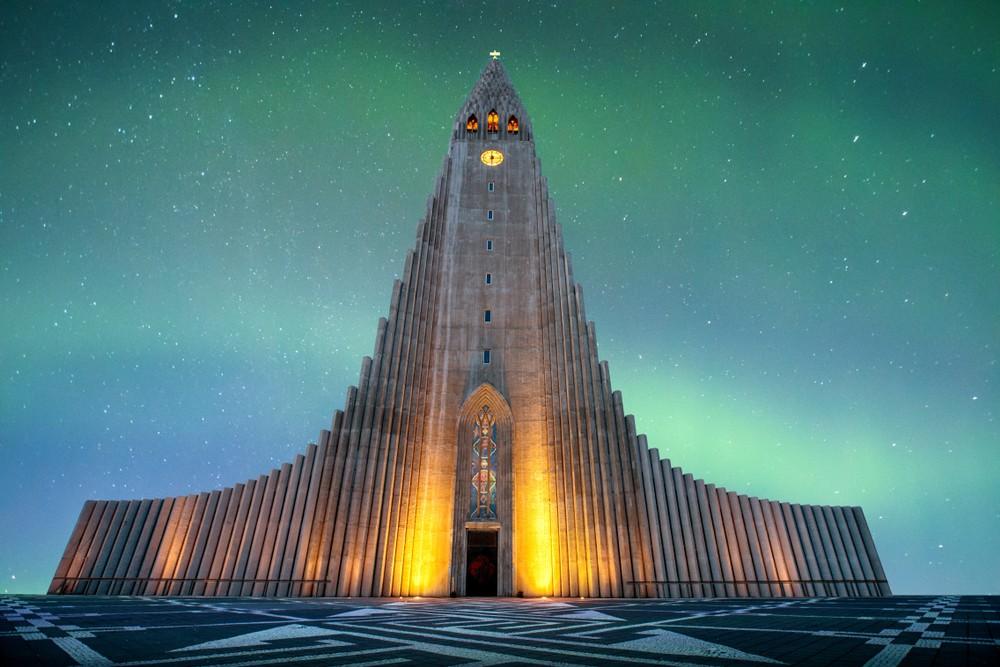
Hallgrímskirkja Church, Image: Ghing / shutterstock

Hardly any other building has caused as much discussion in Reykjavik as the construction of this special church, which began in 1940. Hallgrimskirkja is a masterpiece of modern architecture and characterises the cityscape as perhaps the most important landmark in the entire country. It is a mixture of modern architecture with the traditional architecture of the churches in the north and is available to visitors all year round. If you want to enjoy a unique view over the capital, you should invest around 5 euros for a ticket up to the observation tower. The elevator takes you to a 70-meter-high gallery, which allows a view over the entire coastal city. From here, the special architecture of the capital of Iceland becomes clear once again.

2. Reykjavik Harbor with Harpa Concert Hall

Rejkjavik, Harpa
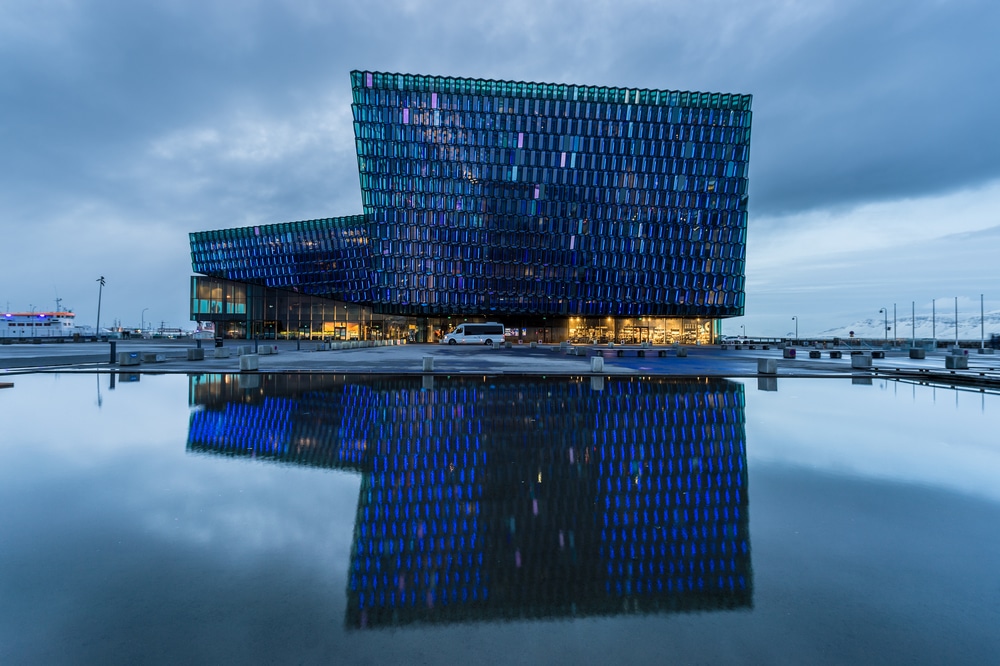
The Harpa Concert Hall, Image: SahatchaiS / shutterstock

You have to get used to the fact that Reykjavik is mainly defined by modern architecture. For a long time, the Icelandic island was in a self-imposed isolation. Apart from fishing, there was little reason for the inhabitants to make contact with other countries in Europe. This only changed in the late 20th century, when service providers also came to the island. The wonderful harbour is still the highlight of a visit today. In combination with the modern Harpa concert hall, there are plenty of opportunities for a great day out and an excursion on the island.

3. The Laugavegur

Reykjavik, Laugavegur
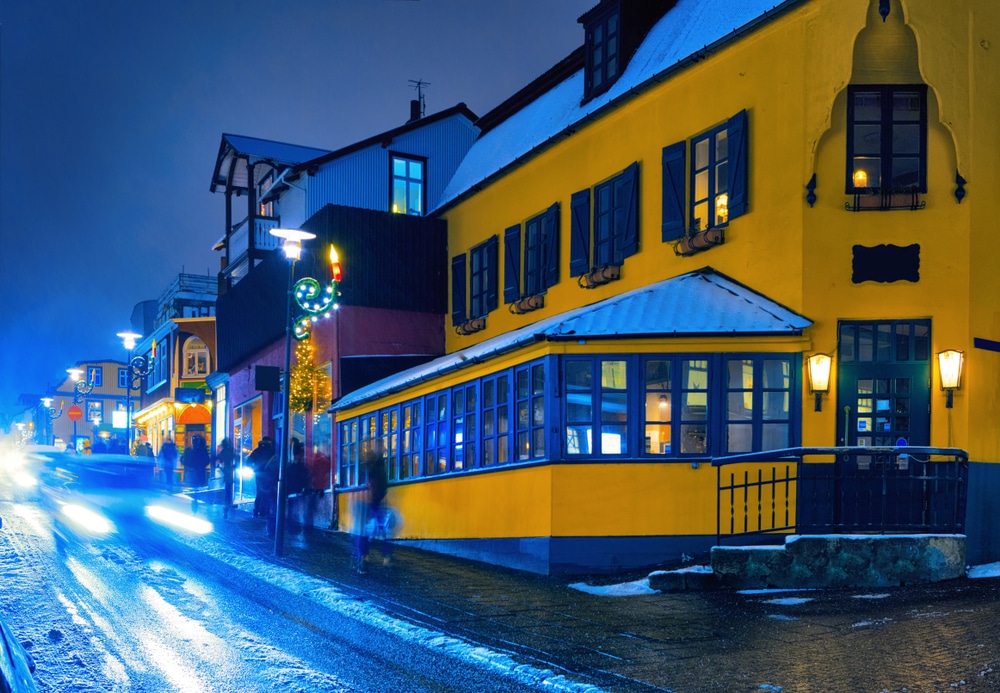
The Laugavegur district, Image: Nella / shutterstock

Even though Reykjavik doesn’t really have an old town to offer, the capital knows how to convince with other special districts. Laugavegur is something like the heart of the city. This is where most of the shops and restaurants can be found, and tourists and locals can be found in the shops and cafes all year round. In addition, the shopping street offers a great view of the church tower, which can always be seen on the horizon. When darkness comes – and it sometimes does very early in Iceland – the shops pack up and instead an active and popular nightlife develops in the capital. This is probably the best way to get in touch with the locals. By the way, many of them speak excellent English – so there should be no language barrier for experienced tourists.
4. The Blue Lagoon

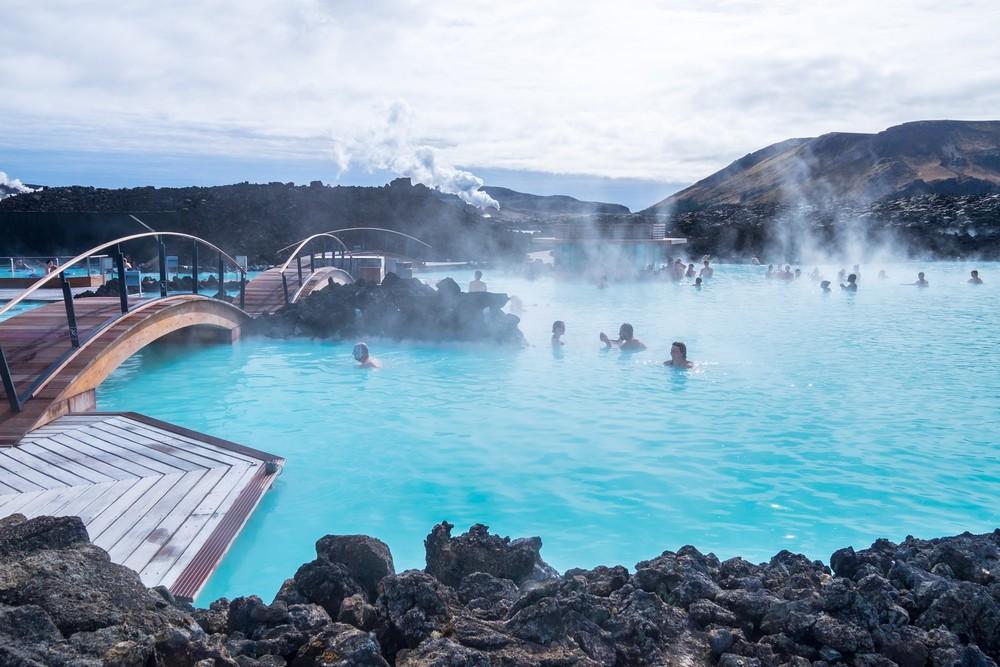
Iceland, Bláa Lónið, The Blue Lagoon near Reykjavik
Bláa Lónið, The Blue Lagoon, Image: Puripat Lertpunyaroj / shutterstcok

In a neighboring town of Reykjavik you will find what the island has been famous for many tourists for many years: a completely natural thermal bath. The hot springs are something like the trademark of the island. Powered by the volcanic energy that can be found everywhere, the hot springs are a very popular place for locals and tourists alike to relax and meet new people. Most of these baths have very strict guidelines and especially for newcomers to sauna culture, some of the traditions could cause a bit of confusion. However, the local lifeguards are happy to explain the procedure and point out how to behave or what to consider during a visit so that it becomes a relaxation for everyone involved.

5. The Art Museums of Reykjavik

Reykjavík
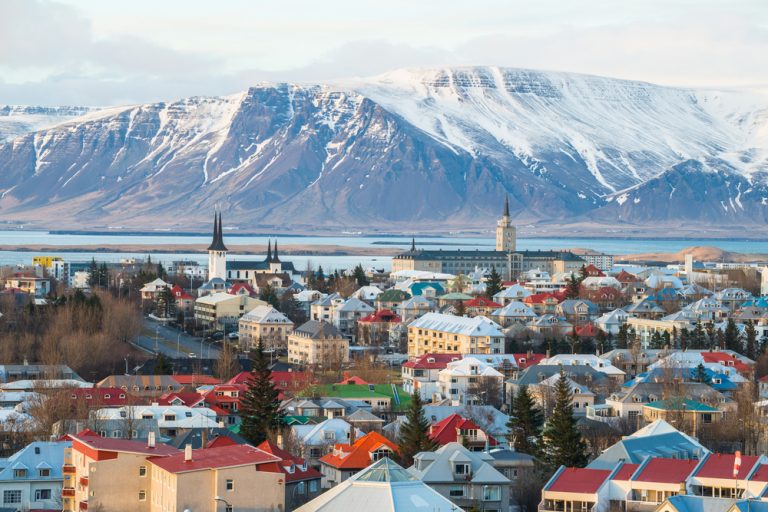
A picturesque and impressive sight of Iceland’s capital, Image: KeongDaGreat / shutterstock

For the small capital of a small island, Reykjavik has a variety of interesting museums to offer. It seems that the focus here was mainly on modern art. In the different parts of the city, you will not only find interesting offers for every art movement, but also current exhibitions by artists from all over the world. If you are interested in the world of museums, you will also find an opportunity to learn a little more about the life of Icelanders in earlier times in the local history museums along the harbor. The modern buildings are not only visually splendourful, they also offer great entertainment and are a popular destination for tourists who come to the island.

More information about Iceland
More information about Reykjavik
Back to homepage

A thousand and one blossoms – Lake Constance, paradise at the foot of the Alps

0

Sometimes idyllically enraptured; sometimes wine-blessed, cheerful – the enchanting landscape on Lake Constance presents itself as diverse and multifaceted. Churches, castles, medieval towns, sun-drenched vineyards and blooming islands – the Swabian Sea seems to have sprung from a picture book. Welcome to one of the most beautiful and oldest cultural landscapes in Europe. From the Stone Age to the present day: Every era has left its mark on Lake Constance. The famous Swabian Sea has superlatives: Germany’s largest lake, whose southern shore belongs to Switzerland and Austria , measures a depth of up to 252 metres and covers an area of 538.5 square kilometres.

Of castles, zeppelins and the sweet life on the beach

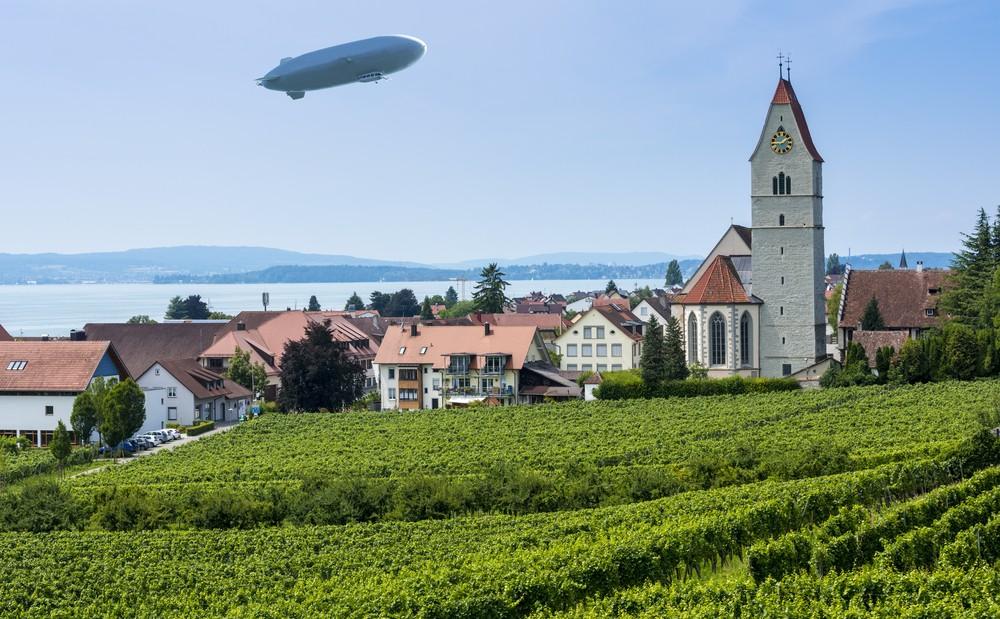
Lake Constance, Constance, Zepellin
A zepellin over Constance, Image: Horst Lieber / shutterstock

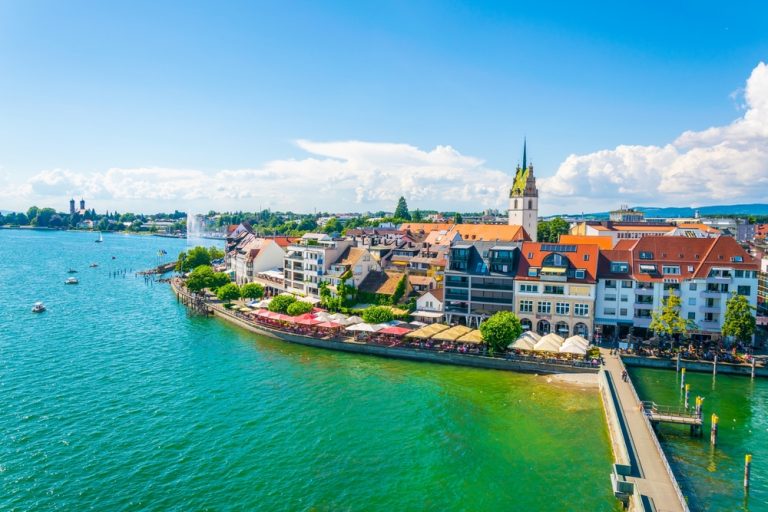
Strolling through picturesque towns, dreaming a bit on the lakeside promenades and a little dolce vita on the beach – that’s a holiday on Lake Constance. The waves are still whispering on the velvety black shore before the sun lifts its face and the chatter of the waterfowl sounds. The sun is shining, the noise level is rising and soon there is a lot of activity on the shores of Lake Constance. Good for those who are now on the road by bike or treat themselves to a mini cruise along the north shore. Rocking on the waves – Lake Constance and shipping simply belong together. There is a lot to discover. Friedrichshafen is the city of zeppelins, but also the former summer residence of the Württemberg kings. After all, the name Graf von Zeppelin is closely associated with the second largest city in the region. From 1908 onwards, he laid the foundation stone for a flourishing industrial centre and built his world-famous airships in Friedrichshafen.

Lake Constance is summer magic and winter fairy tale at the same time. Every season has its charm. Explore the imposing Meersburg , walk in the footsteps of famous personalities, enjoy balmy summer nights, surf, swim or do pirouettes on the ice – almost every activity is conceivable on Lake Constance. When millions of rays of sunshine glitter in the rippled water, colourful sails float above the water and the banks blur in the haze of the sun, an irresistible magic spreads that hardly anyone can resist.

Lake Constance – Cute districts, playful lakeside promenades and lovely residential towns

Charming villages and landscapes are waiting to be discovered on the shores of Germany’s largest inland lake, which borders Austria and Switzerland. Lake Constance provides sights for several holiday trips. It is not easy to choose the most beautiful city. Each of the Lake Constance towns is unique and gives the region its special charm.

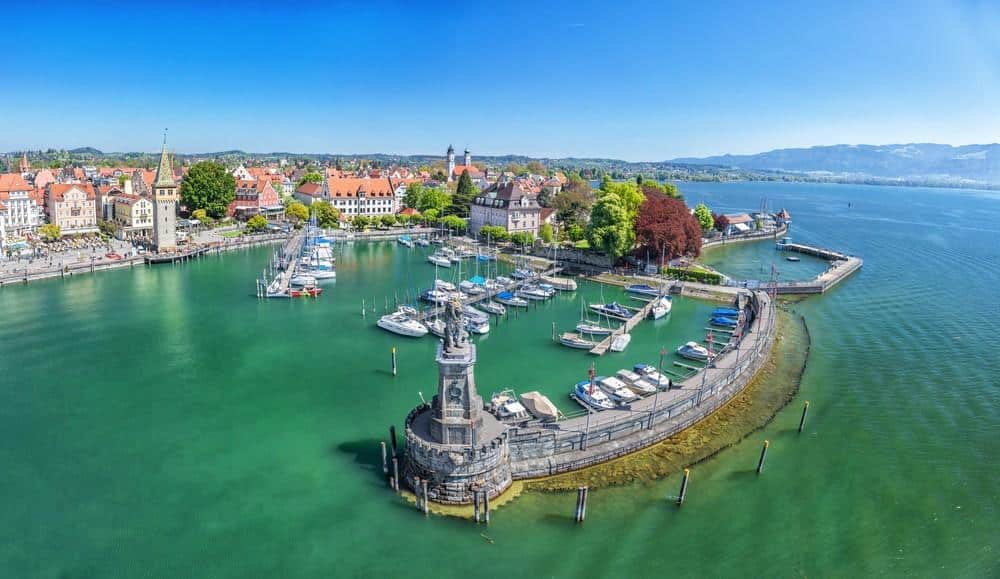
Lake Constance, Lindau
The harbour of Lindau, Image: Sergey Dzyuba / shutterstock

Where the lion guards the harbor, Lindau is located. Like an amphitheatre, the green mountains border the water surface on the east bank. In the background, the white giants of the Alps tower up, while on the opposite shore the green fringe disappears into the deep blue – at night, the distant lights of Bregenz greet you. During a stroll through the city, you will easily be captivated by the nostalgic flair. Crooked alleys and idyllic arcades surround the noble town houses of Lindau. Two dams connect the island city with the mainland.

In Friedrichshafen, a flight with the Zeppelin provides a spectacular bird’s-eye view of the lake. The most popular option is a trip to the local mountains. Less spectacular, but very romantic, is a visit to the Birnau Baroque Church. In the middle of vineyards, the medieval complex impresses – a former monastery from 1080. The church, which was destroyed in the Thirty Years’ War, was rebuilt between 1695 and 1701. From the castle terrace, visitors can enjoy a magnificent view.

Lake Constance, Mainau
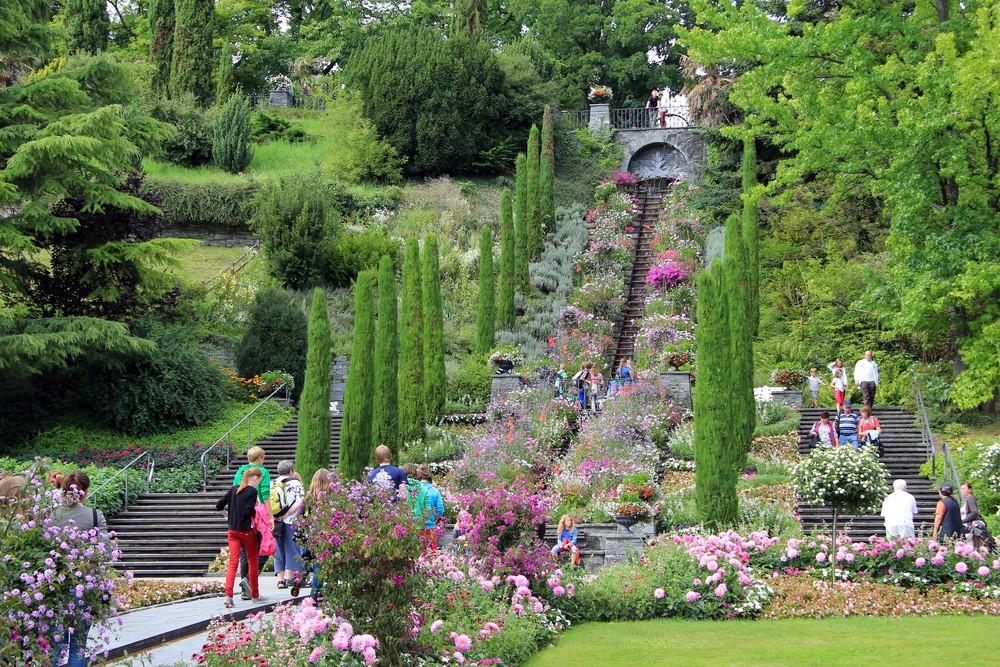
The flower island of Mainau, Image: LENS-68 / shutterstock

A paradise and a place of love: The island of Mainau was shaped by truly royal hands. agaves, palm trees, cypresses and bougainvilleas line squares, streets and gardens – in between a sea of seasonal blossoms. In the middle of Lake Überlingen, the flower island inspires – famous for its subtropical flora and an abundance of exotic flowers. The magnificent island captivates countless visitors.

Constance is the city that travellers raved about as early as the Middle Ages. History lives here. The charming city has lost none of its charm over the centuries. The medieval townscape, the beautiful location on Lake Constance and the history-laden past make Constance almost unique. At the council meeting here in 1414-18, the only papal election on German soil was held. Numerous monuments still remind us of the 16th Council of Church history.

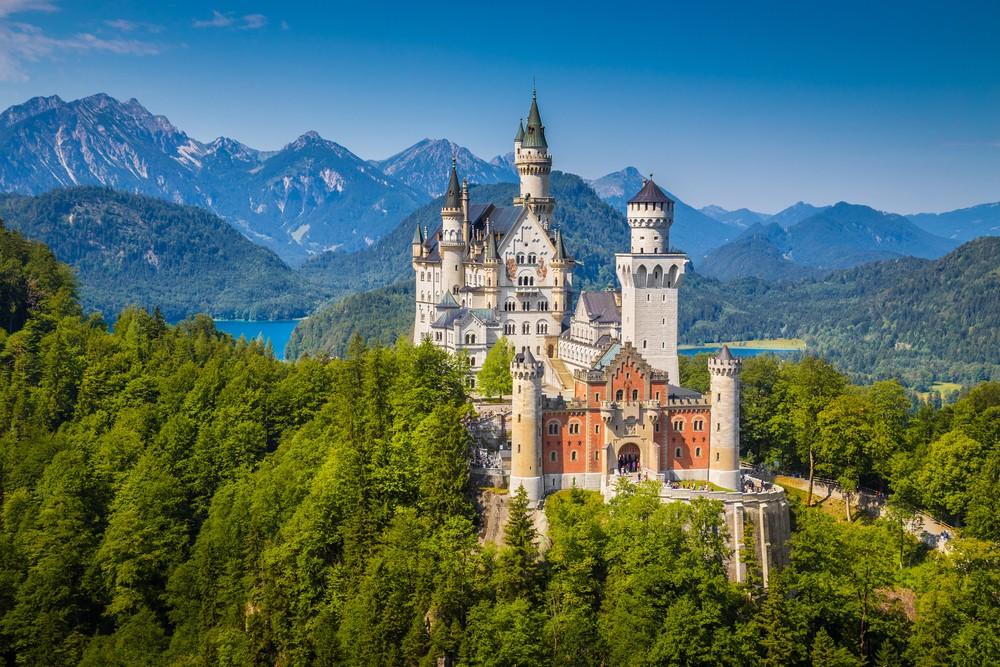
In the midst of extensive vineyards, filled with a cheerful Mediterranean atmosphere, the town of Meersburg is built up in terraces diagonally opposite Constance, on the north shore. Above the town of Meersburg towers a fairytale castle. The Old Castle or Meersburg is the oldest castle in Germany that is still inhabited today. It is considered one of the main attractions on Lake Constance. The most famous resident of the building was the poet Annette von Droste-Hülshoff. Most visitors to the city would probably do the same as the writer – she stayed. Narrow alleys lined with picturesque half-timbered houses characterise the image of Meersburg. The Steigstraße, which leads steeply from the shore of Lake Constance up to the upper town, is particularly pretty. Walking through the streets of the town, lined with filigree gables, you will encounter history at every turn. The prince-bishops of Constance already resided here.

Lake Constance, Alps
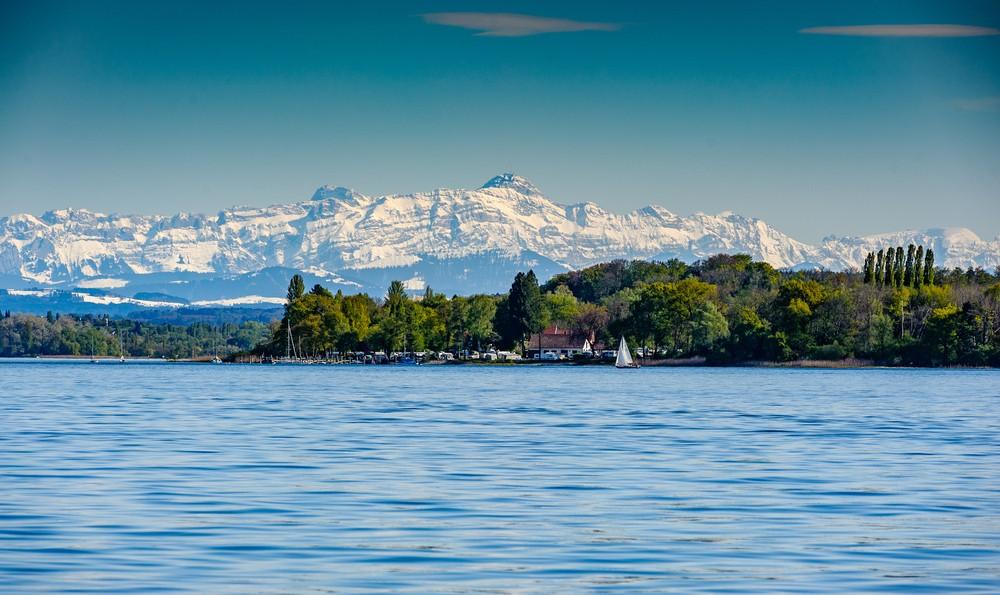
A fantastic backdrop with the Alps in the background, picture:
Carsten Ortlieb / shutterstock

The mountain is calling: At an altitude of 1,064 metres, the Vorarlberg Pfänder exerts its high attraction. It offers a unique view of Lake Constance, around 200 Alpine peaks and a view of the three countries. The Pfänderbahn takes you up. The way to the cable car is signposted in the city of Bregenz. Afterwards, a visit to the upper town of Bregenz is worthwhile. The idyllic district with its medieval flair almost seems a bit sleepy and attracts visitors with playful fountains and many sights.

Highlights in the shadow of famous Lake Constance cities

Whether on foot, by bike or by boat – the unheard-of beauty of the Lake Constance region has a lasting effect.

Salem stands for an extraordinary combination of castle, open-air concerts and a mountain of monkeys. The Affenberg is the most beautiful and largest monkey enclosure in Germany and offers children in particular a natural opportunity to meet fallow deer, storks and over 200 Barbary macaques.

The pile dwellings of Uhldingen-Mühlhofen are no less inspiring. Here you can take a trip to the Stone and Bronze Ages. The Pile Dwelling Museum shows two replicas of pile dwellings as our ancestors lived about 4000 years ago.

Also worth seeing are the wine-growing village of Hagnau, the district of Goldbach with a glacier mill, Sipplingen with the Haldenhof viewpoint and Langenrain with the interesting Marienschlucht nature reserve. Not to forget the vegetable island of Reichenau, which has been connected to the mainland by a dam since 1838, as well as the small town of Radolfzell, which lies in a bay of Lake Zell. The spa town impresses with many sights in a medieval town centre. A visit to Lake Constance also includes a trip to the Rhine Falls in Schaffhausen. Here, the mightiest waterfall in Europe plunges 150 meters into the depths. In July, at the highest time of the water level, the natural spectacle is particularly spectacular.

More information about Lake Constance at Wikipedia.

Liverpool: Cultural metropolis on the Atlantic coast

0

The origins of the historic metropolis date back to the 12th century. Subsequently, the city gained in importance mainly due to its international port, which was long one of the most important in the world. It has also made a name for itself as an important starting point for emigrant ships to America. At the same time, the historic harbour structure is a UNESCO World Heritage Site and forms the charming face of Liverpool. Nowadays, the city is also known for its lively music scene and rich cultural life.

Liverpool is located right next to the mouth of the River Mersey on the Irish Sea and is just over 280 kilometres from England’s capital London. Economically, the financial sector, tourism and the service sector are particularly influential sectors. Thanks to its maritime location, the climate is mild all year round, with no extreme heat in summer or sharp frosts in winter – making Liverpool a great place to visit at any time of the year. The city can be reached by train or by road, including several tunnels below the Mersey. John Lennon International Airport is served by a variety of destinations around the world.

Sights

Liverpool Cathedral
Liverpool Cathedral, Image: Petr Vagner / shutterstock

Liverpool offers many interesting sights, including in particular the venerable harbour buildings, which are partly reminiscent of Hamburg’s Speicherstadt. In addition to the architectural characteristics of past centuries, the district is home to many museums, exhibitions and restaurants. Particularly impressive are, for example, the town hall and Pier Head on the harbour quay as well as Speke Hall, a historic half-timbered house with gardens. The city’s two cathedrals – the modern Liverpool Metropolitan Cathedral and the monumental, neo-Gothic Liverpool Cathedral – are also worth a visit. Other interesting cultural sites are St. Peter’s Church and the Princess Road Synagogue, but also the bombed-out church on Leece Street, which was preserved in this condition as a memorial to the bombing war.

A special feature of Liverpool is the wide range of different museums. The topics range from the less than glorious role of the metropolis in slavery to shipping in the Merseyside Maritime Museum to archaeology and ethnology in the World Museum. Some of the museums can be visited free of charge. A particularly valuable experience is also offered by the Walkers Gallery, the largest collection of paintings in the whole country. Almost as important is the “Tate” art collection housed in the port. If you want to take a deep breath, you should visit the spacious and lovingly designed Sefton Park in the south of the city. Other options for a trip into the countryside are the Wavertree Botanic Gardens and Knowsley Safari Park, which is not far away.

Culture & Gastronomy in Liverpool

Liverpool Anfield
The legendary Anfield stadium in Liverpool, Image: PhotoLondonUK / shutterstock

It is no coincidence that Liverpool was named European Capital of Culture in 2008. The first thought is usually for the Beatles, whose success story began here. Among other things, the exhibition “The Beatles Story” is dedicated to them. The city is also an excellent place to get to know British music history. Top addresses are, for example, the Philharmonic Hall, which offers a high-class concert program, or the Cavern Club, which is known above all for rock’n’roll. Last but not least, the city has many excellent theatre stages, the most famous of which is the Liverpool Empire Theatre. Special attention is paid to the theatre scene through the annual Liverpool Shakespeare Festival. Those with a more interest in sports should consider a visit to the turbulent Anfield Stadium, where the football-mad population likes to celebrate their athletes. In addition, the famous “Grand National” horse race takes place in Liverpool.

Tip for football fans: Anfield Stadium can be visited all year round. Book the tickets in advance on the web (https://www.visitliverpool.com). A visit costs 20 pounds for adults and 12 pounds for children.

Program items:

  • Enjoy stunning views of the pitch and city from the top floor
  • Visit the new state-of-the-art locker rooms for the home team and guests
  • Practice your interview technique in the new press room
  • Touch the infamous “This Is Anfield” sign
  • Walk through the players’ tunnel
  • Sit in Jürgen Klopp’s manager’s chair (coach: as of September 2018)
  • Snap photos of the playing field and the impressive main stand of the infamous Kop.

For culinary needs, Liverpool offers both regional specialties and a wide range of international restaurants of high class. These include, for example, the Panoramic 34 or the Roski. Traditionally, the cuisine is very potato-heavy, and these are particularly popular in the stew called “Scouser”, the “national dish” of the city. Various other dishes such as the classic “English Breakfast” as well as variants of Shepherd’s Pie or the rustic Yorkshire pudding are also known in the rest of the country. Bistros such as the “Wreckfish” are also often among the interesting addresses.

You can find more about Liverpool on Wikipedia

Saudi Arabia – a beautiful country opens its veil

0

For a long time, Saudi Arabia was a country that puzzled the world because some things there felt as if the Middle Ages were still present. But the kingdom wants to open up, and while it was previously only possible for tourists to obtain a visa in the care of a group, this is now also possible for individual travellers. The restrictions that have been in place so far will also be eased in Saudi Arabia as part of the “Vision 2013” project. Crown Prince Mohammed bin Salman wants to make his country fit for the future, and by the way, this also included the lifting of the driving ban for women. On a trip through Saudi Arabia, tourists will be able to visit the testimonies from the time of the ancient Nabataean empire. This beautiful country is opening its veil, even if the holy cities of Mecca and Medina will continue to be open only to people of the Islamic faith.

Eine historische Steinfestung mit Rundtürmen thront auf einem felsigen, sonnenbeschienenen Hügel unter einem klaren blauen Himmel mit vereinzelten Wolken und verkörpert den zeitlosen Charme der antiken Architektur Saudi-Arabiens.
The fortress Qasr Za’abel, Image: Gimas / shutterstock

But some things are still very different with the Saudis than in the Arab neighborhood. And so the old port city of Jeddah is something of an exception to the rule. It is fun-loving and cosmopolitan and has blossomed into a modern metropolis years ago. Saudi Arabia is said to be a “fearful giant”. Anxious probably because the all-powerful house of the king finds it difficult to assess how his subjects assess the everyday things of their lives. When a few years ago the consumption of alcoholic beverages was to be banned as well as the consumption of smoking, there was a loud outcry of protest – by Arab standards. As a result, the request to also put nicotine on the list of bans was not pursued.

Now, it would be an exaggeration to claim that Saudi Arabia will join Western customs in the foreseeable future. Rather, this is the land of the Prophet, where millions of pilgrims crowd around the Kaaba of Mecca and where traditions are still cherished and cultivated. However, the visual differences in Saudi Arabia range from the picturesque Bedouin villages in the mountains of the south to the skyscrapers of the modern capital Riyadh.

Saudi Arabia, Mecca Royal Clock Tower Hotel
The Mecca Royal Clock Tower Hotel, Image: MAbdullah / shutterstock

Al-Ahsa is one of the most historic regions in the country. This is an area where the infinity of the desert merges into an agricultural idyll. With the metropolis of Hofuf, Al-Ahsa, which has been declared a World Heritage Site by UNESCO, is considered the “largest oasis in the world”. Here, 2.5 million palm trees were planted and a sophisticated irrigation system was devised. The Mada ́in Salih excavation site is also on the UNESCO list. The place is about four hundred kilometers from Medina and is basically a huge cemetery. 111 monumental tombs have been discovered here, and they are said to be almost two thousand years old. The decorations carved into the red rock and the inscriptions in Aramaic and Thamudic are impressive.

In Mada ́in Salih you can also visit an old station building and its locomotive. These are the remains of the former Hejaz railway, which, according to the ideas of the royal family more than a hundred years ago, was supposed to connect Syrian Damascus with Mecca. However, it was never completed. Old Jeddah, on the other hand, has retained its reputation as the “gateway to Mecca” for centuries. A tribe of Yemenis founded the town more than two and a half millennia ago. In the early Middle Ages, Old Jeddah received a city wall worth seeing.

Interview with Mihael Djukic about his trip to Saudi Arabia

Even the minister responsible for tourism development, a prince of the royal family, raves about Saudi Arabia’s breathtaking natural beauty. He refers to his country as a “treasury”, but also pointed out that Saudi Arabia will never give up its cultural values as the homeland of the Prophet. This also includes the ban on alcoholic beverages, to which holidaymakers must also submit.

Travel information Saudi Arabia

Capital Riyadh
Form of government Monarchy
Absolute monarchy
Currency Saudi Riyal (SAR)
Area approx. 2,149,690 km²
Population approx. 31,742,308 (2016 est.)
Languages Arabic
Electricity grid 127/220 volts, 60 Hz
Area code +966
Time zone UTC+3


Cyprus – the goddess of love in a divided country

0

Cyprus – This island has always aroused desires. For centuries it was not good intentions that came with the foreigners, but since vacationers have populated the sunny shores, the Cypriots are happy to be “conquered”. Income from tourism is an important source of well-being in the still divided country. The Republic of Cyprus comprises the southern part – the rest is under the Turkish flag. And there are no signs of a solution to the conflict. A United Nations buffer zone is a restricted military area and may not be entered, but there has been a kind of standstill agreement between the warring powers for years. As a result, Cyprus is largely pacified and an ideal travel destination. It is the island where, according to legend, the goddess Aphrodite emerged from the waters of the Mediterranean and where there is now an “Adonis Trail”.

An einem sonnigen Tag liegen drei Boote neben einer historischen Steinburg vor Anker, im Vordergrund ist klares, türkisfarbenes Wasser zu sehen, und über ihnen erstreckt sich der blaue Himmel.
The Kyrenia Fortress in Northern Cyprus, Image: Nejdet Duzen / shutterstock

On the southern shores, the so-called “Rock of Aphrodite” rises from the shallow waters of the sea. It is always the destination of young couples in summer temperatures, because those who swim around the rock tower three times are said to secure eternal love. A nice idea, and those who have managed the triple circumnavigation make a pilgrimage to the temple of Aphrodite near Kouklia, even if there are only a few ruins left. The goddess of love and beauty has enchanted entire regions of Cyprus with her charm.

A citadel protected the port of Famagusta for a considerable period of history. It is part of the historic city wall and has been called “Othello” since the British colonial era. This was and is to be understood as a bow to William Shakespeare, because the English playwright let his “Moor of Venice” wreak havoc in the harbour fortifications of Famagusta. Cyprus is full of stories and legends. This is an island where tradition and hope for a common political future mingle, and where Nicosia presents itself as the last divided capital of the world.

Ein beschaulicher Yachthafen bei Sonnenuntergang auf Zypern, mit Booten, die am ruhigen Wasser vor Anker liegen, einigen Gebäuden entlang der Uferpromenade und der Sonne, die nahe am Horizont untergeht und die Szene in ein warmes Licht taucht.
A beautiful harbour promenade in Limassol, Image: f8grapher / shutterstock

But the brothers, who have been estranged for a long time, have recently become closer, and the “green line”, the line between north and south, has become passable again for the people of Cyprus. Ledrastraße, which used to be the most beautiful boulevard in the city, is now the transit point for pedestrians. If you visit Nicosia , you should visit the Cyprus Museum with its archaeological finds. The old town is still surrounded by a Venetian wall, and the most beautiful panorama is from the upper floor of the observatory. The Greek part of the old town is dominated by the façade of the Archbishop’s Palace.

If you are looking for the most beautiful beaches in Cyprus, you are spoilt for choice. In the south there are extensive sandy beaches, while the bays in the north are rather rocky. Almost all areas suitable for swimming have been awarded a Blue Flag as a sign of cleanliness and service. It is said that there is a suitable bay for every type on this island.

In addition to water sports, golf is the number one holiday activity in Cyprus. Especially in the south, between Limassol and Paphos, sympathizers of this sport will find places close to the sea and among orchids and fruit trees. With good visibility, you can even see the Taurus Mountains on the Turkish mainland from here. A holiday in Cyprus is synonymous with a wealth of impressions. There is the silence of the monasteries, the humming of the cicadas in the trees, the olive groves on the slopes of the mountains, the ruins of former temples, the picturesque alleys of the wine villages in the Troodos Mountains and, last but not least, the kindness and hospitality of the people who live here.

Travel information Cyprus

Capital Nicosia
Form of government Republic
Presidential system
Currency Euro (EUR)
Area de facto 5,896 km²
de jure 9.2511 km²
Population 848,300 (2015, de facto)
1,179,551 (2017, Cyprus)
Languages Greek and Turkish
Electricity grid 240 volts, 50 Hz
Area code +357
Time zone UTC+2 Eastern European Time
UTC+3 Eastern European Summer Time


Ukraine – at the interface between East and West

0

It is with great horror that we see the sad images from Ukraine. We have decided to leave the following article from 2018 unchanged for the time being in order to present the beauty of Ukraine before the outbreak of the war. Our thoughts are with the families on site.

Behind the slightly pale windows of the train, the meadows glide by, and the rays of the early sun of the day sparkle in the dew on the grass. Carriages can be seen on the narrow paths that lead to the old villages and, of course, the many nests of storks on the electricity pylons at the edge of the railway line. A trip on one of the last narrow-gauge railways on the continent is like a trip back in time. This is possible in Ukraine, and this country is not really as medieval as the fleeting images of a train ride convey. After all, Ukraine was once considered a pioneer in Europe. The people of the country fondly remember it as their Princess Anna, who was once married by her father, Grand Duke Yaroslav, to the royal court in France . And it is precisely this Princess Anna who is said to have complained about “backward Paris” after her trip from Kiev . Charles de Gaulle also raved about the metropolis: “I have seen many parks in cities, but never a city that is located in a park…”

Eine traditionelle Holzkirche in der Ukraine mit mehreren Schindeldächern steht inmitten üppig grüner Bäume, umgeben von einem Holzzaun und einem Tor sowie einem Kopfsteinpflasterweg unter strahlend blauem Himmel. Rechts ist ein kleiner Holzschrein zu sehen.
The Museum of Folk Architecture and Rural Life in Lviv, Image: Ruslan Kalnitsky / shutterstock

Kiev’s golden era is still evident today in the impressive Art Nouveau facades in the city. The city was a cultural and economic center at the interface between East and West. The city on the murky waters of the Dnieper cherishes and cultivates its nimbus as a worthwhile destination for holidaymakers who are not only enterprising but also thirsty for knowledge. Because there is a lot to see in Kiev, although Ukraine as a modern state has basically only existed since 1991. At that time, 91 percent of citizens pleaded in a referendum for the independence of their country.

If you look around Kyiv’s surroundings, you will discover amazing things. For example, the Mezhyhirya Palace, the former residence of President Viktor Yanukovych, who fled to Russia in 2014. Today, this house is also open to visitors, and during tours you will even be shown the golden toilet bowl of the ex-dictator.

Ein zugefrorener See in der Ukraine mit sichtbaren Rissen im Eis, umgeben von schneebedeckten Bäumen und Bergen unter einem teilweise bewölkten blauen Himmel.
A frozen lake in Ukraine, Image: Standret / shutterstock

The Sophia Cathedral and the Lavra Cave Monastery are world-famous. Both can now be found on the UNESCO World Heritage List. Once upon a time, the caves on a hill on the west bank of the Dnieper served as a domicile for hermits. Later, the monks were buried here. Those God-fearing people who are revered as saints by Ukrainians today. Incidentally, the memory of Grand Duke Volodymyr, who made Kiev a Christian city, is also cherished as a saint. He is said to have given the order for the construction of four hundred churches. However, many of them disappeared during the Soviet occupation.

As for Odessa, the port city on the Black Sea, the residents of Kiev claim that it is a little “crazy”. Odessa certainly reflects the somewhat different Ukraine. It is casual here and not a few see this city as a pearl of the south. With the famous Potemkin Staircase, which leads over exactly 192 steps from the Old Town to the harbor and has become the visual symbol and landmark of Odessa. This is a city on the move, where the colors of the legendary tsar’s daughters dominate the streets: Russian green, lilac blue and yellow like the butterflies in the park.

The city of Lviv with its extraordinary cultural program is also recommended.

The crises and wars after the secession of Crimea have cast a shadow over Ukraine as a travel destination. Although some precautions are useful for round trips and you should also be prepared for one or the other pothole on the roads, tourist stays in this interesting country are recommended to all those who are interested in culture and lifestyle. And regardless of whether you are travelling by intercity bus or train, almost everyone can easily get into conversation with the hospitable people in Ukraine.

Travel information Ukraine

Capital Kiev
Form of government Republic
semi-presidential system
Currency Hryvnia (UAH)
Area approx. 603,700 (including 26,080 AR Crimea and 864 city of Sevastopol) km²
Population 42,854,106, excluding AR Crimea and the city of Sevastopol (May 1, 2015)
Languages Ukrainian
Electricity grid 220 volts, 50 Hz
Area code +380
Time zone UTC+2
UTC+3 (March to October)


Amsterdam – Narrow houses and an extensive canal system

Many tourists choose Amsterdam as their vacation spot. But before the trip, they always get good information about the city.

The city on the Amstel River was first mentioned in 1275. In 1317, Amsterdam joined the County of Holland and received privileges – the right to duty-free trade. In less than two centuries, a small fishing village has become an important port and an important economic center. At the end of the 15th century, the city received the right to free trade in the Baltic Sea from the Hanseatic League and carried out up to 70% of all transports via the Baltic Sea.

Amsterdam, Houses
Picturesque houses in Amsterdam, Image: Yasonya / shutterstock

After Amsterdam’s main competitor Antwerp was conquered and destroyed by the Spanish in 1585, the city’s wealth and power doubled. Fleeing from the riots of the Inquisition, Antwerp merchants and craftsmen flocked here, especially Jews. They brought the diamond cutting technique to the capital of the Netherlands, which led to the growth of jewelry and gemstones.

By 1658, the area of Amsterdam had been enlarged fourfold. A well-thought-out development opportunity – the “Three-Channel Plan” – ensured the construction of an adequate infrastructure and brought the city the fame of one of the most beautiful cities in Europe.
Since the second half of the 18th century, Amsterdam’s well-being began to deteriorate due to the French occupation and the continental blockade. In the years 1810-1814, the Netherlands was part of the French Empire and the city temporarily lost its capital status. Nevertheless, Napoleon considered Amsterdam to be the third largest city in Europe after Paris and Rome.

In 1900, the number of inhabitants of Amsterdam exceeded half a million people. The rapid industrialization and the revival of the trading port led to overpopulation. The housing problem was solved with great difficulty.

The First World War, in which the Netherlands remained neutral, did not have a significant impact on the life of the city. During the Second World War, the population of the capital suffered greatly.

In the post-war years, Amsterdam’s economy was reoriented from unprofitable industries to trade, tourism and services. Today it is home to the headquarters of major international corporations as well as the headquarters of Greenpeace.

Currently, Amsterdam is a thriving city

Amsterdam, Bike
Amsterdam is a real cycling city. Explore the city on two wheels, Image: Yasonya / shutterstock

There is only one airport in Amsterdam, which is about 15 km from the city center. You can get there by train, bus or taxi. Of course, it’s much cheaper by train. Trains depart every 15 minutes from Amsterdam Airport Station, which is located right inside the airport building. To get to the city center, you need to reach Amsterdam Centraal station. The journey time is only 20 minutes. The ticket price is €4.10.

The exact train timetable can be found on the website of the Dutch Railways . There you can buy a ticket online. The hotels in Amsterdam are not cheap, you have to accept this as a fact. Even small hotels like B&B Level 2-3 stars can cost €100. But there are several Trevelhaks that you can use to save money in Amsterdam. First, it is traditional to recommend booking accommodation in advance, as the most profitable offers are quickly gone.

Secondly, it is advisable not to visit the city on weekends, as many Dutch, Belgians and Germans often spend a weekend in Amsterdam. This immediately leads to higher prices compared to working days.

From November to mid-December and from mid-January to March, prices in Amsterdam are reduced by 30-50%.

Water in Holland is one of the purest in Europe, and that’s why locals almost always drink from the tap. While walking through the city, you will find free drinking fountains.

If you want to see how local people live, just look through the window. Most Dutch people don’t draw the curtains in the living room (or don’t have any at all) and don’t mind if someone looks at them through the window. If they notice you, smile and wave your hand. If you’re in the suburbs, you’re in luck. The windows are larger and they are lower, so you can better see everything.

In the western part of the center is the Jordaan area. In the past, poor people and workers settled here. There are a large number of cafes, bars, restaurants and shops. Narrow labyrinths of streets, cozy courtyards attract tourists. Just 20 km from the capital, you will find idyllic landscapes, old houses and mills of the Zaanse-Schans ethnographic complex, as well as the authentic atmosphere of the fishing village of Voledam. Cheese lovers will be delighted by the tasting of the famous Dutch cheeses. And the fishermen will spoil you with freshly caught herring and smoked eel.

An evening walk through the red light district is very popular. Here you will also get a lot of interesting information about the history and traditions of this place.

Facts about Amsterdam

  1. Canals: Amsterdam is known for its picturesque canals that stretch for 100 kilometers through the city. These man-made waterways are a distinctive feature of the city and add to the unique atmosphere.
  2. Bicycle capital: Amsterdam is considered the bicycle capital of the world. The city has an extensive network of bike lanes, and bicycles are a popular way to get around. There are more bicycles than inhabitants in Amsterdam.
  3. Tulips: The Netherlands is known for its tulips, and Amsterdam is home to the famous Keukenhof Garden every year, which is considered one of the most beautiful flower gardens in the world.
  4. Coffeeshops: Amsterdam is known for its liberal laws regarding the use of cannabis. There are numerous coffee shops in the city where the sale and consumption of cannabis products is allowed.
  5. Royal Palace: The Royal Palace of Amsterdam, also known as the Royal Palace of Amsterdam, is a magnificent 17th-century building. Although it is no longer constantly used by the royal family, it is an important historical and cultural landmark of the city.
  6. Multiculturalism: Amsterdam is an extremely multicultural city. People from different countries and cultures live together peacefully here, and this is reflected in the variety of restaurants, markets, and cultural events.
  7. Anne Frank: The Anne Frank House in Amsterdam is one of the most famous museums in the world. It is the hiding place where Anne Frank and her family lived during the Second World War and where she wrote her famous diary.
  8. Flower markets: Amsterdam not only has the Keukenhof, but also various flower markets, including the famous Floating Flower Market, where you can buy flowers and souvenirs.
  9. Windmills: Although there are no traditional windmills in the city itself, you can find some of the famous Dutch windmills around Amsterdam that you can visit.
  10. Gay-friendliness: Amsterdam has a reputation for being one of the most cosmopolitan and LGBTQ+ friendly cities in the world. The annual Gay Pride Parade attracts thousands of visitors from all over the world.

Museums in Amsterdam

Amsterdam is known for its rich cultural scene, and there are many museums in the city that cover a wide range of topics and interests. Here are some of the most famous museums in Amsterdam:

  1. Rijksmuseum: The Rijksmuseum is one of the most famous museums in the Netherlands and is home to an impressive collection of Dutch artworks from different eras, including works by Rembrandt, Vermeer and Frans Hals.
  2. Van Gogh Museum: This museum is dedicated to Dutch artist Vincent van Gogh and houses an extensive collection of his paintings, drawings, and letters.
  3. Anne Frank House: This museum is located in the former hiding place of Anne Frank and her family during World War II. It tells the moving story of Anne Frank and her diary.
  4. Stedelijk Museum: The Stedelijk Museum is the museum of modern and contemporary art in Amsterdam and is home to a diverse collection of paintings, sculptures, design objects, and more.
  5. The Rembrandt House: Located in Rembrandt’s former home and studio, this museum offers insight into the life and work of the famous painter.
  6. The Hermitage Amsterdam: This branch museum of the Hermitage in St. Petersburg, Russia, features rotating exhibitions from the St. Petersburg museum’s extensive collection.
  7. The NEMO Science Museum: An interactive museum dedicated to science and technology, especially suitable for families and children.
  8. The Amsterdam Historical Museum: This museum presents the history of Amsterdam through exhibitions, artifacts, and multimedia presentations.
  9. The Tropenmuseum: This museum is dedicated to the cultures and traditions of the world, especially the countries and peoples of the former colonial empire of the Netherlands.
  10. The Maritime Museum: This is all about the maritime history of the Netherlands, from historic ships to interactive exhibitions.

Tanzania – after the safari to the beaches of Zanzibar

0

This landscape is more than just a touch of paradise. For many holidaymakers who are on safari in the savannah in Tanzania, this region with its many animals and natural beauty is without a doubt a piece of this side of Eden. Although this country was also exploited in the colonial era and the population of animals was drastically reduced because they were hunted and killed by poachers, Tanzania’s natural wealth has been preserved. Lake Victoria is one of the sources of life in this African country.

It is the “Mediterranean of East Africa” and its floods also wash the coasts of Kenya and Uganda. Nowhere else in the world can people admire such biodiversity as in Tanzania’s magnificent Ngorongoro Crater. The peoples of the world must help to preserve this paradise on earth – and tourism can also play an important role in this.

Tanzania, Safari
On a safari through Tanzania you can probably also see giraffes, Image: Delbars / shutterstock

On safari in the Serengeti and then a beach holiday on the beautiful beaches of Zanzibar – that could be a successful mix. The landscapes that a holidaymaker encounters south of the equator in Tanzania are fundamentally different. There are the subtropical zones with lush vegetation in the mountain forests of Gombe and in the Mahale Mountain National Park. This is the refuge of the chimpanzees, who proceed very carefully in their search for the sweet and sour berries, their favorite food. It was the Englishwoman Jane Goodall who studied chimpanzees for three decades. Today, the endangered primates are visited by tourists accompanied by experienced guides.

But the highlight of every stay in Tanzania is undoubtedly the Serengeti with its almost endless expanse and its huge population of animals. All this is Africa in its most original form. The Serengeti and the Ngorongoro Crater present themselves as a wonderland of nature. Seven thousand white-bearded wildebeest live here alone. Bernhard Grzimek has set himself a monument with his appearances on television and let the world look at this pasture of wild animals. “The Serengeti must not die” was the title of a successful film by the legendary zoo director from Frankfurt am Main. Grzimek’s urn was buried somewhere on the edge of the crater – at the side of his son Michael, who died in an accident while filming in Africa.

Ein Holzboot mit blauem Dach schwimmt auf klarem, türkisfarbenem Wasser in der Nähe eines sandigen Strandes in Tansania, umgeben von üppig grünen Bäumen und Felsformationen; in der Nähe schwimmt eine Person.
Pamunda Island, Image: E X P L O R E R / shutterstock

The proud Maasai call this region “Siringet”, which means “Endless Steppe”. If you travel through Tanzania, you won’t want to miss out on comfortable hotels or lodges on your safari. He finds them in an astonishing abundance. And if he’s in the right place at the right time, he’ll be able to watch up close as millions of zebras and wildebeest cross the rivers in search of fresh grass, some of them becoming prey to crocodiles.

Above this spectacle towers a mighty mountain – Mount Kilimanjaro, which rises from the green rainforest. Those who dare to do so can climb to the “roof of Africa” in a route lasting several days, to the snow-capped summit of the almost six-thousand-metre-high giant. And after the exertions of this unusual mountain tour, many will look forward to the beaches of Zanzibar. The sea is almost always around 27 degrees warm and the white sand, which looks like it is made of powdered sugar, is perfect for walks and hikes. Tranquil fishing villages stretch along the coast like pearls on a string and their inhabitants are happy to welcome guests from another world. They willingly let themselves and their centuries-old culture look into the cards. The time is over when Zanzibar became a plaything of the powers that be, because the island was an important stop on the historic trade routes between the African continent and the countries of Arabia.

Travel information Tanzania

Capital Dodoma
Form of government Federal Republic
Presidential system
Currency Tanzanian Shilling (TZS)
Area approx. 945,087 km²
Population approx. 57,310,019 (2017)
Languages Swahili
Electricity grid 230 volts, 50 Hz
Area code +255
Time zone UTC+3

[/vc_column_text][/vc_tta_section]

Tropical climate

[/vc_tta_accordion][/vc_column][/vc_row]

South Korea – the glittering city of Seoul and historical graves

0

It is a special life experience to submit to the rites of the host Buddhists in a South Korean monastery and to observe the everyday life of the monks. Four hundred kilometers southeast of the metropolis of Seoul also have the chance to achieve the enlightenment of the dawn. And this in the sense of the word, because in the temple Golgulsa in Kyongju there is bed rest at 9 p.m., but the night is already over at three o’clock when the pious men of the monastery gather for the first morning prayers. But when the first rays of the sun unfold their splendor over the picturesque Chungjuho Lake, none of the guests regrets getting up so early. Because this can be one of the visual highlights of a trip through South Korea. A journey across a varied peninsula between two seas.

Blick auf Seoul, Die Hauptstadt Südkoreas
View of Seoul, the capital of South Korea, Image: ESB Professional / shutterstock

Korea is a country divided into two parts with political, social and societal contrasts that could hardly be greater. The north is ruled by an aging communism, while the south has risen to become an economic world power. Hardly anyone books a trip through the last remaining dictatorship of Stalinist influence, while south of the 38th parallel and the border river Yalu, which separates the north from the south, holidaymakers experience the historic “Land of the Morning Calm” on their round trip by bus or rental car and at the same time a successful product of the so-called “tiger states” in Asia.

In the lively capital Seoul , holidaymakers immerse themselves in the dazzling world of an Asian metropolis. Ten million people live here, but when they leave the canyons under the skyscrapers, they soon find themselves in a landscape of lovely valleys, raging rivers, high mountain ranges and many deep forests. Seoul is a melting pot of surprises, with a neon-lit entertainment district, the historic tombs of past royal dynasties, and the palaces that UNESCO has added to its World Heritage List.

Sacred to the Koreans is their Chongmyo Shrine in Seoul, where people worship their ancestors and are aware that they are very close to their deceased. Chongmyo Shrine is also dedicated to the Joseon Dynasty, which ruled Korea for a long period of history between 1392 and 1910. The capital Seoul is not only a high-tech Eldorado, but also convinces with its gardens at the Gyeongbokgung Palace. They are oases of silence in an often very noisy city.

South Korea, Busan
Busan at night, Image: ESB Professional / shutterstock

Holidaymakers should get used to some things during their round trip through South Korea. This is especially true of kimchi, a fermented cabbage that simmers next to the cash register in all restaurants and even fashion stores. This typical Korean dish is something like a culinary matter of course for the people in this country. You have to like kimchi or not. But anyone who has tried the Korean version of German sauerkraut can hardly imagine that it could find its way into European eating habits.

South Korea is framed by the Yellow Sea to the west and the Sea of Japan to the east. In 1946, the country underwent the transformation from a centuries-long kingdom and colony of Japan to a republic. On the island of Jeju with its subtropical climate, the largest lava cave system in the world is fascinating. But also the Cheonjeyeon waterfall, which the Koreans have christened “Pool of the King of Heaven”. Jeju is the typical “wedding island” for the people of the country, and those who spend their holidays there meet numerous young couples during their honeymoon.

Not far from Gyeongju, holidaymakers experience a gem of the history of this country on their round trip. The Buddhist temple Bulguksa has its roots in the 8th century and is the creative and cultural crowning glory of the kingdom of the Silla. The temple with its grotto is considered a natural treasure of Korea, while the Hwasong Fortress with its six-kilometer wall is the highlight of any round trip.

Travel information South Korea

Capital Seoul
Form of government Republic
semi-presidential system
Currency Won (KRW)
Area approx. 100,210 km²
Population approx. 51,700,000 (2018)
Languages Korean
Electricity grid 110/220 volts, 60 Hz
Area code +82
Time zone UTC+9