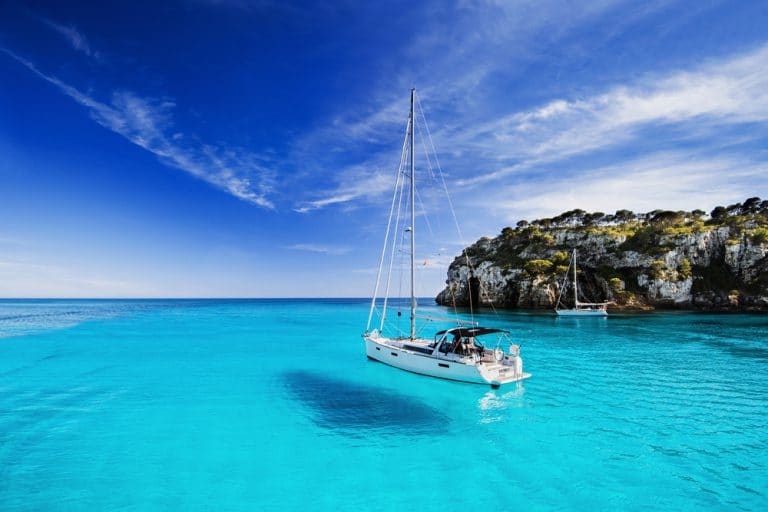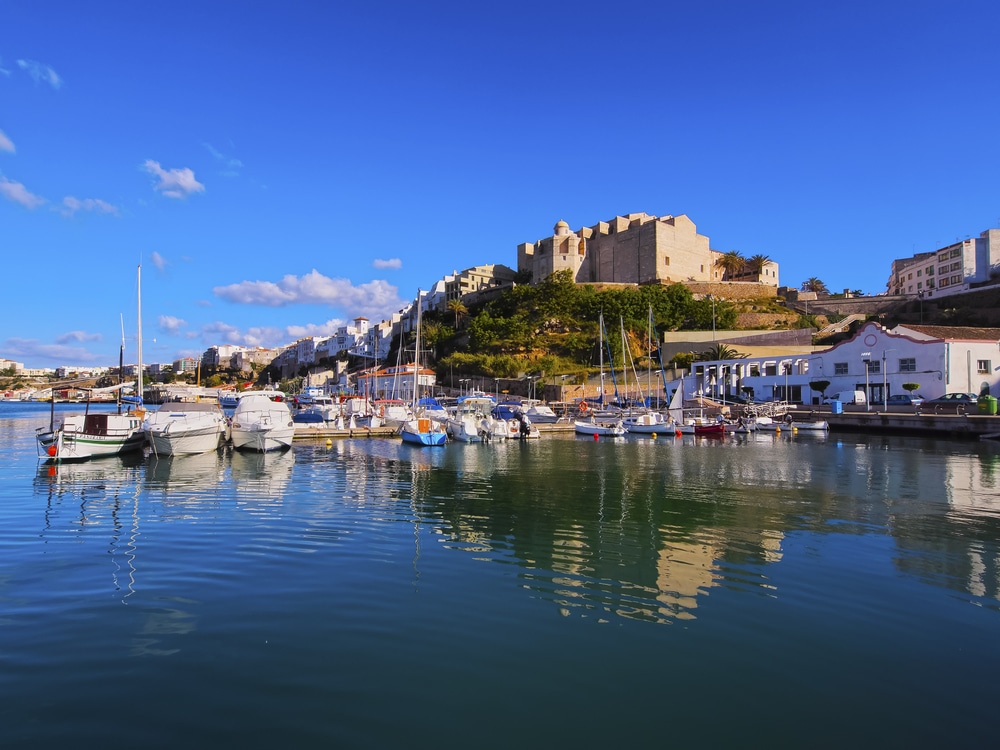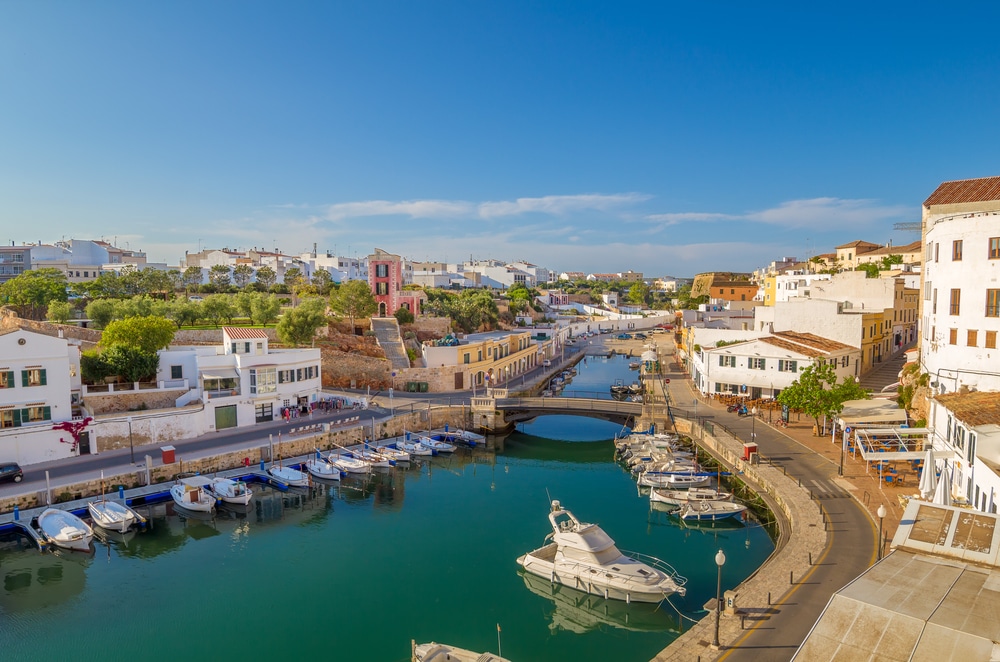
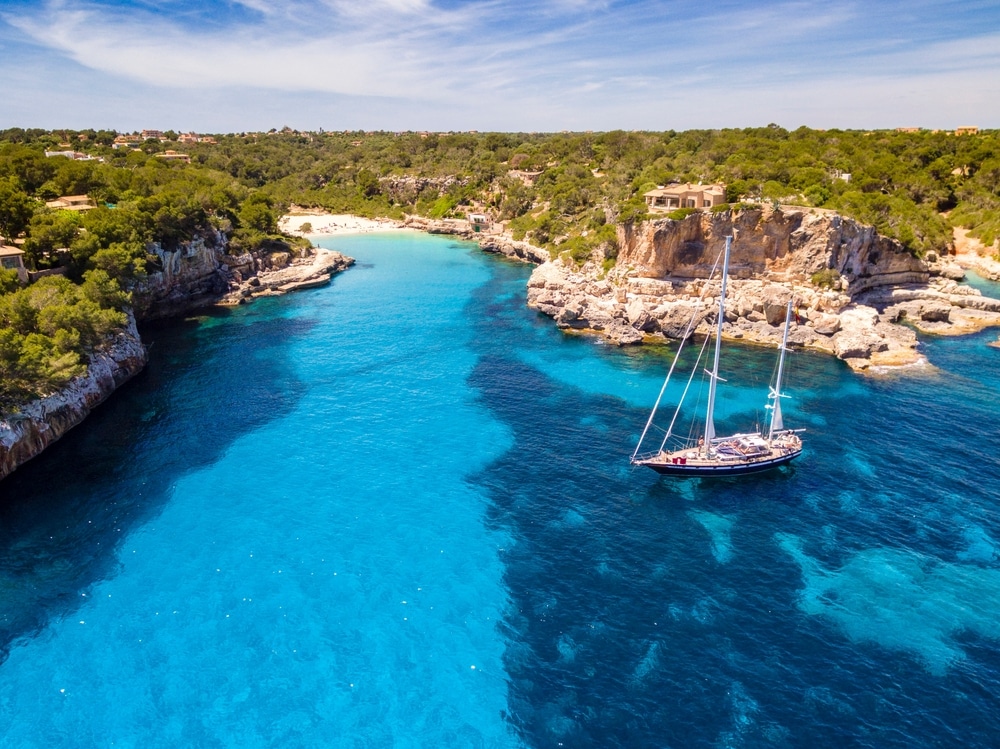
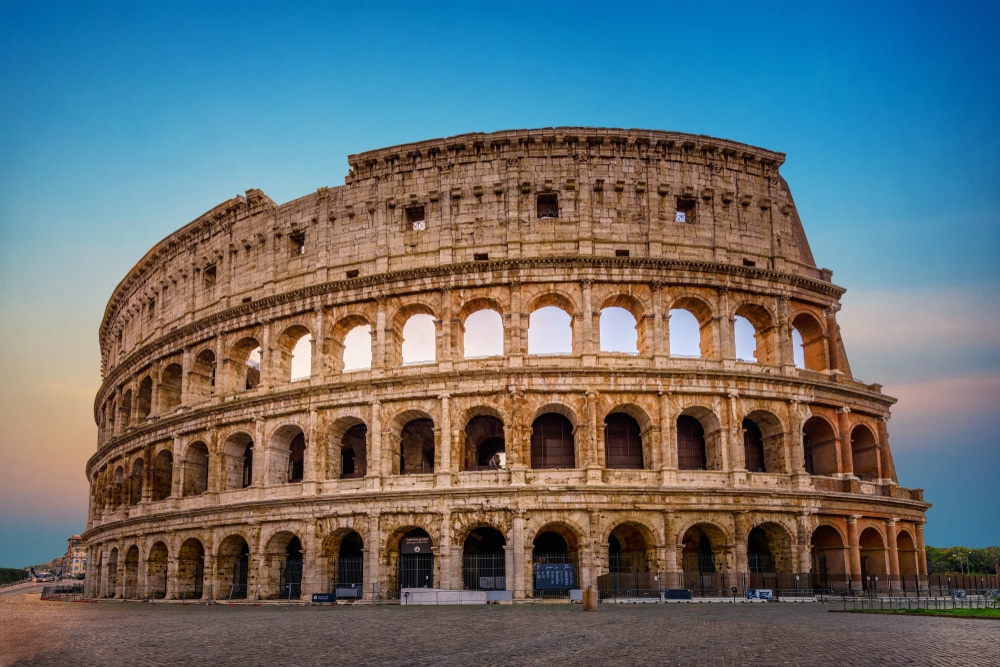
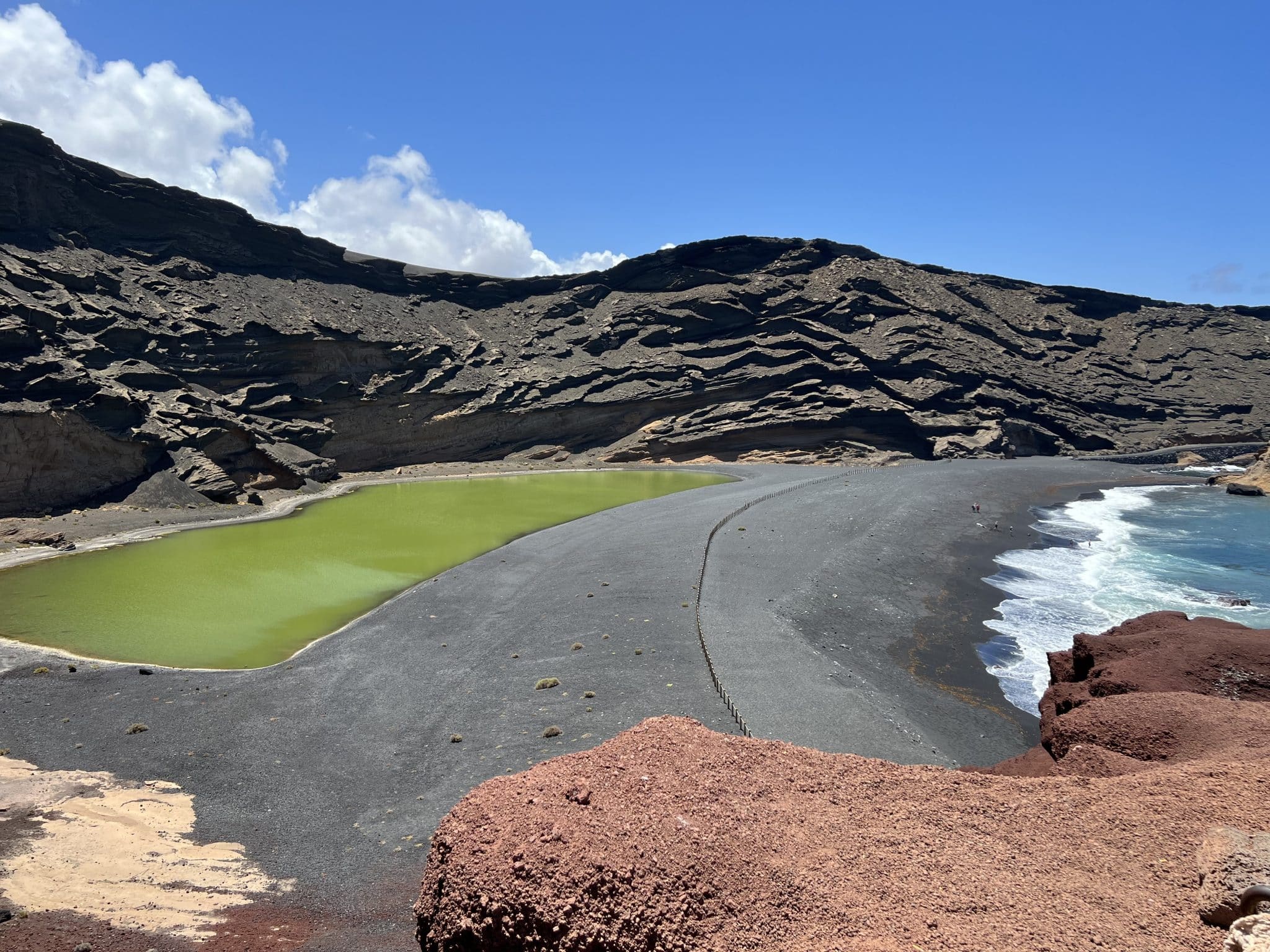
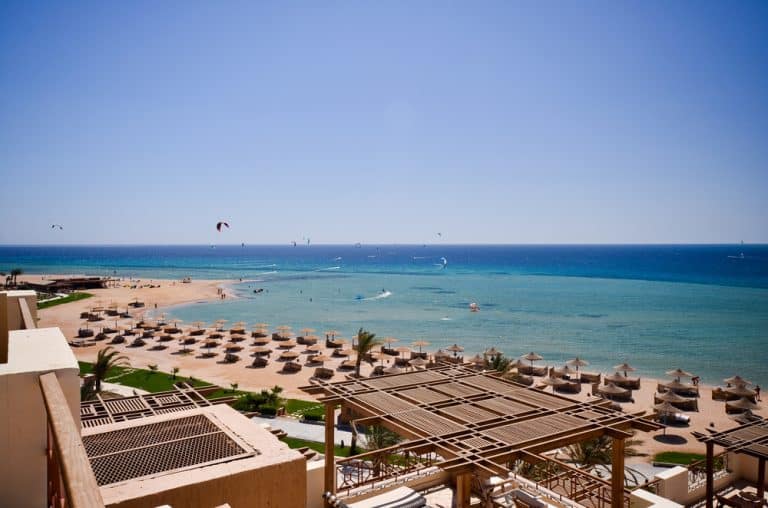


Mallorca’s sister island has a lot to offer. Below you will find our list of the most beautiful sights of Menorca.
Menorca’s capital Mahón
Mahón / Maó, Image: Karol Kozlowski / shutterstock
You don’t have to look far for sightseeing spots on the Spanish island of Menorca . The capital Mahón in the east, also known as Maó, has a rich history and many attractions to offer.
If you arrive in the city by sea, you will pass through the second largest natural harbour in the world. Over a length of almost six kilometers, ships have been sheltered from the weather and attackers for several hundred years.
Another landmark is the church of Santa Maria in the middle of the city. Here is a famous organ by the Swiss Johann Kyburz from the early 19th century. Historical paintings and archaeological finds can be admired in the Museo de Menorca. This is located in the more than 500-year-old monastery of Sant Francesc – in the immediate vicinity of the old town with its winding alleys.
Historical excavation sites
Archaeological excavations can be discovered not only in the museum, but also scattered throughout the island. Among the sites, the Talayotic settlement of Torre d’en Galmés – one of the largest in the Balearic Islands – and the Talati de Dalt are particularly well known. The latter is located a few kilometers from Mahón and is considered to be extremely well preserved. It is said to have been built as early as 400 to 200 BC. Here you can still admire the huge stones, whose arrangement is reminiscent of the British Stonehenge .
Idyllic old town alleys in Ciutadella
Ciutadella de Menorca, Image: tuulijumala / shutterstock
Ciutadella, located in the west of the island, was the capital of Menorca until the 18th century. Here, the Plaça des Born square and the town hall there form the centre of everyday life. A white obelisk in the middle of it is intended to commemorate a raid in the 16th century. The square is surrounded by noble palaces, fortresses and many small alleys where you can find bars, restaurants and boutiques.
An extraordinary building in the Gothic style is the Cathedral of Santa Maria de Menorca. An interesting fact is that it was built from the minaret of the main mosque at the time. This can still be seen today in the tower chapel or the bell tower.
Other sights in Ciutadella are the Bishop’s Palace, as well as the monastery church Església des Socors, which is considered the most beautiful Renaissance church on the island.
Relaxation can be found in the quiet courtyard of the Augustinian monastery in the south of the old town.
The sacred mountain of Monte Toro
Monte Toro, Image: gNesher / shutterstock
For all those who want to do sports during their holiday, an ascent of Monte Toro is a good idea. With its 357 meters, it is also suitable for the less fit and rewards hikers on their way with impressive viewpoints. In good weather, the neighboring island of Mallorca can be seen. It is faster to reach the summit by car. Once at the top, visitors can expect a statue of Christ from 1949, as well as a pilgrimage church and a monastery from the Middle Ages.
If you want to relax from the many cultural impressions of Menorca, you will find the right opportunity to do so in the bay of Cala Galdana on the south coast of the island. Surrounded by protective coastal rocks, an approximately 500-metre-long, golden-yellow sandy beach awaits visitors. The clear, turquoise waters are great for snorkeling or relaxing in one of the sun loungers available for rent. The seven-kilometre-long Barranc d’Algendar gorge also ends at the shell-shaped beach. Over the years, an impressive variety of plants and animals has developed here.
The Caribbean island of Grenada is the southernmost of the Leeward Islands. La Grenade was what the French called the island in colonial times: the jewel. And she is a jewel indeed. It is of volcanic origin, only 18 kilometers wide and about 34 kilometers long, but the extinct volcanoes rise up to 840 meters out of the sea.
The island is almost completely covered with rainforest. Dreamlike beaches invite you to linger, while inland, untouched nature, crater lakes, waterfalls and hot springs beckon. And despite all this, Grenada is still considered an insider tip and is not flooded by crowds of tourists.
Caribbean dream beaches
Saint George’s, the capital of Grenada, Image: Claudio306 / shutterstock
Whether beaches with fine light sand that slope gently into the water and are therefore ideal for families, black-gray beaches that are reminiscent of the volcanic origin of the island or beaches where the palm trees grow into the sea and the coconuts practically fall into your lap: here everyone will find their own personal dream beach.
And with all this, you can still find beaches where you are really lonely. For example, in the north of the island there are some small offshore islands that are uninhabited and can only be reached by boat. Only a few find their way there. A detour is worthwhile for those who want to experience Robinson’s loneliness.
Grenada – A paradise for all divers and other water sports enthusiasts
On an island like Grenada, water sports are of course the top priority when it comes to outdoor activities. Surfing is not possible, the water is too calm and the winds too calm. But divers and snorkelers get their money’s worth in the waters off the island. In addition to the coral gardens with their colorful tropical underwater wildlife, parrotfish, diadem angelfish, surgeonfish and other colorful sea creatures, the Grenada coast is also considered a top wreck area. Around a dozen shipwrecks can be discovered during dives, including “Bianca C”, which is often referred to as the Titanic of the Caribbean .
Image: Hugh O’Connor / shutterstock
Another highlight is the Scultpure Park. The underwater museum with an area of more than 800 square meters was created in 2007 by the English diver Jason de Caires-Taylor. In the meantime, the approximately 80 figures are populated by sea urchins and corals. Fish also enjoy it.
The calm sea off Grenada is also ideal for another water sport: stand-up padding. Kayak tours are also offered. And of course, swimming in the turquoise blue sea is always a pleasure. But there is also the possibility to take a refreshing dip in most of the natural pools at the waterfalls inland.
Outdoor activities in unspoiled nature away from the sea
Most of Grenada is covered with rainforest. The easiest way to discover the natural beauties is to take a tour of the island by car along the coastal roads. But there is also the possibility to walk on paths, some of which still go back to the paths of the indigenous people. There are now marked hiking trails, for example up to the summit of Qua Qua, Grenada’s second highest mountain at 700 meters.
Another hiking trail leads to the Seven Sisters, seven contiguous waterfalls. The crater lake Grand Etang is also a popular hiking destination. If you want to go even further into the rainforest, you have the opportunity to be guided by a guide and discover very special natural beauties; Craters, waterfalls and a flora and fauna of exotic beauty.
St. George’s, the capital of Grenada
Image: Pawel Kazmierczak / shutterstock
St. George’s was founded by the French in the mid-17th century as Fort Royal. In the course of history, the city changed affiliation several times. The French and Britons exercised colonial rule over town and country and left their mark. Three forts lie above the city and those who dare to climb will be rewarded with a fantastic view over the city, harbor and surrounding area. The city itself stretches steeply up into the hills. But the most impressive thing is probably the city’s large market. Here you can find an abundance of typical fruit and vegetables, spices, but also souvenirs.
Culinary
In addition to all the scenic advantages, Grenada is also considered the spice island of the Caribbean. Mainly nutmeg is grown here, but also cinnamon, cloves, ginger and other spices. Grenada’s cuisine is correspondingly spicy. It is Creole, influenced by African, Native American and Indian influences. The sea is never far away, and so fish and seafood play a major role. But chicken and other types of meat are also popular.
The tropical fruits such as pineapple, mango, cashew fruit, papaya or soursop are also unsurpassed in taste, which are worlds better than the imported goods in our latitudes straight from the tree. Grenada’s national dish is oildown. The colorful mixture of different types of bananas, breadfruit, callaloo, a kind of spinach, coconut milk, spices and, depending on taste, other vegetables and meat or fish, is usually only served at larger festivals, as it is very complex to prepare and therefore not practical for home use.
Inextricably linked with Grenada is nutmeg. It can even be found on the flag of the island state. And it is not only used as a spice. It is considered a cultural asset and is used for what feels like everything the kitchen has to offer. They are processed into jam, oil, syrup, liqueur or rum.
Experience France and the Caribbean at the same time on one holiday – isn’t that possible? It’s possible! In Guadeloupe. The indigenous people call the archipelago in the Caribbean “Karukera”, the place of beautiful waters. This belongs to France and is considered largely undiscovered among travelers.
Soufrière, the highest mountain on Guadeloupe and the Lesser Antilles, Image: Filip Fuxa / shutterstock
More than a dozen volcanic islands belong to Guadeloupe, six of which are inhabited – Basse-Terre, Grande-Terre, Marie-Galante, La Désirade and the Îles des Saintes. From lonely sandy beaches to forested mountains, the archipelago’s scenic diversity stretches. The two main islands of Basse-Terre and Grande-Terre together form the wings of a butterfly. They are separated by a mangrove swamp spanned by a few bridges.
Guadeloupe – Breathtaking nature with guaranteed relaxation
View of Iles des Saintes, Image: Jakob Fischer / shutterstock
Only about 400,000 people live in Guadeloupe. The archipelago is considered one of the only 25 UNESCO biosphere reserves in the world. Thanks to its volcanic origin, there are golden and black beaches in addition to chalky white beaches. All of them invite you to laze in the soft sand.
Flower lovers will get their money’s worth at the Deshaies Botanical Garden in Basse-Terre. On seven hectares of land, you can marvel at breathtaking flowers from all over the world, including orchids, hibiscus and bougainvillea.
The tiny islands of La Désirade, Marie-Galante or Les Saintes are only about an hour’s ferry ride from the main islands and invite travellers who want to experience absolute solitude to visit as part of a day trip. During hikes through the nature reserve, you may be lucky enough to discover rare species such as the Lesser Antillean iguana, the Désirade skink or the Gaïac.
Image: Claudio306 / shutterstock
Hikes through the species-rich flora also promise relaxation. At the eastern end of Grande-Terre, a path leads up the cliffs to the Pointe des Châteaux, which offers spectacular views of the Atlantic Ocean and the Caribbean Sea.
A major attraction of the archipelago is the Guadeloupe National Park on the island of Basse-Terre, which covers an area of 75,000 hectares of rainforest.
Active holidays in Guadeloupe
Located in the national park is the Grande Soufrière volcano. It is considered an active volcano that last spewed lava in 1976 and is accessible to travelers. The ascent is considered moderately demanding. The summit is at an altitude of 1467 meters. Once at the top, a view into the crater is possible.
For water sports enthusiasts, there is the possibility of snorkeling, surfing and diving. That
Even for travelers who have had enough of sunbathing on the beach, Guadeloupe offers a whole host of activities such as surfing.
Eventful colonial history and diverse cultural mix
Image: Robert Bleecher / shutterstock
Christopher Columbus first set foot on Basse-Terre in 1493. The Caribs, the indigenous inhabitants of Guadeloupe, successfully resisted colonization by the Spaniards, but were no match for the French who invaded later. In 1674, the archipelago fell to France, then to England and back to France. The import of African slaves for work on sugar cane plantations began. After slavery was abolished in 1848, Indian servants took over the work on the plantations. In 2015, the Mémorial ACTe Museum opened, commemorating the history of slavery. It is considered part of the UNESCO slave route project.
The colonialist history is particularly visible on Marie-Galante – it is characterized by windmills and the ruins of a sugar factory.
To delve deeper into the present-day culture of the archipelago, the numerous festivities in the villages are particularly suitable. Here you can dance to various traditional music styles such as Gwo’ka, Biguine Vidé and Zouk.
Guadeloupe as a destination with other advantages
Even the high season on the small French Caribbean islands is not characterized by mass tourism – unlike other Caribbean islands. Of course, there is also the rum typical of the Caribbean , which can be tasted in distilleries.
Small markets full of traders also exude Caribbean flair – in addition to coconuts, inger and tamarind, punch can be bought in hand-painted bottles that make good souvenirs to take home.
Those who love French baguettes, pastries, good butter and cheese are also in the right place in Guadeloupe. The French influence is clearly noticeable and adds to the charm of the archipelago. Since this belongs to France and thus to the European Union, the official currency of the Euro and currency exchange and conversion is not necessary. Anyone who, as a citizen of the European Union, falls in love with one of the islands of Guadeloupe and wants to stay, can do so indefinitely without major obstacles and additional work permits.
The climatic conditions in Guadeloupe are not characterized by extremes. Thanks to north-easterly trade winds, the tropical climate is mitigated, so that temperatures on the coast vary between 25-28 degrees Celsius.
The Kingdom of Jordan is currently still one of the “insider tips” among travel destinations, because many Germans are concerned about traveling to Jordan in view of the political situation in the surrounding areas or have simply not heard of the country between the Dead Sea and Iraq.
Jordan has extremely hospitable people, thousands of years of history with wonderful historical sites, delicious dishes, a very varied landscape and so much more to offer. Almost 10 million people live in Jordan whose official language is Arabic. The country’s largest international airport is located in the capital Amman, a direct flight from Germany takes about 4 hours.
Amman – Capital of Jordan
View of the capital Amman, Image: mbrand85 / shutterstock
Most travelers reach Jordan via the airport in the capital Amman. Many people head straight from there to the numerous sights further away, even though Amman itself is more than worth a visit.
The Jordanian capital has transformed into a modern metropolis in recent years and shows the country’s eventful history. The tourist highlight of the city is the very well preserved and lovingly maintained Roman amphitheater from the 2nd century AD, which was built into one side of the Jaufa hill. In the summer months, there are also regular performances and events that bring the millennia-old theatre back to life. In the rest of the city, too, numerous contemporary witnesses from the time of the Romans can be discovered, including an ancient citadel and the Temple of Hercules.
In addition to sightseeing, a visit to Amman is also an excellent way to get in touch with the country and its people off the beaten track. The Jordanians are a very hospitable people and so it can happen that they are invited to tea directly after a nice conversation.
Rock City Petra
The rock city of Petra is by far the most famous and therefore also the most touristically developed attraction in Jordan and makes many a visitor lose words due to its size and splendour. You can reach the rock city, which has been a UNESCO World Heritage Site since 1985, through a 1.2 kilometer long and 80 meter deep gorge, at the end of which the temple complex of red rock opens up.
The more than 800 buildings and sacrificial sites of the rock city are built directly into the red sandstone and decorated with extremely detailed decorations. Special highlights of the Petra Valley are the Pharaoh’s Treasury: a monumental funerary temple whose entrance is adorned with gigantic columns, and the Roman Theatre: a theatre carved directly into the rock with 3000 seats.
Crusader Castle of Kerak
Kerak, Image: Anton_Ivanov / shutterstock
The city of Kerak is located in the western part of the country and has always been an important settlement and seat of numerous rulers. A particularly impressive witness to these times is the ruins of the Crusader castle, built between 1142 and 1161.
Shortly after its completion, this position of the Crusaders was attacked and besieged, but it was not successfully taken until 1187 by Saladin’s army, which marked the end of the Crusaders in the Middle East. From the middle of the 13th century until the end of the First World War in 1918, the fortress was then in Turkish hands.
In 2008, the ruins were extensively renovated and restored and have since become an increasingly popular destination for visitors. The fortress is perched on a rocky outcrop, so you can enjoy a great view of the surrounding area from above. Inside the castle there is a small archaeological exhibition that shows finds from the different eras that the castle has lived through.
Mount Nebo
Mount Nebo, Image: Julie Mayfeng / shutterstock
Also located in the western part of Jordan is Mount Nebo. It is known as the place in the Bible from which Moses was able to see the Promised Land for the first time. Today, the mountain has become a popular destination for visitors because of this biblical passage, as well as because of the incomparable view over the Dead Sea and the Jordan Valley to neighboring Israel.
On the mountain there are also the remains of an ancient church from the 3rd century AD. and some very well preserved mosaic panelling, which can be seen in a small museum. Not far from the mountain is the mosaic city of Madaba, which is also mentioned in the Bible. A visit to St. George’s Church, which is decorated with numerous ancient mosaics, is particularly worthwhile here.
Wadi Rum
Wadi Rum, Image: Matthias Kestel / shutterstock
In the south of Jordan is Wadi Rum, a desert landscape that was created from a dried-up river. This 100-kilometre-long desert of red sand and rock impresses not only with its unreal landscape, but also with rock carvings from prehistoric times as well as spectacular sunrises and sunsets. In 2011, the landscape of Wadi Rum was declared a World Heritage Site and today attracts numerous visitors from all over the world. The highest mountain in Wadi Rum is Jebel-Um-Dami, from whose 1800-meter-high summit visitors can see as far as the Red Sea and the border of Saudi Arabia on a clear day.
Dead Sea
The Dead Sea, Image: Fadi Sultaneh / shutterstock
The Dead Sea is one of the most impressive landscapes in Jordan, along with Wadi Rum. With a salinity of over 300 grams per liter of water, the Dead Sea is one of the saltiest waters in the world. The density of the water here is so great that a person can float on the surface without sinking. The Dead Sea is located on the border with Israel in one of the deepest depressions on earth, far below sea level and is actually a lake. There are numerous spa and wellness offers around the Dead Sea, because the soils and minerals from the lake play a major role in the cosmetics industry.
Lucerne is a particularly popular destination for tourists in Switzerland. The city, first mentioned in 840, is the cultural and social centre of Central Switzerland. Despite its great importance in the region, it is of a manageable size with around 80,000 inhabitants and offers good air and, last but not least, magnificent panoramas.
Guests come to Lucerne not only because of the large number of sights in the city and because of the general, pleasant way of life. The proximity to the Alps and the location directly on Lake Lucerne also make the city so attractive for a weekend or even a longer stay.
Sights in Lucerne
The Chapel Bridge, Image: gevision / shutterstock
The most famous is certainly the Chapel Bridge, which is one of several bridges that connect the old town with the new town. In any case, it is the most visited and most photographed of the bridges over the Reuss, which roughly divides Lucerne into two halves.
It also dates back to 1365 and is the second longest covered wooden bridge in all of Europe. The Chapel Bridge covers an impressive 202 metres and features Lucerne’s landmark in its centre: the octagonal water tower.
At the same time, from about 1350, the Musegg Wall and the Musegg Towers were built. They also bear witness to the long history of the city, as does the entire old town of Lucerne, which is well worth seeing.
Other historic buildings in Lucerne
The Lion Monument, which was built in 1819, is definitely worth mentioning here. Also worth seeing on a trip to Lucerne: the Chateau Götsch, which was completed in 1888. It is also considered one of the city’s landmarks.
In addition, there are many other churches, such as the Matthäuskirche, the Hofkirche St. Leodegar im Hof and the Franciscan Church. Other religious buildings include the monastery of St. Anna above the city and the Jesuit church, which is the oldest baroque church in the whole of Switzerland.
Another highlight of the sights is the Ritt Palace, which is a palace building from the 16th century and now functions as a government building. Nevertheless, visits are also possible here – and also highly recommended.
Museums in Lucerne
Lake Lucerne, Image: gevision / shutterstock
Since Lucerne is also a cultural center of the region, as mentioned, there are also a striking number of museums located in the city.
First of all, there is the Swiss Museum of Transport, which is the most visited museum in the whole country. Several ships, airplanes, locomotives and, of course, automobiles can be found in it. In addition, the Museum of Transport also contains a large planetarium, another attraction of this institution.
Many other museums are worth mentioning here:
the Richard Wagner Museum
the Museum of Fine Arts Lucerne
The Historical Museum
the Glacier Garden
And this is by no means the name of all the museums that open themselves and their exhibits to visitors to Lucerne – and of course to its inhabitants – in order to illuminate them. This also includes the Bourbaki Panorama, in which a 112-metre (!) wide circular painting by Edouard Castres can be seen. There is thus a corresponding museum for almost all interests.
Lucerne Features
Cruises
It is no coincidence that a number of steamships in Lucerne are also considered assets worthy of protection. The fleet of the SGV based here comprises five paddle steamers, making it the largest worldwide fleet of its kind on fresh water. And excursions on one of these paddle steamers are a classic activity on a trip to Lucerne – not for nothing, because the trip on the water is wonderfully relaxing on the one hand, and on the other hand you can enjoy the great alpine surroundings.
Culinary specialties
Of course, Lucerne also knows how to eat well. Regional specialties are, for example, the Birnenweggen, a pastry filled with pears. In addition, people like to serve the typical Lucerne gingerbread, the Lucerne Chügelipatete or relatively recent creations such as Lozärner Rägetröpfli, a special type of chocolate praline.
Regular events and festivals in Lucerne
Uniquely, October 2 is a holiday here, in honor of St. Leodegar, a Christian martyr who lived in the 7th century AD. Of course, there are many celebrations on this day, but throughout the year, life in Lucerne is busy with a number of celebrations and festivals.
As everywhere in German-speaking Switzerland, Shrovetide naturally plays a major role. But there is also the Lucerne City Festival, which is also celebrated once a year. Other events include the following:
Lucerne Blues Festival
Fumetto, a comic strip festival
Funk am See
Blue Balls Festival
PinkPanorama
Lucerne is also a regular venue for internationally relevant sporting events. The Ruderwelt Luzern is an annual rowing regatta on the Rotsee, in addition to the Lucerne Marathon and the Meeting Spitzenleichtathletik Luzern. In this respect, there should be something for every taste and in almost every season of the year in terms of events and activities.
Moscow presents itself as a metropolis of superlatives and at the same time the most decadent in the world. The heart of Russia is intoxication and catastrophe, temptation and enemy – Moscow is more than a city. At night, it’s not just the Kremlin that shines.
Sparkling glass towers, aristocratic palaces, onion domes and confectionery buildings light up Moscow’s starry sky.
Past and present seem to magically attract everything: history, politics, power and tourists. On the Moskva River, the old Russian capital has grown to sprawling size. Moscow’s abundance keeps its visitors in suspense and on their feet. How nice that there are many places to rest.
Moscow, the capital of Russia – a planet in its own right
View of Moscow, Image: Sergey Dzyuba / shutterstock
“Yes! To Moscow! To Moscow as soon as possible!” This is what Anton Chekhov once wrote in his novel “Three Sisters”. To this day, legal and illegal immigrants from all over follow the call. Moscow is growing. Once poor and grey, today there is a new attitude to life – a hip wind is blowing. In what is by far the largest metropolis in Europe , there is a universe that never sleeps.
Heavy traffic rolls through the streets. Students and artists turn night into day – countless clubs and bars entice you to stop for a bite to eat. Western European tourists, curious Japanese, clichéd people with handbags and gold chains next to Indian turban-wearers, bearded Caucasians and “Barbies” stroll in front of the Kremlin walls.
Image: mzabarovsky / shutterstock
Moscow looks European in the face of Asia. Stark contrasts are always present: on the dusty Tverskaya, the babushka wears her headscarf. Even in the depths of winter, she sells her homemade food in front of the subway. Workers shuffle by in their worn-out felt boots, while businessmen stumble by in sinfully expensive mink and elegant boots.
Discover and experience Moscow – places that take your breath away
Nowhere else in the world are there such luxurious metro stations as in Moscow: each is a work of art in itself – magnificently decorated with marble, mosaics, precious metals or stained glass. They were supposed to be palaces for the people, the metro stations built under Stalin. One of the most magnificent stations is the Komsomolskaya.
If cobblestones could talk
Moscow City, Image: mzabarovsky / shutterstock
Even under the tsars, Red Square was the centre of the city and a stage for political events. What the Place de la Concorde is to Paris, Trafalgar Square is to London , the “Krasnaya Plotschad” is to Moscow. The cobblestones could tell of thousands of soldiers, tank tracks, rocket transporters, state flags, red flags, sickles and Soviet stars. Often enough, the square attracted the worried eyes of the world.
The Red Square is impressively framed by mighty buildings: St. Basil’s Cathedral on one side, the Kremlin with its mighty gates and the Redeemer Tower on the other. A terrific ensemble is offered. St. Basil’s Cathedral is a fairy tale in the middle of Moscow. Of the 600 churches with their differently designed onion domes, it is undoubtedly the most beautiful.
View of the Kremlin, Image: Koray Bektas / shutterstock
No less impressive is the symbolic Iberian Gate on Red Square, which was once destroyed by the communists. It has been resurrected in its former glory.
Only a stone’s throw separates Red Square from the Kremlin, the mausoleum of Lenin, the communist founder of the state, from the tombs of the tsars. They were crowned in Moscow, even when St. Petersburg had long since ruled the empire. The golden domes of the Church of the Deposition of the Virgin Mary in the Kremlin are particularly impressive.
Kremlin – Welcome to the center of power!
Moscow in the morning, Image: f11photo / shutterstock
Everything is based on the Kremlin, the historic core, which lies on a hill 40 meters above the river. In 1150, Moscow’s history began with the Kremlin. The old castle of the Tsars, which has been expanded over the centuries into a monumental residential complex, forms the historic center of Moscow with Red Square. To this day, the Russian president has his official residence in the Kremlin. Therefore, the extensive area can only be visited to a limited extent by tourists. If you are in Moscow, you should not miss this extraordinary “open-air museum” with its churches and magnificent palaces.
Moscow – Shop or just be amazed
The GUM department store with its shopping arcades on three floors, spanned by a huge glass roof, impresses every visitor. The huge temple of consumption was built at the end of the 19th century in the then sophisticated historical style.
Moscow’s favourite places
Newly spruced up, the historic buildings of the former merchant quarter Kitaj-Gorod shine again in their old glory. The old district is only a few steps behind the GUM and acts as if it had never been anything other than the merchants’ quarter.
So close to heaven: A visit to the Kalina Bar is worthwhile. Here you feel welcome, the food is deliciously prepared and you can enjoy a breathtaking view.
In the Tsaritsyno district of the same name is the picturesque castle park and the park ensemble of the Tsar’s country estate.
Day after day, a colorful mixture of people romps around at Moscow’s farmers’ markets. Visitors are immersed in a frenzy of colours and scents. The atmosphere is unique.
Between Theatre Square and the Boulevard Ring lies Moscow’s most beautiful shopping district. The special flair has attracted countless traders since the 19th century.
Arbatstraße is a bustling pedestrian zone, characterized by small shops, cafes, street painters and musicians.
Old Moscow can be found in Samoskvoreche. Idyllic squares, narrow streets and beautiful churches. In the middle of it all, the Tretyakov Gallery inspires. Here, the arc spans from sacred art to the Russian avant-garde of the 20th century.
As in a fairy tale, the Kolomenskoye open-air museum appears. In the former tsar’s residence, you can enjoy a great insight into Russian architecture on 390 hectares.
The Bolshoi shapes the harmonious image of Theaterplatz. The name of the Bolshoi Theatre stands for the traditional Russian ballet worldwide. In 1877, the great theme ballet “Swan Lake” by Tchaikovsky was premiered here.
Gorky Park stands for culture and recreation. Among Moscow’s parks, it is one of the most popular.
The skyline of Moscow City, Image: Khoroshunova Olga / shutterstock
Tip: When the legs get heavy from all the walking, some people wish for a bike. Moscow may not be a Mecca for cyclists. Nevertheless, there are dozens of rental stations to rent a bike. As a rule, the first half hour on the bike is free of charge.
Once a culinary desert of the Soviet era – today the gourmet metropolis of the East
With its extravagance, Moscow outshines the restaurant scene of all Western metropolises. Cantinetta Antinori is the best example of high standards in terms of ambience and cuisine. But you can also enjoy terrific cuisine in the middle price segment. Dzhumbus is popular – excellent service, excellent hospitality and delicious food.
Georgia is currently still on the list of few travelers, but this is completely unjustified. The small country on the border between Europe and Asia offers immense diversity both culturally and scenically and welcomes its guests with open arms. The country has been independent since 1918 and is now home to almost 4 million people. A flight from Germany takes about 3.5 hours, the most common airport in Georgia is Tbilisi. However, there are also international airports in Kutaisi and Batumi.
Sights and highlights in Georgia
Tbilisi – the heart of Georgia
Tbilisi, Image: MiGol / shutterstock
The capital of Georgia, Tbilisi, is home to more than a quarter of the country’s population and is a cultural and economic hub. The city also has a lot to offer visitors and is the center of tourism in Georgia.
The city centre of Tbilisi is particularly beautiful, especially known for its lovingly carved wooden balconies. In the narrow cobbled streets there are numerous bars, bars and wine cellars and invite you to enjoy the hospitality of the Georgians.
Another highlight in the Georgian capital is the spa district of Abanotubani. Since Tbilisi means “warm spring”, a part of the city’s history can be discovered here and visitors can enjoy the baths with sulphurous water that can reach temperatures of up to 47 degrees. There are also numerous providers of massages and other spa services here. If the legend is to be believed, the hot springs under the city were once discovered during the hunt of a Georgian king, when a pheasant he had killed fell into a hot spring and was immediately cooked.
Towering over the city of Tbilisi is the mighty Narikala Fortress, which was once the most important castle in the country and played a central role in the numerous conflicts in the region. Today, unfortunately, only a ruin remains, but after taking the cable car to the castle, there is a fantastic view over Tbilisi and the surrounding region.
Cave Monastery of Davit Gareja
In a day trip from Tbilisi you can visit the cave monasteries of Davit Gareja, which are located on the border with neighboring Azerbaijan . If you don’t want to drive yourself, you will find numerous tour operators in the Georgian capital that offer day tours here. The journey alone is an experience, because the road leads through a barren landscape marked by salt lakes. The monastery complex itself consists of 2 monasteries, the renovated Lavra Monastery in the valley and the ruins of the Ubadno Monastery a little further up the mountainside. There are also cave paintings to discover on the grounds and the view from the higher monastery to the countryside all the way to Azerbaijan is impressive.
The Ananuri Fortress
Ananuri Fortress, Image: UBC Stock / shutterstock
The Ananuri Fortress is located north of Tbilisi on the Georgian Military Road, picturesquely situated on the shore of the Aragvi Reservoir. The oldest parts of the building date back to the 13th century and the castle includes a variety of buildings, including an Orthodox monastery inside the complex. The castle can be visited and is developed for tourism, on the forecourt there is a small market with stalls selling food, souvenirs and all kinds of odds and ends. A special highlight is when a bridge below the fortress, which used to be part of the Georgian Military Road, becomes visible in the reservoir at low tide.
Gergeti Trinity Church Tsminda Samebna
Again north of the Ananuri Fortress, also on the Georgian Military Road, is the Gergeti Trinity Church. It can be reached on a hiking trail in about 3 to 4 hours from the road and offers a wonderful view of the surrounding mountains, and there are numerous cafés and restaurants in the village.
Cave city of Uplistsikhe
Uplistziche, Image: Ralf Poppcke / shutterstock
About 12 kilometers from the city of Gori lies the abandoned cave city of Uplistsikhe. Once home to up to 20,000 inhabitants, the cave city with its labyrinth of underground rooms and tunnels is now abandoned. The first people are said to have lived here 3000 years ago, the last left the city in the 18th century. The largest complex of the cave city is the Tamaris Darbasi, a huge hall in the rock, which is held in place by two columns. The cave city is a candidate for UNESCO World Heritage and is currently being extensively restored.
Batumi – The gambling city from Georgia on the Black Sea
Georgia’s second-largest city looks a bit like an eastern version of Las Vegas. Since gambling is strictly forbidden in Turkey , which is only 20 kilometers away, business is flourishing all the better here and has allowed some casinos to emerge. The city also has a very beautiful historic city center and a beach invites you to swim in the Black Sea in summer.
260 kilometers north of Rome lies the city of Pisa with 90,000 inhabitants. Due to its location on the Mediterranean, it was an important seafaring republic and attracted traders from all over the world. It became famous for its “Leaning Tower of Pisa”, which developed into one of the biggest tourist magnets in Europe and especially Italy . Nowadays, Pisa is a lively, modern city with a typical Italian flair, with many students who make up almost half of the population.
The city’s landmarks
The most important buildings in Pisa are located in Piazza dei Miracoli, also known as Piazza del Duomo . Here, the Leaning Tower of Pisa, the cathedral, the largest baptistery in the world and a cemetery are close to each other. These four sights were named UNESCO World Heritage Sites in 1987.
Leaning Tower of Pisa
Ponte di Mezzo, Image: Anton Watman / shutterstock
Construction of the free-standing bell tower began in 1173. Twelve years later, it happened that the tower, which had been unfinished until then, tilted by four degrees . The reason for this was a loamy soil that could not withstand the weight. The missing part was then built in such a way that the construction could not sink any further. It reached a total height of 55.8 meters and the Leaning Tower of Pisa was finally opened in 1372.
Duomo di Pisa
The Cathedral of Pisa, also known as the Cathedral of Santa Maria Assunta , was built in the middle of the 11th century in the Romanesque style. In 1118 it was consecrated by Pope Gelasius II. The materials used for the construction were often objects that were captured in previous battles or stolen from the defeated cities. Along with the Cathedral of Florence , it is considered one of the most popular churches in Tuscany.
The Baptistery
The Baptistery, Image: Dima Moroz / shutterstock
The world’s largest Christian baptistery reaches a height of 54 meters and is located not far from the Cathedral of Pisa. On its dome there is a bronze statue of John the Baptist from the 15th century. In addition to the octagonal baptismal font , the acoustics of this church are particularly impressive. Due to the special construction, there are unique sound experiences and echoes inside the building.
Camposanto Monumentale
The Camposanto Monumentale cemetery is also part of the Piazza dei Miracoli and was already used for burials in the Middle Ages. The cloister and the Gothic marble façade that surrounds the cemetery are particularly worth seeing.
Special celebrations in Pisa
Luminara di San Ranieri
Every year on June 16, the feast of the patron saint “San Ranieri” takes place in Pisa. The whole city becomes a unique scene when hundreds of thousands of candles and lights are lit at sunset. Floating lights enchant the Arno River, on which illuminated boats sail. Various concerts take place and the party goes on until late at night. The festivities reach their climax at 11 p.m., when the big fireworks display is ignited.
Regata di San Ranieri
The actual holiday in honour of San Ranieri takes place one day later, on 17 June. In the morning, processions pass through Pisa. You will end in the cathedral, where a large mass will be celebrated. In the afternoon, the annual regatta takes place on the Arno, where the different districts of the city compete against each other in a boat race.
On the last Sunday of June, the inhabitants of Pisa celebrate the Gioco del Ponte, the “Battle on the Bridge”. In this centuries-old competition, the Tramontana and Mezzogiorno districts compete against each other. The aim of this medieval game is to take the other part of the bridge. A historical procession leads the almost 400 participants, some of whom are dressed in helmets and armor, to the scene. On the Ponte di Mezzo bridge, an attempt is finally made to push a seven-ton cart to the opponent’s side.
Tuscan delicacies
In Pisa you can find all the delicacies typical of Tuscany. Local products from the region, such as meat from pig and cattle breeding or fish from the Mediterranean, dominate the menu. The sciocco, an unsalted bread, is often served with meals. Culinary specialties include olive oil, truffles, wine and the famous pecorino sheep’s cheese. As is customary throughout Italy, antipasti and pasta are offered in almost all restaurants in Pisa.
Trier – The former Augusta Treverorum is the historical, cultural and economic centre of the Moselle. On the one hand, it is young and dynamic, with an active university, and on the other hand, it is a place where history is more present than almost anywhere else in Germany. The former cosmopolitan city of antiquity has a past that even Rome sometimes envies it. A city of contrasts, shaped by the feudal power of absolutist prince-bishops.
It was in this Catholic stronghold that Karl Marx was born, whose teachings were to become the kind of substitute religion for part of the world. Trier plays the role that is probably its most likeable most convincingly: namely to be the city of wine; somewhat hidden, but very cozy, as quiet corners tend to be.
For the romantic walk through the old town of Trier, you should take at least half a day. Trier has an unusual variety of sights to offer. Some of them are so hidden that they are difficult to find by strangers. Therefore, it is highly recommended to join one of the city tours. You will start in front of the Tourist Information office at Porta Nigra.
PORTA NIGRA / SIMEONSTIFT
The Porta Nigra, Image: Alizada Studios / shutterstock
The Roman city gate was built in the last third of the 2nd century from light sandstone blocks against Germanic attacks. Weathering blackened the façade as early as the Middle Ages and gave the building the name Porta Nigra (Black Gate). Converted into a church in the 11th century, it was given a four-winged annex on the west side: the Simeonstift, one of the oldest surviving monastery complexes in Germany. Today it houses the Municipal Museum.
MAIN MARKET TOWN OF TRIER
The market cross (original in the Simeonstift Municipal Museum) was donated in 958 by Archbishop Heinrich as a symbol of the archbishop’s city rule. The Petrusbrunnen (1595) in the south-eastern corner of the square was designed by the Trier sculptor Hans Ruprecht Hoffmann. Through a magnificent Baroque portal on the south side, one reaches the Gangolf Church from the 14th/15th century, which is built all around. Century. The most striking building on the main market square is the “Steipe”, the medieval drinking and festival house (1430 – 1483) of the councillors.
TRIER CATHEDRAL / CHURCH OF OUR LADY
The cathedral dates back to a Roman palace from the 4th century. This makes it probably the oldest basilica in Germany. The most precious relic of the cathedral is the Holy Robe, the legendary robe that Christ is said to have worn until shortly before his crucifixion and is now kept in the Holy Chamber. Sacred art worth seeing is also contained in the treasure chamber in the cathedral.
Connected to the cathedral by the cloister and the so-called paradise is the Church of Our Lady (13th century), one of the first Gothic churches in Germany. Its floor plan resembles the shape of a twelve-petalled rose.
PALAIS KESSELSTATT
The imperial count family built their baroque city residence in the 18th century in the immediate vicinity of the cathedral and the Church of Our Lady on the foundations of a Roman patrician villa.
PALASTAULA / ELECTORAL PALACE
The Basilica of Constantine, Image: LaMiaFotografia / shutterstock
The “Aula Palatina” served Emperor Constantine in the 4th century as a throne room, which was richly decorated with marble slabs and sculptures. In front of the imperial throne, a golden floor mosaic shone in the light, falling through the windows up to seven meters high. Since 1856, the building, which has been freed from the old coloured plaster, has been used by the Protestant church.
Architecturally connected to the Palastaula is the Electoral Palace. From 1757 to 1761, the south wing was added in the Rococo style by Johannes Seiz, one of the students of the Würzburg architectural genius Balthasar Neumann. The figurative decoration of the middle palace façade and the stone sculptures in the palace garden were created by Ferdinand Tietz. Today, the palace is the seat of the Supervisory and Service Directorate.
IMPERIAL BATHS
The spa palace of Emperor Constantine was built around the year 300 and was equipped with technical refinements such as cold, hot water and steam baths. The outer walls of the complex as well as the underground service corridors, heating shafts and ducts still exist.
AMPHITHEATER TRIER
The amphitheater, Image: Sergej Lebedev / shutterstock
Beyond the old city walls is the amphitheatre, which served as a fortification in the Middle Ages, later as a quarry and vineyard. It was built around 100 AD and could accommodate about 20,000 spectators.
THERMAL BATHS AT THE VIEHMARKT
Trier’s oldest Roman baths from 80 AD were discovered only a few years ago under the cattle market. In 1998, a museum on the bathing industry of antiquity was opened above the ruins.
KARL-MARX-HAUS TRIER
The world-famous philosopher Karl Marx was born in 1818 in a baroque town house at Brückenstraße 10 (now a museum).
ROMAN BRIDGE
The market square in Trier Image: Romas_Photo / shutterstock
In the 2nd century AD, the Romans built the river crossing to the other bank of the Moselle, five of whose seven pillars are still of ancient origin.
ST. BARBARA’S THERMAL BATHS
This Roman bath complex was built as early as the middle of the 2nd century and was used for several centuries.
ST. MATTHIAS’ CHURCH
The pilgrimage church was built in the 12th century over an early Christian burial ground to house the bones of the apostle Matthias. Between 1496 and 1510, new Gothic vaults were installed and the choir and crypt were lengthened. The porches and tower crowning are Baroque.
RHEINISCHES LANDESMUSEUM TRIER
High Cathedral Church of St. Peter in Trier, Image: Vytautas Kielaitis / shutterstock
Founded in 1874, the museum displays important collections on prehistory and early history, from the Roman period as well as on the fields of medieval and modern art history. There is no comparable documentation of Roman art in Germany.
MUNICIPAL MUSEUM
In the former cloister from the 11th century, which was built as an extension to the Porta Nigra, the collections of the Municipal Museum are now on display, including painting and sculpture from the Middle Ages to modern times, Dutch and Rhenish painting (mainly 19th century) as well as topography and art history of Trier.
Facts about Trier
Trier, the oldest city in Germany, is rich in history and cultural heritage. Here are some interesting facts about Trier:
Roman roots: Trier, formerly called “Augusta Treverorum”, was founded in 16 BC and was an important Roman base. The city was part of the Roman province of Gallia Belgica.
UNESCO World Heritage Site: Trier has an impressive collection of Roman buildings, including the Porta Nigra, the Imperial Baths, the Roman Bridge, and the Basilica of Constantine. These buildings are part of the UNESCO World Heritage Site and attract visitors from all over the world.
Porta Nigra: The imposing Black Gate, the “Porta Nigra”, is the best-preserved Roman city gate north of the Alps and a landmark of the city. It dates back to the 2nd century AD.
Imperial Baths: The Imperial Baths are the ruins of a Roman bath complex that was once used by emperors and nobles. They bear witness to the progressive Roman bathing culture.
Trier Cathedral: St. Peter’s Cathedral in Trier is an impressive Gothic church and a UNESCO World Heritage Site. It houses the Holy Robe, an important religious relic.
Karl Marx: Trier is also known as the birthplace of Karl Marx, the famous philosopher and social theorist. The Karl Marx House is a museum that offers insights into his life and work.
Moselle: The town is located on the banks of the Moselle River, which is known for its picturesque vineyards and wine production. The region is famous for its Riesling wine.
University of Trier: The city is home to the University of Trier, which is one of the oldest universities in Germany and makes an important contribution to education and research.
Roman Amphitheatre: The Roman Amphitheater of Trier is one of the largest surviving Roman amphitheaters in Europe and offers insights into gladiator fights in Roman times.
Festivals and events: Trier offers various festivals and events throughout the year, including the Trier Wine Festival, the Trier Old Town Festival and the Antiquities Festival “Bread and Games”, where the Roman era comes back to life.
Trier is a fascinating city that combines the history and culture of Roman times with modern life. The well-preserved Roman ruins, Gothic architecture, and rich wine tradition make Trier a unique and fascinating destination.
Museums in Trier
Trier is a city in Germany with a rich history dating back to Roman times. Here are some of the museums in Trier that showcase the history, art, and culture of the city and its surroundings:
Rheinisches Landesmuseum Trier: This museum is one of the most important archaeological museums in Germany and offers an impressive collection of artifacts from the Roman, Celtic and medieval periods. The museum is located in the former Premonstratensian monastery of St. Michael.
Karl Marx House: The birthplace of Karl Marx is now a museum that offers insights into the life and ideas of the famous philosopher and social theorist. Visitors can learn more about Marx’s life and work here.
Museum am Dom: This museum focuses on sacred art and art objects from Trier Cathedral and other churches in the region. The collection includes paintings, sculptures and liturgical objects.
Stadtmuseum Simeonstift Trier: The museum is housed in the former Simeonstift monastery and is dedicated to the history of the city of Trier. It houses a wide collection of objects documenting the development of the city from Roman times to the present day.
Museum of Prehistory and Early History Trier: This museum offers insight into the prehistoric history of the area, including tools, jewelry, and other archaeological finds.
Museum Karl-Marx-Haus: This museum is dedicated to the history of communism and the workers’ movement and offers exhibitions on Karl Marx as well as the history of socialist movements worldwide.
Museum am Wasser Trier: The Museum am Wasser is an interactive museum that focuses on the importance of water for the city of Trier. It presents exhibits on water supply, shipping and hygiene in the city.
Museum of Contemporary Art (Galerie Streitenfeld): This gallery showcases contemporary artworks by regional and international artists and provides a platform for contemporary art exhibitions.
These museums offer a wide range of cultural and historical experiences in Trier. They allow visitors to explore the city’s fascinating history and artistic diversity. Trier is a place that combines history and modernity, and the city’s museums reflect this.
Even if it doesn’t sound like it at first, because the region is so far away from Germany – but in Southeast Asia you can take a very good vacation. You don’t have to do without anything, neither a nice accommodation, nor the sunny beach and on top of that you get exotic cities and really delicious Asian food. Best of all, it doesn’t feel like a low-budget vacation here. Because in many Asian countries it is possible to rent luxurious accommodation for little money and receive excellent service. In short: In Southeast Asia you can experience a true dream vacation for little money.
Round trip in the Philippines
The Philippines has been one of the trend destinations for several years. This archipelago in the Indian Ocean consists of more than 7100 islands. Many beaches are waiting for the holiday-hungry here. A Philippines round trip is particularly popular with tourists. Because within a few days, many sights of the archipelago can be discovered. There are hardly any communication problems here. Because the Philippines was once an American colony, the second official language here is English. The months of January to May are recommended as a travel time for the Philippines. This is because the rainy season in the region is from June to October. The months of March to May are particularly beautiful in the Philippines – but you also have to expect temperatures of around 35 degrees.
Southeast Asia – not only for families, but also for backpackers
If you want to discover the “inner beauty” of Southeast Asia, you can also travel to the region, which stretches across several countries, as a backpacker. Because the Philippines and Southeast Asia is much more than just a holiday region for people who would like to enjoy beach life or are planning a family holiday. Even solo travelers or small groups can save a lot of money on a Southeast Asia trip. Especially as a backpacker. There are many accommodation options that are very cheap and designed to stay only one night in the place. The food is also very cheap. The cost of living is very low compared to Germany throughout Southeast Asia.