
Logo Reisemagazin
Monday, May 11, 2026
Home Blog

Lake Iseo surprises and inspires

Nestled in a magnificent natural setting lies one of the most beautiful lakes in northern Italy – Lake Iseo, Italian Lago d’Iseo. It is one of the famous northern Italian lakes, but is much less overcrowded with tourists than neighboring Lake Garda. While there, just like Lake Como or Lake Maggiore, many international visitors ensure hectic holiday activity, Lake Iseo is a real oasis of peace. Its shores are a popular destination for Italian families on weekends or holidays. As a foreign visitor, you have the pleasant feeling of being a rare but always welcome guest in an almost private part of Italy.

An idyll on the southern edge of the Alps

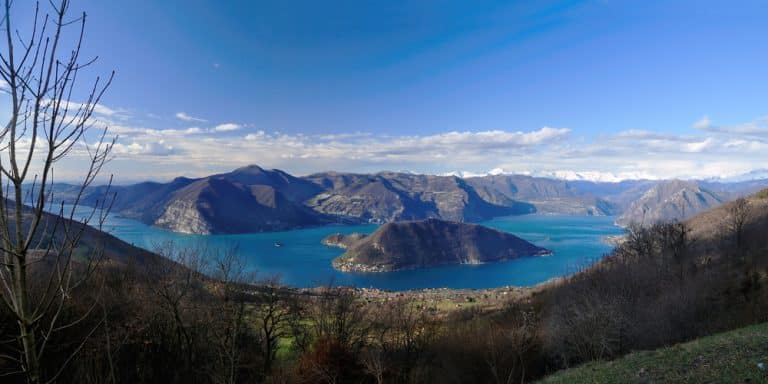
Lake Iseo is conveniently located not far from the AA motorway, about 50 km west of Lake Garda. Milan International Airport is less than a two-hour drive away. From the Gotthard tunnel or the Brenner Pass, it takes just under three hours to drive. With a length of 25 km and an area of 65 square kilometers, Lake Iseo is the fourth largest of the northern Italian lakes. For comparison, Lake Garda covers an area that is more than 6 times as large. In the middle of Lake Iseo stands Monte Isola, an island with a mountain almost 400 m high.

Monte Isola is one of the “I borghi più belli d’Italia” – the most beautiful places in Italy. The steep rock faces along Lago d’Iseo provide special climatic conditions. Fall winds make the lake a paradise for windsurfers and sailors. There are numerous sheltered beaches, which are somewhat hidden, but wonderfully comfortable. Directly adjacent to the lake is the Franciacorta wine-growing region. It is famous for its excellent Spumante – noble sparkling wines whose quality is on a par with the legendary champagne.

Enchanting places line the shores of Lake Iseo

Time seems to have stood still a little on Lake Iseo. There are no large hotel castles, shopping miles or even discotheques or nightclubs. Instead, beautiful small hotels directly on the shore, family guesthouses, cozy restaurants, romantic alleys and market squares. On a drive around the lake, you get an inspiring impression of this enchanting holiday region. The roads are artfully carved into the rock over long stretches and always offer magnificent views of the lake and the islands.

Resorts on Lake Iseo

The main town is named after the lake – Iseo

The small town has just under 10,000 inhabitants and is located on the southern shore of Lake Iseo. The long and well-kept waterfront promenade is lined with numerous palm trees. On the café terraces you can enjoy the fantastic view of the surrounding peaks with a cappuccino or a glass of Spumante . The ferries of the Navigazione sul Lago d’Iseo start in the small port. They connect all the towns and also run regularly to Monte Isola. A few kilometers further north is the small community of Sulzano. It was at the center of the international art world in the summer of 2016, when the famous artist couple Christo and Jeanne Claude installed their “Floating Piers” here. On the floating paths covered with colorful fabric, anyone could walk over to the island of Monte Isola and even completely circle the small island of San Paolo.

Most popular places – Lovere and Sarnico
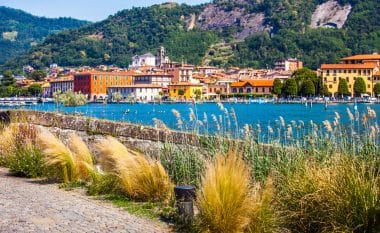
Sarnico on Lake Iseo, Image: SchnepfDesign / shutterstock

The village of Lovere on the northern shore offers its guests a variety of amenities. Around the impressive marina there is a varied promenade where flea markets and small concerts take place. In less good weather, the spacious indoor pool offers comfortable opportunities to swim. The historic town centre with the old town tower and the Tadini Academy is worth a long walk. Particularly worth seeing is the church of Santa Maria from 1473.

Sarnico in the south offers its guests a 100 m long bathing jetty in the beautifully landscaped outdoor pool Lido Nettuno. The main attraction of the friendly little town, however, are the numerous Art Nouveau villas, which were built at the end of the 19th century for the Faccanoni family of entrepreneurs. The church of San Martino and the Cappella dei Mortini with their wonderfully restored old frescoes are also worth a detailed visit.

Sights along Lake Iseo

The church in Pisogne

The small church of Santa Maria della Neve is also known as the “Sistine Chapel of the Poor”. The painter Romanino created these impressive frescoes between 1534 and 1536. They show many people of that time in great detail and still give a very interesting impression of rural life around Lake Iseo.

The hiking and nature paradise of Monte Isola
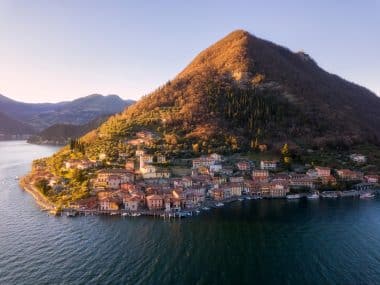
Monte Isola, Lake Iseo
Monte Isola, Image: MicheleRossetti / shutterstock

This large island dominates the landscape of Lake Iseo. The high mountain is densely covered with olive trees and offers wonderful opportunities for beautiful walks, sporty hikes or extensive bike tours. The main town of Peschiera Maraglio has a great atmosphere and lives up to its claim to be one of the most beautiful places in Italy at every turn. At the highest point of the island stands the Sanctuary of the Madonna della Ceriola. The approximately one-hour hike there is rewarded with probably the most beautiful view of Lake Iseo and in a small bar you will find the necessary refreshment. Cars are not allowed on Monte Isola, but some bus lines offer comfortable connections to the idyllic little island towns.
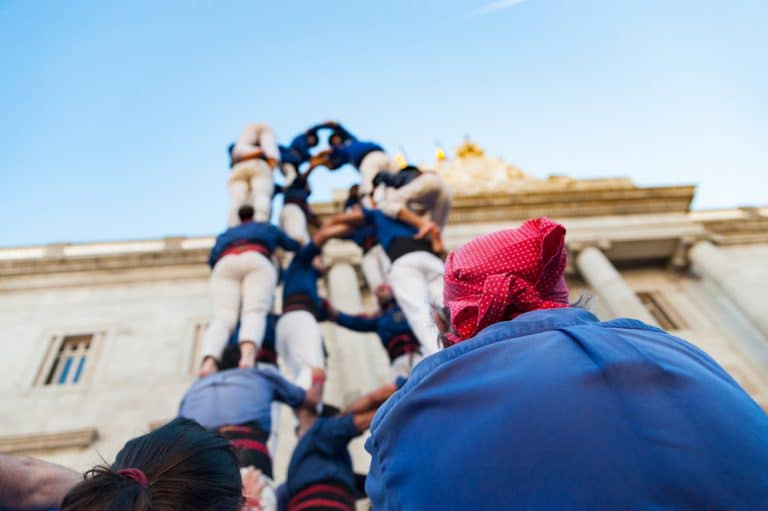
Castells (human towers) in Tarragona

On the Spanish Mediterranean coast, the port city of Tarragona is located about 100 kilometers southwest of Barcelona. The Roman amphitheatre offers magnificent views of the sea and the fine golden sandy beaches of the Costa Dorada. The real sensation of the city, however, are the human towers that are built here by the Tarragonese. The Catalans call them the Castells, which have become an authentic part of Catalan culture for over 200 years.

Roots of the Castells

Monument as castellers Tarragona
Monument of the Human Towers in Tarragona (Monument as castellers), Image: Alexey Broslavets / shutterstock

In the early 19th century, Catalonia came up with the idea of showing the skill and power of the Catalans with human towers that rise high into the sky, thus manifesting the majesty of the culture and the people here. By the middle of the 19th century, the impressive Castells had spread throughout Catalonia and began to develop into a centre of regional identity in Tarragona.

The Castells became higher and higher until social crises, the First World War and later the Spanish Civil War led to a widespread collapse of the Castells. After the Second World War, a new period of prosperity began, with Barcelona and today Tarragona becoming the centre. The modern mass media led to ever new competitions and increased the ambition of the Castellers. Today, prestigious competitions between the various Castellers groups take place throughout the country, creating unique cultural events. Previously unthinkable constructions were realized. Since 1980, there has been talk of a golden age for the Castells.

The culture and technology of the Castells

Castell's Competition
Photograph of the annual Human Tower Competition in Tarragona, Image: David Ortega Baglietto / shutterstock

The Castellers who build the Castells are organized in local groups that compete with each other. Everyone wants to build the most beautiful and best Castell. The event includes exact techniques and a variety of rituals. The Castells can be between 2 and 9 men strong and eight, nine or ten and even more levels high. Musicians accompany the event with their Catalan drums and shawms. The strong always support the weak.

The Castells, which can contain very different foundations and many floors, are planned using sophisticated technology. The Castells, symbols of the cooperation of the Catalans in the community, are built in the central squares, in Tarragona usually in front of the cathedral or in the Rambla Nova. Here is one of the monuments to the human towers often found in Catalonia, in which the faces of well-known artists such as Pablo Picasso, cellist Casals and Joan Miró have been incorporated.

Castells in Tarragona today

During the summer season, a Castell is erected every Wednesday evening at 8 p.m. in front of the cathedral in the Plaza de la Seu. Other highlights can be found at Plaza Santiago Rusiñol. On some days throughout the summer until late autumn, large parties are celebrated with several Castellers groups. Brave visitors to Tarragona actively participate in Castells workshops organised by the Tourist Office. In autumn, a competition of Catalan Castellers groups is celebrated in the Tarragona Arena. The homepage of the tourist office provides information about dates.

Acapulco – cliff divers, dream beaches and nightlife

0

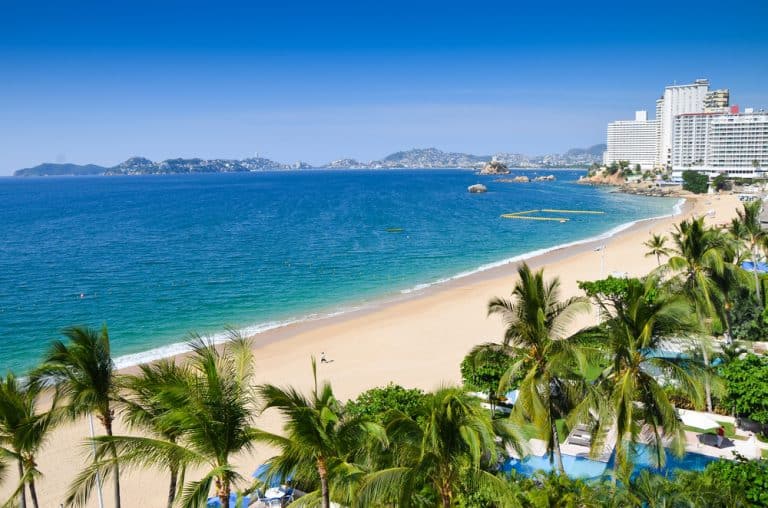
The famous seaside resort of Acapulco is located on the Mexican Pacific coast and developed into the favorite resort of the US jet set from the 1950s onwards thanks to its excellent natural conditions, such as miles of sandy beaches and year-round bathing weather. Especially after the revolution in Cuba, when this exotic holiday destination was no longer accessible, Acapulco quickly took one of the top places in the favor of the Americans. In the decades that followed, many wealthy Hollywood personalities bought a villa here, spent their luxurious honeymoons under Mexico’s tropical sun, and ensured that exclusive bars and nightclubs were established. However, due to drug problems and the high crime rate, the number of tourists in Acapulco has been falling for years.

General information about Acapulco

La Quebrada Rock, Acapulco
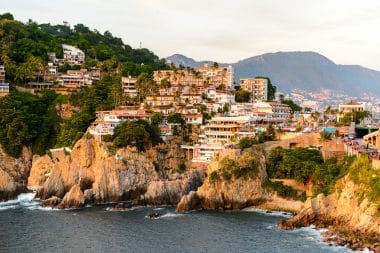
The rock La Quebrada, Image: Anton_Ivanov / shutterstock

The city with around 690,000 inhabitants stretches along a wide bay on a strip of only 800 m wide between the sea and the mountains of the Sierra Madre del Sur. Today, the image of the village is mainly shaped by the many high-rise buildings that were built in the heyday of tourism. Playa La Icacos and Playa La Condesa are just two of the beautiful sandy beaches of Acapulco, which extend over a total length of 16 km. Since the region has a tropical climate with year-round temperatures between 23° and 30° C, beach vacationers and water sports enthusiasts get their money’s worth at any time of the year, but the rainy season is from June to October. The Pacific Ocean offers ideal water temperatures that never fall below the 25°C mark, so swimming, snorkeling and diving are among the most popular activities. Even on the more than well-visited beach sections, there is still a relatively intact underwater world. For water sports enthusiasts, Acapulco is an excellent area with a varied offer – for example, you can surf, water ski or simply go on a relaxing boat tour.

Sights, excursion destinations and possible activities

Island “La Roqueta” in Acapulco, Image: Jorge Zorrilla AM / shutterstock

One of the main attractions of Acapulco, which hardly any vacationer misses, are the cliff divers (clavadistas) of La Quebrada. In earlier times, pearl divers jumped from this rock into the depths – today it is only a purely tourist event. If you want to save the entrance fee for “the show”, you have just as good and unrestricted a view from a small bridge on the opposite side as from the visitor platform, for which a ticket must be purchased. Acapulco’s most significant historical attraction is located in the city’s harbor, where the 17th-century Fort San Diego can be admired. The complex with its unusual five-pointed shape is one of the most beautiful examples of the former Spanish defenses on the Pacific coast and has housed the city’s historical museum since 1986. It is worth strolling through the exhibition rooms and getting a comprehensive impression of the time of colonization to Mexico’s independence.

Despite the distance of almost 200 km, many culturally interested tourists, for whom the holiday package of sun, beach and sea is not enough, take part in an organized tour to the silver city of Taxco. The village is located at an altitude of 1515 m in the mountains and even the drive over a winding serpentine road is an adventure. Taxco is an authentic small colonial town and a national monument. Visitors stroll through the alleys with the whitewashed houses and like to sit in the cafés on one of the many squares. If you are enthusiastic about silver jewelry, you are guaranteed to find one or the other beautiful piece in the shops of the municipality, because Taxco is the center of Mexican silver processing. Under no circumstances should you miss a visit to the baroque cathedral of Santa Prisca, which was built in the 1750s and is one of the most beautiful churches in the country due to its ornate interior decoration with rich carvings and magnificent paintings.

Mexico is also a destination for animal and plant lovers and so numerous tours are offered from Acapulco. One of the most popular excursions is a trip to Laguna Coyuca, a beautiful bird sanctuary that can be discovered on an organized, guided boat tour or in a rented kayak. The small island of Isla de la Roqueta, which lies about one kilometre off the coast in the bay of Acapulco, is also worth a stay of several hours and scores with its lush tropical vegetation. Snorkelers and divers are happy about the intact reefs, but families with children will not get bored either, because the zoo and a lighthouse provide suitable activities on the 8 km² island.

There are several excellent golf courses in Acapulco and tennis is also one of the sports practiced by many holidaymakers here. For many holiday guests, the unforgettable experiences include horseback rides along the beach and romantics like to extend their stay with a picnic afterwards and enjoy the fantastic sunset over the Pacific.

Although Acapulco has lost many tourists to other resorts, such as Cancun, in recent decades, the noble myth of this seaside resort on the Pacific Ocean still lives on. If you want to spend a beach holiday with all amenities and a very good infrastructure, appreciate a varied entertainment programme and perhaps sometimes want to turn night into day during your holiday, you will find the best conditions for this in Acapulco.

Liguria – Italy’s beautiful crescent in the north

0

Compared to many other areas of Italy, Liguria should only mean something to those who actually call themselves connoisseurs of the country. It has neither the fame of Tuscany, nor the economic importance of Lombardy , nor does it have any major cities such as Rome or Naples. Nevertheless, Liguria is probably one of the most beautiful corners of the entire country.

Up there, far to the north and directly south of Piedmont, there is a part of Italy that was completely independent for a long period of history and once even a separate empire of the Mediterranean. With its center in Genoa, it is not only picturesque beaches, but impressive variety in nature that attracts more and more tourists to the region.

The well-known but little-known landscapes of Liguria

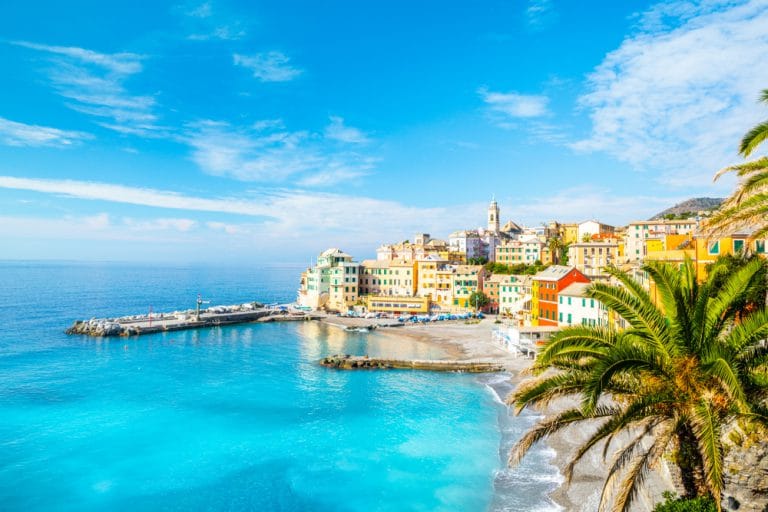
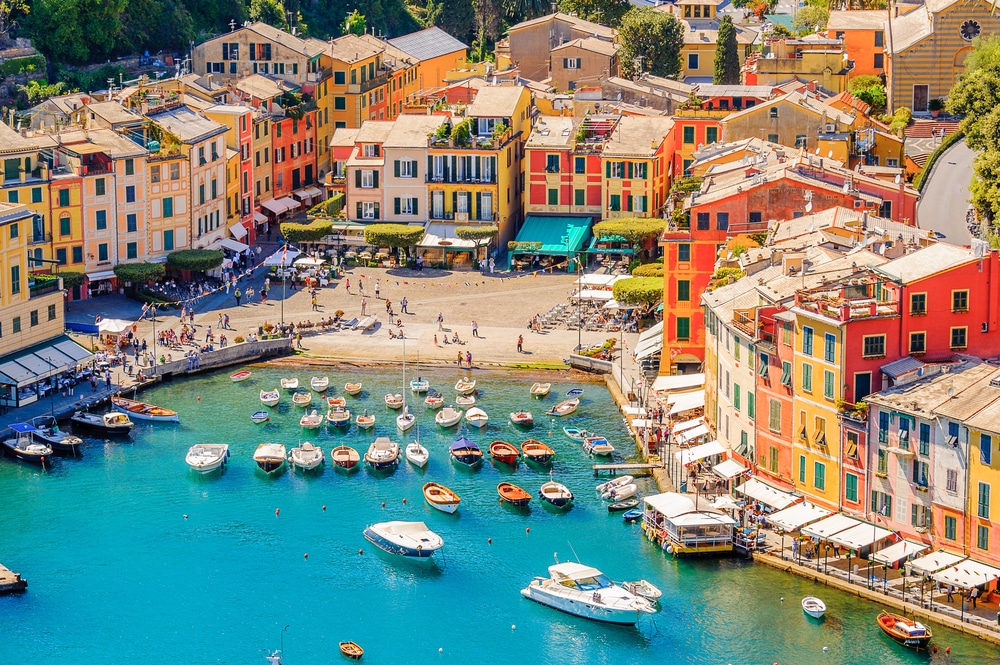
It’s not even that many people don’t know what to find in Liguria. On the contrary, some of the most famous photo landscapes can be found here. For example, there is the Portofino peninsula with its colorful villages, of which everyone has probably seen a picture somewhere. The name Cinque Terre is also probably known to many. Here, too, it is above all the colorful facades and the incredibly blue sea that have already inspired many vacationers and those who have seen it in film and television. In general, Liguria is not for nothing the land of explorers and adventurers within Italy. It attracts with rugged landscapes, with mountains and hills, with rich valleys and, of course, with a beautiful coastline and the picturesque beaches that Italy takes for granted.

The fact that Liguria has such a variety to offer is due to the many natural parks that have been created here over time. Through a unique combination of flora and fauna and a great deal of effort in the protection of native nature, Liguria offers hikers, excursionists, cyclists and simply interested tourists the right opportunity for balance. Just a moment ago in the vibrant city of Genoa, you can be in the dense forests around the city in just a few hours. Or you can take the opportunity to go out on the Mediterranean Sea by boat and explore this sea with all its treasures, which is so important for Europe.

Liguria – between nature, relaxation and beach holidays

Genoa, Liguria
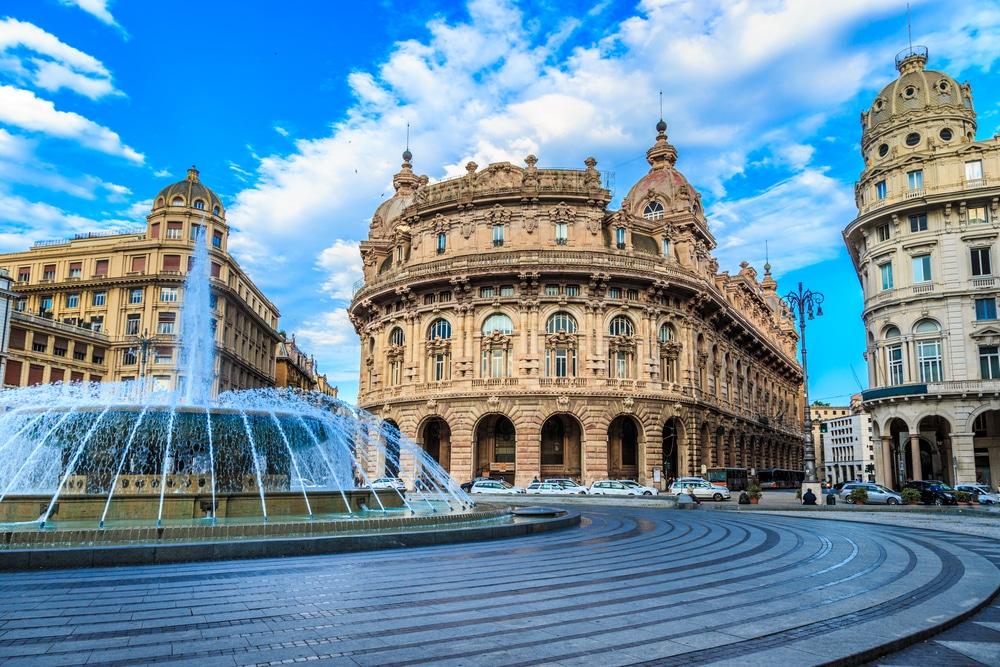
The Piazza de Ferrari in Genoa, Image: Garsya / shutterstock

Genoa is one of the most beautiful destinations, especially in summer, even for the Italians themselves. The climate here is quite bearable and the beaches stretch over the entire stretch of coast. On the other hand, various villages have retained their traditional charm. Recently, the expansion of the strongholds for tourists was also stopped. Too much of the region’s natural treasures had already been stolen. Today, attempts are being made to reconcile tourism, which is an enormous economic factor for the region, with the desire to preserve as much of Liguria as possible.

Nevertheless, there is a great variety of activities for tourists. Of course, there are countless sights. From Genoa, which itself has a very long history and can boast incredible buildings, to the small fishing villages that may only have one or two restaurants for tourists, but have been able to preserve the unique charm of the region. From water sports to extreme sports in the mountains to relaxing tours for hikers and cyclists, everything can be found here. Due to the fast connection to Piedmont , a holiday with your own car can also be extended to another great part of Italy.

The main attractions of Liguria

One of the most important sights of Liguria is, of course, Genoa. With its impressive harbour and old town with so much history to tell, holidaymakers can easily keep busy for a few days. It is also home to some of the most interesting museums in the region. Many tours through the region and to the sea also start from Genoa – so for sufficient excursions, the appropriate time should be planned during a holiday in Liguria. In addition, the surroundings of Genoa are beautiful and it is worth driving along the coast and stopping in one of the small villages to enjoy the local cuisine.

Portofino
Portofino, Image: Anton_Ivanov / shutterstock

In addition to visits to such well-known places as Portofino or Cinque Terre, it is above all the natural treasures of Liguria that you should have seen once in a lifetime. These include, for example, the valleys of Le Valli dell’Olivo. This is where a large part of the famous olive oil from Italy comes from. The Hanbury Gardens in Hanbury are another tip. It is one of the largest gardens in Italy and offers an impressive variety of plants and shrubs. If you are in good shape, you should also have taken a bike ride on the Pista Ciclabile. It is perhaps one of the most beautiful routes in Europe.

People and cuisine in Liguria

Last but not least, of course, the cuisine is not to be sneezed at. Fresh seafood is a matter of course for the inhabitants of Liguria and they are only too happy to share with the tourists. Otherwise, they have adapted well to tourism here. There is an excellent infrastructure, many opportunities for activities and a great hospitality for visitors from all over the world. A great place for a trip in Italy.

Holidays in Liguria: The best tips

Journey

  • Airports:
    • Genoa (Cristoforo Colombo Airport, GOA): Liguria’s main airport, about 7 km from the city centre.
    • Nice (Côte d’Azur Airport, NCE): About 150 km from Genoa, with good train connections to Liguria.
  • Train: Good connections from other Italian cities such as Milan, Turin and Rome.
  • Car: The A10, A12 and A7 motorways connect Liguria with other parts of Italy.

Best time to visit

  • Spring (April to June): Mild weather and fewer tourists.
  • Summer (July to August): Warm weather, ideal for beach holidays, but also the high season.
  • Autumn (September to October): Pleasant weather and fewer tourists.

Activities and sights

  • Cinque Terre: Five picturesque villages along the coast, known for their colorful houses and spectacular hiking trails.
  • Genoa: The capital of Liguria with its historic port, aquarium and impressive old town.
  • Portofino: An elegant fishing village with exclusive boutiques, restaurants and beautiful coastal paths.
  • Sanremo: Famous for its casino, music festival and flowers.
  • Portovenere: A charming seaside village and UNESCO World Heritage Site.
  • Beaches: Popular beaches such as Monterosso, Vernazza and Levanto offer ideal conditions for relaxing and swimming.

Important telephone numbers

  • Emergency: 112 (general emergency)
  • Police: 113
  • Fire brigade: 115
  • Ambulance service: 118
  • Genoa Tourist Office: +39 010 557 2903

German Doctors

  • Dr. Johannes Bernhard: Via XX Settembre, 5, Genoa, +39 010 581 220
  • Dr. Andrea Weiss: Corso Italia, 10, Genoa, +39 010 362 6967

Important words with translation

  • Hello – Ciao
  • Thank you – Grazie
  • Please – Per favore
  • Yes – Sì
  • Nein – No
  • Sorry – Scusa
  • Where is…? – Dov’è…?
  • How much does it cost…? – Quanto costa…?
  • Emergency – Emergenza
  • Doctor – Medico
  • Hospital – Ospedale

Holidays

  • New Year’s Day: January 1
  • Epiphany: January 6
  • Easter Monday: variable (March/April)
  • Labour Day: 1 May
  • National Holiday: June 2
  • Assumption Day: 15 August
  • All Saints’ Day: November 1
  • Christmas: December 25
  • St. Stephen’s Day: December 26

Opening hours

  • Shops: Usually Monday to Saturday from 9:00 a.m. to 1:00 p.m. and from 3:30 p.m. to 7:30 p.m. Many shops close at noon for a siesta.
  • Supermarkets: Usually daily from 8:30 a.m. to 8:00 p.m.
  • Restaurants: Lunch from 12:30 to 14:30, dinner from 19:30 to 22:00.
  • Banks: Monday to Friday from 8:30 a.m. to 1:30 p.m. and from 2:30 p.m. to 4:00 p.m.

Airport

  • Genoa Cristoforo Colombo Airport (GOA): The main airport in the region, about 7 km west of Genoa city centre.

NUDISM

  • Not official: There are no official nudist beaches in Liguria. Nudism is not practiced and could be considered offensive.

Post / Stamps

  • Post offices: In all major cities and towns. Main post office in Genoa. Opening hours: Monday to Friday from 8:30 a.m. to 7:00 p.m., Saturday from 8:30 a.m. to 12:00 p.m.
  • Stamps: Available at the post office, kiosks and tobacconists.
  • Costs for letters and postcards to Germany: Standard letter up to 20g: approx. 1.10 EUR; Postcard: approx. 1.10 EUR

Safety

  • Crime: Liguria is considered safe. Observe common precautions as in any tourist region, especially against pickpockets in busy areas and markets.
  • Emergency number: 112

Current

  • Voltage: 230 volts
  • Sockets: Type C, F and L (Type F as in Germany, Type L Italian standard)

Tip

  • Restaurants: Usually the tip is included in the price (coperto). However, an additional tip of 5-10% is welcome if the service is good.
  • Taxis: Round up the amount
  • Hotels: 1-2 euros per day for cleaning staff

Customs

  • Allowances within the EU: No customs restrictions on personal belongings.
  • Alcohol: Maximum 10 liters of spirits, 20 liters of alcoholic beverages with less than 22%, 90 liters of wine, 110 liters of beer.
  • Tobacco: 800 cigarettes, 400 cigarillos, 200 cigars, 1 kg of tobacco.

Nassau – The capital of the Bahamas

0

The Bahamas archipelago is one of the absolute destinations of many people and is often synonymous with the special nature, the climate and life in the Caribbean. As one of the most popular cruise ship destinations in the Caribbean, there are of course a few ways to explore the archipelago including the historic capital of Nassau. Above all, however, a visit on your own can be worthwhile if you want to see as much of the archipelago in the Caribbean as possible. In addition to an impressive culture and way of life, there are many wonders of nature and one or two historic buildings from the long history of the Caribbean state to see.

The distinctly different world on the islands of the Bahamas

The Americans in particular are big fans of the islands of the Bahamas. The islands can be reached quickly by cruise ship from Florida and especially on the main island “Paradise Island”, where a not inconsiderable part of Nassau including the most important tourist infrastructure is located, is very much geared towards the public from the States. Nassau and Paradise Island are thus the tourist hot spots of the Bahamas and offer a very special attitude to life that actually has little to do with the rest of the archipelago. The capital is completely geared towards the flow of tourists from the States and other parts of the world and offers a corresponding infrastructure for an exciting stay.

An eye-catcher is certainly the Atlantis Paradise Island Resort, which is not only one of the largest hotel complexes in the world, but also includes casinos and a variety of other entertainment activities. So if you’re looking for a good show or just want to play a bit of blackjack in the evening, you’ve come to the right place. If you are looking for the culture and spirit of the Bahamas and Nassau, however, you will probably head to other regions of the city and the islands. This dichotomy from the modern world for tourism and the preservation of its own history and culture can be noticed throughout the archipelago.

The sights of historic Nassau

Nassau Bahamas
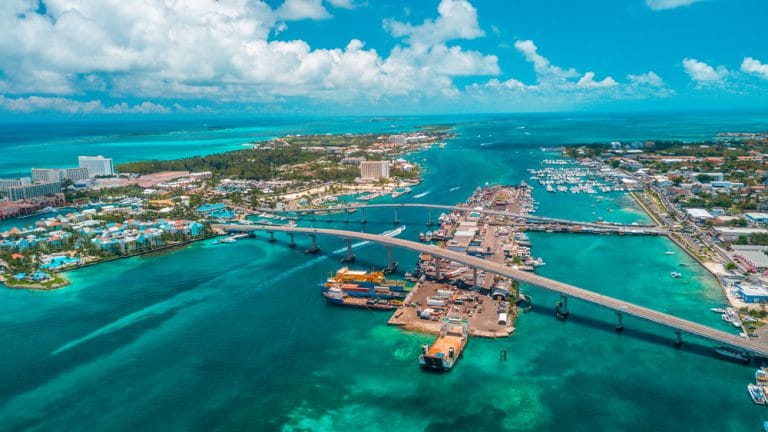
Aerial view of Nassau, capital of the Bahamas, Image: alarico/shutterstock

If you want to escape the touristy Nassau and concentrate more on the roots and the exciting history of the islands and their capital, you can actually do this relatively easily. As soon as you leave the area around Paradise Island, you go to the actual parts of the city, where most of the inhabitants can be found. The other parts of Nassau are connected to Paradise Island by two large bridges. Taxis can be found everywhere, as well as other options for exploring. Especially if you are already in the historic city center, however, it is recommended to walk on your own feet – the distances are usually short and the traffic is often more of a hindrance for transport by car.

Beginning of the 17th century and deep into the In the 18th century, the Bahamas and especially Nassau were mainly a nest for pirates. Many attempts to destroy the pirate island have failed and at times the island was even the home of the famous Blackbeard. Only with the intervention of the British – and a pirate as governor – could the problem be eliminated. From about the middle of the In the 18th century, the construction of Nassau in its present form began. One attraction that already results from this is the city’s famous Pirate Museum, which deals intensively with this exciting part of the city’s history.

After that, the fate of Nassau and the entire Bahamas remained closely linked to the political developments of the USA . So it is no wonder that today many rich Americans in particular have built their own empire on the small private islands. But if you want to see a little more of the island, you should take a look at the historic Parliament Building, which is open to the public and was built in the early 19th century. The many forts, especially the Charlotte Fortress, are also worth a visit – even if most of them have never actually fired a shot, they are a special testimony to the history of the Caribbean and the architecture of the time.

Traditions and recreations in and around Nassau

Even though there are a lot of historic buildings in Nassau and you can also play at the casino on the side, you are still in the Caribbean and on some of the most beautiful islands this world has to offer. Of course, this also applies to Nassau. Around the islands over which the capital extends, there are a variety of beautiful beaches that invite you to go swimming and where you can spend the whole day. In the evening, you can immerse yourself in the nightlife of Nassau, enjoy a bit of the local cuisine and visit the many clubs, bars and discos that make Nassau a paradise for young and old alike.

If you come at the right time of year, you can also watch one of the many folk festivals. The most famous festival is the Junkanoo Cultural Festival, which takes place on New Year’s Day and one reason for this is that many travelers take a trip to the Bahamas, especially at this time of year. Especially in combination with a cruise , it could be the perfect destination for exciting relaxation in the Caribbean.

La Graciosa – the eighth Canary Island

0

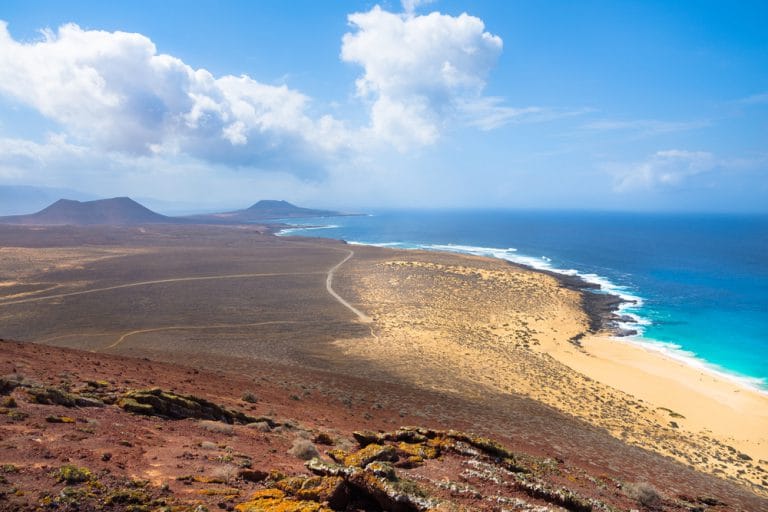
La Graciosa – Visit the smallest inhabited island in the Canary Islands, which received its status as the eighth Canary Island in November 2018. Even the journey to the island, which is located off the northern tip of Lanzarote, is a great experience. It is part of the Chinijo Archipelago Natural Park and is a paradise for those seeking relaxation. Soak up the sun on miles of secluded beaches or enjoy sporting activities such as hiking and cycling.

There is only one paved road at the port of Caleta del Sebo, everything else is sandy tracks. For overnight stays, there are apartments, guesthouses and a campsite to choose from. There are a few restaurants and bars at the harbour, supermarkets and services such as bicycle rental are also available.

Your journey to La Graciosa – a special experience

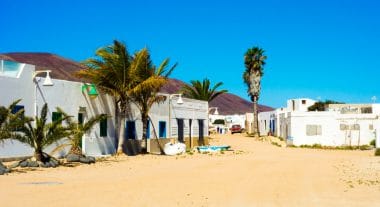
You can only get to the small island from Lanzarote . The ferries start in the picturesque fishing village of Orzola in the north. There are regular connections, the ferries take bicycles and surfboards, but no cars. You can reach the port town of Orzola by bus or taxi. During the crossing, imposing rock formations and cliffs can be admired. At the northern tip of Lanzarote is the Mirador del Rio viewpoint, designed by the Canarian artist and architect Cesar Manrique. Upon arrival of the ferry, you can enjoy the view of the picturesque port of Caleta del Sebo. Flat white houses with blue-painted doors and shutters characterize the image of the quaint place. The rest of the island consists of sand-colored hills and long sandy beaches.

Dream beaches await you on the small Canary Island

On the northwest side of La Graciosa stretches the 500-meter-long Playa de las Conchas, which was the 500-meter-long Playa de las Conchas. His ship was stuck between rocks and offshore mini-islands. The beach offers plenty of space for sun worshippers, but you should note that there are no restaurants, sanitary facilities or lifeguards. In strong winds, the surf is strong and there are high waves.

Montana Bermeja, La Graciosa
Montana Bermeja, Image: Bernard Barroso / shutterstock

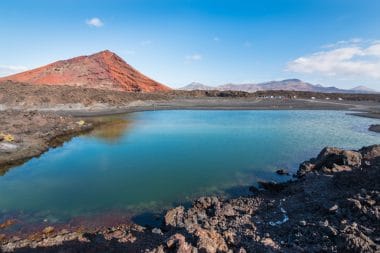
Strong currents are another reason for a bathing ban. You can enjoy a great view of Playa de las Conchas and the two offshore islets of Isla Alegranza and Montana Clara from Montana Bermeja, the red mountain. For day visitors, the local beach of Caleta del Sebo or Playa Francesa, 2 km away, are ideal. The small beach at Baranco de los Conejo offers peace and seclusion, because only walkers pass there on their way to Pedro Barba, the second town on the island.

The Marine Protected Area of the Chinijo Archipelago

La Graciosa is located in the middle of the marine reserve of the Chinijo archipelago, the largest of its kind in Europe. It is made up of the islands of La Graciosa, Alegranza, Montaña Clara, Roque del Oeste or del Infierno, Roque del Este and the Risco de Famara. It was established in 1995 with the aim of ensuring the sustainable use of fisheries resources. The marine fauna of this area is one of the most varied and biodiverse in the Canary Islands. Many species of seabirds are also at home here, as they have a good food base in the waters. Therefore, the park was also named a bird sanctuary (ZEPA). Among the rare species are the ospreys and the frigate petrel. The largest population is the Cory’s Shearwater, with the largest colony in Spain.

Excursion tips for your holiday on La Graciosa

Caleta del Sebo, La Graciosa
Street in Caleta del Sebo, Image: szmuli / shutterstock

In Caleta del Sebo , it is worth visiting the small Chinijo Museum, which provides interesting facts about the marine reserve. You can also learn about aloe and salt production. If you want to explore the island by bike, you will find paths that lead to special corners of this charming landscape. However, you should be experienced in cycling, because there are only sandy slopes, no asphalt paths. Hiking is also possible on La Graciosa, but the volcanic rocks give your tour an adventurous ambience.

Some are covered with lichens, which brings variety to the otherwise barren landscape. The plains and mountains shine in a wide variety of colors depending on the position of the sun, ranging from earthy tones to red or green. The sand, some of which comes from the Sahara, provides a unique desert feeling. A special experience is a boat trip to the Islotes, which are the mini islands of the marine reserve. Look forward to dreamlike, unspoiled-looking beaches and a species-rich underwater world that you can explore while snorkeling. The small islands with their partially dried gorse bushes will remind you of Western movies.

Utrecht holidays: Discover the versatile student city

When you think of a holiday in the Netherlands , you first and foremost imagine the vibrant capital Amsterdam or relaxation on the North Sea. However, the student city of Utrecht has also turned out to be a real insider tip. Because if you spend your holidays in this city in the center of the Netherlands, you can admire many beautiful sights and make new discoveries again and again.

Important information about Utrecht

Kasteel de Haar
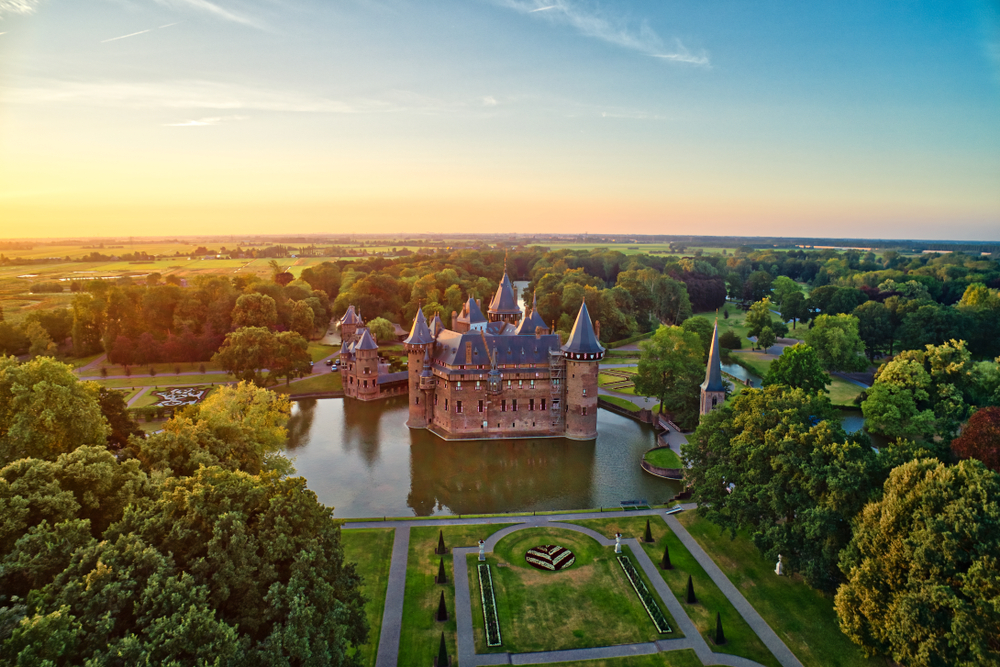
Kasteel de Haar near Utrecht,
Image: Ververidis Vasilis / shutterstock

Utrecht is the fourth largest city in the Netherlands. Around 350,000 people are at home here. The urban area of Utrecht covers a total area of almost 100 m². The best time to visit Utrecht is between April and October. The highest average temperatures are reached in July and August. It is coolest in January and February. You can experience a real highlight if you plan your Utrecht holiday in late summer. At the end of August and beginning of September, the popular Oude Muziek festival takes place, where you can attend numerous musical performances.

How to get there

There are several ways to get to Utrecht. If you want to travel by plane, select the destination airport in Amsterdam, which is only about 30 kilometers away. Alternatively, you can use the airport in Rotterdam, which is about 45 kilometres from Utrecht.

In addition, Utrecht is very easy to reach by car due to its central location. For example, you can use the E30 or the A12, which leads directly into the city. Travelling by train is also easy: the city station is the largest in the Netherlands and is served by around 1,500 trains every day.

The sights in Utrecht

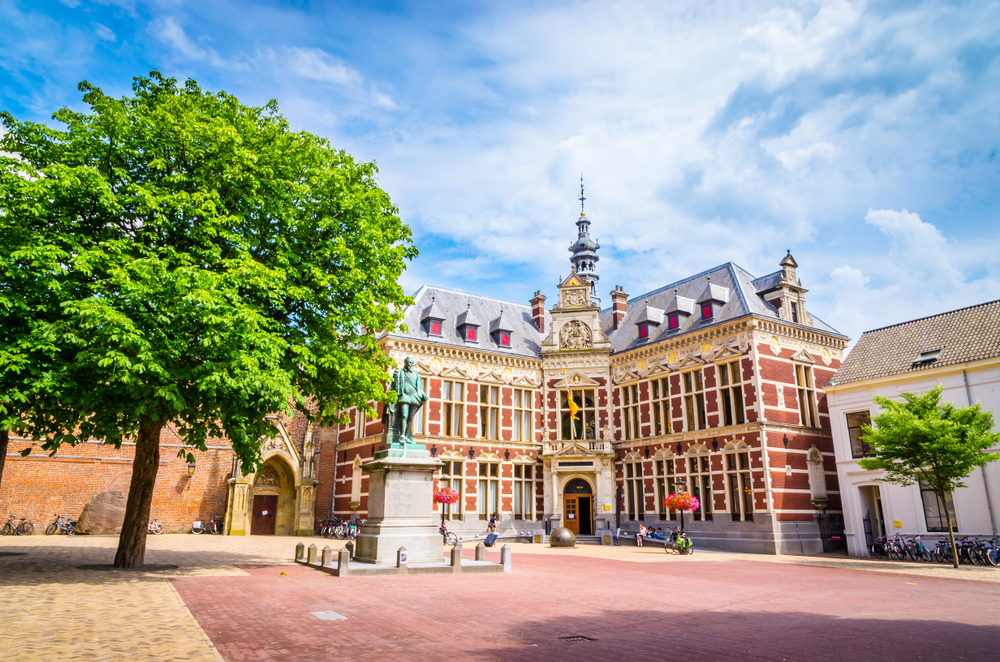
Utrecht University
The University of Utrecht, Image: Olena Z / shutterstock

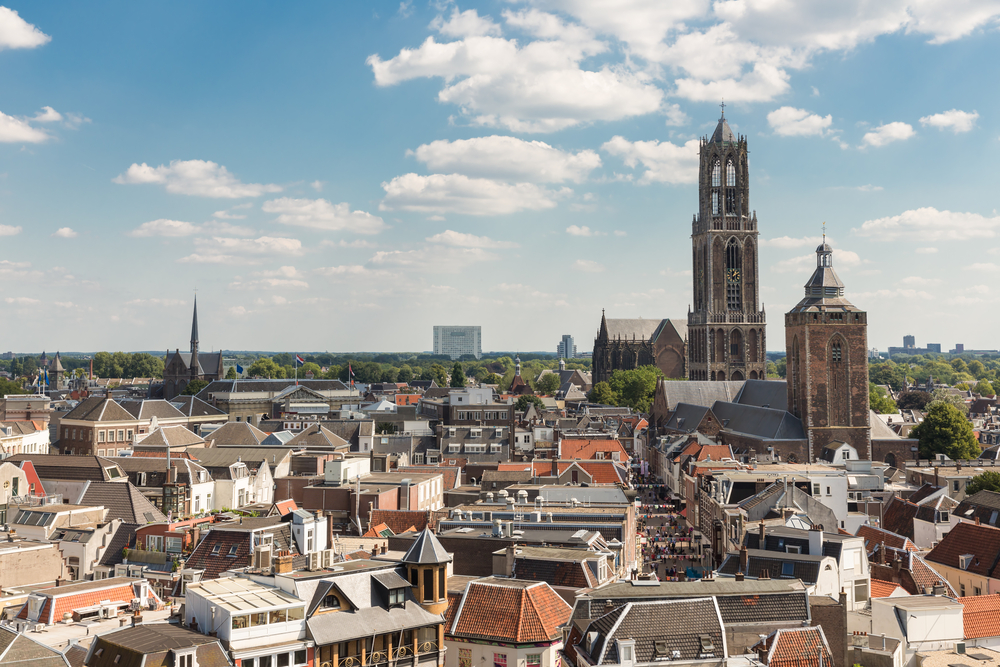
Whether it’s a short city trip or a longer stay during your holidays: there are various sights in Utrecht. The city’s landmark is the striking Utrecher Cathedral. It has a height of 112 meters, making it the largest church tower in the entire country.

If you spend your holiday in Utrecht, you should definitely climb the cathedral. From the top, you will experience an impressive view of the city with its many canals that wind between the houses. The ascent to the cathedral is possible as part of a guided tour, so that you will receive a lot of interesting information about the building on the way up.

You will also have the opportunity to explore the underground: Below the Utrecht Cathedral, you will learn more about the history of the Roman fort that once stood on this site on the DOMunder Tour. Of course, the building itself also has a lot to offer. It is built in the Gothic style and impresses with stylish decorations. After the visit, stroll through the courtyard with cloister and beautiful hedges and herbs.

View of Utrecht
View of Utrecht, Image: T.W. van Urk / shutterstock

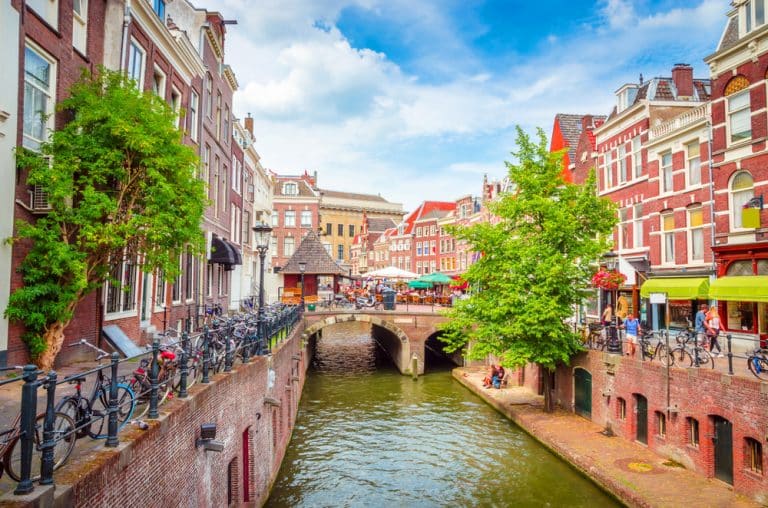
Another flagship of the city are the magnificent canals. Here, visitors can take exciting boat tours. For example, you can opt for a guided tour or a paddle trip. The shipyard cellars are adjacent to the canals. When the weather is nice, you can sit on the quays in front of the cellars and enjoy the view of the water. Numerous cafes and bars invite you to linger.

A special experience is also the Trajectum Lumen, a route that takes you along various light art installations in the city. You can explore this route from the water, but also on foot.

Museums in Utrecht: lots to see

There are numerous museums in Utrecht that you should visit. A first address is the Centraal Museum. It scores above all with its versatility. There are changing exhibitions for every taste. They marvel at exhibitions of modern art, but also old works. Design prints can be seen just as much as fashion. Of particular interest are the exhibits by the De Stijl group and Gerrit Rietveld.

Younger guests will get their money’s worth in the Miffy Museum opposite. The focus here is on the children’s book character Miffy.

You should also plan a visit to the railway museum. There you will be amazed by the magnificent processions and can also become active yourself.

Museum Speelklok specialises in various self-playing instruments. They examine mini music boxes, see pianolas and look at large barrel organs. The museum is housed in a former church. In a former monastery is the Catherijneconvent, which presents ecclesiastical works of art. It scores with beautiful furnishings in a modern style. In any case, you should take a look at the imposing treasure chamber in the basement. Children enjoy the interactive activities.

Journey

  • Airports:
    • Amsterdam Schiphol Airport (AMS): The nearest international airport, about 35 km northwest of Utrecht. Regular train services take travelers to Utrecht in about 30 minutes.
    • Rotterdam The Hague Airport (RTM): About 60 km southwest of Utrecht.
  • Train: Utrecht Centraal is a central hub in the Dutch rail network and offers good connections to the entire region.
  • Car: Good road connections via the A2 and A12 motorways.

Best time to visit

  • Spring (April to June): Mild weather and blooming tulip fields.
  • Summer (July to August): Warm weather, ideal for outdoor activities.
  • Autumn (September to October): Pleasant temperatures and fewer tourists.

Activities and sights

  • Cathedral Tower: The tallest church tower in the Netherlands offers a great view over the city.
  • Canals: Experience Utrecht’s unique two-story canal design on a boat trip.
  • Rietveld Schröder House: A UNESCO World Heritage Site and a masterpiece of the De Stijl movement.
  • Museum Speelklok: A fascinating museum of self-playing musical instruments.
  • Centraal Museum: The oldest city museum in the Netherlands with a diverse collection.
  • Botanical Garden: A beautiful garden, ideal for a relaxing stroll.

Important telephone numbers

  • Emergency: 112 (general emergency)
  • Police: 0900 8844
  • Fire Department: 030 286 6666
  • Ambulance service: 030 239 8800
  • Utrecht Tourist Information: +31 30 236 0004

German Doctors

  • Dr. Sebastian Becker: Burgemeester Reigerstraat 57, +31 30 251 0934
  • Dr. Andrea Müller: Maliebaan 71, +31 30 231 6427

Important words with translation

  • Hello – Hello
  • Thank you – thanks u wel
  • Please – Alsjeblieft
  • Yes – Yes
  • No – No
  • Sorry
  • Where is…? – Waar is…?
  • How much does it cost…? – Hoeveel kost…?
  • Emergency – Noodsituatie
  • Doctor – Arts
  • Hospital – Ziekenhuis

Holidays

  • New Year’s Day: January 1
  • Good Friday: variable (March/April)
  • Easter Monday: variable (March/April)
  • King’s Day: April 27
  • Labour Day: 1 May
  • Liberation Day: May 5
  • Ascension Day: variable (May/June)
  • Whit Monday: variable (May/June)
  • Christmas: 25th and December 26

Opening hours

  • Shops: Usually open Monday to Saturday from 9:00 a.m. to 6:00 p.m., Thursday often until 9:00 p.m. Many shops are also open on Sundays.
  • Supermarkets: Usually daily from 8:00 a.m. to 10:00 p.m.
  • Restaurants: Lunch from 12:00 to 15:00, dinner from 18:00 to 22:00.
  • Banks: Monday to Friday from 9:00 a.m. to 5:00 p.m.

Airport

  • Amsterdam Schiphol Airport (AMS): The nearest international airport, about 35 km northwest of Utrecht.

Post / Stamps

  • Post offices: In all major districts and shopping centres. Central post office near Utrecht Centraal. Opening hours: Monday to Friday from 9:00 a.m. to 6:00 p.m., Saturday from 9:00 a.m. to 5:00 p.m.
  • Stamps: Available at the post office, kiosks and supermarkets.
  • Costs for letters and postcards to Germany: Standard letter up to 20g: approx. 1.50 EUR; Postcard: approx. 1.50 EUR

Safety

  • Crime: Utrecht is considered safe. Observe common precautions as in any tourist city, especially against pickpockets in busy areas and markets.
  • Emergency number: 112

Current

  • Voltage: 230 volts
  • Sockets: Type C and F (as in Germany)

Tip

  • Restaurants: 5-10% of the bill amount, often included in the bill.
  • Taxis: Round up the amount
  • Hotels: 1-2 euros per day for cleaning staff

Customs

  • Allowances within the EU: No customs restrictions on personal belongings.
  • Alcohol: Maximum 10 liters of spirits, 20 liters of alcoholic beverages with less than 22%, 90 liters of wine, 110 liters of beer.
  • Tobacco: 800 cigarettes, 400 cigarillos, 200 cigars, 1 kg of tobacco.

Employees are entitled to educational leave

Most employees in Germany are not even aware of the existence of educational leave paid for by the employer. For example, only 1.5 to 2% of all employees in Germany make use of this social right, although according to a survey, 77% of all employees are interested in this offer. We would therefore like to remind employees of the existence of this law, go into history and development and show how education and holidays can be wonderfully combined, especially in England.

An initiative of the ILO

The introduction of educational leave was an initiative of the ILO, the UN’s International Labour Organization, which has taken up the cause of the global spread of social rights. First of all, the situation of workers should be improved by strengthening their social rights and expanding their educational opportunities in the sense of development and participation. In 1974, the Federal Republic of Germany agreed to the request and delegated the implementation of the new employee law to the states.

Educational leave is a matter for the federal states

Educational leave is therefore a social right that exists at the state level. For example, if you apply for educational leave in England , you should first deal with the customs in your state. The Free States of Bavaria and Saxony have so far refrained from putting employees’ entitlement to educational leave into practice.

Only those who do not work in both federal states may apply for educational leave. Whereas in the early days of this law it was mainly blue-collar workers who benefited from educational leave, white-collar workers have now caught up with them.

The conditions for educational leave

Educational leave is usually granted for five days at a time in two consecutive years. It must be approved and paid for by the employer if the conditions for educational leave are met. Employees meet the conditions if their educational leave is committed to the objective of continuing vocational or political training. Personality-building courses also have the chance of recognition. The training provider must provide proof of a certificate from the Employee Training Act (AwbG).

Why educational leave in England?

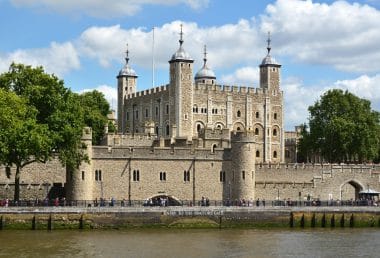
Tower of London
The Tower of London, Image: Alexander Chaikin / shutterstock

England is a popular destination for educational leave, especially since mastering a foreign language is a lifelong process. In terms of the relevance of foreign languages, English is the undisputed number one. English is the native language spoken in the UK, the USA, Canada, New Zealand and Australia and is the official, commercial and lingua franca in 80 other countries.

As a world language, the whole world is oriented towards the English language, so that communication in English is possible in almost all countries. Digitization has further strengthened the importance of English, as the language has now become the prerequisite for sharing important and interesting information in private life as well.

In the course of globalization, mastering English is helpful in many professions when applying for jobs and on the career ladder. In some job advertisements, it is even a prerequisite. Numerous language schools offer official qualifications such as the prestigious Cambridge Certificate for proven foreign language skills at various levels. The degrees are recognized by 13,500 universities, companies and institutions and are a strong sign of performance and willingness for employers.

History and culture

In addition to linguistic reasons, English history and culture also speak in favour of educational leave with added value. With the victory over the Armada in the Elizabethan era, England replaced Spain as the dominant nation in Europe in 1588. In the centuries that followed, England was at the head of a world empire, the British Empire, which ruled over 25% of all territories worldwide and where the sun never set.

English colonists founded states in the USA, Canada, Australia and New Zealand and important impulses for science, trade, diplomacy and culture came from the island state. Even when, after the experiences of two world wars, the colonial peoples rose up, no longer wanting to be cannon fodder for the conflicts of foreign masters, England succeeded in retaining many of them through the Commonwealth and consolidating the relations that had grown historically. King Charles III is now head of state of the 15 member states.

After all, English rock music inspired the whole world and provided the atmospheric accompaniment to the liberation impulses after 1968. It gave rise to the legendary English punk.

The process of educational leave

Providers of educational leave in England have opened their doors in the most beautiful regions of England. The combination of the trip with the premises of a language school is a matter of course and leisure time or an attractive supporting program are also given a high priority. The symbiosis of vacation and education is not only what constitutes educational leave in the literal sense of the word, even if in some federal states there is somewhat more sessed talk of educational leave or educational time.

Food and board are usually covered by the organiser, who covers the costs through the price of the educational leave. Last but not least, good providers pay attention to exciting community experiences that can be used to make contacts for life and to develop friendships with like-minded people, with whom you can talk in English or German, depending on your mood.

In which regions of England is it most beautiful?

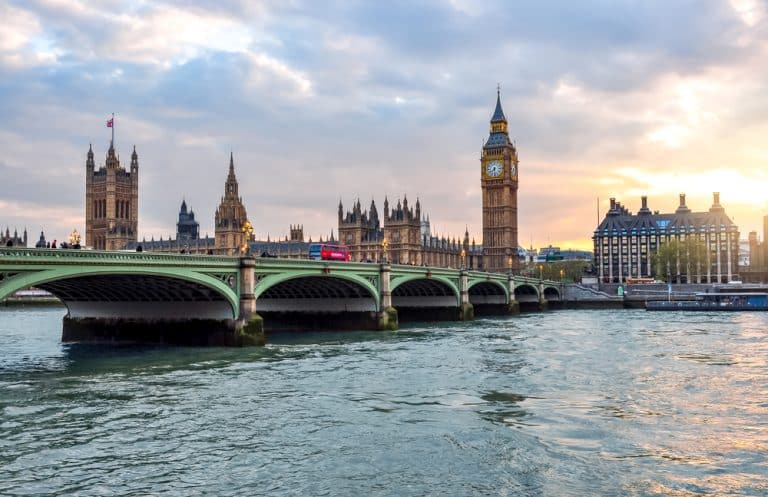
England has a lot to offer and many regions offer special charms. The cosmopolitan city of London with its 9 million inhabitants is always an experience and famous sights such as Big Ben, Buckingham Palace, Tower of London, Westminster Abbey and the oldest dungeon in the world make the connoisseur click his tongue.

Beautiful coastal towns are Brighton, Bournemouth and – the Gulf Stream makes it possible – the “English Riviera” in Torquay. If you want to experience the sublime atmosphere of English elite universities, you should take an educational holiday in Oxford or Cambridge , while Manchester and Liverpool are classic working-class cities that can be compared to the Ruhr area.

The offer should be used

The attractive offer of educational leave exists and all you have to do is grab it to enjoy it. If you have decided to take an educational holiday, England is a good choice, because the country behind the English Channel has a lot to offer in terms of culture, history and landscape, while refining your language skills in the age of globalisation and digitalisation is guaranteed to help everyone.

When choosing a provider, it is not only the quality of the language courses that is decisive, but also the accommodation and leisure activities. If you find a good provider, you learn for life, spend wonderful days and enrich your biography.


Lake Geneva – a place that connects

Lake Geneva, or Lac Léman as it is called in French, is located between Switzerland and France. It thus connects both cultures and holds a variety of different facets and impressions. Art lovers will find many historic chapels and museums of various art movements in the old towns around the shores of the largest lake in Central Europe. Nature lovers will not only be thrilled by the unique mountain panorama that rises above the water. And if you just want to take a relaxing break, you will find numerous opportunities for long walks along the promenades, to lose yourself in the shopping paradises of the cities or to be enchanted by the gastronomic offer. Of course, the destination is particularly attractive for all water sports enthusiasts who can really let off steam on the lake.

Interesting facts about Lake Geneva

With 580 square kilometres of water, Lake Geneva holds the title of the largest inland lake in Central Europe. At the southwestern tip is the Swiss canton of Geneva, the north shore belongs to the canton of Vaud and a small part of the eastern south bank is attributed to the canton of Valais; the rest of the south bank is in French territory. With a holiday, you can experience different cities, cultures and ways of life, each of which has its own special features. At its deepest point, it goes down 310 meters, which also makes it the deepest lake in France. In addition to the Rhône and Dranse, other, smaller rivers such as the Venoge and the Aubonne flow into it. The largest and most famous cities along the coast are Geneva, Lausanne and Montreux.

Geneva, the lake’s namesake

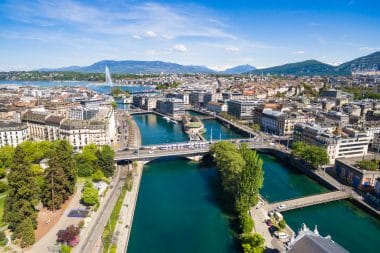
Lake Geneva
Lake Geneva (or Lac Léman), Image: Samuel Borges Photography / shutterstock

The city on the shores of the lake is Geneva, known above all as the cradle of watchmaking and the unofficial capital of the kingdom of chocolate. Tradition is very important here and nostalgia can arise in the streets at the sight of the historic buildings and rustic houses. The old town, which rises above the left bank, is dominated by the Cathedral of St. Pierre and is also home to the oldest square in the city, the Place du Bourg-de-Four.

Although French is the dominant language, as everywhere around the lake, Geneva is considered one of the most international cities in the world. Here, the quality of life is also said to be one of the best in the world, which is also noticeable in everyday things. The locals may seem a bit closed at times, but they have a very friendly and cheerful nature. You can feast on exquisite gastronomy right on the waterfront, enjoy an impressive performance in Geneva’s Grand Théâtre opera house or visit one of the many museums. For example, the Musée international de l’horlogie is a watch museum that presents the history and diversity of watchmaking in Geneva.

Lausanne – holiday region and lively cultural city

Lausanne, the capital of the Swiss canton of Vaud, picturesquely situated on three hills, impresses with a unique view. Standing on the shore of the lake, you have an unobstructed view of the Savoy Alps on the French side, which rise impressively above the water. This combination of snow-covered peaks and bright sunshine with sea flair make the city’s promenade an absolute highlight.

The city is home to a large number of historic, impressive buildings such as the cathedral, which is the focus of the cityscape as an early Gothic building. From the towers you have a wide view over the lake, the Alpine panorama and the surrounding towns. The palace hotels and associated parks also invite you to marvel and stroll. As far as art is concerned, the Olympic Museum is particularly noteworthy, where sports fans get their money’s worth. The Olympic Committee has been based here since 1914 and thus also attracts other major sporting events such as the Lausanne Marathon or the international athletics meeting “Athletissima”.

Inspiring Montreux

A touch of the Mediterranean, a touch of poetry and a picturesque setting make the town of Montreux a real gem. The greats of show business such as Freddie Mercury and Prince were inspired here; Charlie Chaplin even spent the last 25 years of his life in this place. A museum, Chaplin’s World , has been set up for him, where his fans can walk in the footsteps of their hero.

The collection of famous visitors is not surprising, as the view and the southern climate invite you to dream of past passions and better days. A full schedule of the city with a number of cultural events allows the artistic spirit to live on even today. The most famous and popular is probably the Montreux Jazz Festival, which fills two weeks of summer every year with music and good humour. Here, world-famous stars of the jazz scene perform alongside newcomers and regional artists, creating a relaxed atmosphere in which you can indulge in the music and the cheerful mood.

Lake Geneva is as diverse and special as the individual regions that frame it. Whether it’s tradition and international enjoyment in Geneva, historic buildings and a great panorama in Lausanne or art and poetry in Montreux, everyone gets their money’s worth here.

Rovinj: Croatian port city with Mediterranean flair

0

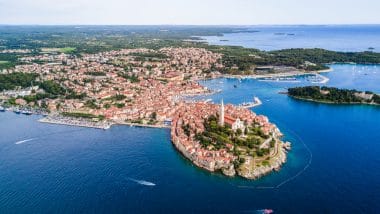
Romantic, dreamy, Mediterranean: these are the buzzwords that come to mind when you think of the Croatian city of Rovinj. Some even think it is the most beautiful city in Croatia. The port town of Rovinj, which has only about 15,000 inhabitants, is located in the very north of the country, on the Istrian peninsula, directly on the Adriatic Sea. The history of the city is eventful.

In the second century AD, the Romans settled here. Later, Rovinj was under Byzantine rule. From the 13th century, Rovinj was Italian, later the Habsburgs took over, and finally the city was part of Yugoslavia. The Italians in particular have left their mark here: Rovinj is still bilingual – Croatian and Italian – and the Italian minority still makes up ten percent of the population. This is reflected in the way of life, as well as in the architecture and on the plate.

Mediterranean way of life between romantic bays and beaches

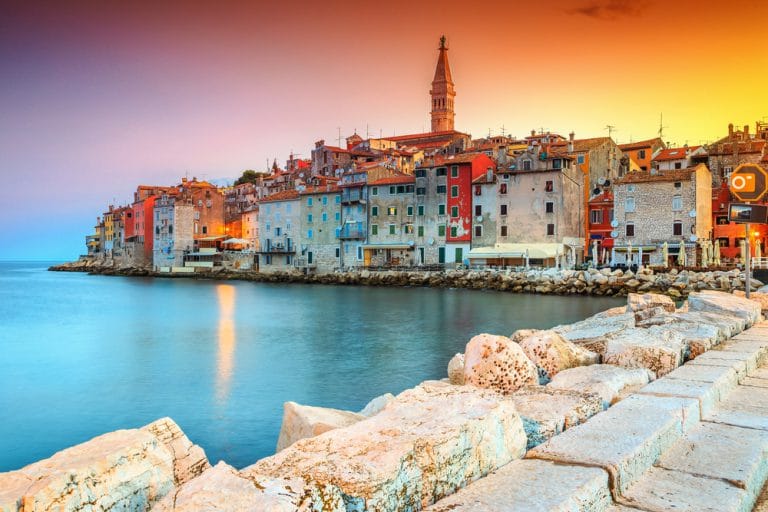
Rovinj from above
Aerial view of Rovinj, Image: F8 studio / shutterstock

Rovinj is located on a narrow promontory that juts far out into the Adriatic Sea. Here, visitors still breathe the flair of a small fishing village, where time sometimes stands still. Those who like it particularly quiet will love the 22 small islands off the coast of the city. By boat, for example, you can quickly get to Crveni Otok, which translates as “Red Island”.

The landscape on the islands is still wild, and particularly charming. But there are also magical beaches on the mainland, such as Borik Beach or Lone Bay. In Istria, the beaches are made up of small pebbles. The water around Rovinj is crystal clear, which is especially pleasing to snorkelers and divers who want to explore the surrounding underwater world. There are several professional diving schools in Rovinj. Sports enthusiasts can also rent kayaks to explore the many coves lined up along the coast. In the sunset, they look particularly picturesque.

Winding and rocky: the historic old town of Rovinj

Old Town Rovinj
The old town of Rovinj, Image: Tupungato / shutterstock

Especially in the hot midday hours, a walk through the shady old town of Rovinj is good. Istria has a Mediterranean climate: this means that the summer months can be very dry and hot.

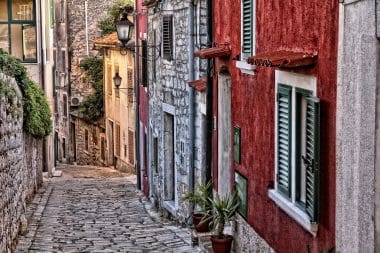
The best time for a beach holiday is from June to September. In the remaining months, the climate is mild, which makes Rovinj an attractive holiday destination even in the low season. If you stroll through the old town alleys, you are walking on natural cobblestones. You enter the old town through the Venetian Porta Balbi, built in 1680. Here you can see the coat of arms of the winged Venetian lion. The Church of St. Euphemia is considered a landmark of Rovinj.

Its 60-metre-high church tower is visible from afar. But the interior of the church is also a feast for the eyes: the baroque church, built in the 18th century, is decorated with ornate paintings and Gothic statues. The alleys continue to wind their way to the Baptistery of the Holy Trinity. The heptagonal Romanesque church from the 12th century is the oldest building in the city, and for that reason alone it is worth a visit. Also from the 12th century is the glowing red Torre dell’Orologio: the clock tower.

In the past, it functioned as the south tower of the city wall, later as a prison. If you want to find out more about the history of the city, visit the local history museum before the old town walk leads through the streets of Trevisol and Garzotto. Here, between colourful houses with low doors and flower boxes, the wheel of time turns back and visitors feel wonderfully slowed down. Before heading back to the harbour, the Batana Museum invites you to take in historic wooden boats and fishing objects.

Between fjord and cave landscapes: magical excursions around Rovinj

Who would have thought that with the Limski Channel near Rovinj there is also a fjord to cross. The narrow inlet runs along the west coast of Istria. The low-salt fjord is best known for its fish and mussel farming. Oysters, seafood or Italian-inspired fish dishes, which end up on the plate in Rovinj’s restaurants in the evening, were often fished here.

Tourists like to take a boat trip through the nature reserve. The nature around the Linski Canal is wonderfully diverse. A real highlight is the cave of Romuald at the end of the Linski Canal. According to legend, the hermit Romuald lived here around 1,000 AD. The cave is a colourful stalactite cave that can be visited as part of guided tours.

If you prefer hiking to boating, the Limski Canal is the right place for you. A well-signposted hiking trail leads from Vrsar to Dvigrad, which can be mastered as a daily stage. The trail runs largely parallel to the Limski Canal. With the difference that you can now explore the waterway almost from a bird’s eye view, as the hiking trail is located high above the rocky cliffs. The destination of the hike is the ruined city of Dvigrad. The medieval village, which was once founded by the Illyrians, has been abandoned since 1631, and has been falling into disrepair ever since. Dvigrad used to be an important trading center. Two castle ruins and a lot of dilapidated sacred and secular buildings can be visited here. People once fled Dvigrad because plague and malaria had a firm grip on the city.