Near the east coast of the USA lies Washington D.C., the capital of the United States. The city is the seat of government and thus the center of power of the country. Although Washington D.C. does not have a long history, the city still offers countless sights and it is clearly noticeable that history is being written in this place.
A planned city attracts the eyes of the world
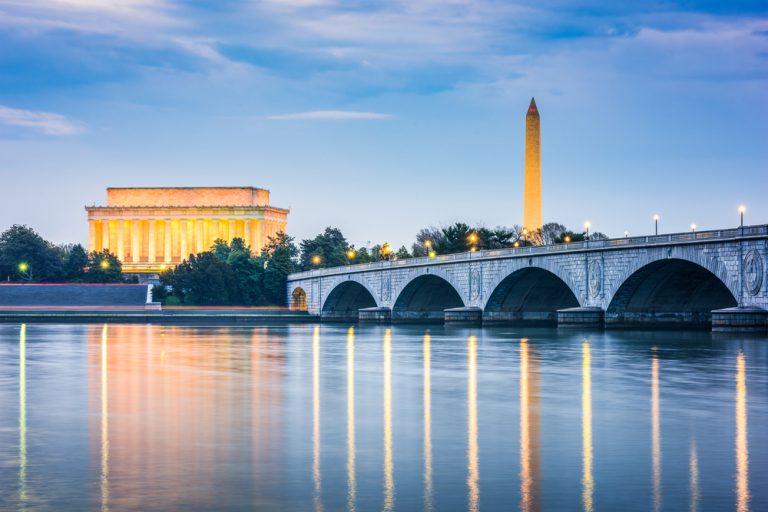
The Washington Monument, Image: Sean Pavone / shutterstock While cities like New York or Los Angeles have grown naturally and are characterized by a hectic business atmosphere, the planned city of Washington D.C. presents itself almost idyllically and at first glance the capital of the United States almost looks like an idyllic provincial town. After New York City was the first capital of the USA from 1788 to 1790, Philadelphia was declared the transitional capital for ten years in 1790. During this time, a new and permanent seat of government was to be elected, and in the end, President Washington chose undeveloped meadows and swamplands to build a well-planned capital. This is clearly noticeable when looking at the road network, because ultimately the streets of the city all start from the Capitol and Union Station. Thanks to the well-thought-out planning, Washington D.C. is not lacking in green and recreational areas and the strict building regulations also ensure that the almost idyllic cityscape of the capital is not affected.
Washington D.C. – A city that gives you goosebumps
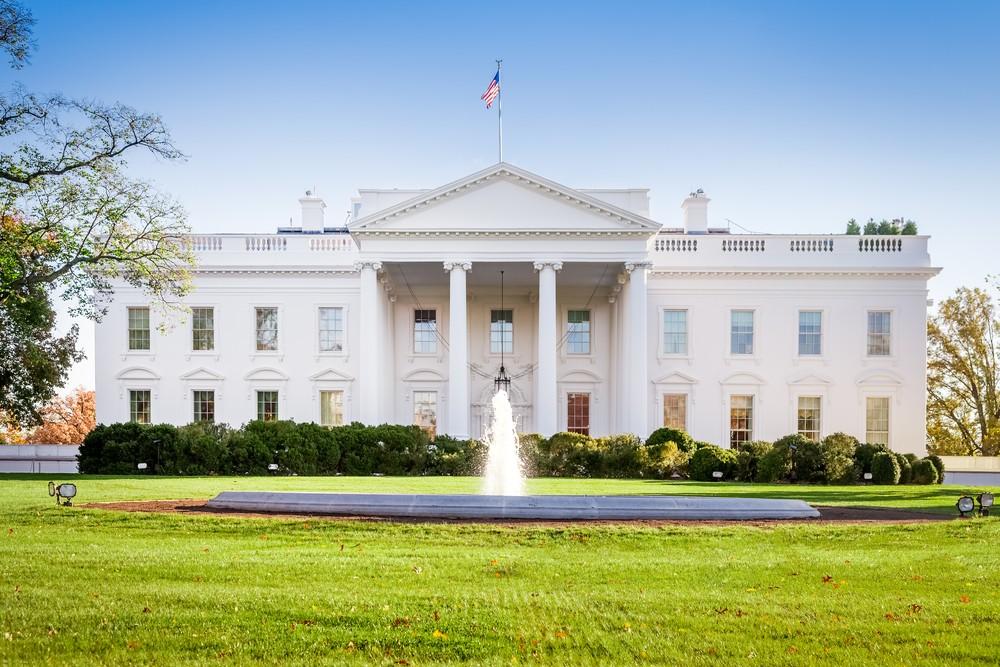
The Capitol in Washington, Image: AevanStock / shutterstock Washington D.C. exudes a unique charm that captivates everyone. Numerous well-kept green spaces, clean streets, impressive buildings, places where decisions were and are being made about the schicksal of the nation and the world, and all this in a network of rectangular streets that make the city appear clear despite its size. One of the city’s landmarks is Union Station. The “Central Station” impresses with a magnificent entrance hall that impresses with white marble, detailed murals and valuable statues. Another landmark of the city is the United States Capitol. With its white dome about 30 meters high, it is a landmark of American politics. The building is the seat of the U.S. Congress and thus one of the most important places in the country. If the congress building does not yet send a shiver down your spine, you will experience your own personal goosebump moment at the latest when you visit the White House. “The White House” is ultimately not only the residence of the incumbent president, the most powerful person in the country and the world, but it is here that the fate of the USA was and is decided on a daily basis. A look behind the scenes of the White House is a must when visiting Washington D.C. and undoubtedly leaves lasting impressions.
Impressive memorials keep the history of the USA alive
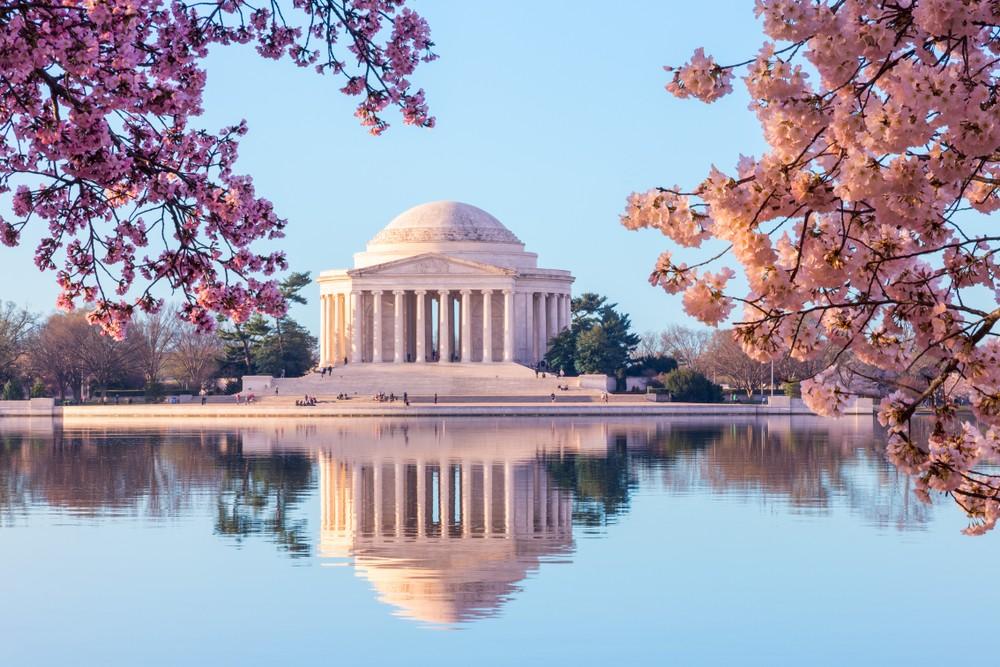
The White House, Image: turtix / shutterstock A stroll through Washington D.C. always leads past one of the numerous memorials. Not to be missed, of course, is the Lincoln Memorial. A gigantic column rises to the sky and on it there is a statue made of white marble. But this place also commemorates another person, because Martin Luther King Jr. stood on the steps of Lincoln’s memorial in 1963. and gave his meaningful speech that went around the world. If you let your gaze wander towards the ground, you can discover the words “I have a dream”, which have been embossed at the top of the stairs. Another memorial is the Vietnam Veteran Memorial. Of course, at first glance it is not as impressive as the Lincoln Memorial, but at second glance you discover a good 60,000 names of people engraved in black granite lives in the Vietnam War. President Jefferson also had his own monument dedicated to him. The Jefferson Memorial resembles the Roman Pantheon. At the gates of the city is one of the most impressive cemeteries in the world. Not only did more than 300,000 soldiers find their final resting place on the Arlington National Cemetry, but also countless well-known personalities. Among others, President John F. Kennedy was buried at the Arlington National Cemetry. A walk through the area not only includes well-known names, but also an unforgettable view of Washington D.C. One of the more recent memorials is the Pentagon Memorial. This memorial presents itself as an impressive park, which invites you to linger with 184 stone benches and commemorates the victims of September 11, 2001 in a particularly beautiful way.
Washington’s underrated sights
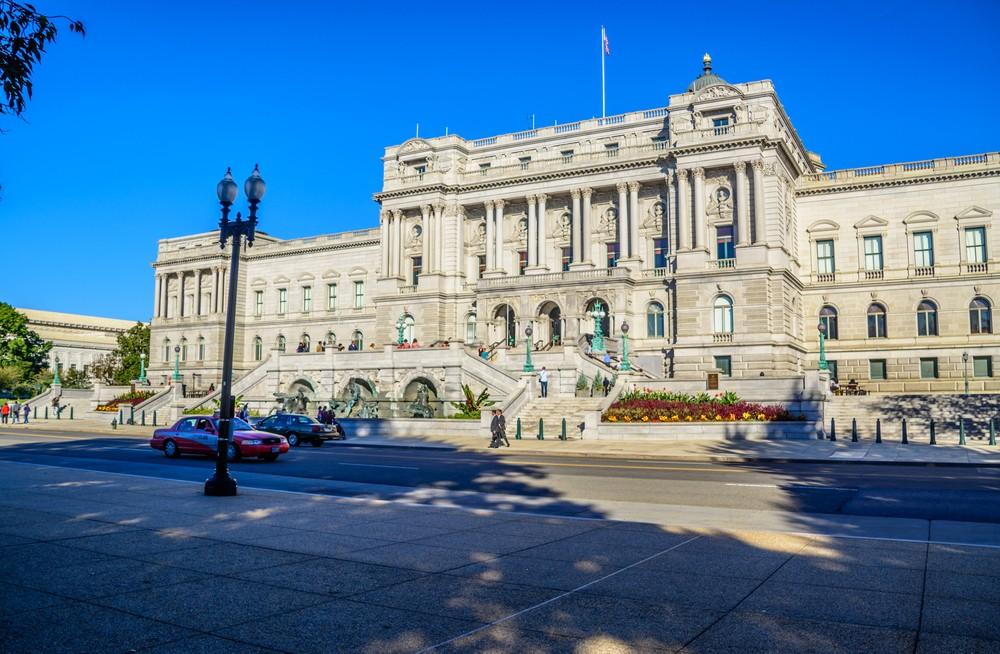
Library of Congress, Image: Oomka / shutterstock If you visit Washington, you should not only have the memorials and the places of big politics on your plan, but also take time for the most beautiful places in the city, which unfortunately are often left out of sightseeing tours. A visit to the Libarary of Congress, for example, is very impressive. In these venerable halls there are 100 million books, photographs, maps, sheet music and manuscripts. As soon as you enter the Thomas Jefferson Building , you will be amazed by detailed murals, marble columns and a unique mosaic floor. The main reading room, which is equipped with a 50-metre-high dome and gives the world’s largest library a very special charm, is also very impressive. Likewise, visitors to the US capital should take time for the city’s museums. In addition to the National Museum of Natural History, there are several other impressive museums in the city, most of which can be visited free of charge thanks to the D.C.-based Smithsonian Foundation. By the way, the Smithsonian Institution Building is also worth a visit, because in addition to the administration there is also an information center and the building itself is absolutely worth seeing. A visit to the Botanic Garden, which was created in 1820 and is home to an impressive number of exotic plants from all over the world, is also recommended.
Washington D.C. – The seat of government as the capital of culinary delights
Visitors to Washington D.C. should not only go from sight to sight, but also make time for enjoyment. In recent decades, a lot has happened in Washington in terms of culinary delights, and the city’s gastronomic scene has long been worth a visit. Washington’s kitchens have long been home to world-famous top cuisines that invite you on a culinary trip around the world. There is not much left to see of the simple American cuisine with steaks and burgers in Washington, but much more there are French restaurants, top Asian cuisine, fine Latin food and overall a culinary variety at the highest level that can hardly be found in any other city. However, the delights in the noble restaurants also have their price and so the prices are significantly higher than the prices that are common in the USA. Even simpler restaurants have raised their prices significantly. It is important not only to see the prices of the card, but also to be aware that these are net prices and that you also have to pay tips for the service. Nevertheless, it is recommended to crown a visit to the capital with a good meal, because no matter what culinary preferences you have, you will always find the right restaurant in Washington D.C.
Holidays in Washington, D.C.: The most important information
The most important tourist resorts & excursion destinations
The White House: The official residence of the President of the United States.
The Capitol: Seat of the U.S. Congress and one of the most recognizable buildings in the world.
Lincoln Memorial: A memorial in honor of President Abraham Lincoln.
Washington Monument: An obelisk in honor of George Washington, the first president of the United States.
Smithsonian Institution: A group of museums and research centers, including the National Air and Space Museum and the National Museum of American History.
National Mall: A large park in central D.C., surrounded by many of the most important monuments and museums.
Jefferson Memorial: A memorial in honor of Thomas Jefferson, the third president of the United States.
Viet Nam Veterans Memorial: A memorial honoring U.S. soldiers who died in the Vietnam War.
National Zoo: Part of the Smithsonian Institution, known for its panda bears.
Library of Congress: The largest library in the world.
Important telephone numbers
Emergency number (police, fire brigade, ambulance): 911
Police (non-emergency): +1 202-727-9099
Embassy of Germany in Washington, D.C.: +1 202-298-4000
Tourist Information: +1 202-789-7000
German Doctors
Dr. Wolfgang Grams: 4101 Reservoir Road NW, Washington, D.C. 20007, +1 202-687-3600
Dr. Jürgen Schreiber: 2141 K Street NW, Suite 608, Washington, D.C. 20037, +1 202-466-3006
Opening hours
Shops: Usually Monday to Saturday from 10:00 to 21:00, Sunday from 11:00 to 18:00.
Supermarkets: Usually daily from 7:00 a.m. to 10:00 p.m.
Restaurants: Lunch from 11:00 to 15:00, dinner from 17:00 to 22:00.
Banks: Monday to Friday from 9:00 a.m. to 5:00 p.m.
Airport
Washington Dulles International Airport (IAD): The largest international airport in the region, about 42 km west of Washington, D.C.
Ronald Reagan Washington National Airport (DCA): The nearest airport, about 5 km south of Washington, D.C.
Baltimore/Washington International Thurgood Marshall Airport (BWI): About 51 km northeast of Washington, D.C.
Post / Stamps
Post offices: In all major districts.
Main Post Office: 2 Massachusetts Ave NE, Washington, D.C. 20002. Opening hours: Monday to Friday from 9:00 a.m. to 5:00 p.m., Saturday from 9:00 a.m. to 1:00 p.m.
Stamps: Available at the post office, some kiosks and supermarkets.
Costs for letters and postcards to Germany: Standard letter up to 1 oz: approx. 1.20 USD; Postcard: approx. 1.20 USD
Safety
Crime: Washington, D.C. is considered relatively safe, but tourists should exercise caution, especially in less frequented areas and at night.
Keep valuables safe and do not carry large amounts of cash.
Emergency number: 911
Current
Voltage: 120 volts
Sockets: Type A and B (adapters for European plugs are required)
Tip
Restaurants: 15-20% of the bill amount is customary.
Taxis: Round up the amount or about 10-15%
Hotels: $1-2 per day for cleaning staff
Customs
Allowances for travellers from the EU:
Alcohol: Maximum 1 liter of spirits or 2 liters of wine.
Tobacco: 200 cigarettes or 50 cigars or 250g of tobacco.
Other items: Goods with a total value of up to $800 are duty-free.
Other excursion destinations
National Gallery of Art: An art museum with a large collection of masterpieces.
United States Holocaust Memorial Museum: A museum that commemorates the victims of the Holocaust.
Arlington National Cemetery: A military cemetery with the graves of many U.S. soldiers and famous people.
International Spy Museum: A museum that sheds light on the history and techniques of espionage.
Tidal Basin: A man-made basin that is especially visited during the cherry blossom season in spring.
The Phillips Collection: A museum of modern and contemporary art.
Newseum: A museum dedicated to the history of news and journalism.
Georgetown: A historic neighborhood with charming streets, high-end boutiques, and excellent restaurants.
Rock Creek Park: A large urban park with hiking trails, horseback riding, and historic sites.
Dupont Circle: A lively neighborhood with many cafes, art galleries, and embassies.
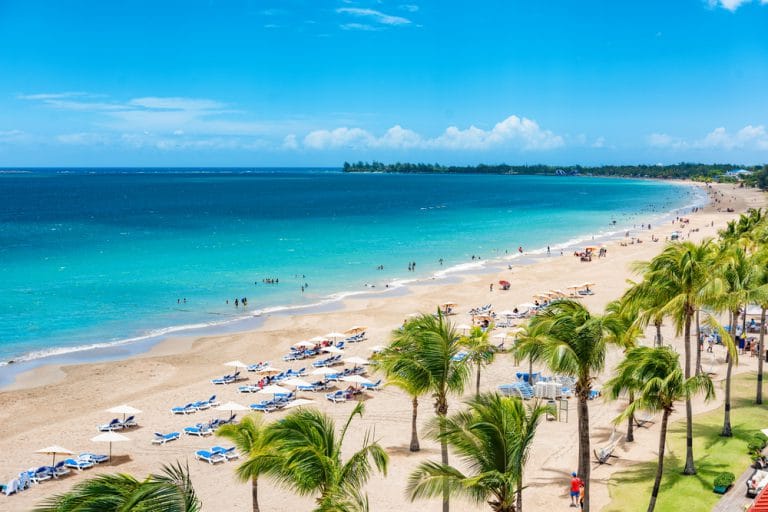
White sandy beach in the Caribbean: The beach panorama of the same name unfolds at the village of Bávaro – together they form one of the most beautiful and popular resorts in the Dominican Republic. Located in the region near Punta Cana, Bávaro is one of the highlights of the Dominican Republic, where Caribbean flair awaits travelers in good weather.
How to get there
If you visit Bávaro, you will land at Punta Cana Airport, 20 km away. This can be reached from Germany with a direct 10-hour flight from several major cities (e.g. Flight Berlin – Punta Cana or flight Hamburg – Punta Cana) and with more than two million international arrivals per year, Punta Cana International Airport is the second most popular airport in the Caribbean.
Playa Bávaro – Beach Highlight of the Caribbean
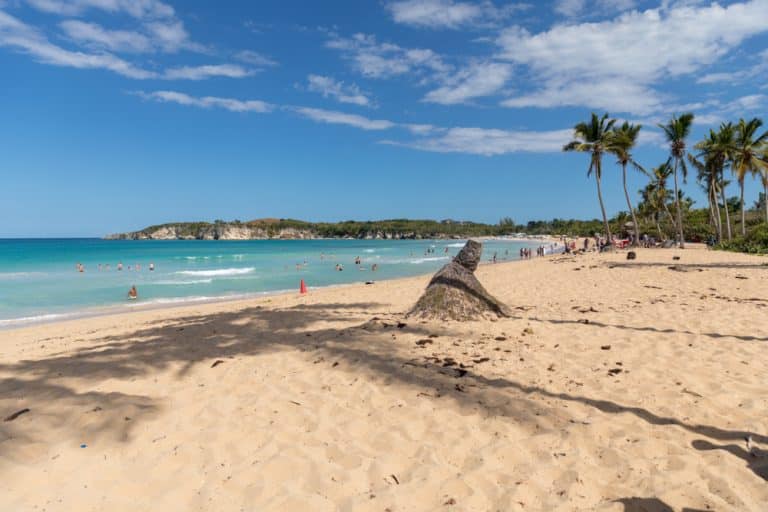
Some of the most beautiful and impressive beaches, not only in the Dominican Republic, but also in the world, rest on the headland of Punta Cana. These include Playa Bávaro, which scores points with its fine coral sand and the Caribbean blue of the tropical sea in the Dominican Republic. Once a recreational home for the inhabitants of the region, the beach gained such popularity that soon an entire resort was grouped around it. Less than 20 kilometers west of the central town of Punta Cana, Bávaro including the beach is now one of the holiday highlights of the Dominican Republic. The palm-fringed beach panorama is a tropical paradise for a Caribbean sea holiday. The white beach was once even named one of the most beautiful beaches in the world by UNESCO. The entire beach region in which Playa Bávaro fits in stretches over almost 50 kilometers along the coast – making it one of the longest beach sections in the world. It’s no surprise that water sports are also popular here, from windsurfing to parasailing to snorkeling. From this perspective, Playa Bávaro provides the best reasons for a Caribbean vacation in the Dominican Republic.
Bávaro – Relaxation on the beach
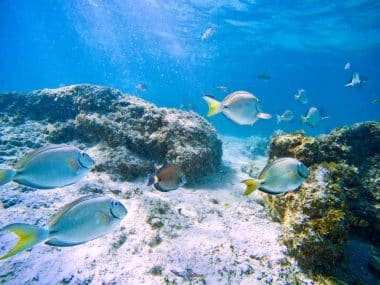
Bavaro is of course also great for diving and snorkeling, Image: Felipegsb / shutterstock Today, however, Bávaro is more than just a beach. Holiday resorts, restaurants and even a Bávaro Adventure Park now enrich the popular holiday region on the east coast of the Dominican Republic. The selection of restaurants and souvenir shops on the coast is comparatively large, and numerous hotels of various luxury levels are waiting for a stop. Bávaro and Punta Cana now manage to provide over 25,000 hotel beds for overnight stays – further proof of the popularity of the region. At the same time, various golf courses in the region around Bávaro await those who long for sporting relaxation. Bavaro Adventure Park is considered the only adventure park of its kind in the Dominican Republic. Everything here is designed for sporting entertainment – from the zipline to horseback excursions to the freshwater lagoon. But the real highlight around Bávaro remains the breathtaking beaches. Not only the section directly near Bávaro, but also the neighboring beaches know how to convince tourists with Caribbean flair. There is the neighboring, somewhat quieter Cabeza de Toro Beach, located on the coastal town of the same name. Playa el Cortecito also unfolds on the shores of a former fishing village, which can now be visited not far from the holiday resorts. Beach sections such as Playa de Arena Blanca and Playa de Arena Gorda round off the overall tourist picture of the Dominican Caribbean coast.
Natural region and Punta Cana in the vicinity of Bávaro
Natural paradises unfold in the south of the region around Punta Cana. National parks such as Cotubanamá and Parque Nacional del Este, the eastern national park of the Dominican Republic, are located here. A unique ecosystem of partly exotic plants and animals rests here mainly untouched. Cliff-rich coastal landscapes, beaches, mangroves and caves characterize the area, which preserves the natural facets of the Caribbean region. A cultural and tourist fixture of the region near Bávaro is the core town of Punta Cana, in the vicinity of which about 40,000 people live today, and in the Punta Cana Village itself about 15,000. Punta Cana is one of the most popular holiday regions in Latin America – also thanks to the beautiful beaches in the area. The number of residents in the region is growing steadily thanks to the tourist flair. Numerous activities – from excursions to the beach region to excursions to the neighboring islands – can be undertaken from Punta Cana. For example, day trips to the Caribbean island of Saona, located in the Parque Nacional Cotubanamá, or to Isla Catalina are also offered. The island’s capital, Santo Domingo, is just over a two-hour drive from Punta Cana. In terms of tourism, Bávaro and Punta Cana have enough facets to offer to stay more than just a few days on the Caribbean Sea.
Holidays in Bávaro: the most important information
The most important places & excursion destinations
Bavaro Beach: A mile-long stretch of white sand known for its beauty and crystal clear waters.
Dolphin Iceland Park: A maritime theme park where you can swim with dolphins and experience other marine animals.
Manati Park: A theme park that specializes in the flora and fauna of the Dominican Republic.
Cocotal Golf and Country Club: One of the best golf courses in the region with spectacular views.
Iberostar Bavaro Golf Club: Another excellent golf course in Bávaro.
Bávaro Adventure Park: An adventure park with a variety of outdoor activities such as ziplining, bungee trampolines and zorbing.
Hoyo Azul: A stunning natural pool at the foot of a cliff in Scape Park, Cap Cana.
Saona Iceland: A beautiful island with white sandy beaches and turquoise waters, ideal for day trips.
Indigenous Eyes Ecological Park: A nature reserve with lagoons that invite you to swim and relax.
Scape Park: An adventure park in Cap Cana with caves, ziplining, and nature trails.
Important telephone numbers
Emergency number (police, fire brigade, ambulance): 911
Tourist Police (CESTUR): +1 809 552 1060
Police: +1 809 552 1011
Hospital (Hospiten Bavaro): +1 809 686 1414
German Embassy in Santo Domingo: +1 809 542 8964
German Doctors
Dr. Michael Laehn: Hospiten Bavaro, +1 809 686 1414
Opening hours
Shops: Usually Monday to Saturday from 9:00 am to 9:00 pm, some shops are also open on Sundays.
Supermarkets: Usually daily from 8:00 a.m. to 10:00 p.m.
Restaurants: Lunch from 12:00 to 15:00, dinner from 18:00 to 23:00.
Banks: Monday to Friday from 8:30 a.m. to 4:00 p.m., Saturday from 9:00 a.m. to 12:00 p.m.
Airport
Punta Cana International Airport (PUJ): The nearest airport, about 20 km south of Bávaro.
Post / Stamps
Post offices: There is a post office in Bávaro and others in the larger towns of the region. Opening hours: Monday to Friday from 8:00 a.m. to 5:00 p.m.
Stamps: Available at the post office and in some kiosks and supermarkets.
Costs for letters and postcards to Germany: Standard letter up to 20g: approx. 40 DOP (approx. 0.70 EUR); Postcard: approx. 30 DOP (approx. 0.50 EUR)
Safety
Crime: Bávaro is considered relatively safe, but tourists should exercise caution, especially in busy tourist areas and at night.
Keep valuables safe and do not carry large amounts of cash.
Emergency number: 911
Current
Voltage: 110 volts
Sockets: Type A and B (adapters for European plugs are required)
Tip
Restaurants: 10% service charge is often included in the bill, additional tip of 5-10% is appreciated.
Taxis: Round up the amount or about 10%
Hotels: $1-2 per day for cleaning staff
Customs
Allowances: Personal belongings are duty-free.
Alcohol: Maximum 2 liters of spirits or wine.
Tobacco: 200 cigarettes or 50 cigars or 250g of tobacco.
Other items: Goods with a total value of up to $500 are duty-free.
Destinations
Dolphin Iceland Park: Swim with dolphins and other marine animals.
Manati Park: Theme park with a variety of shows and animals.
Hoyo Azul: A natural pool in Scape Park.
Saona Iceland: A popular destination for day trips with beautiful beaches.
Catalina Iceland: An island with fantastic diving and snorkeling opportunities.
Altos de Chavón: A replica of a 16th-century Mediterranean village with art galleries, restaurants, and an amphitheater.
Los Haitises National Park: A beautiful national park with mangrove forests and caves.
Cueva de las Maravillas: An impressive cave with ancient Taino cave paintings.
Bávaro Adventure Park: Outdoor adventure park with activities such as ziplining and bungee trampoline.
Indigenous Eyes Ecological Park: Nature trails and lagoons, ideal for hiking and recreation.
Crystal clear waters and dreamy bays, dense rainforests and exotic animals – the Caribbean offers limitless possibilities and a perfect mix of adventure, exploration and relaxation. Over 7,000 islands and archipelagos attract several million sun-seekers to the Caribbean paradise every year. But which island is the right one? With these ten top travel destinations, nothing is left to be desired!
1. Aruba
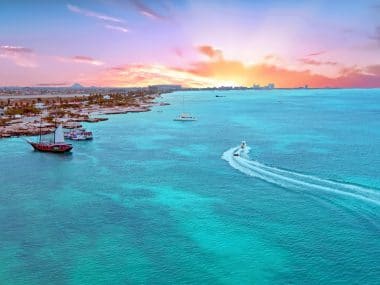
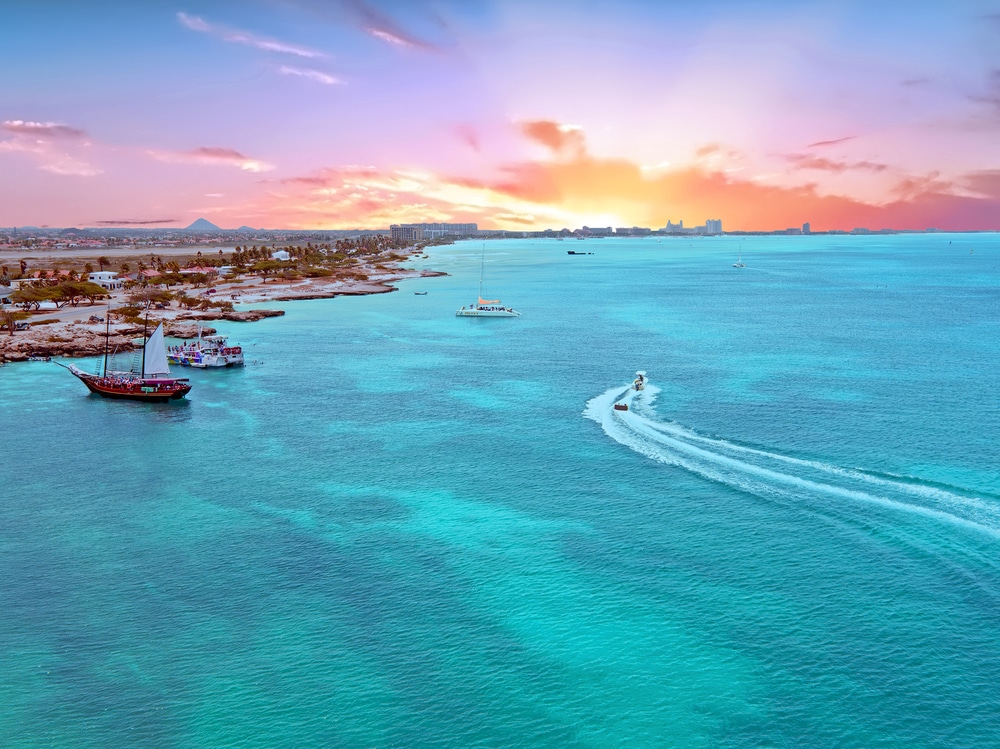
Aruba in the Caribbean, Image: Steve Photography / shutterstuck Endless white sandy beaches, crystal clear turquoise waters and beautiful resorts make the westernmost of the three ABC islands (Aruba, Bonaire and Curacao) a true dream destination of the Caribbean. Aruba belongs to the archipelago of the Lesser Antilles and, with an average temperature of 28 degrees, offers an ideal holiday paradise for sun worshippers, kitesurfers and nature lovers all year round. The predominantly flat island with its beautiful beaches invites you to relax and do nothing or play a game of beach tennis – the trend sport of the island. Although the island is one of the four equal countries of the Kingdom of the Netherlands , it enjoys complete internal autonomy with its own currency, government and constitution.
2. Cuba
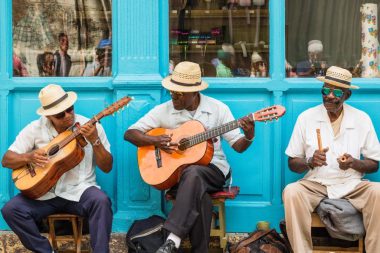
There’s always something going on on Cuba’s streets, Image: EvijaF / shutterstock Colonial cities, vintage cars in bright colors, hot salsa rhythms or a classic Cuba libre on one of Varadero’s beautiful sandy beaches – the charm of Cuba makes everyone go into raptures and the Cuban joie de vivre is definitely contagious! The largest metropolis in the Caribbean offers its visitors a perfect mix of beach and cultural holidays, relaxation and adventure. The cultural and political center of the island is the capital Havana, which is home to a breathtaking old town with many UNESCO-listed treasures.
3. Bahamas
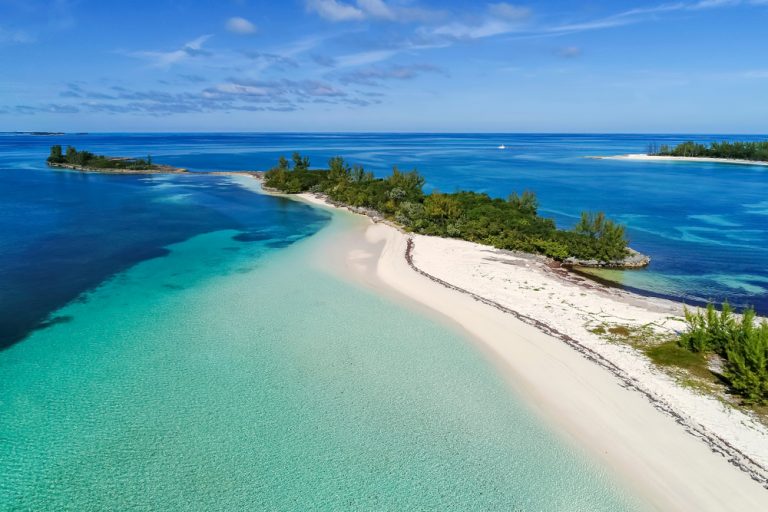
The popular tourist destination is located north of Cuba and inspires its visitors with countless shopping opportunities, pristine beaches and a breathtaking underwater world. Huge coral reefs invite you to dive and snorkel, while in the evening you can indulge in one of the many boutique hotels or luxury resorts. One of the most beautiful beaches in the Caribbean, the “Pink Beach”, is located on Harbour Iceland – one of the approximately 700 Bahamas islands.
4. Guadeloupe
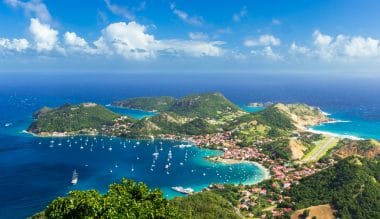
View of Gouadeloupe, Image: Robert Bleecher / shutterstock Guadeloupe consists of several inhabited and uninhabited islands, with the two main islands of Guadeloupe being shaped like a butterfly and located between Dominica in the south and Montserrat in the north. The green island in the middle of the French Caribbean is also part of the Lesser Antilles and inspires above all with its colorful flora and fauna. In addition to national parks, thermal springs and an active volcano, Guadeloupe is also home to the largest rainforest in the Caribbean, making it the perfect destination for nature lovers.
5. St. Lucia
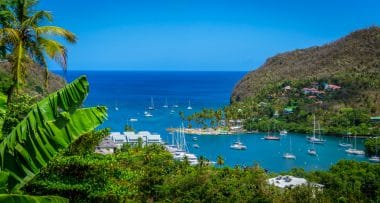
St. Lucia, Image: Esposito Photography / shutterstock The scenic diversity of St. Lucia with tropical rainforests, rushing waterfalls and dreamlike palm bays is an absolute highlight for nature enthusiasts and romantics. But those interested in culture will also get their money’s worth with fortresses and plantations from the colonial era. An absolute highlight of the island is the “Sulphur Springs” – the only drivable volcanic crater in the world.
6. Dominica
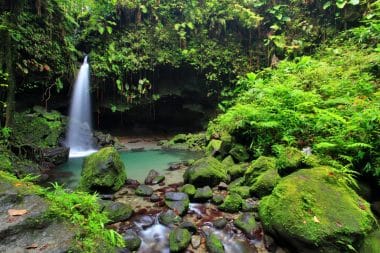
Dominica, Image: emperorcosar / shutterstock The untouched rainforest as well as the lush and original vegetation give the island of Dominica its nickname “the Nature Iceland”. The sparsely populated island is a perfect retreat for those seeking peace and quiet. Divers can experience a spectacular underwater world, while hikers explore the island and its flora and fauna on foot.
7. Curacao
Beautiful, crystal clear waters, spectacular coral reefs and breathtaking marine life offer divers and water sports enthusiasts on Curacao a perfect holiday destination. The island is considered a paradise on earth and is known worldwide for the world-famous liqueur “Blue-Curacao”, which is also produced on the island. As an autonomous state of the Netherlands, Curacao is one of the ABC Islands and is characterized by many European influences.
8. Bonaire
Bonaire offers a lot of peace and quiet and fantastic beaches, Image: Studio Barcelona / shutterstock The Dutch island of Bonaire is ideal for a holiday all year round due to the consistently warm and dry weather conditions. The holiday paradise has been spared from mass tourism to this day and the untouched beaches and pristine nature are ideal for watching iguanas, flamingos and wild herds of donkeys. The natural nature of the island offers paradisiacal tranquility and invites you to relax. With one of the most colorful underwater worlds in the Caribbean and almost no current in the waters off the island, Bonaire is one of the best diving spots in the world.
9. Saint Kitts and Nevis
The island state is a true holiday paradise for romantics. Separated by a canal, the island state consists of the two islands of St. Kitts and Nevis. Due to its volcanic origin, the island is rich in lush and colorful flora. The dreamy mountain island captivates with wide sandy areas, tropical rainforests and rugged volcanic groups.
10. Sint Maarten
The paradisiacal names of some beaches such as “Paradise Peak” or “Happy Bay Beach” alone speak for the island of Sint Maarten. The southern part of the island belongs to the Netherlands, with the north being occupied by the French overseas territory of Saint Marten. A visit to both parts is definitely worthwhile! Since the interior of the island is hardly populated, hikers get their money’s worth here and can explore Sint Maarten on foot in peace. An absolute highlight of the island is probably the Princess Juliana Airport, which is located directly on the beach. Many onlookers and tourists are attracted here by a breathtaking and rare sight: the planes fly so low over the beach that it looks as if they are landing directly on the beach – where holidaymakers are sunbathing. Definitely worth a photo!
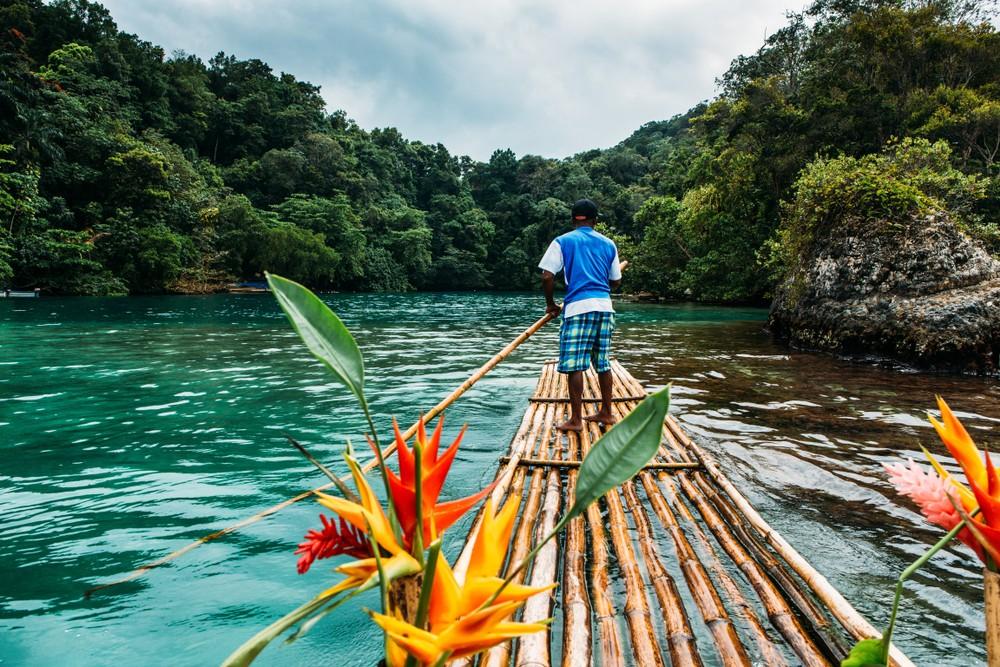
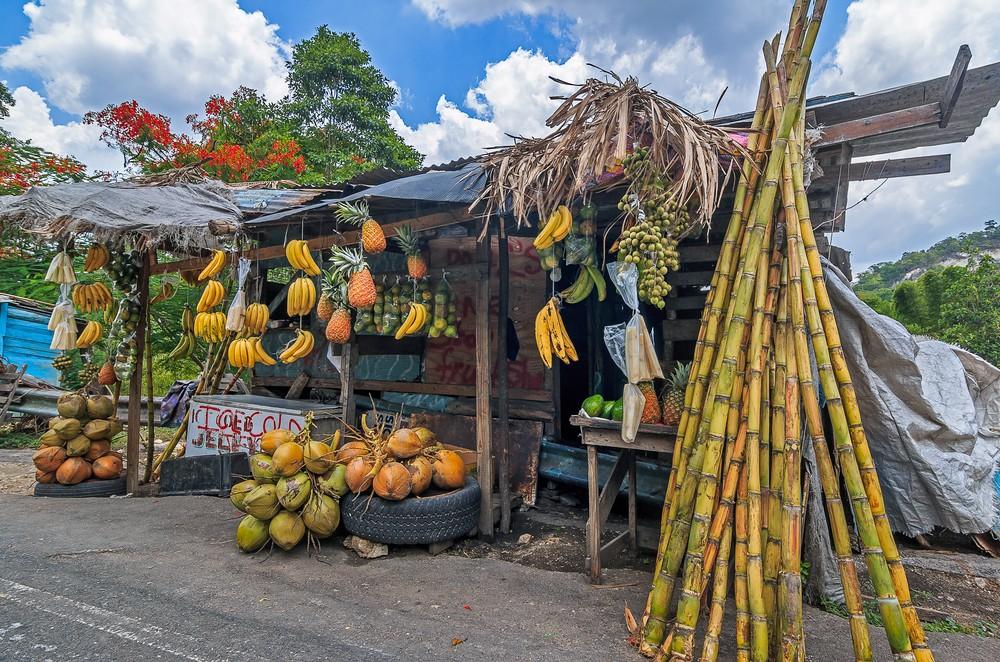
On the paradisiacal island of Jamaica, there is something like a “magic triangle”: reggae, rastafari and rum! But it’s not just the hot rhythms, the unusual hairstyles and the alcoholic beverages that attract guests from all parts of the world to this tropical region. Rather, it is the wonderful beaches, the warm sea in all seasons and the fascinating underwater world on the coral reefs on Jamaica’s doorstep. But the sound of reggae will remain in the memory of many holidaymakers long after they have been caught up in everyday life. A bamboo raft in Jamaica, Image: ajlatan / shutterstock Jamaica – this is a happy island under a mild Caribbean sun with some big neighbors: Cuba, Haiti and the Dominican Republic. Reggae seems to be in the blood of the islanders. And not only since the legendary Bob Marley spoke with his songs of the longing of people to return home to the roots of their lives, to Africa. “Soulful town – soulful people,” Bob Marley breathed into the microphones. It was his very special declaration of love to Jamaica that laid the singer to rest in a mausoleum in Nine Miles and created a place of worship for the Rastafarians. On a round trip through Jamaica, the visitor repeatedly encounters refreshing waterfalls in a landscape that resembles a jungle. But there are also the impenetrable mangrove forests on the coasts and the hills of the Blue Mountains. In this environment, the Englishman Ian Fleming created the role of the legendary James Bond with his novels. Some of these films were made in Jamaica. Also in the Swamp Safari Park in Falmouth, where it was reserved for a stuntman to slip into the role of Roger Moore and fled over the back of a crocodile in the film “Live and Let Die”. A typical fruit stand in Jamaica, Image: LBSimms Photography / shutterstock The explorer Christopher Columbus anchored at Montego Bay on May 4, 1494. According to historical writings, he was opposed by almost a hundred thousand Indians from the Aruak tribe. Today, this is the hub of the “Gold Coast” with a wide range of water sports, first-class golf courses and the resorts of the seaside resort of Doctor’s Cave and White Sands. It is mainly a holiday resort for families with their children. Seven Miles Beach is the most beautiful of all Jamaica’s beaches in the eyes of many travelers. Surely this has something to do with the picturesque sunsets that can be experienced here. Holidaymakers will find accommodation for every budget and to everyone’s taste on this island. And almost everywhere it is only a few steps from the friendly resorts with their tropical gardens to the pristine white sand of the beach on the doorstep.
The most beautiful beaches in Jamaica
Seven Mile Beach – This beach in Negril is known for its white sand and crystal clear waters. It stretches for 7 miles and offers numerous activities such as swimming, snorkeling, and sunbathing.
Doctor’s Cave Beach – This beach in Montego Bay is famous for its crystal clear waters and white sand. The beach is also a popular spot for snorkeling and diving.
Frenchman’s Cove – This beach in Port Antonio is one of the most picturesque beaches in Jamaica, with white sand, turquoise blue waters, and green hills in the background.
Blue Lagoon Beach – This beach in Port Antonio is another picturesque beach known for its turquoise lagoon and crystal clear waters. The beach also offers opportunities for snorkeling and boating.
Treasure Beach – This beach in southern Jamaica is known for its calm and relaxed atmosphere. The beach is a popular place to relax and also offers opportunities for snorkeling and fishing.
Travel information Jamaica
Capital Kingston
Form of government
: Parliamentary monarchy
Currency
Jamaica Dollar (JMD)
Area
approx. 10,991 km²
Population
approx. 2,900,000 (as of 2017)
Languages
English
Power supply
110 Volt / 50 Hz
Country calling code
+1 (876)
UTC-5 time zone
Holidays in Jamaica: The most important information
The most important tourist resorts & excursion destinations
Montego Bay: Known for its beaches, resorts and the Hip Strip district.
Negril: Famous for its Seven Mile Beach and spectacular sunsets.
Ocho Rios: Home to Dunn’s River Falls and a popular destination for cruise ships.
Kingston: The capital offers cultural attractions such as the Bob Marley Museum and Emancipation Park.
Port Antonio: Known for the Blue Lagoon and Frenchman’s Cove.
Treasure Beach: A quieter alternative with beautiful beaches and authentic Jamaican culture.
Blue Mountains: Great for hiking and known for the famous Blue Mountain Coffee.
Important telephone numbers
Emergency call (police, fire brigade, ambulance): 119
Police: +1 876 927 7681
Fire Department: +1 876 922 2523
Ambulance: +1 876 927 7681
German Embassy in Kingston: +1 876 920 4240
German Doctors
Dr. Peter Vogel: Fontana Pharmacy, 6-11 Fairview Shopping Center, Montego Bay, +1 876 953 0593
Dr. Claudia Egger: The Winchester Medical Center, 3A Winchester Road, Kingston 10, +1 876 920 3414
Opening hours
Shops: Usually Monday to Saturday from 9:00 a.m. to 5:00 p.m., some shops are also open on Sundays.
Supermarkets: Usually daily from 8:00 a.m. to 8:00 p.m.
Restaurants: Lunch from 12:00 to 15:00, dinner from 18:00 to 22:00.
Banks: Monday to Thursday from 8:30 a.m. to 2:30 p.m., Friday from 8:30 a.m. to 4:00 p.m.
Airport
Sangster International Airport (MBJ): The main airport in Montego Bay.
Norman Manley International Airport (KIN): The main airport in Kingston.
Ian Fleming International Airport (OCJ): Near Ocho Rios.
Post / Stamps
Post offices: In all major cities and towns. Main post office in Kingston.
Opening hours: Monday to Friday from 8:30 a.m. to 4:30 p.m.
Stamps: Available at the post office and in some kiosks and supermarkets.
Costs for letters and postcards to Germany: Standard letter up to 20g: approx. 130 JMD (approx. 0.80 EUR); Postcard: approx. 130 JMD (approx. 0.80 EUR)
Safety
Crime: Some areas, especially in Kingston, should be avoided.
It is advisable to check current travel advice and observe common precautions, especially in larger cities and tourist areas.
Emergency number: 119
Current
Voltage: 110 volts
Sockets: Type A and B (adapters for European plugs are required)
Tip
Restaurants: 10-15% of the bill amount is customary if no service charge is included.
Taxis: Round up the amount or about 10%
Hotels: $1-2 per day for cleaning staff
Customs
Allowances: Personal belongings are duty-free.
Alcohol: Maximum 1 liter of spirits or 2 liters of wine.
Tobacco: 200 cigarettes or 50 cigars or 250g of tobacco.
Other items: Goods with a total value of up to $500 are duty-free.
Destinations
Dunn’s River Falls (Ocho Rios): A famous waterfall that visitors can climb up.
Blue Hole (Ocho Rios): A natural water pool with waterfalls and Tarzan swing.
Rick’s Cafe (Negril): A famous spot for cliff jumping and spectacular sunsets.
Bob Marley Museum (Kingston): The reggae star’s former home, now a museum.
Blue Mountains: A paradise for hikers and nature lovers, known for its coffee.
YS Falls (St. Elizabeth Parish): A series of seven waterfalls with natural pools.
Appleton Estate: One of the oldest sugar plantations and rum distilleries in Jamaica.
Luminous Lagoon (Falmouth): A unique place where the water glows at night.
Rose Hall Great House (Montego Bay): A historic property with a spooky history.
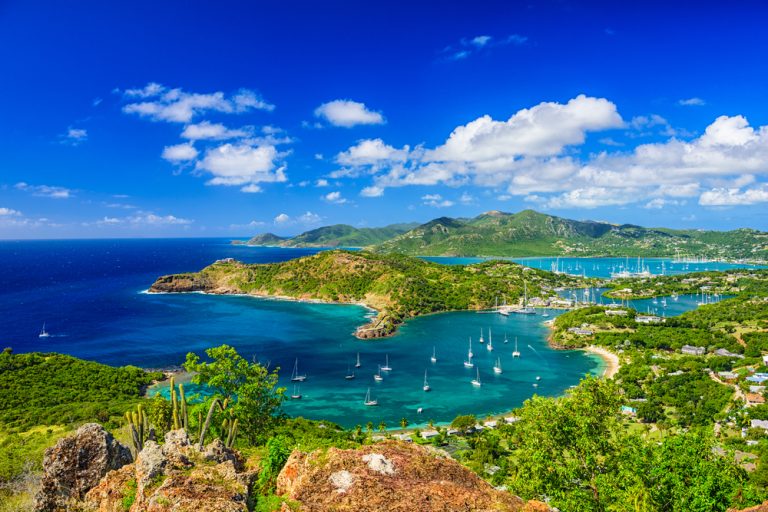
The election and advertising slogan of the island state of Antigua and Barbuda could also serve as a program for a successful vacation: “Experience it to believe it”. Without a doubt, it is a special experience to experience one of the fascinating sunsets on these so-called “Leeward Islands”. Some of the 365 beaches between the Caribbean and the Atlantic Ocean shimmer pink.
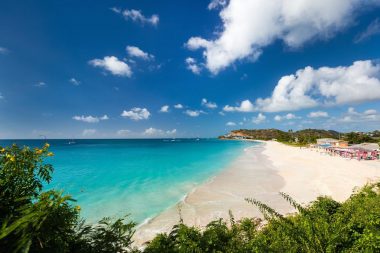
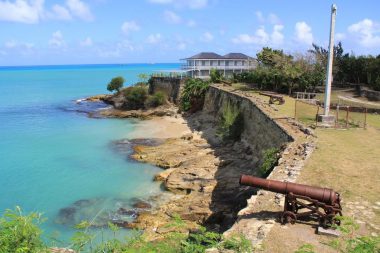
About a hundred thousand people populate Antigua and Barbuda, and if you want to get closer to the joie de vivre of the locals, you should be there during the carnival times. On ten summer days and nights, an entire country celebrates and dances to the Caribbean sounds. For the most part, the inhabitants of the two islands have African roots, and their lightness of being is very quickly transferred to their guests from all over the world. Idyllic tropical darkwood beach in Antigua island in Caribbean seas with white sand, turquoise ocean water and blue sky, Image: BlueOrange Studio / shutterstock Spain’s legendary navigator Christopher Columbus indirectly gave Antigua its name. The mortal remains of the explorer are located at the Puerta de la Lonja in the huge cathedral of Seville. But in Columbus’ time, this was still a small chapel called Santa Maria La Antigua. This is where the name of the beautiful Caribbean island comes from. Saint John’s is the capital and metropolis at the same time. This is a lively trading hub and a photogenic motif for holidaymakers at the old harbour. In the 18th century, the city was of great importance as a base for England’s royal fleet in the Antilles. Today, sugar, rum and cotton are exported here. Large sailing yachts can be admired in English Harbour Bay and Falmouth Harbour. British Fort James was built to guard St. John’s Harbour in Antigua and Barbuda in the Caribbean , Image: Lindasj22 /shutterstock If you are looking for a sporting challenge on the romantic islands, you will find it on a “zipline tour”. Under the guidance and supervision of experienced rangers, you can move over suspension bridges and from tree to tree like the legendary Tarzan once did. This is a treat for all those who are unfamiliar with a fear of heights. However, the wide range of water sports on Antigua and its little sister Barbuda is particularly popular with holidaymakers. The sea is warm and the stylish and luxurious hotel complexes and resorts are almost exclusively within sight of the white beaches. In the restaurants, the fruits of the sea reach the tables, and hardly anyone can escape the magic of the exotic nights in Antigua and Barbuda. Some hotels impress with an interesting animation program, others have dedicated themselves to health and beauty therapy with their wellness area. Trips inland include Betty’s Hope, the last functioning sugarcane windmill in the Caribbean.
Holidays in Antigua & Barbuda: The most important information
The most important tourist resorts & excursion destinations
St. John’s: The capital of Antigua with the harbor, Heritage Quay and the Antigua and Barbuda Museum.
English Harbour: Historic site with Nelson’s Dockyard, a UNESCO World Heritage Site.
Jolly Harbour: Popular holiday resort with beautiful beaches and marina.
Dickenson Bay: One of the most popular beaches with many resorts and water sports.
Ffryes Beach: A beautiful, quiet beach, ideal for relaxing.
Barbuda: Known for the Pink Sand Beach and the Frigate Bird Sanctuary.
Shirley Heights: Famous overlook with spectacular views and Sunday barbecues.
Important telephone numbers
Emergency call (police, fire brigade, ambulance): 911 or 999
Police: +1 268 462 0125
Fire Department: +1 268 462 0044
Ambulance: +1 268 462 0251
German Embassy in Port of Spain (responsible for Antigua & Barbuda): +1 868 628 1630
German Doctors
There are no German doctors in Antigua & Barbuda.
If necessary, you should contact the local hospitals and clinics:
Mount St. John’s Medical Centre: St. John’s, +1 268 462 0251
Adelin Medical Centre: St. John’s, +1 268 462 0866
Opening hours
Shops: Usually Monday to Saturday from 9:00 a.m. to 5:00 p.m., some shops are also open on Sundays.
Supermarkets: Usually daily from 8:00 a.m. to 8:00 p.m.
Restaurants: Lunch from 12:00 to 14:30, dinner from 18:00 to 22:00.
Banks: Monday to Thursday from 8:00 a.m. to 3:00 p.m., Friday from 8:00 a.m. to 4:00 p.m.
Airport
V.C. Bird International Airport (ANU): The main airport, about 8 km northeast of St. John’s.
Post / Stamps
Post offices: In all major cities and towns. Main Post Office in St. John’s. Opening hours: Monday to Friday from 8:00 a.m. to 4:00 p.m.
Stamps: Available at the post office and in some kiosks and supermarkets.
Costs for letters and postcards to Germany: Standard letter up to 20g: approx. 3.50 XCD (approx. 1.15 EUR); Postcard: approx. 3.50 XCD (approx. 1.15 EUR)
Safety
Crime: Antigua & Barbuda is considered relatively safe, but tourists should exercise caution and observe common safety precautions, especially in busy areas and at night.
Emergency number: 911 or 999
Current
Voltage: 230 volts
Sockets: Type A and B (adapters for European plugs are required)
Tip
Restaurants: 10-15% of the bill amount is customary if no service charge is included.
Taxis: Round up the amount or about 10%
Hotels: $1-2 per day for cleaning staff
Customs
Allowances: Personal belongings are duty-free.
Alcohol: Maximum 1 liter of spirits or 2 liters of wine.
Tobacco: 200 cigarettes or 50 cigars or 250g of tobacco.
Other items: Goods with a total value of up to $500 are duty-free.
Destinations
Nelson’s Dockyard (English Harbour): Historic shipyard and national park with museums and restored buildings.
Devil’s Bridge (Indian Town Point): Natural limestone bridge created by centuries of erosion.
Betty’s Hope: A former sugar plantation with restored windmills and a small museum.
Barbuda: A trip to the neighboring island of Barbuda to visit Pink Sand Beach and the Frigate Bird Sanctuary.
Fig Tree Drive: A scenic road through Antigua’s rainforests, ideal for a scenic drive.
Stingray City: A place where visitors can swim with and feed stingrays.
Cades Reef: A great place to snorkel and dive with a variety of marine life.
Museum of Antigua and Barbuda: Located in St. John’s, it offers insight into the history and culture of the islands.
Darkwood Beach: A beautiful beach, ideal for swimming and relaxing.
Hawksbill Beaches: Four interconnected beaches, including a nudist beach (Eden Beach).
Spain has long since established itself as a holiday destination for German guests.
But conversely, this also means that it will be difficult to get free rooms spontaneously, especially for the summer.
And even then, it’s hard to find a little peace and relaxation.
The situation is different in cities such as Chiclana de la Frontera, where the flow of guests is significantly lower.
But what actually makes the place so unique?
Not only suitable for bathers
Located in the Bay of Càdiz, Chiclana de la Frontera can be easily reached from various German airports.
The journey takes barely five hours.
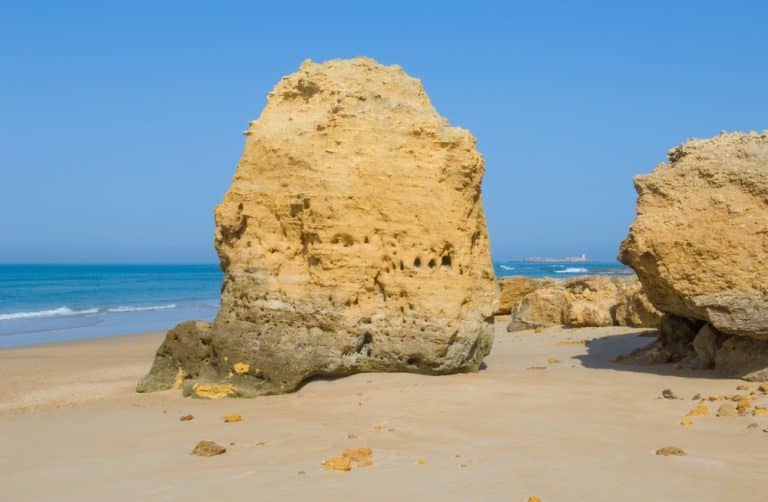
Especially in the warm season, tourists find this way to really relax on the long, white beaches on the Spanish coast.
But be careful, especially in the high season, the thermometer rarely falls below the 30 degree Celsius mark.
The wind coming from the sea is also a bit weak and does not provide any real cooling.
It is therefore advisable to visit the city in spring and autumn, when Chiclana can be enjoyed away from the holiday crowds with mild temperatures and mostly rain-free days.
Two and a half millennia of eventful history
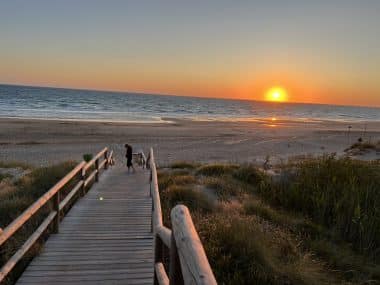
Beach of Novo Sancti Petri at sunset, Image: Travel Magazine Online Chiclana was originally inhabited during the time of the Phoenicians, who ruled the Spanish coast from the 9th century BC – but later lost power to the Romans.
The region was particularly successful in the extraction of salt in that era and was able to earn some wealth with it.
After the first documentary mention in the early
In the 14th century, Chiclana was settled and from the 14th century onwards
15th century brisk trade with the newly discovered America: Spanish wine and olives in particular enjoyed great demand on the new continent.
In the Middle Ages, however, the city was abandoned in the course of the Wars of Independence, razed to the ground and only built from the 17th century onwards in the form that is still so much appreciated by visitors today.
The old town as a starting point for sightseeing
The historic centre of the city can be seen from afar with the towers of the two churches of Jésus Nazareno and San Juan Bautista.
The local districts do not follow a uniform architecture, but look like colorful set pieces from different times that have been arbitrarily placed together.
Many artists have opened their studios there.
There are only a few restaurants in the old town.
On the other hand, some of the bodegas are open from morning until late at night – they are small establishments where regional wines and sherries are served.
Also worth a visit is the Chiclana Museum in the Casa de Briones, where the life of the locals from antiquity to modern times is documented with many finds.
Walking across the sea
If it gets too crowded in the city, you will find plenty of retreats on the various beaches.
By the way, not alone to swim there or dive in partly crystal clear water and enjoy the plants and animals off the Spanish coast.
Chiclana de la Frontera has an impressive rocky landscape with smaller caves.
Particularly interesting is the Playa de Sanct-Petri, which can be seen from a distance: the old fishing village with picturesque white buildings is separated from Chiclana by the sea.
At low tide, however, the distance between the two places, which is only a few kilometres, can be easily covered on foot – at high tide, the route is used by boats.
Observe rare birds in the nature reserve
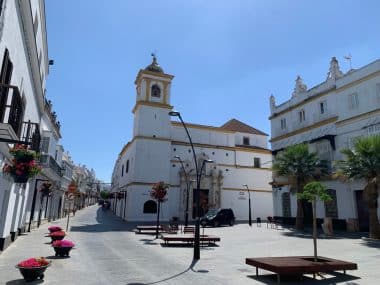
Church in the Andalusian city of Chiclana de la Frontera, Image: Colinmthompson / shutterstock The fact that Chiclana de la Frontera is not just a tourist resort can be seen in the extensive meadows and forests around the city. With the Complejo Endorreico de Chiclana and the Laguna de la Paja, there are even two reserves of their own, which want to bring visitors closer to the flora and fauna of the coastal region. Here you can find some birds that are not native to Central Europe: flamingos and pelicans benefit from the region’s proximity to the African continent and the high temperatures. But eagles can also be admired. By the way, it is advisable to wear sturdy shoes on the tours over tall grass and through old pine forests, because even small scorpions and snakes have long since conquered the habitat for themselves.
Not dotted with shopping
There is another point in which Chiclana differs from many other tourist strongholds: There are supermarkets and opportunities for shopping. Nevertheless, everything here is a bit smaller and more discreet. It is therefore worth visiting the markets that take place on weekends on the Camino de los Recoberos, as well as every Tuesday on the Recinto Ferial. Not only regional dishes can be found there at low cost. Rather, some of the local artists also exhibit their works – and thus make it possible to buy smaller souvenirs that tell of the beautiful holiday on the Spanish coast for a long time to come.
More Dutch than the Netherlands? We visit three islands of the Netherlands Antilles.
In the southeast of the Caribbean island chain are the Lesser Antilles, the ABC islands of Aruba, Bonaire and Curaçao. Together with the SSS islands of Saba, St. Eustatius and St. Marteen , they were the Netherlands Antilles (dissolution of the unit in October 2010). The sun-drenched islands are autonomous areas of the Dutch Kingdom – and so the typical Dutch flair unfolds surprisingly intensively at the 13th parallel.
A picturesque village on Saba, Image: Erika Bisbocci / shutterstock Governors represent the motherland and reside in classicist official residences with candy-colored facades, whose attitude is quite respectable and yet without pomp. From time to time, members of the Dutch royal family, which is particularly popular on the islands, also visit the islands. However, the unwavering hospitality of the islanders is also enjoyed by less prominent visitors, for whom freshly tapped Amstel beer – originally brewed from seawater on Curaçao – or Gouda and butter biscuits will soon become a matter of course.
In addition, there is a perpetual summer, which is tempered to about 27.5 °C by gentle trade winds. So it is no wonder that there is no corresponding word for “weather” in the Creole national language Papiamento.
Curaçao: Amsterdam of the Caribbean
The capital of the island of Curaçao is Willemstad. Here, the districts of Scharloo, Punda and Otrobanda are part of the World Heritage Site for a reason. In the “Amsterdam of the Caribbean” there is a unique parade of over 300-year-old bell gables along the Sint Annabaai and all around the stately homes of the planter barons open the doors of their salons filled to the brim with the rarest family antiques. The best example and definitely worth seeing is the Landhuis Brievengat in Curaçao’s southwest. Here, the everyday, fun-loving merengue dance event became a must to see and be seen. When they hear “Curaçao”, however, many contemporaries first think of liqueur, which is sugar-sweet and as turquoise blue as the wide sea. You can only get to the copper kettles of the Chobolobo distillery officially guided – and you will learn almost nothing about the liqueur company’s trade secrets. Only this much: At the beginning of the beguiling Curaçao spirit there were historical attempts by the once Spanish conquerors to settle the plump oranges of their homeland on Curaçao. The fruits of these plantations were coarse-pored and puny bitter oranges, which later became a stroke of luck: one of the world’s most drunk liqueurs is now distilled from the oil of the green, not quite ripe skins.
Aruba: “One happy Island”
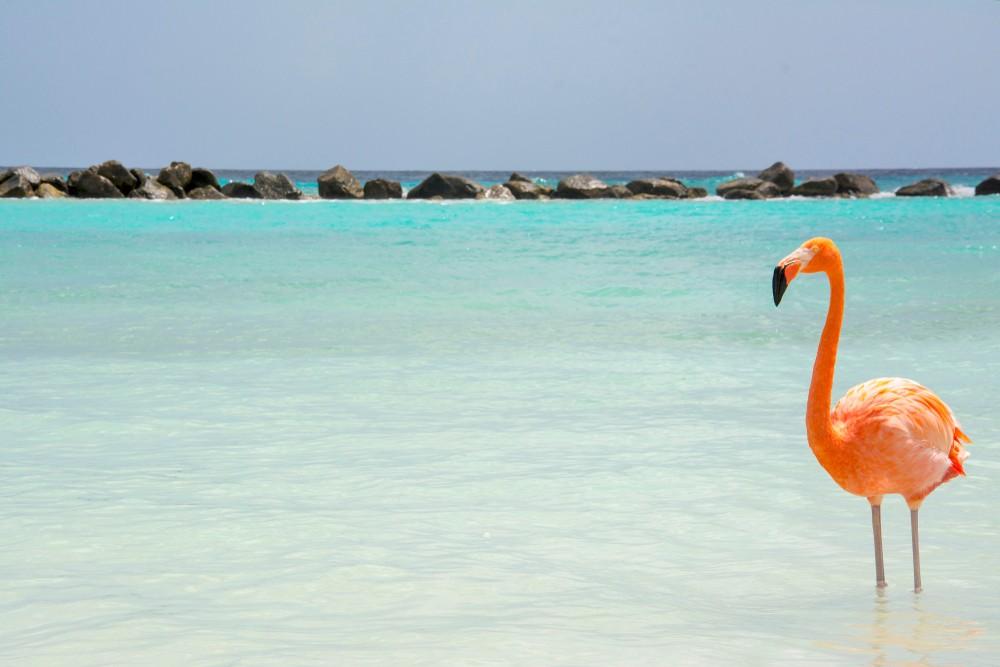
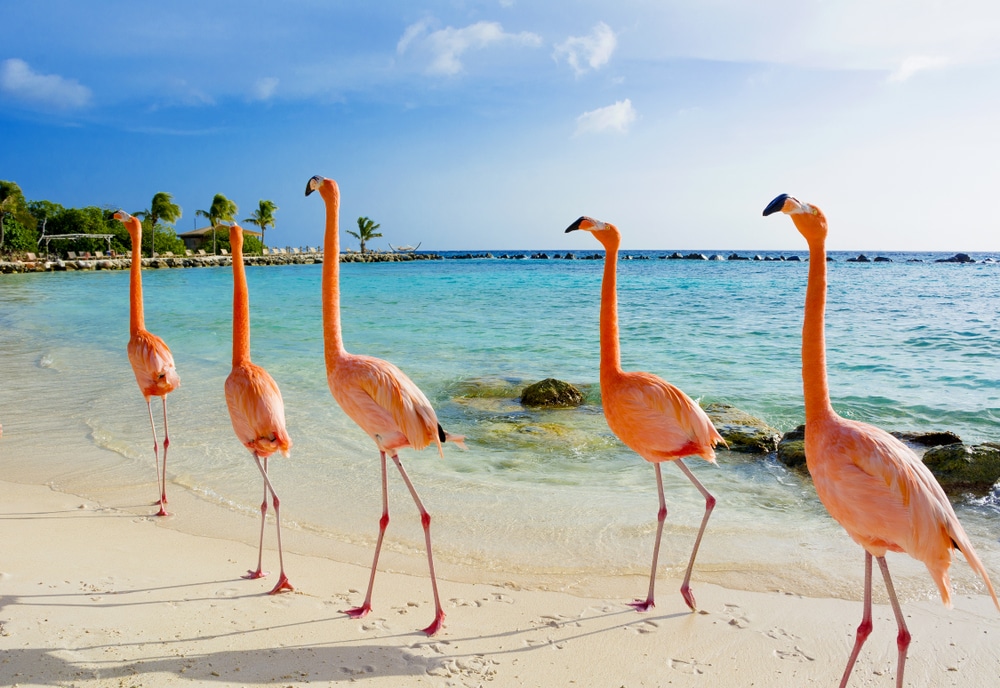
A flamingo on the beach in Aruba, Image: Matt Grimaldi / shutterstock Under the cheerful motto, Aruba presents itself as a kind of land of smiles of Dutch origin. The island metropolis of Oranjestad appears cheerful with colourful malls and a breathtakingly large lido, 25 hotels and an 18-hole golf course. 12 kilometers of sandy beach surround an azure lagoon and everywhere in Aruba, any Caribbean clichés are guaranteed to be fulfilled, right down to luxurious casinos and Neu-Schwanstein facades.
St. Maarten – Island of the Dutch and French
On Sint Maarten , space for cascading-adorned paradise hotels is scarce, as the Dutch and the French have shared the small, peaceful island since 1648. Nevertheless, there are three dozen fine white sandy beaches here and the island’s capital Philipsburg looks like a colorfully whitewashed petitesse. The old Fort Amsterdam with magnificent views over the Netherlands Antilles is also absolutely worth seeing.
It’s green in Costa Rica – very green. And the jungle begins at the door of the hotel. Christopher Columbus gave this paradisiacal stretch of land the name: “Rich Coast”. And since the explorer in 1502 probably did not mean the wealth of natural resources, but was probably more fascinated by the gold jewelry of the natives, he felt this country as a kind of treasure island. As a result, Costa Rica was colonized by Spain for over 250 years before the political situation in Costa Rica led to a democracy. The socialist José Mariá Figuerres Ferrer, whom his compatriots simply called “Don Pepe” for the sake of simplicity, one day abolished the military because he believed that Costa Rica was far too beautiful to afford soldiers. That was probably a good decision.
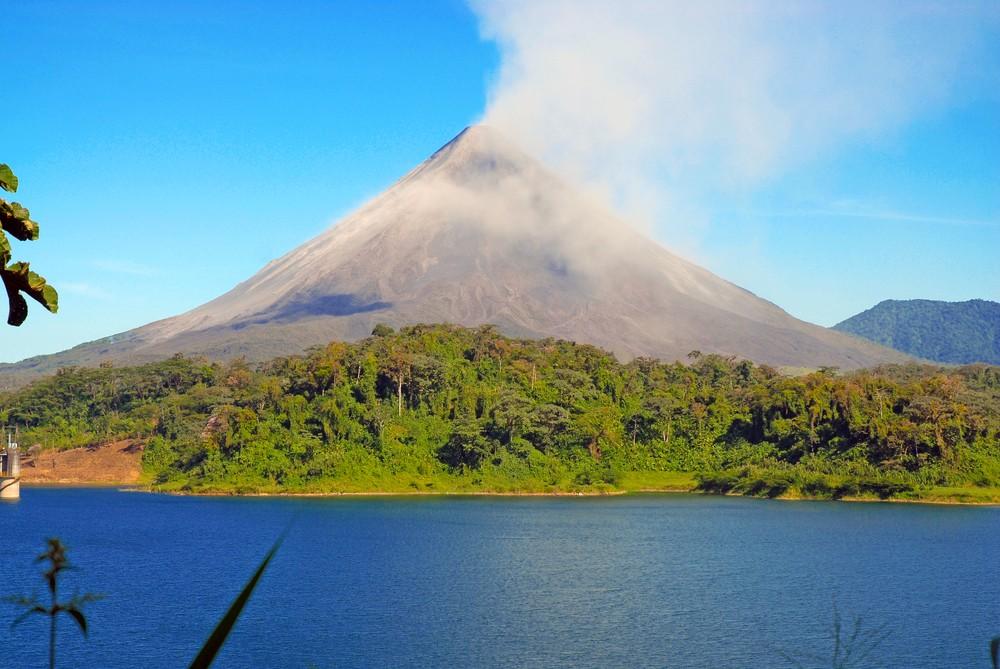
The Arenal Volcano, Image: robert cicchetti / shutterstock
Certainly, the picturesque beaches alone are a reason to travel to Costa Rica. The mangrove forests reach right up to the blue lagoons, and anyone who has experienced the colourful spectacle of a sunset from the perspective of a hammock in Tortuguero on the Caribbean Sea will never forget it. On balmy nights, you can watch the turtles laying their eggs in the sand. But Costa Rica is above all a wonderland of nature between two seas, and for some, this exotic region is a bubble bath for the soul in a pleasant climate and without the danger of terror or civil war.
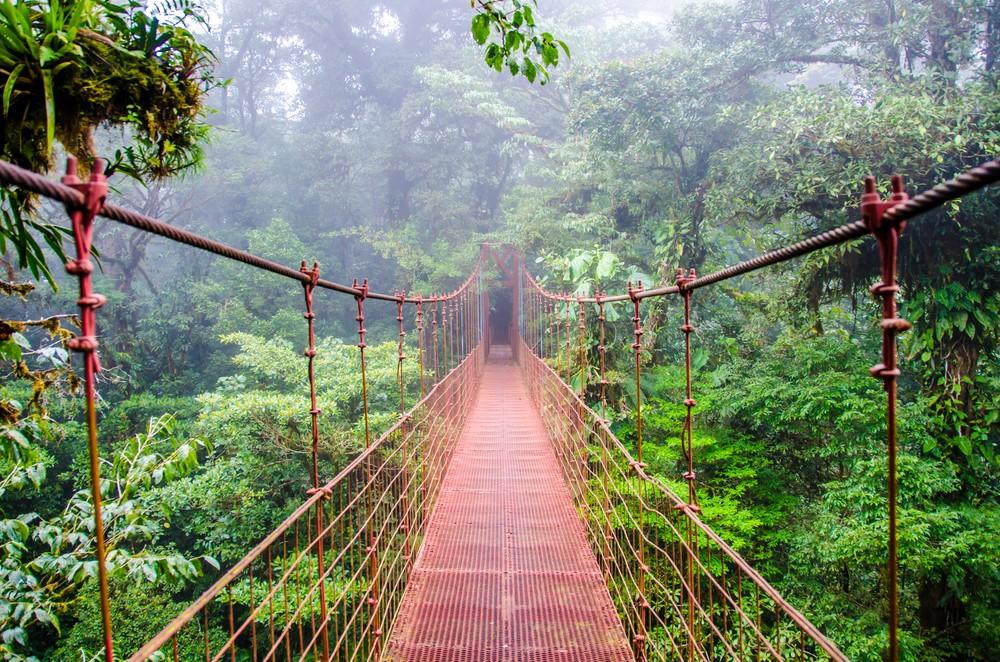
An old bridge in the middle of the rainforest, Image: Simon Dannhauer / shutterstock
Costa Rica has placed no less than a quarter of its land area under nature conservation, because no other country in the world has such a wealth of fauna and flora in such a limited area. Scientists claim to have counted 850 bird species and 150 different amphibians there alone. Costa Rica owes its fascinating rainforest to the fact that it forms a kind of biological corridor between the north and south of the American subcontinent. The country is humid and hot, and the amounts of rain are enormous in some territories.
UNESCO has put three of the largest and most beautiful national parks on its list of World Heritage Sites. In the Parque Nacional Volcàn Poàs, a paved road leads to the vicinity of the crater rim. The largest geyser in the world is also located here. Rich wildlife can be found in Manuel Antonio Park, seven kilometers south of Quepos on the beach of the Pacific. If you are enthusiastic about the combination of beach, sea and rainforest, you are in good hands there, because the distances to the country’s attractions are short. The highest mountain massif in the Cordillera de Talamanca on the border with Panama is dominated by the 3,819-meter-high Chirripó. Pumas, tapirs, the mystical quetzal and wild boars live in the peripheral areas of the glacial lakes.
Costa Rica delights vacationers from all over the world with a wild and sublime landscape. “Small is beautiful” – this is the advertising slogan of the tourism managers of the country, which is extremely careful with its natural treasures. There are the almost impenetrable rainforests in the south, the picture-book volcanoes that stretch across Costa Rica and the misty jungle of Monteverde with its suspension bridges and the refuge of the lively Kabuzin monkeys.
If you want to experience this tropical country with your eyes open, you should opt for a round trip. The word “ecotourism” is to be taken seriously in Costa Rica, because several villages and cooperatives have committed themselves to this trend and offer excursions that focus on nature. The tours lead to the fertile and hilly regions at the foot of the Irazú volcano with a landscape that is quite close to that of Switzerland . If you want to penetrate into the depths of the rainforest, you can use the longboats and the company of local guides on the canals and river arms. It is a journey into a world where everything flies and crawls, smells and blooms.
Travel information Costa Rica
Capital
San José
Form of government
Republic
Presidential democracy
Currency
Colón (CRC)
Area
approx. 51,100 km²
Population
approx. 4,947,490 (2017)
Languages
Spanish
Electricity grid
120 volts, 60 Hz
Area code
Phone +506
Time zone
UTC−6
Holidays in Costa Rica: The most important information
Important telephone numbers
Emergency number (police, fire brigade, ambulance): 911
Police: +506 2222 1365
Fire Department: +506 2222 8191
Ambulance Service (Cruz Roja): +506 128
German Embassy in San José: +506 2290 4243
German Doctors
Dr. Bernhard Bleuel: Hospital Clínica Bíblica, San José, +506 2522 1000
Dr. Dieter Lehmann: Hospital CIMA, Escazú, +506 2208 1000
Opening hours
Shops: Usually Monday to Saturday from 9:00 am to 6:00 pm, some shops are also open on Sundays.
Supermarkets: Usually daily from 7:00 a.m. to 10:00 p.m.
Restaurants: Lunch from 12:00 to 14:30, dinner from 18:00 to 22:00.
Banks: Monday to Friday from 8:30 a.m. to 4:00 p.m., Saturday from 9:00 a.m. to 12:00 p.m.
Airport
Juan Santamaría International Airport (SJO): The country’s main airport, located about 20 km northwest of San José.
Daniel Oduber Quirós International Airport (LIR): Close to Liberia, important for the Guanacaste region.
Post / Stamps
Post offices: In all major cities and towns. Main post office in San José. Opening hours: Monday to Friday from 8:00 a.m. to 5:00 p.m.
Stamps: Available at the post office and in some kiosks and supermarkets.
Costs for letters and postcards to Germany: Standard letter up to 20g: approx. 500 CRC (approx. 0.70 EUR); Postcard: approx. 500 CRC (approx. 0.70 EUR)
Safety
Crime: Costa Rica is considered relatively safe, but tourists should exercise caution, especially in larger cities and busy tourist areas. Keep valuables safe and be careful at night.
Emergency number: 911
Current
Voltage: 110 volts
Sockets: Type A and B (adapters for European plugs are required)
Tip
Restaurants: 10% service charge is often included in the bill, additional tip of 5-10% is appreciated.
Taxis: Round up the amount
Hotels: $1-2 per day for cleaning staff
Customs
Allowances: Personal belongings are duty-free.
Alcohol: Maximum 5 liters of spirits or wine.
Tobacco: 500 grams of tobacco or 400 cigarettes or 50 cigars.
Other items: Goods with a total value of up to $500 are duty-free.
Destinations
Arenal Volcano and Hot Springs: The active Arenal Volcano and nearby hot springs are a must-see for visitors.
Monteverde Cloud Forest: A unique ecosystem ideal for hiking and bird watching.
Manuel Antonio National Park: One of the most beautiful national parks with stunning beaches and abundant wildlife.
Tortuguero National Park: Known for the turtles that come to lay their eggs here and the lush vegetation.
Corcovado National Park: A remote paradise with an amazing variety of flora and fauna.
Tamarindo Beach: Popular beach for surfing, swimming and relaxing.
San José: The capital offers cultural attractions such as the National Theatre and the Gold Museum.
Poás Volcano: An active volcano with a spectacular crater lake, easily accessible from San José.
La Fortuna Waterfall: An impressive waterfall near the Arenal Volcano.
Aruba is considered the first of the so-called ABC Islands (Aruba, Bonaire and Curacao). The island was inhabited more than 3000 years ago. This population group, known as Arawak – from the Caiquetio tribe – is believed to have immigrated from Venezuela via the offshore and neighboring islands of Bonaire and Curacao. Even today, Papiamento, the dialect of the Arawak, is used as an officially valid and spoken language. This is considered one of the four main languages, along with Spanish, English and Dutch. However, to a much lesser extent. The reason for this may be the increasing settlement, not least by Europeans. Today, the island of Aruba, which is located just under 25 kilometers off the coast of Venezuela , is one of the more expensive islands in the Caribbean. Aruba used to be part of the Netherlands Antilles.
Islas Inutiles historical overview
Image: Steve Photography / shutterstuck The Spaniards reached the island in the 16th century and called it “Islas Inutiles”. In the translated sense, this means as much as useless. The island seemed useless to them because they did not seem to have any mineral resources that could be used by them. A mistake that, as it turned out later, they would bitterly regret due to the rich gold finds on the island. It was these extensive gold discoveries that led to Aruba gradually becoming more densely populated by countries, especially the Dutch, but also by Americans and other European countries. At the beginning of the 20th century, the gold rush, which had lasted for a long time, ebbed away and passed on the supporting economic torch to oil production. It was then the American company Esso that identified oil deposits off the coast of Aruba and knew how to exploit them until after the 2nd World War. The German Reich, under Hitler’s leadership, set out to attack the island with cannons, but ultimately had to abandon its plan. After the gold rush subsided and when the oil reserves were exhausted, a different, new era began for Aruba. The tourism industry discovered the island. From then on, a real boom began, to which the island owes its current level of residence.
Aruba a different Mallorca?
Despite the fact that it derives its prosperity mainly from tourism, Aruba does not have mass tourism similar to Mallorca (especially El Arenal). Despite the increasing number, in recent years there have been an average of 2 million holidaymakers who visit Aruba year after year. One reason for this may be the relatively long journey. Aruba can be reached from Amsterdam in about 10 hours. Which can probably be seen as one of the reasons why mainly Americans and South Americans visit the paradisiacal island. Whatever the constellation of holiday seekers may look like. The fact is that the airport, the “Aeropuerto International Reina Beatrix”, is one of the most modern but also the safest in the Caribbean .
The climate in Aruba
Flamingos on the beach in Aruba, Image: Natalia Barsukova / shutterstock Aruba has a consistently warm climate with subtropical characteristics. The average temperature is around 29 degrees. Perennial. The constantly prevailing trade winds ensure that there is always a light wind blowing through the island, which has a length of just 30 kilometers and is just 9 kilometers wide. It therefore offers enough space for the slightly more than 100,000 permanent residents, who, by the way, can be counted among the friendliest contemporaries. Which is hardly surprising considering the fact that they have settled on one of the most beautiful islands on earth. During the rainy season, which is between October and December, hurricane-like storms can sometimes occur. A visit to Aruba should therefore be planned for the time outside the rainy season. The warm and humid climatic conditions are also responsible for the fact that mosquitoes that transmit dengue fever have found their home in Aruba. So you should ensure sufficient vaccination protection. Of course, the blue pearl of Aruba also has other things to offer in terms of fauna and flora. The entire coast is considered a nature reserve, which is why the authorities pay strict attention to compliance with environmental protection rules. The coral reefs around Aruba offer numerous animal inhabitants an almost paradisiacal home. Among them are sharks, but they usually stay away from beaches. However, you shouldn’t let it come down to that. Two species of snakes have settled inland. One of them is the small rattlesnake, which is especially found in Aruba. Apart from the fact that this makes up a population of about 230 specimens and the relative size of them, it can happen that you come across them on a trip inland. Authorities warn against the bite of this “small” rattlesnake. Which is why it is also pointed out that in the event of an emergency, the life-saving serum must be administered. However, incidents have hardly been reported in recent years.
Special features of the island of Aruba
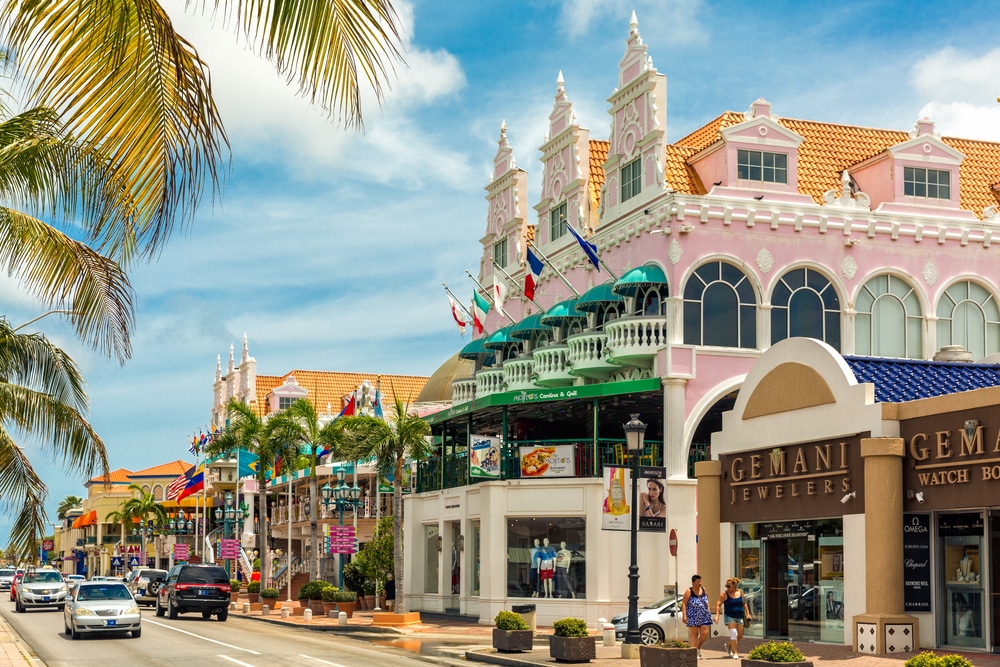
Oranjestadt, Image: mandritoiu / shutterstock Aruba impresses above all with its assertive nature, despite all human influences. The coast is considered a diver’s paradise and the richness of fauna and flora is considered one of the most diverse on earth. The same applies to the mainland, where the cactus species in particular are among the most noteworthy succulents. As well as the diva-diva trees, which are typical for this part of the Caribbean. The western part of the island has developed into the center, with the capital Oranjestad. If you are in the mood for a little Caribbean nightlife, you will get your money’s worth there. Also worth visiting are the renovated dwellings of the slave settlements in the north of the island, which want to be seen as a historical memorial. Aruba is still considered by many people to be the paradise for foreigners and foreigners. beginners in the paradisiacal Caribbean life. It’s hard to blame them.
The most beautiful beaches in Aruba
Eagle Beach – Eagle Beach is known for its beautiful white sand beaches and crystal clear waters. It is also the widest beach in Aruba and offers many amenities such as umbrellas, sun loungers and water sports facilities.
Palm Beach – Another very popular beach in Aruba is Palm Beach, which also offers beautiful white sand beaches and crystal clear waters. There are many hotels, restaurants and shops near the beach.
Baby Beach – Baby Beach is located in the south of Aruba and is ideal for families with young children, as the water is very shallow and therefore not too dangerous. There are also plenty of picnic areas and BBQ facilities.
Mangel Halto – Mangel Halto is a quiet beach in southern Aruba and is ideal for snorkeling and diving. There are many coral reefs and colorful fish to discover.
Arashi Beach – Arashi Beach is another beautiful beach in Aruba and is ideal for snorkeling and swimming. There are also many rocks and caves nearby to explore.
General information:
Layer: Aruba is an island in the southern Caribbean, about 29 kilometers north of Venezuela.
It is part of the Kingdom of the Netherlands.
Area: The island has an area of about 180 square kilometers.
Population: Aruba has a population of approximately 110,000 inhabitants.
History:
Protohistory: Aruba was originally settled by the Arawak Indians before it was discovered by the Spanish in 1499.
Colonial era: In the 17th century, the Dutch took control of Aruba.
The island was part of the Netherlands Antilles until 1986, when it received autonomous status within the Kingdom of the Netherlands.
Nature and Environment:
Climate: Aruba has a dry climate with low rainfall and warm temperatures throughout the year.
The island lies outside the hurricane belt.
Landscape: The landscape of Aruba is characterized by white sandy beaches, cacti, rock formations and the famous Divi-Divi trees, which are shaped by the steady trade winds.
National parks: Arikok National Park covers about 20% of the island and protects a variety of flora and fauna, including rare plants and animals such as the Aruban cave thrush.
Tourism:
Beaches: Aruba is known for its stunning beaches such as Eagle Beach and Palm Beach, which are among the best in the world.
Activities: The island offers numerous leisure activities such as snorkeling, diving, windsurfing, sailing and golfing.
Hiking and off-road tours in Arikok National Park are also popular.
Culture: Aruba has a rich cultural scene with numerous festivals, carnival parades, and cultural events throughout the year.
The cuisine is a mix of Caribbean, South American and Dutch influences.
Reachability:
Transport: Queen Beatrix International Airport offers numerous direct flights from North America, Europe and the Caribbean.
The island also has a well-developed road network and public transport.
Special features:
Economy: Aruba’s economy is heavily dependent on tourism.
The island also has a free trade zone and is an important location for oil refineries.
Language: The official languages are Dutch and Papiamento, a creole language.
English and Spanish are also widely spoken.
Safety: Aruba is considered one of the safest islands in the Caribbean, making it a popular destination for tourists.
For many people, the Caribbean is the longing destination par excellence. White sandy beaches, sprawling palm trees, pure sun and an attitude to life dominated by freedom, good humour and music characterise our picture. Whether you’re traveling to the Caribbean individually, traveling there as part of a cruise or booking an all-inclusive vacation, relaxation is guaranteed. Because as soon as you get off the plane, you have arrived in another world and the attitude to life of the Latinos is so contagious that it captivates everyone.
A brief overview
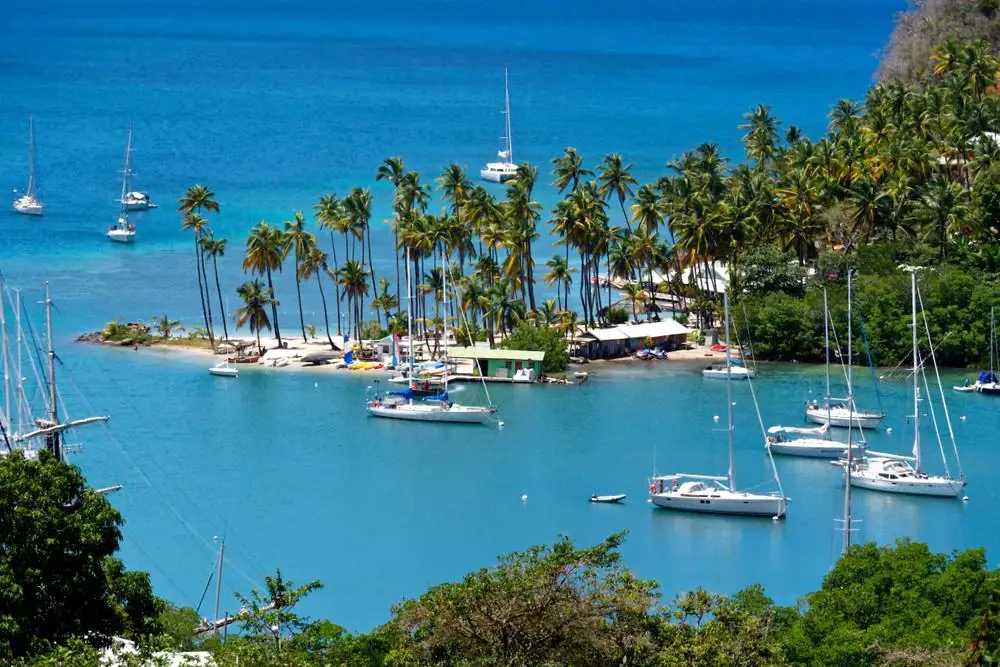
The port of St. Lucia, Image: Erika Bisbocci / shutterstock
The Caribbean is divided into the Western Caribbean, the Southern Caribbean, the islands in the open Atlantic North, the islands in the open Atlantic South, the Greater Antilles, the Lesser Antilles.
The most popular holiday islands are the Dominican Republic, the Bahamas, Trinidad & Tobago, St. Marteen and Cuba. Cuba is the largest of the Caribbean islands in terms of area.
The best time to travel to the Caribbean
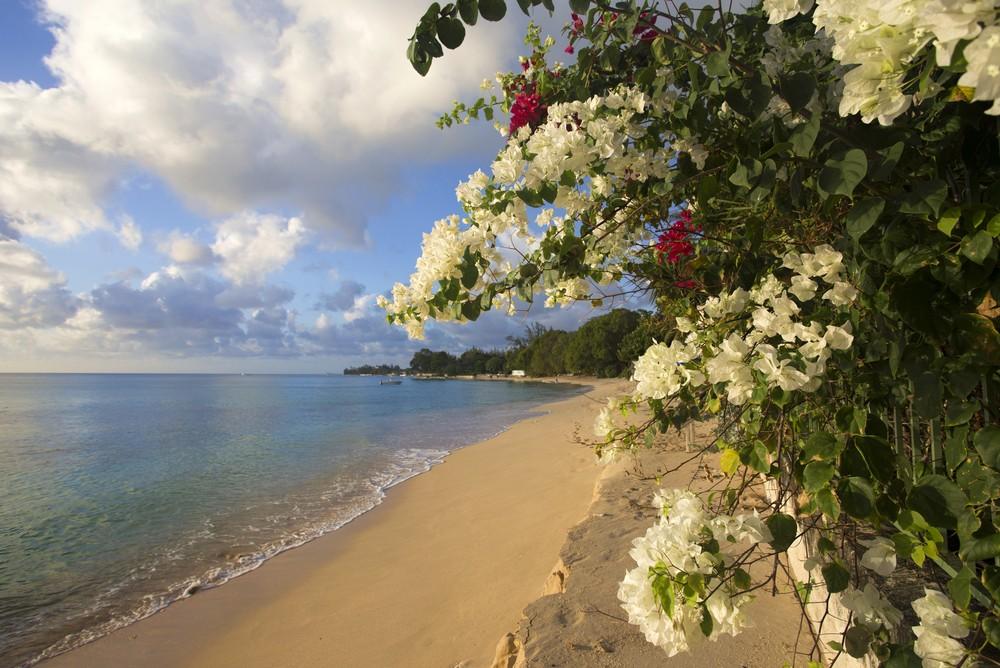
Rest and relaxation in Barbados, Image: Svitlana Minazova / shutterstock
Since the Caribbean stretches over several thousand kilometers, there are different recommendations for different islands when it comes to travel time. In principle, it is best in our European winter in the Caribbean. And that’s a perfect exchange: escape the cold and snow and enjoy the sun and Caribbean flair. But here is an overview of the recommendations for travel time:
Cuba: The best time to travel to Cuba is from November to April. This leaves the rainy season and hurricane season behind and has pleasant temperatures and more pleasant humidity in the dry season. Nevertheless, due to its location, it is always relatively humid and warm in Cuba and the humidity rarely drops below 80 percent.
The Bahamas: A trip to the Bahamas is best from December to May. During the day it has a pleasant 25 to 29 degrees Celsius and it is dry. Due to the warm Gulf Stream, the water temperatures are very very pleasant.
Grenada: For Grenada , the recommendation for travel time is similar, but the best time there starts in January, but also extends into May.
Cruises: At the same time, the recommendation for a cruise in the Caribbean also falls. However, this is of course still somewhat dependent on the specific goal.
Trinidad and Tobago: Trinidad and Tobago in the north of the Caribbean off the coast of Venezuela is usually outside the hurricane zone, but should only be visited between January and May due to the rainy season.
St.Marteen: For St. Marteen (Leeward Islands), the recommended travel time is from January to April.
ABC Islands: A destination for the whole year are the ABC Islands (Aruba, Bonaire and Curacao). There it has eight to nine hours of sunshine per day all year round. And even if there is a short rain shower, it doesn’t dampen the holiday joy.
Of course, you can also travel to the Caribbean outside the recommended travel times, but the weather is much wetter in the rainy season and the sky is cloudy rather than bright blue. If you are planning to travel to the Caribbean during hurricane season, please pay special attention to the regional warnings so that your holiday enjoyment is not dampened.
Things to do in the Caribbean
If you travel to the Caribbean, you have many opportunities to do something. If you want, you can just let your mind wander and do nothing: relax on the beach all day, enjoy delicious cocktails in a beach bar in the afternoon and just enjoy life. But even those who want to be active can experience a lot.
Sport and exercise
Image: Larwin / shutterstock
If you like water sports, you can go swimming and diving in many places. The Caribbean is home to many interesting spots for snorkeling and diving. And Belize has the second largest barrier reef in the world. Or you can try windsurfing or kitesurfing and feel the power of wind and water. Plus, you can make the catch of a lifetime deep sea fishing or take off flyboarding. And there are also sports opportunities away from the water. Because some of the islands, for example Puerto Rico, are mountainous and invite you to hike. The volcanoes can be explored on an extensive hike – for example on the island of Dominica.
Cities and culture
If you are interested in culture, you can go on a discovery tour in ancient Mayan sites in countries such as Belize, Mexico or Guatemala and immerse yourself in times long past. And Cuba also offers a lot of activities and wonderful photo opportunities for those interested in culture. Many Caribbean cities are characterized by the style of the colonial era and impress with magnificent restored buildings and mighty colorful cathedrals from this time. In many cities there are also colorful markets where you can stock up on fresh fruit. Or you can stock up on souvenirs and take a little piece of the Caribbean home with you.
Flora and fauna
And if you are interested in foreign flora and fauna, the Caribbean is the right place for you. Because there are many animals and plants to marvel at in numerous national parks that do not exist in Europe. The Dominican Republic alone has over 100 national parks and invites you to dive into the Caribbean jungle.
Culinary delights from the Caribbean: A journey of discovery through the flavors of the islands
The Caribbean is not only known for its beautiful beaches and crystal clear waters, but also for its diverse and tasty cuisine. The culinary landscape of this region is as colorful and diverse as the culture, which has been shaped by the different peoples and their history. The Caribbean includes many different islands, each with its own culinary traditions, but a common denominator is the use of fresh, local ingredients and the combination of flavors from Europe, Africa, India and the indigenous people.
Influences on Caribbean cuisine
The cuisine of the Caribbean is a result of the region’s history, which is marked by the colonial past, slavery and migration of different peoples. Originally influenced by the indigenous Taino, Arawak and Cariben, African, European and Asian influences were later added. This mix of traditions has given rise to a distinctive culinary identity.
African influences: Many spices and preparation methods come from African cuisine, especially the use of beef, chicken and fish, but also the famous “one-pot” cooking, in which all ingredients are cooked in one pot.
European influences: The Spanish, French and British colonial rulers brought new ingredients and cooking techniques with them. This is evident in dishes such as ragoûts (stews) and croquettes (meatballs).
Asian influences: The immigration of Chinese and Indian workers brought spices such as curry, ginger, and garlic to the region, leading to the emergence of dishes such as the popular curry chicken.
Indigenous influences: The indigenous peoples of the Caribbean used ingredients such as cassava, yams, sweet potatoes and corn. These are still used in many dishes today.
The most important ingredients of Caribbean cuisine
Caribbean cuisine thrives on the fresh, local ingredients that are abundant due to the tropical climate. The most common ingredients include:
Fish and seafood: Since the Caribbean region is surrounded by oceans, fish and seafood are ubiquitous in the kitchen. Redfish, snapper, crawfish and shrimp are particularly popular.
Tropical fruits: Mangoes, pineapples, papayas, coconuts and bananas are not only delicious snacks but also essential ingredients in many dishes and drinks.
Herbs and spices: Caribbean cuisine is known for its intense flavors. These include fresh herbs such as thyme, oregano, parsley and coriander, as well as spices such as ginger, cinnamon, cloves and nutmeg.
Hot sauces: Pepper and hot sauces made from habaneros, Scotch bonnet or other chili peppers are very common in the Caribbean and give the dishes their distinctive spiciness.
Typical dishes from the Caribbean
Each island in the Caribbean has its own culinary specialties. Here are some typical dishes from different countries:
Jamaica – Jerk Chicken: Jerk chicken is one of the most famous dishes of the Caribbean. The chicken is marinated with a spice mixture of allspice, cinnamon, nutmeg, ginger and Scotch bonnet chillies and then smoked over an open fire or on the grill. The smoky flavor combined with the spiciness of the spices is unmistakable.
Trinidad and Tobago – Doubles: Doubles is a popular street food that consists of two soft flatbreads filled with a spicy curry mix of chickpeas. It is often garnished with a spicy tamarind sauce and fresh herbs.
Haiti – Griot: Griot is a traditional Haitian dish made from marinated pork fried in oil until crispy on the outside and tender on the inside. It’s often served with rice and beans, as well as savory sauces.
Dominican Republic – Mangu: Mangu is a dish made from pureed green plantains that is often eaten for breakfast. It is served with fried onions, cheese and egg and is a typical example of the local use of bananas.
Cuba – Ropa Vieja: Ropa Vieja is a classic Cuban dish made from tender, braised beef prepared in tomato sauce with peppers, onions, garlic and cumin. It is often served with rice and black beans.
Barbados – Flying Fish and Cou Cou: The national dish of Barbados consists of grilled or fried flying fish served with cou cou, a porridge made from cornmeal and okra. It is a simple but tasty dish that reflects the essence of Caribbean cuisine.
Caribbean Drinks
The Caribbean is also famous for its tropical drinks, both alcoholic and non-alcoholic. Among the best known are:
Rum: Rum is probably the most famous alcoholic drink from the Caribbean. In countries such as Cuba, Jamaica and Barbados, many different types of rum are produced, which are enjoyed both neat and in cocktails such as the Mojito, Piña Colada or Daiquiri.
Caribbean Sorrel: Sorrel is a drink made from hibiscus flowers that is especially popular at Christmas. It is prepared with sugar, ginger and spices such as cinnamon and cloves.
Tropical juices: Fresh juices made from mangoes, papayas, pineapples or guavas are widely available in the Caribbean and are a refreshing refreshment on hot days.
Cruise itineraries and ports in the Caribbean: A paradise at sea
The Caribbean is one of the most popular cruise destinations in the world, and for good reason: the crystal clear waters, tropical islands, diversity of cultures, and countless activities on board make Caribbean cruises an unforgettable experience. In this article, we’ll take an in-depth look at the Caribbean’s most popular cruise itineraries and ports, as well as special experiences that await passengers on board and ashore.
The most popular cruise itineraries in the Caribbean
The Caribbean offers a wide range of cruise itineraries, departing from various port cities in the United States, Mexico, and Central America. Depending on the duration of the trip and interests, holidaymakers can choose between short 3- to 4-day trips and longer, multi-week tours. Here are some of the most popular routes:
1. Western Caribbean
The Western Caribbean is known for its impressive islands, white sandy beaches and cultural highlights. This route usually goes to ports in Mexico, Jamaica, the Cayman Islands, and Belize.
Ports:
Cozumel (Mexico): Cozumel is a popular destination for divers and snorkelers, thanks to its colorful coral reefs. The island also offers a mix of Mayan ruins, beaches, and lively towns.
Montego Bay (Jamaica): Here, cruise ship passengers experience the Caribbean joie de vivre to the fullest. Popular excursions include Dunn’s River Falls and visits to plantations and rum factories.
George Town (Cayman Islands): The Cayman Islands are known for their stunning beaches and clear waters. Snorkeling and diving trips are particularly popular here, as well as boat trips to the famous Stingray City.
2. Eastern Caribbean
The Eastern Caribbean offers some of the region’s best-known islands, including the Bahamas, Puerto Rico, St. Thomas, and the Virgin Islands.
Ports:
Nassau (Bahamas): Nassau on New Providence is an exotic paradise that offers both history and luxury. A visit to the Atlantis Resort and the famous Straw Market is a must.
San Juan (Puerto Rico): The capital of Puerto Rico is a UNESCO World Heritage Site, known for its colonial architecture, the old fortress El Morro and the historic old town.
Charlotte Amalie (St. Thomas, US Virgin Islands): St. Thomas is known for its perfect shopping and stunning beaches. Diving and snorkeling trips as well as boat trips to secluded bays are particularly popular here.
3. Southern Caribbean
View of Willemstad, the capital of Curacao. Image: emperorcosar / shutterstock
The Southern Caribbean offers a more remote, less-visited side of the region, with less touristy hustle and bustle and breathtaking landscapes.
Ports:
Oranjestad (Aruba): Aruba is famous for its white sandy beaches, crystal clear waters, and dry climate. Particularly well-known are the beaches of Palm Beach and Eagle Beach, which are ideal for relaxation and water activities.
Willemstad (Curaçao): The Dutch Caribbean island of Curaçao enchants with its colorful architecture, coral reefs and multicultural heritage. A highlight is a visit to the Christoffel National Park.
Kralendijk (Bonaire): Bonaire is a paradise for nature lovers and divers. The island offers some of the best diving in the Caribbean, as well as pristine beaches and abundant birdlife.
Ports in the Caribbean: More than just a port of call
The ports in the Caribbean are not only access points to the islands, but also highlights in their own right, offering travelers fascinating experiences. Many cruise ports have modernized their infrastructure in recent years to offer guests an even better experience. Some of the most famous and popular ports are:
Labadee (Haiti): A private Royal Caribbean port that offers passengers exclusive access to a tropical paradise. Labadee is known for its white sand beaches, zip-lining across the ocean, and the chance to swim and snorkel in the clear waters.
CocoCay (Bahamas): Another private island port operated by Royal Caribbean. CocoCay offers a variety of activities, from a water park with waterslides to private cabanas and glass-bottom boat excursions.
Half Moon Cay (Bahamas): An idyllic, unspoiled paradise offered exclusively to passengers by Holland America Line. Here, guests can relax on pristine beaches or swim in the blue lagoon.
Special experiences on board Caribbean cruises
A Caribbean cruise offers many exciting experiences not only on land, but also on board. Here are some highlights that await passengers on a cruise through the Caribbean:
1. Luxurious Facilities and Entertainment
Modern cruise ships offer a variety of leisure options. Many ships have luxurious spas, gyms, pools, and Jacuzzi areas where guests can relax and rejuvenate. Entertainment is provided by Broadway-like shows, comedy performances, live music, casinos and even ice rinks or surf simulators. Some shipping companies even offer special theme nights and parties that take up the Caribbean theme.
2. Gastronomic highlights
The cuisine on board Caribbean cruise ships is as diverse as the region itself. Cruise lines offer an extensive culinary offer, from all-you-can-eat buffets to fine dining restaurants and specialty restaurants with Caribbean and international dishes. There are also often theme evenings on board that focus on Caribbean dishes.
3. Water sports and adventure on board
For the more adventurous, many cruise ships offer a range of activities, including waterslides, climbing walls, zip-lining, or even kart race tracks on the ship. Diving or snorkeling trips are also frequently offered, and some ships even have their own “platforms” for divers that lead directly into the Caribbean waters.
4. Recreation and wellness
For those seeking relaxation, Caribbean cruises offer plenty of wellness options, including massages, yoga classes, beauty treatments, and steam rooms. Many cruise ships have a spa area overlooking the sea, which allows guests to pamper themselves in a dreamy setting.
5. Exclusive shore excursions
Special excursions are offered at each port, allowing passengers to experience the islands of the Caribbean at their best. From private beach days to safari tours in pristine rainforests to cultural and history tours, these excursions offer unique insights into life on the islands.
Six official languages and exciting religions
In addition to many unofficial languages of the local population, there are six official languages in the Caribbean. Spanish is the most widely spoken language and the official language of Puerto Rico, Cuba and the Dominican Republic. The other languages are English, French, Dutch, Haitian and Papiamento. Papiamento is a creole language spoken on the ABC Islands. When it comes to religions, there are also very different faiths among the more than 40 million inhabitants of the Caribbean.
The majority of this is attributable to Christianity. And other well-known religions such as Hinduism, Buddhism or Judaism are also represented. But what is really exciting are the rather unusual and sometimes spiritual beliefs. Voodoo is one of the best known. The syncretic religion often exists parallel to Christianity or is practiced additionally. In addition to a lot of witchcraft and sorcery, voodoo also stands for the healing power of plants. Especially in Cuba, many people live out the Santería faith. This is a faith imported by African slaves and mixed with Catholic veneration of saints. This rather unknown religion is opposed by the well-known religion of the Rastafarian movement. It was created in the 1930s in the course of the Black Power movement in Kingston, Jamaica. It owes its fame to the famous representative Bob Marley, who sang against racism and slavery. Characteristic external feature are the dreadlocks. They serve as a symbol of pride in the homeland of Africa.
Exotic plants and rare animals
The landscape and underwater world of the Caribbean are just as diverse as the inhabitants. If you are on holiday here and are looking for a change from the white sandy beach and palm trees in between, you will find all kinds of alternatives. Beautiful rainforests entice with lush greenery. Impressive waterfalls, fascinating mountain landscapes and extinct volcanoes satisfy the thirst for adventure. Cuba’s mountain forests are home to many different species of orchids. Sap-rich plants such as frangipani trees, mangroves and ball cacti enrich the natural landscape of the Lesser Antilles and on the ABC Islands, the bizarre Divi-Divi trees sometimes grow directly on the beach. Culinary highlights are provided, for example, by the guava tree, the mango tree, the olive tree or the avocado tree.
In numerous botanical gardens, there is a colourful floral picture of heliconias, bromeliads, flamboyant and many other types of flowers. With over 14000 plants, this diversity of Caribbean flora is not surprising. In the Caribbean wildlife, birds are strongly represented with more than 700 species. The parrot species Blue-headed and Imperial Amazon are only found in Dominica. The latter even has the status of national bird and is threatened with extinction. Wedge-tailed plovers are especially found on St. Martin and Aruba is associated with the flamingo. But it is not only special bird species that fascinate animal lovers. Caribbean manatees are among the rarest animal species in the world. The Caribbean manatees are protected. An encounter with iguanas, crocodiles, bats, the famous Bahamas pigs or sea turtles is also possible.
The history and colorful culture of the Caribbean
The first settlement of the Caribbean took place in 3500 BC. They were Indians from Venezuela. The friendly Arawak Indians were added as a second people. This was followed by the warlike Indians of the Cariben tribe, who ultimately gave the popular holiday region its name. Columbus discovered some Caribbean islands between 1492 and 1504. Further settlement took place through oppression and slavery. In the 16th century, the colonial era began with the arrival of the English. The French and Dutch conquered some of the colonies a short time later and with the arrival of the Africans in 1794, slavery was banned. However, Napoleon reintroduced it in 1802 before Victor Schoelcher banned it again in 1848 and thus the first independence movements began. Workers from China and India were now hired to work on the sugar cane and tobacco plantations.
Their colonial past is still strongly evident in today’s Caribbean. The story is of course less beautiful, especially because of slavery. Nevertheless, this difficult time has also contributed to the fact that today the diverse and cheerful culture makes the region so unique. Each Caribbean island has its own cultural mix. A very important part of Caribbean culture is music. While the Afro-Caribbean music style calypso is mainly found in Barbados and Trinidad and Tobago, Jamaica is the cradle of reggae. An important cultural event is the Carnival of Limón. The entire Limónensa community participates in this festival of music, dance and masquerades of the most diverse kinds. Many tourists also do not miss this annual spectacle in the week around 12 October. The typical Caribbean cuisine also reflects the multicultural diversity. Through the colonial period, Indian cuisine mixed with European influences. Later, Indian components were added and typical foods of African cuisine such as plantains, cassava or sweet potatoes are also used.
Travel budget and cost planning for a Caribbean trip: What you should know
The Caribbean is a dream destination for many travelers, but before you pack your bags, it’s important to create a realistic cost plan for your trip. Prices vary depending on the island, travel time, and type of accommodation, but with a little planning, you can tailor your Caribbean trip to your budget. Here are some key factors that affect costs and tips on how to create a realistic travel budget:
1. Flights
Flights to the Caribbean can vary greatly, depending on the time of travel, the choice of airport and the departure region. Direct flights from major European or North American cities such as New York, London or Miami are often cheaper than flights with stopovers. The high season (December to April) is more expensive, while the low season (May to November) often offers better deals.
Price range: Direct flights from the US can cost from around $200-500 (for one-way round-trips), while flights from Europe can range from €500 to €1000, depending on the destination and booking period.
2. Accommodation
The Caribbean offers a wide range of accommodations, from all-inclusive resorts to luxurious hotels to budget guesthouses and vacation rentals. The choice of accommodation often depends on your travel style and budget.
Budget options: Budget accommodations like guesthouses and Airbnbs start at around $50-100 per night. These are suitable for travelers looking for simple but comfortable places to stay.
Mid-range: Hotels or smaller resorts in the mid-range cost around $100-250 per night.
Luxury: Five-star resorts and exclusive all-inclusive hotels in the Caribbean can cost anywhere from $300 to $800 per night, although these rates can be even higher in high season.
3. Catering
Food and drink can also vary depending on the destination and type of accommodation. If you’re staying at an all-inclusive resort, most meals are included in the price. In other cases, you should count on meals in restaurants.
Restaurant dining: A simple lunch at a local restaurant costs around $10-20 per person. A dinner at a fine dining restaurant can cost anywhere from $30-50 per person.
Self-catering: If you are staying in an apartment or guesthouse with a kitchenette, you can save money by visiting local markets or supermarkets and cooking for yourself. Prices for fresh produce vary by island, but are usually cheaper than restaurant visits.
4. Activities and excursions
The Caribbean offers a variety of activities, from water sports to cultural tours and nature experiences. Prices for excursions may vary depending on the destination and provider.
Diving and snorkeling tours: These usually cost between $50 and $150 per person, depending on the duration and destination.
Boat trips and whale watching: A half-day boat trip can cost around $50-100.
Attraction entrance fees: Many museums or national parks charge entrance fees ranging from $5 to $20.
Family-friendly destinations in the Caribbean
The Caribbean is a wonderful destination for family vacationers, with many kid-friendly hotels, resorts, and activities designed specifically to meet the needs of families. Here are some of the best family-friendly destinations:
1. Bahamas
The Bahamas is known for its stunning beaches and family-friendly resorts. The island of Nassau is particularly recommended, which offers cultural attractions such as the Ardastra Gardens Zoo as well as child-friendly beaches. Many resorts offer kids’ clubs, children’s pools, and special excursions, such as boat tours to see Exuma’s famous pigs.
2. Jamaica
Jamaica is also a very popular destination for families. At hotels and resorts like the Beaches Negril , you’ll find activities and facilities specially tailored for children, including waterslides, childcare, and special kids’ menus. Trips to the famous Dunn’s River Falls, where children as young as 6 years old can also climb, are another highlight.
3. Cayman Islands
The Cayman Islands are known for their beautiful beaches and safe waters that are ideal for snorkeling and swimming. The Stingray City excursion, where you can swim with rays, is a particularly child-friendly activity. The island also offers numerous family-friendly resorts with child-friendly amenities and pools.
4. Punta Cana (Dominican Republic)
Punta Cana is one of the most popular destinations for families in the Caribbean, especially because of its numerous all-inclusive resorts. These offer extensive childcare programs, pools with water slides, and amusement parks. The nearby Manati Park offers the opportunity to swim with dolphins and learn more about the local flora and fauna.
Practical travel tips and preparations for a Caribbean trip
A Caribbean trip requires some preparation to make sure everything goes smoothly. Here are some practical tips to help you plan:
1. Travel insurance
It is advisable to take out comprehensive travel insurance that covers both medical emergencies and travel interruptions or cancellations. Because some Caribbean islands are remote, medical facilities may be limited, and insurance will give you extra peace of mind.
2. Travel documents and visas
For most Caribbean islands, German citizens do not need a visa stay for tourist stays of up to 90 days. However, it is recommended to check the specific entry requirements for your destination, as they may differ depending on the island and country of origin. Make sure your passport is valid for at least 6 months beyond the date of return.
3. Vaccinations and health care
Before traveling to the Caribbean, you should make sure that all recommended vaccinations are up to date. These include vaccinations against hepatitis A and B, typhoid fever and vaccinations against flu and COVID-19. In some areas of the Caribbean, there are also mosquitoes that can transmit diseases such as Zika or dengue. Mosquito repellent is therefore an important part of your travel preparation.
4. Best time to travel
The best time to visit the Caribbean is from December to April, when the weather is dry and pleasant. However, this is also the high season, and the prices of accommodation and flights are higher during this time. The low season from May to November is more favorable, but also associated with the risk of tropical storms. If you choose this time, pay attention to the weather forecast and book flexibly.
5. Money and currency
Most Caribbean islands use the US dollar or local currencies, but these are often easily exchangeable for US dollars. In larger cities, there are ATMs and many shops accept credit cards. Still, it’s wise to have some cash in the local currency with you, especially if you’re visiting smaller places or remote areas.