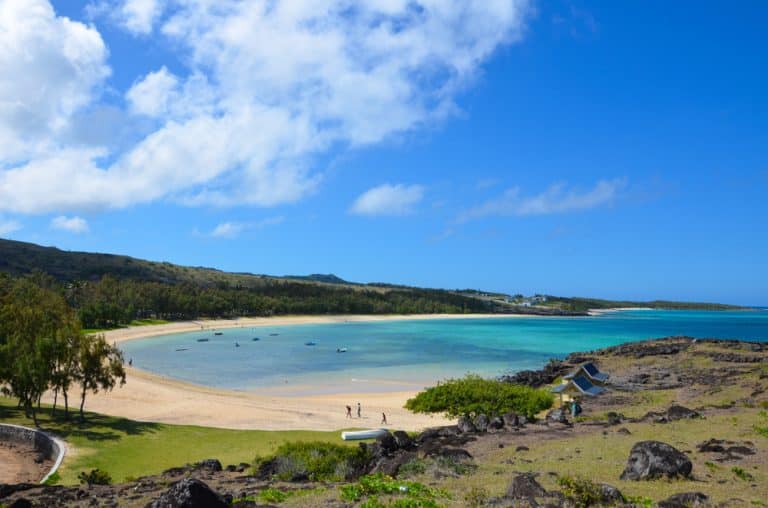
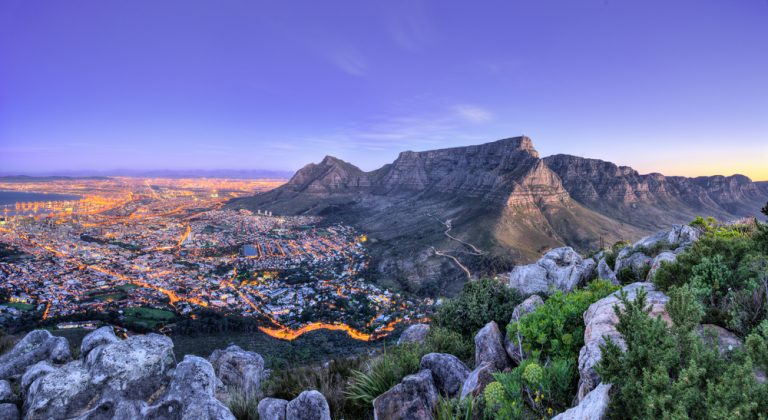
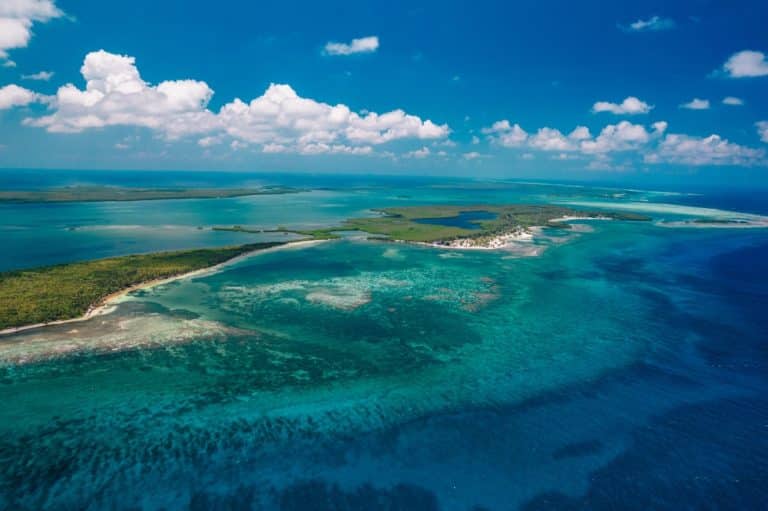
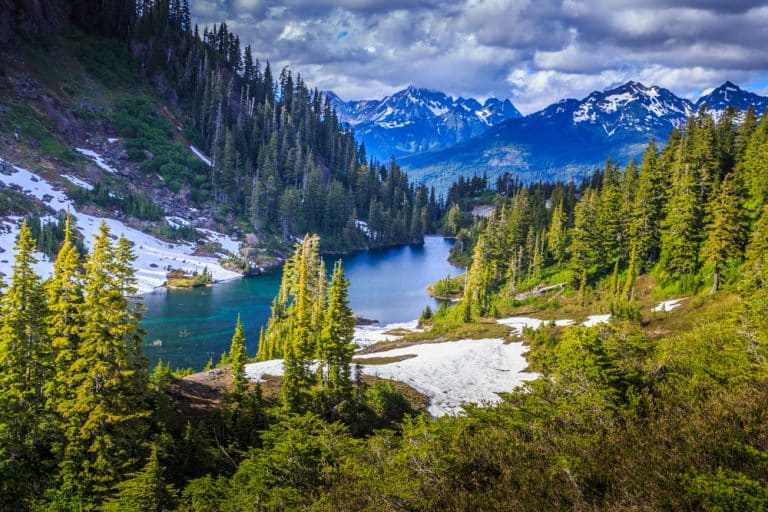
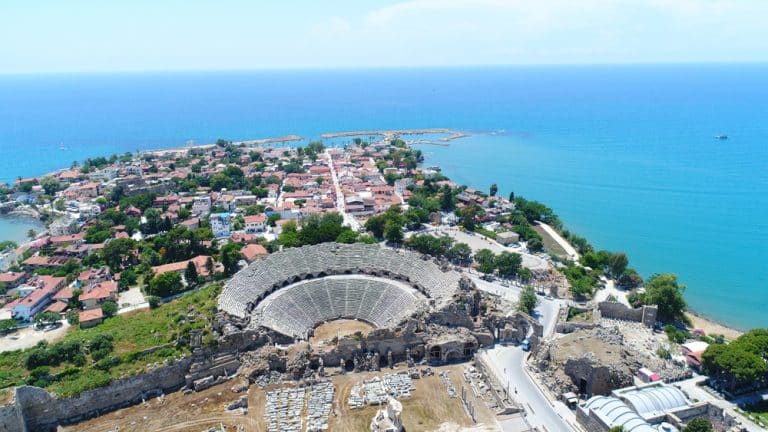


Bulgaria – an insider tip among holiday destinations! More and more Germans are flocking to the golden beaches of the famous Bulgarian Black Sea coast. But the country has much more to offer!
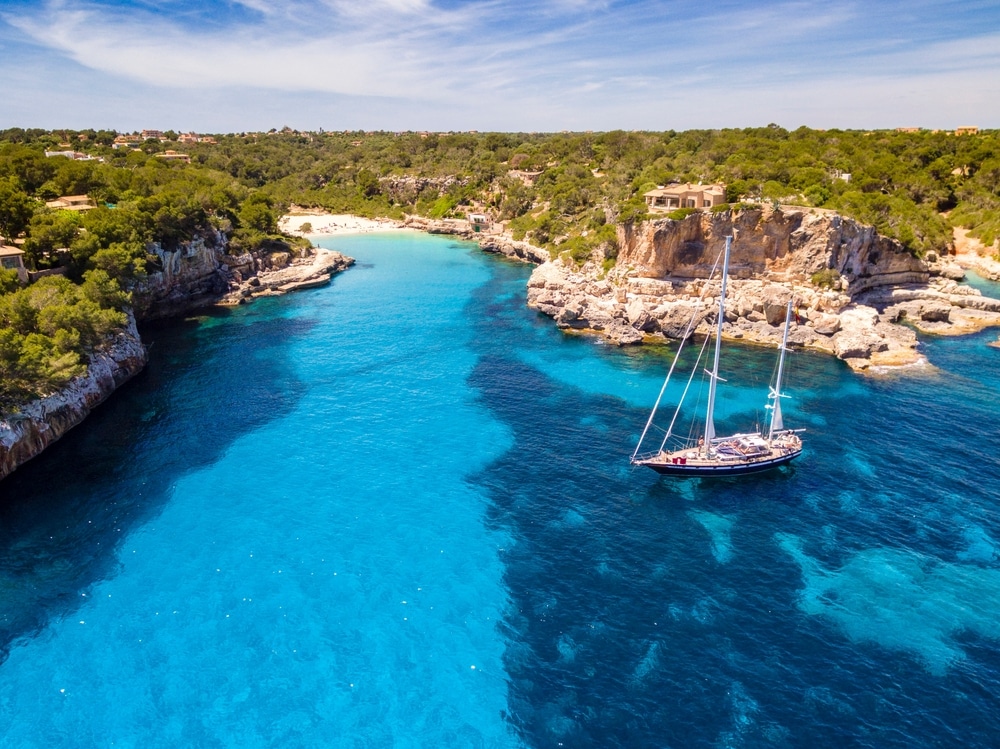
Bolata Beach – A famous bay near Cape Kaliakra, Image: Calin Stan / shutterstock
On Golden Sands, holidaymakers benefit from the guaranteed warm temperatures in summer. But nature lovers in the rest of the country are also happy about the good weather. Because it makes it even easier to explore the beautiful surroundings. For example, around the 260 lakes. Or on a hiking and climbing holiday in the national parks of the Pirin, Rila or Balkan Mountains. And no matter where you look, Bulgaria’s soil seems to be particularly blessed. Wonderful lush green, roses in a wide variety of colors and grapes in almost every front garden. No wonder that Bulgarians are considered sociable and friendly people. A taste of home-grown wine or schnapps (rakija) is definitely part of the holiday.
A visit to Bulgaria is not only worthwhile in summer. Winter sports in the mountains are becoming more and more popular. Snowfall and low temperatures are guaranteed! The 142 health resorts in Bulgaria are also well visited all year round. The hot and cold mineral springs and mud baths are particularly popular. A paradise for spa and wellness tourists!
In addition to its beautiful nature, Bulgaria has a rich cultural heritage. History enthusiasts will find it difficult to visit the approximately 40,000 historical sites, 36 cultural reserves, 160 monasteries and countless museums in just one holiday. But at least the seven UNESCO World Heritage Sites are not to be missed. For example, the tomb of Sveshtari: a magnificently decorated resting place for a Thracian ruler.
Those who prefer to experience the culture of the Bulgarian people live will get their money’s worth with the tradition-conscious nation. Bulgarians like to celebrate and have the opportunity to do so on numerous holidays. On the occasion of holidays, traditional dances are performed in colourful costumes. These are best observed in one of the many cafés or restaurants. Bulgarian cuisine is tasty, rich and comparatively cheap. Even the salads are a special taste experience, as the products grown in the country taste “real like vegetables”. Other regional specialities include yoghurt with the famous Bulgaricus milk bacteria or “Sirene”, a brine cheese.
View of the Bulgarian ski resort of Borovets, Image:
Sporty holidaymakers prefer the active opportunities of the country. Not only hiking and climbing are popular sports. Equestrian sports are also part of the offer, as is cycling on the Eurovelo long-distance cycle paths. Adventure seekers can embark on a rafting or kayaking trip in the whitewater rivers. In the Black Sea, diving is very important. And in winter, you can go skiing in the mountains.
Of course, the cities of Bulgaria also have a lot to offer. In the capital Sofia , shopping enthusiasts have fun in the numerous shopping centers and then rest in one of the parks. The coastal cities of Varna and Burgas invite you to take a walk on the beach or visit the historic old town.
Almost all tourists are drawn to the coast of the Black Sea . You are faced with the choice of quiet, idyllic seaside resorts, such as Kranevo, Sveti Konstantin or Albena. Or you prefer to party into the night. At Golden Sands – the Ballermann on the Black Sea – there is always a lot going on at night. Discos and parties take place directly on the beach or even in the party ship Party Cruise. In any case, a holiday in Bulgaria will be an unforgettable experience!
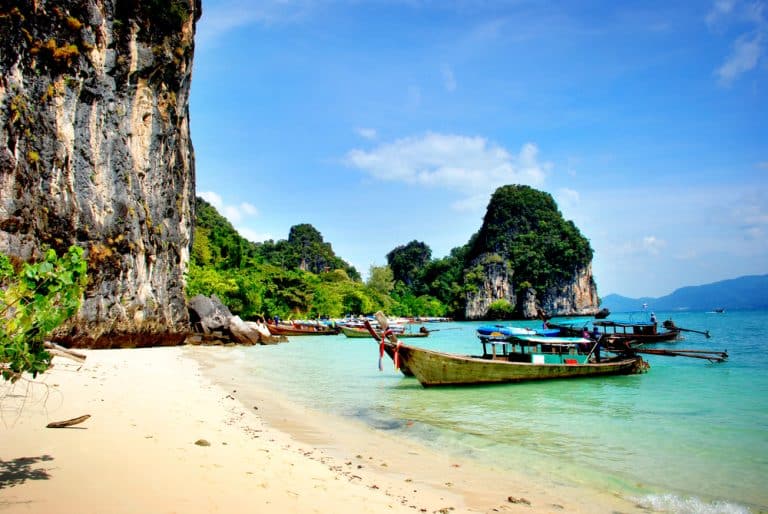
In Thailand, past and present mix to create an interesting and fascinating cocktail for holidaymakers. This region in Southeast Asia has retained a mysterious charm, and many a long-distance traveler who has often landed at the airport of the lively metropolis of Bangkok believes that the smiling politeness of the people in the realm of his majesty will probably survive all time. Here, the guest is what he likes to be most in all countries: king! Thailand has many faces. Exotic beaches ideal for lounging or dreaming. The hidden monasteries in the mountains of Chiang Mai, islands full of melancholy in the Indian Ocean and the South China Sea and the deep green of the jungle.
Image: Iakov Kalinin / shutterstock
And in many regions of Thailand, the rainforest begins on the doorstep of the hotel or resort. The palm trees sway in a gentle breeze on the beaches, orchids bloom in the well-kept gardens, and bananas grow on the mighty perennials with their large leaves. Khao Yai National Park is an almost magical place with one of the most extensive rainforest areas on the Asian continent. The Khao Khiau towers over the undulating green landscape with its 1350 meters, and if you move through the jungle on the narrow paths accompanied by experienced rangers, you will meet leopards, tigers, wild dogs, civets and, of course, many monkeys and birds.
Khao Yai is just one of a total of 95 national parks and protected areas in Thailand. In Khao Sok, on the highway from Phuket to Surat Thani, the largest flower in the world, the Rafflesia, grows between limestone cliffs with a flower diameter of almost one meter. On the border with Malaysia stretches a marine national park: Ko Tarutao. These are exactly 51 almost exclusively uninhabited islands – one more beautiful than the other. They line up like pearls on a string in the Andaman Sea and are home to the sea nomads who leave their houses on stilts all their lives only to fish on the sea.
View of Bangkok, Image: Drone Thailand / shutterstock
If you are in Bangkok for a few days and have gradually gotten used to the traffic on the streets, you should definitely go to the National Museum. It is the largest in Southeast Asia and is housed in a palace of the former viceroy. A visit is like a journey through the history of Thailand.
There’s no question about it: Bangkok is a juggernaut and yet this city is a fascinating experience for most visitors. With the “Floating Gardens”, the golden pagodas and an impressive residence of the king. The statues of the Buddha are just as much a part of the image of this beautiful country as the monks in their saffron-yellow cloaks. The people of Thailand draw strength from the encounter with the images of Gautama. Spirituality and religiosity shape everyone’s lives.
Thailand is the traditional “land of the free” and it is about the size of France with a 2,500-kilometer stretch of coastline. It is an Eldorado for water sports enthusiasts and a highlight of international tourism. Guests are welcomed by their hosts with folded hands in front of their faces, and those who know the customs there should refrain from shaking hands and leave it at a slight bow. And one thing should definitely be taken to heart: The head is considered the seat of the soul and must never be touched.
Travel information Thailand
Capital
Bangkok
Form of government
Hereditary Monarchy
Military government (under constitutional monarchy)
The extremely hospitable coastal nation in southwestern Europe leaves nothing to be desired – even though Portugal covers just a quarter of Germany’s area. An ideal destination for relaxed round trips, provided you can resist the urge to stay in place. Because it’s beautiful basically everywhere here.
Porto, Image: artem evdokimov / shutterstock
It is not without reason that Portugal’s multifaceted nature earned the country the World Travel Award as “Europe’s most beautiful destination” in 2018. One of the most famous holiday regions is certainly the Algarve, which attracts visitors to the south coast with its beautiful beaches, enchanting bays and spectacular rock formations. With more than 850 km of Atlantic coastline, there are plenty of other ways to spend a great holiday by the sea. Up and down the country, turquoise lagoons, bizarre cliffs and long golden sandy beaches can be discovered. In the large estuaries of the Tagus and Sado rivers, countless flamingos and spoonbills adorn the panorama.
In addition to species-rich snorkeling bays and diving areas , first-class surf spots line the Portuguese coast. In Figueira da Foz, the longest waves in Europe promise endless surfing fun, giant waves provide ultimate adrenaline rushes off Nazaré. The “perfect setting” for surfers is the tube waves of Peniche.
Lisbon, Image: TTstudio / shutterstock
In addition, kitesurfing, parasailing and all conceivable other saltwater sports are also on the program. Climbing routes in the cliffs, coastal hiking trails and various golf courses with a sea backdrop offer dry sports experiences on the Atlantic. Or you can seek out one of the many quiet fishing beaches far away from all the action, where you can simply relax while building sandcastles, swimming or walking.
However, if you want to be active, you don’t have to do without it domestically. The diverse landscapes allow you to do everything that outdoor sports demand. Torrents in the mountains challenge you to canyoning and rafting, while canoeing on the crystal-clear rivers is more leisurely. Climbing or paragliding is a special way to pay respect to Portugal’s mountain ranges.
Those who prefer to travel on two legs will find plenty of attractive trekking routes.
In winter, skiing is possible in the up to 2,000-metre-high mountain ranges of the rugged Serra da Estrela, but this should not keep summer lovers away from Portugal. In the south, there is veranda weather all year round, so you can always enjoy the country’s culinary delights outdoors.
The country produces fruits, vegetables, wine, cheese and olive oil in top quality. After freshly caught fish or a Mediterranean stew, a traditional custard cake always goes well with the espresso. A glass of port wine rounds off the evening.
Speaking of port wine: culture is not only on offer with the city of Porto and its picturesque alleys and historic buildings. Everywhere in the country, the most diverse eras and architectures have been immortalized, so it is not only in Lisbon and Porto that you can walk excellently in the footsteps of the past.
A trip to Portugal is no problem even with island fever. On the one hand, there is the flower island of Madeira, which, with its proximity to Africa , has mild winters, pleasantly warm summers and an incredible sea of flowers in spring to offer.
The Azores are really in the middle of the Atlantic. For a little more changeable weather, the sensational volcanic panoramas and a bath in the hot springs make up for it.
Travel information Portugal
Capital
Lisbon
Form of government
Unitary republic
semi-presidential democracy
Currency
Euro (EUR)
Area
92,212 km²
Population
approx. 10,310,000 (2016 est.)
Languages
Portuguese
Electricity grid
230 volts, 50 Hz
Area code
+351
Time zone
UTC±0
UTC+1 (March to October)Azores:
UTC-1
UTC±0 (March to October)
Of course, it doesn’t always have to be Kavier, but in Monaco’s best company, the expensive is part of the good manners. However, if you go to Monte Carlo as a vacationer, you will by no means fall out of character there when you feast on a fish sandwich on a bench in the picturesque Japanese Garden. This principality is far less snobbish than most people think. For some, the city-state on the Mediterranean Sea is more like an operetta, others see Monaco as an illustrious refuge of good humour and sometimes also good taste. However, here and there the old splendor has faded and is probably getting on in years. But what remains is an affordable luxury from a world between appearance and reality.
The annual highlight of the Formula 1 season: The Monaco Grand Prix, Image: cristiano barni / shutterstock
Monaco has always afforded itself the form of government of a constitutional monarchy. In all important decisions of the miniature state, the prince himself decides. The coastline measures just 4,100 meters and the entire territory is only two square kilometers in size. If you stroll through the English Garden on the Isar in Munich , you will be on the road longer than in Monte Carlo. The small principality is rich, beautiful and sought-after. After all, 41,000 jobs await the approximately 32,000 inhabitants – that is a lonely world record.
The narrow parking space on Avenue Princesse Grace could have sprung from the flashing Who’s Who of the automotive industry, because hardly a mid-range car gets lost here between the Porsches, Lamborghinis and Ferraris. If you take a seat in one of the bars at the marina, you can order a dish of the day for just under ten euros, but when you look at the styled boats, it can also be an expensive lobster. The rental fees in the marina amount to a proud 200,000 euros per year and ship.
Monaco at night, Image: tichr / shutterstock
Monaco would like to expand by landfilling, but the sea on its doorstep is up to seventy meters deep, which would cause costs that would be disproportionate to the yield even in the principality. So they stay small and a pinch immodest…
Prince Albert’s income is estimated at a good hundred million euros. But exact figures are state secrets. After all, he also holds the majority of shares in the casino company “Société des Bains de Mer” and various luxury hotels. If you are a holidaymaker inspecting Monte Carlo, you should start your day with a cup of coffee on the terrace of the legendary Café de Paris . Caruso already treated himself to a petit noir here and Frank Sinatra had a regular place there.
This is the aura of high society, the playground of the paparazzi, a sophisticated dwarf state. But also a particularly beautiful and contrasting refuge on the Mediterranean. Those who do their business there often travel from neighboring France every day, because even Nice is not very far. Those who can afford it, however, float in by helicopter – to the airport in Fontvieille. It is said of Monte Carlo that everyone knows everyone in this illustrious spot. Most of them also know the prince, because the city is actually a village.
Many tourists are drawn to the photogenic market stalls on the Place d’Armes and in the evening to the Texan restaurant, where Prince Albert’s sister Stephanie can also be seen. Even if you don’t stay there, holidaymakers should stop by the Hotel Hermitage and admire the lobby under the glass dome. And if you try your luck in the casino in the hall of the rattling machines or even at the roulette tables, you first have to pat the knee of the bronze horse with the Sun King Ludwig at the entrance. Then, they say, luck would be on your side in the casino.
Monaco is an illustrious stage of vanities – but also one of the sunniest places in the south of the continent. A small realm of elegance and extravagance.
In the north of Spain, on the Bay of Biscay, lies the province of Cantabria (Spanish. Cantabria). The beautiful port city of Santander is the capital and is also considered the economic and cultural center of the province.
Cantabria is also called España Verde – the green Spain – because the rainy area here is significantly greener than other parts of Spain. If you want to spend your holidays in Cantabria, you can look forward to wonderful landscapes, beautiful beaches and unique art treasures.
One of the many cultural highlights is the well-known Way of St. James, which leads through the capital Santander.
About 30 km from Santander, near the town of Santillana del Mar, are the well-known caves of Altamira, known worldwide for their cave paintings and a World Heritage Site since 1985.
Things to do in Cantabria
If you like hiking, you will have plenty of opportunity to do so in Cantabria, as the Cantabrian Mountains have more than 200 mountains with a height of over 2,000 mtr. With 2,648 mtr. the Torre de Cerredo is the highest mountain.
A special and magical place is El Soplao, located 60 kilometres from Santander. Here you will find a cave with underground wells and rivers, labyrinthine galleries, stalactites and stalagmites. Moisture and water have given the cave its shape over thousands of years. The tour of the cave takes about 1 hour.
The Cabárceno Wildlife Park in Obregón is also worth a visit. On a circular route of a good 20 km you can experience more than 100 animal species from 5 different continents. The park with its beautiful gorges, lakes and extensive enclosures can be explored on foot or by car.
Places to visit in Cantabria
The well-known caves of Altamira, Image: EQRoy / shutterstock
Many charming coastal towns such as San Vicente de la Barquera, Castro Urdiales or Comillas are lined up along the coast.
The small port town of Hondarribia has a beautiful old town with the church of Santa María de la Asunción y del Manzano, which is well worth seeing, and a town hall with a beautiful baroque façade. The popular street San Pedro Kalea attracts with numerous tapas bars and many other good restaurants.
Gijon has a special tourist attraction with its aquarium. The aquarium is located directly on the beach of Poniente and has a lot to offer on three floors. A special highlight are the shark feedings, which take place twice a week.
To go on hiking tours in the Picos de Europa National Park, the nice town of Potes is ideal. Here, hikers will find everything they need in the mountains. If you want to enjoy a truly overwhelming panoramic view, you should take the cable car from Fuente Dé to the 2,503 mtr. high Torre de los Horcados Rojos.
Llanes is a charming fishing village and one of the most beautiful places on the coast. A special attraction for mountain bikers and hikers is the Senda de la Costa, a hiking trail that winds along the picturesque coast. The largest beach in the town is Playa de Toro.
The cuisine of Cantabria
The Spanish sausage chorizo, Image: DronG/shutterstock
Cantabria also has a lot to offer in terms of cuisine. For example, the paprika sausages chorizo and the black blood sausages morcielles are particularly popular here. Both are also used in the Fabada, a stew made from white beans. Another speciality is the blue cheese Cabrales, which matures in the caves of the Cabrales region. This cheese consists of a mixture of sheep’s, cow’s and goat’s milk.
The so-called guinea pig belongs to the scorpionfish family and is considered one of the ugliest fish. But its meat is very tasty and is therefore very popular in Pastel de Cabracho.
Beaches and nature in Cantabria
In Cantabria, more than 60 beaches await holidaymakers on more than 220 kilometres of coastline. One of the most beautiful and largest beaches, the 5 km long sandy beach La Salve, can be found in Laredo, a coastal town between the bay of Santona and the Ria de Treto inlet.
The longest sandy beach on the coast can be found in the seaside resort of Zarautz. It is a very popular meeting place for windsurfers. The town’s landmark is the Gothic fortified tower Torre Luzea, which is located in Nagusia Kalea Street.
On a true dream bay and surrounded by the foothills of the Pyrenees lies the seaside resort of San Sebastian (Donostia). The climb to the local mountain Urgull is worthwhile, because from here you have a good view of Concha Bay with its great beach.
Forests, clouds, water – these are the attributes of one of the most beautiful countries in the world – Norway. Norwegians are said to have a certain gratitude for their nature, if only because the gigantic fjords and mighty mountains of their homeland separate them from the rest of humanity. This is certainly a little exaggerated, because a large part of the five million inhabitants are cosmopolitan and meet travelers with great open-mindedness.
This is a country where the waterfalls shine almost magically, where the sea loses its excitement in the fjords and where almost all the cities are located on the coast. “Yes, we love this land that, gnawed by the sea and furrowed with a thousand homes, rises out of the floods”. With these words, a certain Björnstjerne Björnson wrote the lyrics of Norway’s national anthem. It is a declaration of love to a country where the magic of the North reveals itself in many aspects and in images that will never be forgotten.
View of Oslo, Image: Damien VERRIER / shutterstock
Norway is a destination in all seasons. The days of summer are long and usually blessed by a mild climate. The weeks of winter in Lofoten are clear and cold and convey a very special charm on the threshold of the Arctic. This is a large and quiet region that reaches up to the waters of the Arctic Ocean on the maps and is the epitome of vastness and nature in its original state. Someone once said that Norwegians are born with a backpack. And there is probably a little more than just a pinch of truth in it, because in hardly any other refuge on the old continent are there so many hikers between the romantic Oslo Fjord and the Nordic Hammerfest.
Historical places in Bergen, Image: Grisha Bruev / shutterstock
This is a rich country, because the people of Norway grabbed their luck with both hands when the oil fields were discovered off their coasts. Since then, a certain prosperity has set in in the Scandinavian model country. Which in turn means that traveling through Norway is not exactly cheap. And yet nature with all its gigantic facets is worth booking a holiday in Europe’s northernmost country. The hiker – but also the car driver – is enthusiastic about landscapes that could be the product of the third day of creation.
Almost all round trips through Norway start in the capital Oslo, and the fjord of the same name winds its way to the metropolis for exactly one hundred kilometers. If you stand at the railing of one of the large ships that plough through this slender sea passage, you get a taste of what awaits you inland. In the harbour of the capital there is a town hall that looks like a fortress to the arrivals and of which the holidaymakers probably only learn from the travel guide that the Nobel Peace Prize is awarded there every year.
Oslo is dedicated to culture and Norwegian memory. Both are evident not only in Gustav Vigeland’s sculpture park, but above all on Museum Island on the periphery of the harbour, where Heyerdal’s raft Kon Tiki and Fridjof Nansen’s “Fram” can be admired. With it, the Norwegian drifted through the ice of the Arctic. And this as early as the end of the 19th century. Towering above it all is the legendary Holmenkollen, where the cradle of Nordic skiing stood and where the huge ski jump cannot be overlooked even from the ship.
Bergen with its local mountain Floyen presents itself as a good parlour of pop music and yet is first and foremost a port for fishermen. One of the most popular regions in the country is the Geirangerfjord, and anyone who has ever experienced the waterfall of the “Seven Sisters” will never forget this picture. The passengers on board a Hurtigruten ship humbly see the unique panorama from below. This is a visual highlight in this fascinating revue of the elements.
Travel information Norway
Capital
Oslo
Form of government
Hereditary Monarchy
constitutional monarchy with strong parliamentary features
When planning a city trip , Sofia is usually not the first thing that comes to mind, although the capital of Bulgaria is one of the oldest cities in Europe and has a lot of historical, cultural and gastronomic interesting things to offer.
General information about Sofia
The eventful history of Bulgaria is easily recognizable in the cityscape of Sofia and the legacies of Byzantines, Romans and Ottomans are just as obvious as those of socialism. Sofia has been changing since the 1990s and impresses with many contrasts. On the one hand, the grey, partly run-down prefabricated housing estates are still omnipresent, while chic boutiques, modern galleries and inviting restaurants are lined up, especially in the shopping streets of the city centre.
If you are interested in architecture, the beautiful villas from the Wilhelminian period and Art Nouveau always stand out. Sofia is the only European capital that has a local mountain for skiing or hiking in the immediate vicinity. The 278 km² Vitosha Mountains at the gates of the city are an extremely attractive local recreation area for the 1.2 million Sofia residents and the mountains, some of which are more than 2000 m high, are considered a perfect region for active holidays among Bulgarian holidaymakers.
The main sights of Sofia
Saint Sofia, Image: Pres Panayotov / shutterstock
The cityscape of the Bulgarian capital is characterized by buildings from different eras and cultures. Countless imposing magnificent buildings are popular photo motifs and are worth a visit. The best example of this is the so-called “square of tolerance”. Here, a Jewish synagogue, a Catholic and an Orthodox church as well as a mosque are close to each other. The Banja Bashi Mosque with its high minaret was built in the 16th century by the well-known master builder Sinan and is one of the oldest mosques in Europe. It commemorates the time of Ottoman rule in Bulgaria and is the only one of the city’s former 80 mosques that is still in operation today. Sofia is surprisingly green – everywhere small and large parks invite you to relax, walk and linger. The beautiful complex directly behind the Square of Tolerance is also recommended as an oasis of peace during a sightseeing tour.
The real landmark of the city is the Bulgarian Orthodox Alexander Nevsky Cathedral, which fascinates with its size, impressive architecture and magnificent interior. Even during the landing approach to the airport, the building with the golden roofs is clearly visible from the air. A visit to St. George’s Rotunda is also a must on the program during a trip to Sofia. The location in the courtyard of today’s presidential palace alone is extraordinary.
Alexander Nevsky Cathedral, Image: Takashi Images / shutterstock
The early Christian church is believed to have been built by the Romans in the 4th century and is considered to be the oldest building in the city. It is located right next to the archaeological site of ancient Serdica and is particularly famous for its ancient frescoes. In the Boyana Church in the district of the same name, several layers of wall paintings were also discovered, which date back to the 10th century. The church, which was built in several construction phases, was added to the UNESCO World Heritage List in 1979, as it is one of the few completely preserved churches from this early period.
The city’s museums
Sofia has several extremely renowned museums that attract many locals and international visitors, not only on rainy days. The National Historical Museum is certainly the most important among them. Here, the permanent exhibition shows exhibits from all periods of Bulgarian history. The pieces from the fields of religious art and folk art are particularly impressive. The National Museum of Natural Sciences is also worth a visit, especially for families with children. The oldest museum in Bulgaria presents collections of butterflies, insects and taxidermied birds and mammals on three floors. Among the most valuable pieces are the Carolina parakeet, which has been extinct for over 100 years, and a 2 m tall, stuffed brown bear.
Special features in Sofia
National Palace of Culture, Image: Takashi Images / shutterstock
An unusual sight for foreigners is the so-called “knee shops” or “Klek shops”. These kiosks, which are housed in basements, sell a huge range of everyday goods, which can be ordered while crouching through a small hatch. Another curiosity are the elevated wooden houses, which can often be seen next to the traffic lights on busy streets and intersections. These are control points where the traffic lights can be operated manually by police officers, for example if special traffic control is necessary due to a major event or a state visit.
If you’re in Sofia in June, you’ll be lucky enough to experience the Sofia Music Weeks, when Bulgarian and international artists perform in several different venues. In general, the city scores with an important cultural scene. Especially street art and graffiti artworks can be discovered on many house facades when you walk through the streets. In the meantime, even city tours on this topic are offered.
Typical specialties
In the metropolis of Sofia, locals and visitors alike have a choice of countless restaurants serving international and domestic dishes. Bulgarian cuisine is influenced by Greek and Turkish cuisine due to the country’s history and includes a lot of vegetables and dairy products. Typical dishes include the fresh Shopska salad with sheep’s cheese and Bob Chorba, a soup with white beans that can be described as the national dish of Bulgaria.
General Travel Information Sofia
Sofia attracts with a lot of culture, delicious food, countless nice cafés and extremely reasonable prices. In the small shops and on the colourful markets, tasteful souvenirs can be bought well. A shopping experience in a class of its own is the luxury department store ZUM in the city center. Built in the 1950s, the seven-storey building offers a wide range of goods, from branded clothing from all famous fashion labels to all kinds of electronics. The covered courtyard is also architecturally interesting.
For a trip to Sofia, you should plan at least three full days. The months of May to September are ideal in terms of weather, because then it is usually warm but not too hot. The maximum temperatures in July and August average 27°C. The city is also wonderful for a combination tour of sightseeing program and active vacation in the Vitosha Mountains. Whether you come here for hiking and climbing or skiing and snowboarding, the fantastic view of Bulgaria’s capital is free of charge.
53 kilometers south of Hurghada is Safaga, an old seaport known for its clean air, black sand dunes and mineral springs. Safaga is considered Egypt’s most important phosphate export center and important seaport. Many visitors also come for medical reasons. Safaga is said to have extraordinary potential for curing psoriasis, rheumatism and arthritis, but also for back problems and improving blood circulation. Due to its positive effect on the skin, Safaga has also developed into a true beauty pilgrimage site.
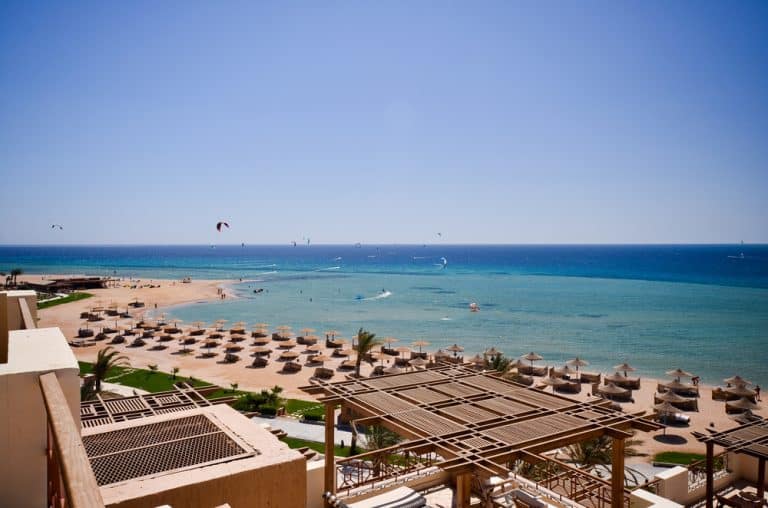
The clean beaches and the always stiff sea breeze make Safaga an excellent place for diving holidays. Although Safaga is an excellent destination for diving and snorkeling, the city is even more famous for its ideal conditions for kitesurfing and windsurfing. In 1993, Safaga even hosted the World Windsurfing Championships.
The city is also a perfect starting point for sightseeing tours. The desert west of the city is home to just as many historical treasures as the Red Sea, which borders Safaga to the east.
For day trips by speedboat to the wall of fire, the Forbidden Reef or the ferry wreck of Arish El Tor, it is best to book a local guide on site. In addition, there are excursions to the famous Tobia Islands, the Panorama Reef with the towering corals of Abu Qitan and the legendary Mons Claudianus, the ruins of a Roman settlement dating back to 68 AD, where granite buildings from the surrounding mountains were used exclusively for the purpose of the imperial Rome .
Beaches and water sports in Safaga
The beaches in Safaga are immaculate and beautiful. Most hotels in Safaga have their own private beaches that are exclusively available to hotel guests. Hotels and resorts in Safaga offer a wide range of water sports and activities related to the sea, from snorkeling trips to pedal boats, canoeing and catamarans.
Windsurfing in Safaga
Safaga is a windsurfer’s paradise, Image: Kostin SS / shutterstock
Safaga hosted the Red Sea Windsurfing World Championships in 1993 and has an excellent reputation among windsurfing and kitesurfing. The winds in the Red Sea are caused by the temperature difference between land and water, and Safaga benefits from a generally flat coastline with no fringing reefs. This creates perfect conditions.
Safaga is therefore ideal for beginners in the field of windsurfing, but also advanced windsurfers get their money’s worth.
Ancient Egypt from Safaga
The Karnak Temple in Luxor, Image: Zbigniew Guzowski / shutterstock
Safaga is a good starting point for inland sightseeing. Luxor is easy to reach. It is often referred to as the largest open-air museum in the world. Due to the numerous well-preserved ancient monuments in the city and its surroundings, it is the ideal destination for an exciting day trip. The city of Luxor was built on the ruins of the ancient city of Thebes and is located on the east side of the Nile. Karnak is located in the north and Thebes on the west bank. It is a “must” for any holiday in Egypt to visit the Luxor Temple built by Amenhotep III and the Karnak Temple. Luxor is also close to the Valley of the Kings and the Valley of the Queens.
Mons Claudianus is one of the best preserved sites of Roman civilization in Egypt. As a Roman penal colony and quarry, the stones worked by the prisoners were used as building material for the Roman Empire. Mons Claudianus’ gleaming black stones can still be seen today in Hadrian’s villa, in the portico of the Pantheon, in public baths, and in the columns and floor of the Temple of Venus in Rome.
Attractions in Safaga
Ferry wreck ‘El Arish El Tor’
The Norwegian ferry sank in 2002 and came to a standstill on its port side. The wreck starts at a depth of 15 meters and goes down to 38 meters. Its abundance of fish and the abundant growth of soft corals, especially on the propellers, as well as the remains of former seating areas on deck, make the wreck worthwhile for wreck divers and underwater photographers alike. Even the former utensils on board the ship, such as life jackets or fire hoses, can still be seen – none of which were needed when the ship slowly sank at anchor, because it was unmanned. This wreck is home to many yellow-tailed barracuda, Indian mackerel often hunt around them and swarm across the deck – an unforgettable natural spectacle.
Firewall
The reef offers abundant coral growth and many marine animals such as fusilier and goat fish, as well as the ubiquitous lionfish. The plateau is home to groups of smaller coral heads that are home to anemones and clownfish, as well as even the otherwise rare moray eels. Encounters with large stingrays such as feather-tailed or eagle rays are also common.
Forbidden Reef
It is a large reef accompanied by ergs. Next to the reef, the depth is 10 meters, and further out it is up to 30 meters, where the seabed is covered with bizarrely shaped coral blocks. This site is very rich in fish, especially schools of fusiliers, as well as large jacks and barracuda. Groups of dolphins also frequently visit this dive site. A dive can be done as a mooring line or as a drift dive and is suitable for all levels.
Mons Claudianus
This huge Roman site and important landmark is named after Mons Claudianus, who once supplied grey granite for the Roman Empire. One thousand stone crushers and Roman soldiers were stationed in this part of Hurghada for over two centuries. Even today, objects from Mons Claudianus can be seen in the Pantheon, Hadrian’s villa and the unfinished Temple of Venus. Other sights are the old fortress, apartments, workshops, stables, baths, granite columns and slabs.
Panorama Reef
Safaga’s underwater world is a diving paradise, Image: pekk / shutterstock
If you want to go diving in Panorama Reef, you should plan several dives, as you will not visit this place only once. This is due to the huge plateau and rich slopes that you should not miss. The diver’s paradise is located 60-90 minutes outside of Safaga.
The reef is the largest reef in Safaga and offers arguably the largest underwater variety of plants and animals. Due to the current from the north, the reef is particularly suitable for drift diving. The North Plateau is home to many purple corals, dolphins, and gray reefs, to name a few. However, the main attraction of the reef is, of course, the steep walls, which disappear into the depths at a depth of more than 20 meters. The coral life of the reef is characterized by soft corals. The abundance of different fish species in this reef is simply gigantic. For example, there are parrotfish, lionfish, and scorpion fish, to name a few.
Tobia Island
Tobia Island, a surfer’s paradise, is a small bank island in the middle of Safaga Bay. Tobia Island is considered the perfect place to spend a day at sea on one of the many day trip dive boats. It is also a wonderful place to snorkel and observe the excellent coral heads in the shallow water, making snorkeling easy, fun, and ideal for children. For those who like it more challenging, some of the best diving in the region can be done from Topia Island. Dive boats will take you to different locations where you can experience many different types of dives in a single trip, from sandy shallows to towering coral columns.
Diving in the Red Sea off Safaga
Diving around Safaga is varied and interesting. There are fewer dive centers than in Hurghada in the north, which means that the dive sites are less crowded and the corals are in better condition. With dives on the house reefs for beginners and some deeper drift dives offshore for advanced divers, there is something for divers of all levels. The coral reefs are characterized by pinnacles, slopes, grottos, and overhangs, and are all abundantly populated with marine life. There is also the wreck of the Salem Express, a hundred-meter-long ferry that sank in December 1991 and unfortunately killed about five hundred passengers on board who wanted to make a pilgrimage to Mecca. To venture a little further afield, a liveaboard excursion might be a better option for the avid diver, as otherwise most resorts offer day dives from boats or from the shore.
But whether you’re looking for a diving adventure or the perfect wave, whether you just want to relax on the beach or explore the historical monuments of ancient Egypt, you’re guaranteed to find something for everyone on a holiday in Safaga.
Fantastic beaches, breathtaking nature and coral reefs: If you are planning a very special holiday away from the crowds of tourists, the island of Rodrigues is the right place for you. The small island in the Indian Ocean, which belongs to the Mascarene Islands, belongs to Mauritius and is one of the absolute insider tips in the Indian Ocean. More and more tourists from all over the world are discovering the advantages of the island for themselves. Even though more and more hotels and holiday resorts have been built on Rodrigues in recent years, you can still spend your holidays here largely undisturbed. Especially for nature lovers, adventurers and those seeking relaxation, the small island, which is located about 580 kilometers from Mauritius , is a perfect holiday destination for an unforgettable holiday. Many tourists also combine a visit to the islands of Rodrigues and Mauritius into a joint holiday. The entire coast is characterized by numerous sheltered bays, which makes the island a real dream destination, especially for young people and couples, but also for celebrities from all over the world. English and French are mainly spoken on the island.
Trou d’Argent: Paradise for beach vacationers and water sports enthusiasts
Trou d’Argent, Image: arlequin / shutterstock
Those seeking relaxation and beach vacationers are in the right place on the island of Rodrigues at the Trou d’Argent. This is considered the most popular beach on the island. The white sandy beach is idyllically located between two steep cliffs. The island is completely surrounded by beautiful coral reefs. If you want more than just lying in the sun and jumping into the azure blue water, you can also use the time to climb into the rocks, among other things. In addition, the coral reefs are ideal for an extensive snorkeling or diving trip.
There are also numerous offers for water sports enthusiasts on the beach. In the vicinity of the beach, some hotels and holiday homes have been built in recent years. Thanks to its sheltered location, the beach is also a popular spot for windsurfers and kitesurfers. Another extremely popular destination for Rodrigues vacationers is the offshore island of Ile aux Cocos. This is a fascinating nature reserve with a long sandy beach and countless coconut palms. The exciting boat trip to Ile aux Cocos alone is a real adventure. Through the clear water you have a beautiful view of the species-rich underwater world.
Port Mathurin: Market flair and sights
Market in Port Mathurin, Image: Christophe Cappelli / shutterstock
The island’s capital Port Mathurin on the north coast is also always worth a visit. On the beautiful market square of the city of 6,000 inhabitants, you can enjoy typical African flair. You are sure to find one or two souvenirs of an unforgettable holiday. From the viewpoint on Mount Fanal you also have a great overview of the entire island. Also worth seeing is the small mosque in the city as well as the large statue of the Virgin Mary. Port Mathurin is also one of the few entrances for shipping through the large coral reef that surrounds the island.
Flora and fauna: turtles, reed warblers and rare plants
The flora and fauna of Rodrigues Island is also extremely impressive. The hilly island is home to many rare plants and animals that are very rare in the world – including the Rodrigues Reed Warbler and the Rodrigues Flying Fox. Nature lovers should definitely pay a visit to the Francois Leguat Tortoise Parc in the southwest of the island. In the protected reserve, about 1,200 turtles can be experienced in their natural habitat. There are also more than 40 different tree species here. The botanical garden “Jardin des Cinq Sens” is also always worth a visit thanks to its countless rare plants. Many tour operators also offer guided tours through the fascinating nature of Rodrigues. The volcanic origin of the island also becomes clear again and again. From the highest peak of the island, the 395-meter-high Mont Limon, you can overlook the entire island.
Best time to visit Rodrigues Island: Surfers in autumn, hikers in summer
The weather on the island of Rodrigues is characterized by a subtropical climate with warm temperatures, plenty of sun and little rainfall. The optimal time for a trip to Rodrigues depends primarily on the destination of the trip. Those who want to surf off the coast of the island will find perfect conditions here, especially between September and December – as well as beach vacationers. During this time, the temperatures here are constantly hot at around 30 degrees Celsius. On the other hand, if you prefer to hike on Rodrigues, you should visit the island between May and September. Then the temperatures will be an extremely pleasant 25 degrees Celsius.
Madeira is a true pearl that captivates with a mild climate and plenty of sunshine all year round. The island in the Atlantic Ocean belongs to Portugal, and thus to the EU. However, geographically speaking, the island is closer to Morocco. 737 kilometres separate the European island from the African mainland. In addition to a varied and exciting flora and fauna, Madeira can also boast historic towns and villages with original charm that invite you to visit and relax.
The island’s capital, Funchal
The botanical garden of Funchal, Image: Cristian Mircea Balate / shutterstock
If you come to the island of Madeira , you usually end up in Funchal – whether by plane or cruise ship. With around 115,000 inhabitants, Funchal to the south is by far the largest city on the island, and the tourist magnet par excellence. Funchal’s old town is picturesquely located directly on the coast. In the narrow streets of the old town, it is wonderful to walk past small traditional shops and quaint restaurants and bars. If you want to experience the real life of the islanders, you should definitely visit the Mercado dos Lavradores. Here, locals and tourists alike stock up on fresh fruits, such as passion fruit, mangoes, guavas and bananas grown in Madeira, which are very popular here. Flower bulbs can also be purchased here.
Madeira is considered the flower island of Europe par excellence – anyone who has ever visited the Botanical Garden of Funchal will know why. The best way to get there from the city centre is by cable car. Already on the way, a breathtaking view stretches over the city. In addition, there are a whole series of churches worth seeing, such as the Sé Cathedral. Palaces that were built in colonial style often contain museums and can be visited inside and outside. For example, you can see everyday objects, antique furniture, paintings and azulejo, the typical Portuguese tiles. Football fans head for the Cristiano Ronaldo Museum, where there are numerous memorabilia of the footballer such as trophies, jerseys and fan letters to see. The ball artist is the most famous son of the island.
The Piscina Naturais of Porto Moniz
Piscina Naturais of Porto Moniz, Image: Sina Ettmer Photography / shutterstock
Much smaller than Funchal is the coastal town of Porto Moniz. In the somewhat sleepy small town, at the very northwestern tip of the island, only about 1,700 inhabitants live. Nevertheless, the place, which was home to whalers in earlier times, is absolutely worth seeing. Directly in front of the waterfront promenade are several Piscina Naturais, natural swimming pools that have formed from volcanic rock. Here you can relax in the warmed Atlantic water and listen to the sound of the sea. In addition to tourism, fishing is now the main occupation of the inhabitants of Porto Moniz. Therefore, you should definitely try freshly caught swordfish with Madeira bananas and passion fruit sauce in one of the fish restaurants located directly on the harbour. Afterwards, you can track down the sea creatures in the Centro Ciência Viva, a show aquarium.
The thatched farmhouses of Santana
The thatched farmhouses of Santana, Image: MisterStock / shutterstock
Santana is located on the north coast of Madeira and is widely known for its small thatched houses, which from the outside look like brick, brightly painted Indian teepees. Their peculiar architectural form made the houses one of the landmarks of the island. The thatched roofs have to be renewed about every four to five years: if you are lucky, you will come at the right time to witness this ancient task. In the past, the farmers of the village lived in the traditional houses, but today many of them are no longer inhabited, but can be visited. The houses are part of the Madeira Theme Park, which provides information about the history and culture of the entire island. Santana is also surrounded by a densely wooded mountain landscape, which has held the title of UNESCO Biosphere Reserve since 2011. If you are already here, you should take a hike into the enchanting surroundings.
The romantic fishing village of Camara de Lobos
Camara de Lobos, Image: Cristian Mircea Balate / shutterstock
Just a few kilometres from Funchal is Camara de Lobos. The place is considered one of the most original in all of Madeira. If you are good on foot, Camara de Lobos can be approached from Funchal via a coastal hiking trail that offers magnificent views of the Atlantic Ocean. Even from afar you can see a whole row of wooden fishing boats, which are still in service here. The place itself was built on stone cliffs. So on a walk through the small town, it goes up and down a lot. Above the fishing village lies the most important growing area of Madeira wine. In the small bars of the old town, you can enjoy a glass of it in a romantic setting.
Machico: a visit to the oldest city in Madeira
Bay of Machico, one of the famous beaches of Madeira Island, Image: Cristian Mircea Balate / shutterstock
In July 1419, Portuguese explorers landed on the island of Madeira for the first time, and started the settlement of the island from here. This was the beginning of the history of the island as part of Portugal. Machico quickly developed into the center of sugar cane cultivation. The Capela dos Milagres church, built in the 15th century, is not only worth a visit, but also the oldest church on the island. Just like in the chapel of São Roque, the famous Portuguese tile paintings can be admired there. The Solar do Ribeirinho, a former mansion built in colonial style, houses a museum on local history. Near the quay of Machico, the Fort São João Baptista, built in the 18th century, rises above the city. Tourists are also attracted by a Caribbean-looking sandy beach, which was artificially created in the middle of the city center. This sandy beach is an absolute speciality in Madeira, where there are otherwise only stone beaches.