Everyone knows it: car trips can often be long and breaks are necessary to stretch your legs, refuel and get some fresh air. Of course, a small snack, lunch together or a good coffee should not be missing during the breaks. The problem: Many rest stops and truck stops on the German motorways usually provide little relaxation from the journey and the selection of meals is also moderate. Finding the perfect restaurant for a break on the highway is often difficult. The drive & dine app now wants to make this search easier: The application, which was launched in the summer, takes drivers to one of over 1,500 selected restaurants along the planned route.
Wide range of choices: there is something for everyone
Restaurant search made easy: In the app, everyone can find the restaurant for their taste with the help of different filters. Users can choose between various cuisines, such as Thai or Italian, and filter the restaurants according to special characteristics. Among other things, breaks can be planned with a gas station or e-charging stations near the restaurants. In addition, it is possible to filter by the price range. The refreshment stops are easy to reach from the motorway, as they are usually a maximum of five kilometres away from the exits.
All restaurants at a glance depending on the route
The route from Cologne to Dortmund is one of the most stressful sections on the German motorways, with an average of 19 construction sites on the outward journey and 18 construction sites on the return, as a comparison of the app shows. Especially on such routes, a relaxed break is important in order to be able to continue riding full of energy afterwards. This is exactly what the app makes possible.
Unlike other online applications, drive & dine suggests restaurants while driving, so users don’t have to focus on a static location, but have an overview of nearby restaurants depending on the route. The app is currently available in German and English for iOS and Android devices.
The founder of the app is the Liebrecht-Frey family from Frankfurt am Main: Victoria Liebrecht has many years of international gastronomy experience, Werner Frey is an experienced manager in the automotive industry and the 17-year-old daughter and student Friederike Liebrecht takes care of the social media presence of drive & dine.
“The idea for drive & dine came to us in 2018 on the way back from our vacation in France . We wanted to eat something away from the busy motorway service areas, but the search with the smartphone turned out to be difficult and took a lot of time due to the dynamics. This gave rise to the idea of an app that can be used to easily direct you to a suitable restaurant near the motorway exit,” says Victoria Liebrecht, co-founder of drive & dine.
“Not far from the motorway there are real restaurant pearls. We want to put them in the spotlight, give them a stage and make them attractive for new guests. We have experienced for ourselves that it is worthwhile to just go off: This is the only way to get to know new corners and take a relaxed break,” comments co-founder Friederike Liebrecht.
Do you have a restaurant that fits drive & dine, but is not yet listed? Then feel free to send your suggestions by email to info@drivedineapp.com.
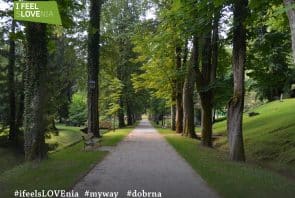
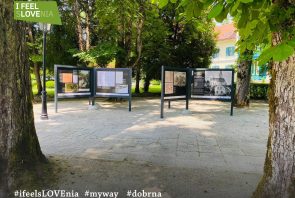
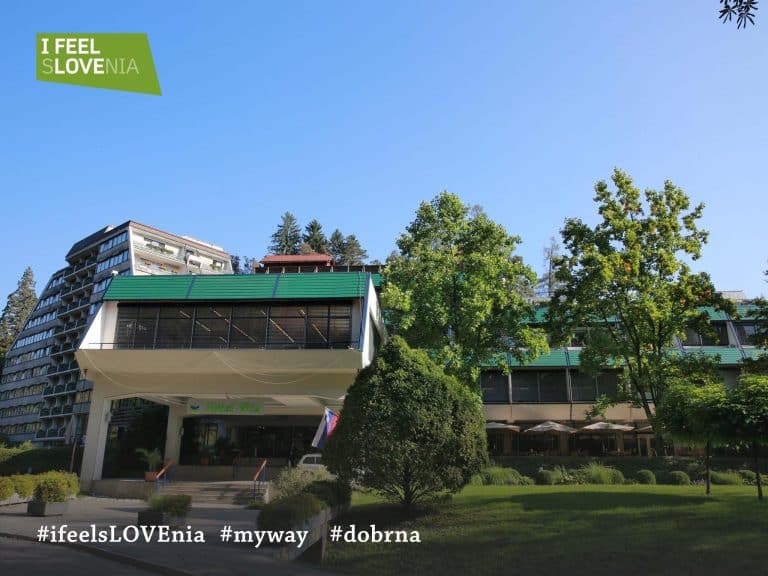
In the summer, the exhibition “Dobrna through the ages” was on display in the “two-hundred-year-old spa park of Dobrna (Slovenia).
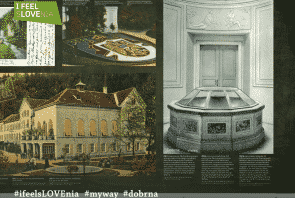
When most people hear the name Dobrna, they first think of health resorts and spa tourism, as Terme Dobrna is considered one of the oldest health resorts in Slovenia today, and spa tourism has made great contributions to the development of the town and its surroundings. In addition to the spa material, the exhibition also presented archival materials from other holdings and collections, which reflect special features and interesting facts from the history of this place. The exhibition is arranged chronologically, the oldest document is the deed of the Dobrnica manor from 1789, with which Baroness Kajetana ceded the hunting ground to the owner of the Dobrna estate. As the oldest pictorial representation of Dobrna, in addition to the black-and-white graphic of the Snake Castle and Dobrna from 1681, there was also a colour postcard of Dobrna sent in 1899, on which the individual details of Dobrna can be seen.
Dobrna, a place where health and well-being have been at home for centuries
Image: Visitdobrna
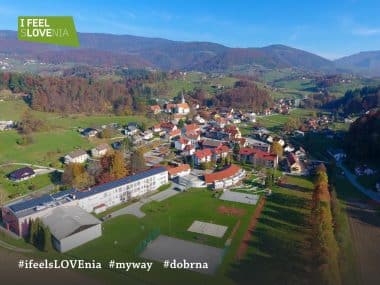
Dobrna, a place in the heart of the green forests below Paški Kozjak, 20 km north of Celje, is characterized by its healing waters, which were already known to the Celts and Romans. The Dobrnske toplice thermal bath, now called Terme Dobrna, was first mentioned in a document in 1403; making it the oldest Slovenian thermal spa in operation. Without it, Dobrna would not be on the map of modern tourist destinations. Away from industry, city noise and traffic, with a mild climate, Dobrna has always been a recognized health resort for the treatment of gynecological diseases and infertility. Today, the program is broader and more effective in other treatment areas as well. Dobrna offers many opportunities for hiking, cycling and exploring the rich cultural and natural heritage of the surrounding area. It is also an excellent starting point for day trips around Slovenia, where you can be in the mountains, karst cave, wine cellars or on the coast in practically two hours.
The Dobrna Promotion 2021 project is co-financed by the Slovenian Tourist Board in accordance with the public tender “For the co-financing of activities to promote the tourism offer of the leading tourist destinations in Slovenia in 2021”.
Many people like to hike, whether it’s a day trip, a weekend trip, a few weeks or just for an hour to get some fresh air, hiking connects, makes you happy and provides an inner balance. However, it is very rare to decide to start a journey that has no end to it for the time being. But they do exist, people who care so much about the most natural and healing locomotion that they want to grow a steady rhythm of life from it. As if that wasn’t enough, there are two adventurers whose mission is to wander around the world without money. How this can work and from what the idea of leading a life without money was born is told here.
Who are the two adventurers in freedom?
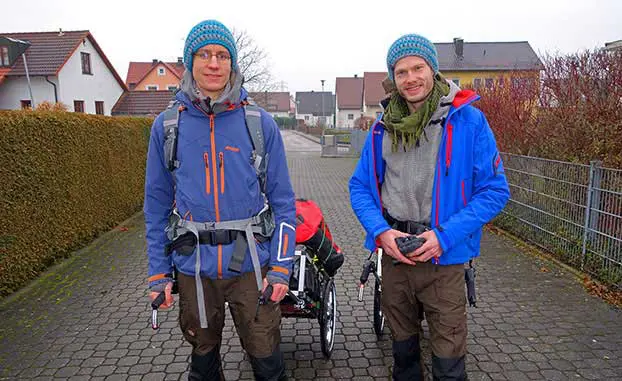
Heiko Gärtner and Franz Budjor on the day of their departure, Image: Lebensabenteurer.de
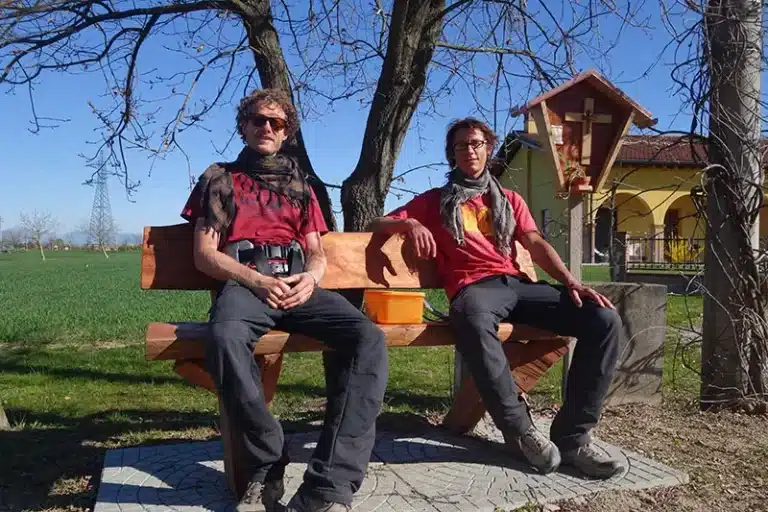
On 01.01.2014 the time had come, Heiko Gärtner and Franz Bujor wanted to find out whether a life without money is possible. The urge to escape from society and the regulations was so loud that they could hardly ignore it. Because the previous sedentary and unfree life was absolutely no longer an option for both of them, so the idea was born to hang up the old life and start a new one in freedom and enjoyment of life armed with two pilgrims’ chariots. Until then, Heiko did an apprenticeship at Allianz and took over his father’s insurance agency. And Franz studied pedagogy and led class trips and youth programs. Afterwards, they wanted to help students and participants in their joint wilderness school to re-establish their connection to nature, which they were happy to pass on for quite some time. Finally, the wilderness school was handed over to a successor in order to be able to work on the preparations for her world trip without money at the same time.
It is without a doubt the greatest adventure of her life, which took a year of preparation, but it was worth it. Since the beginning of their adventure, they have been living as nomads, wanderers, researchers, healers and writers without money in order to learn as much as possible about natural healing methods and the healing art of different cultures.
The trip became the longest charity walk in the world without money
Since Heiko and Franz wanted to contribute something to the well-being of the world and its inhabitants, they also opened the longest charity walk in the world. The aid projects of the charity run were joyfully supported by private individuals and companies in order to ensure a more peaceful, healthy and happier life together. By running without money, projects such as for the protection of indigenous peoples but also for environmental protection are supported, but above all and this is particularly important to Heiko and Franz, that those who can no longer walk should also be supported. This is how the mission “Walk for people, who cannot walk” was born.
A dream became reality
They not only want to be web nomads, healers, researchers and globetrotters themselves, but also pass on their knowledge and the many possibilities to all people who are interested and also feel the call of freedom within themselves. Every person can become a light or kindle his light and they want to encourage everyone to become a seeker of truth in their own life.
From childhood dream to task in adult life
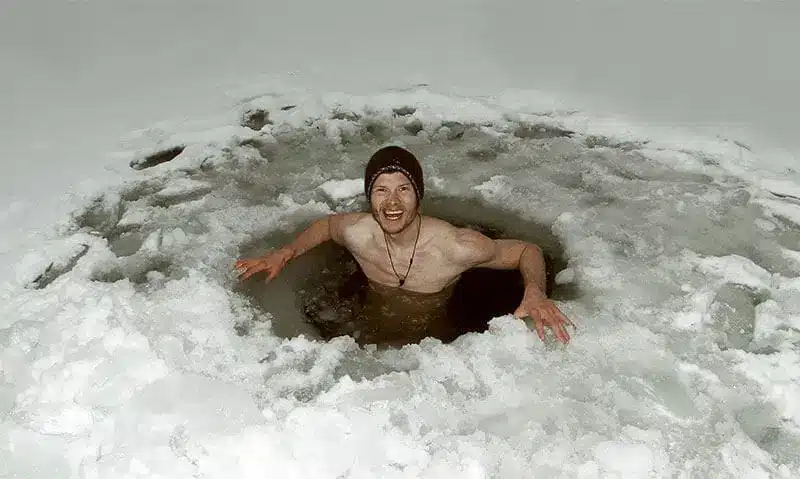
Heiko Gärtner takes an ice bath, Image: Lebensabenteurer.de
Even as children, Heiko and Franz carried large and adventurous travel plans independently of each other at the age of about four or five. But above all, as a researcher and explorer, to travel the world without money. Nevertheless, like many others, they started as adults with a completely normal job and put the world travel plans of their childhood on hold for the time being.
When they both set out as adults to visit an American medicine man, they already suspected that a big task was waiting for them. They were allowed to take part in a healers’ meeting, where the old Indian healing knowledge was to be reactivated. As you can quickly imagine at this point, it didn’t take long for the childhood dream to flare up again like an unmistakable fire. There was no longer any doubt for both of them, they felt that it was time to break down the tents and go.
Why walk around the world?
Our feet have more nerve cells than our hands, so they are a lot more sensitive. This enables us to establish a connection to the earth while hiking, in order to create a healing for the earth but also for us, as long as the steps are carried out consciously. Therefore, a hiking trip is also a healing journey at the same time, where you experience first-hand who you are, what needs to be healed and how you can heal your contact with the earth.
How can you imagine a life without money?
Since both pull a pilgrim’s chariot behind them by means of an attached hip belt, they can stow their belongings in it and are thus flexible and without travel costs. Each of them carries around 60 kilos of luggage and equipment, as this weight would have been impossible with a backpack on their backs.
If you travel with a higher goal that people find supportive, such as supporting the aid organizations during Heiko and Franz’s trip around the world without money, you will also meet people with a big heart. This made it possible for them to find out in which region which methods and systems work to get food, sleep and equipment. Churches, museums, castles, yurts, caravans, cafes, community rooms or host families are suitable for accommodation, as long as there is a positive intention and a feeling of confidence.
Due to the abstract system of society, there is a lot of waste and overproduction, which on the other hand has developed a dense social network to catch people who fall through it. Nobody uses food that is available in surplus anyway, considering how much is thrown away. 70% of what is grown in the fields is thrown away before it reaches the end consumer. Actually, you can go anywhere, both report, where food is sold, to ask with a friendly request and a short explanation why you need the things. Of course, not everyone says yes, even if they could, but usually you always find enough to get full.
A lot has changed for Heiko and Franz since they left
The time spent hiking has become a kind of ritual in their journey. Especially in regions like Extremadura, where the landscape does not change for many weeks, you have the opportunity to look into your own soul cellar and get out everything that is slumbering there and wants to enter into harmony. Both were able to gain many small and large insights about themselves in the course of their travels. But the most important and central insight that both were able to gain for themselves is the sentence: “Everything is one!” A sentence that can be found in any religion or philosophy of life and sounds totally simple at first.
What this sentence means, however, can throw the entire world view overboard, because the meaning of our lives is suddenly completely different. The explanation that there will always be joy and sorrow in life and why we are confronted with certain situations or topics that we perceive as negative is also becoming more and more conclusive. Both now see and feel the world with different feelings, they feel how strongly omniscient love surrounds us and that everything and every encounter has a meaning. They are incredibly grateful for everything that has happened in these 7 years of being on the road without money.
About the authors: Heiko Gärtner and Franz Bujor are survival experts and extreme journalists who have been wandering around the world on foot and without money for a good cause since 2014. All information about her journey, the ideas behind it and her experiences so far can be found at www.lebensabenteurer.de
Interview with Heiko Gärtner from 28 November 2021
What were your biggest concerns about embarking on such a travel adventure without money?
The biggest concerns were that we would get involved in a very hard and uncomfortable life. Before we left, we weren’t sure if we could even rely on any form of support from other people. So what if no one wanted to help us with food, places to sleep, or other things? We had already trained often enough on how to survive purely with what nature offers. So we knew that we would definitely get through, but we also knew that this would be very hard and deprivation. Fortunately, however, these concerns proved to be completely unfounded. In the seven years we have been on the road so far, we have not had to go hungry for a single day and only on about 10 or 15 nights we did not get a place to sleep. But even that wasn’t bad, since we had our tent with us.
How do you have to imagine the daily routine on such a trip?
As a rule, we got up every morning around 8:00 a.m., packed our camp for the night and then left around 9:00 a.m. Most of the time we had fresh fruit for breakfast on the way. Sometimes we also ate together with our hosts before leaving or took a short breakfast break along the way if we found a nice place for it. The hike then took an average of about 6 hours before we looked for a new place. Depending on the location, we then went on sightseeing tours without luggage or simply worked on our projects. Wrote articles for the world travel blog, edited pictures and the like. Or we have had long and intensive conversations with our hosts or with other people we have met. In the evening we had a proper dinner and then we ended the day with a series or a movie on the computer. That’s more or less how our “everyday life” went. Of course, there were completely different days, because nothing could really be planned. It could be that we passed a thermal spa and were invited to test it. Then we spent the afternoon in the sauna. Or we hiked until late at night because the next place where we could find a place to sleep was 80km away from the last one. A lot of things could be planned or at least assessed in advance, but things often went completely differently than expected.
Which countries did you like best on your way?Both from nature and from the hospitality of the people?
As far as nature is concerned, our favorite is clearly Montenegro. In no other country have we been able to get to know so many different natural beauties in such a small area and with almost no traffic. There were gorges, mountains, forests, endless meadows, steppes, beautiful lakes and much more. As far as hospitality is concerned, Slovenia is our number 1. Here we sometimes had problems making any progress at all in one day because we were invited so often. But Kosovo, Romania and Bulgaria were also very hospitable. Here it was enough to show a crumpled piece of paper on which it was written in poor translation what we needed and the people helped us without us knowing a word of their language. However, we were also positively surprised by the Germans, who were much more open and helpful towards us than they are usually credited with. However, we have had the best experience in Central and Western Europe in France . Here the people were not only very hospitable, but also real connoisseurs. We were able to taste hundreds of cheeses and many other specialties.
Were there any considerations during the trip to cancel the project?
A few times. There were always situations in which you were fed up because nothing just wanted to work out as planned. There were areas that were so ugly, loud and unfriendly that you just wanted to leave. But those were always only short moments in which you didn’t see a way out. Most of the time, it only took minutes for the mood to improve again and then we made new plans or adapted our previous strategies to the situation. The good thing was that it would have been impossible to give up immediately anyway. In any case, you would have had to go to the next city to book a plane or a train there and just thinking about how to do that already led to the fact that we preferred to look for a solution on how to proceed instead.
What are your plans for the future?
We are currently taking advantage of the situation with the Corona crisis, in which it is no longer so easy to travel without money, to prepare for our next stages. From the very beginning, the goal of our journey was to walk through every country and continent on earth. The plan is still in place and in order for it to be feasible, we need an escort vehicle as a mobile base station. In Europe, you could easily wander from one place to the next and get a new place to stay and new food. In Africa, Australia, Russia and also in the USA and Canada, this will no longer be possible so easily. There are regions where you have to overcome hundreds or even thousands of kilometers to get back to a populated place. You can’t take enough water and food with you on foot. In some regions it doesn’t matter, because you will find enough on the way, but if you have to go through deserts or steppes, that would be our death. Therefore, we take our expedition vehicle with us, in which we can transport food and water and which also serves as a living and working place in the afternoon and evening. After all, we want to continue our documentary and it would be a shame if we couldn’t report on the particularly exciting corners of this earth.
On the Mexican peninsula of Yucatan in the state of Quintana Roo lies the small town of Tulum on the Riviera Maya. It is popular all over the world for its enchanting beaches. One of its attractions is the clear sea. Not far away, the jungle awaits tourists, as well as the legacies of ancient, fascinating cultures. Tulum is also known for its magnificent Mayan ruins on the Caribbean Sea.
Getting to Tulum
The journey to Tulum usually takes place by plane in Cancun . The bus then continues via Playa del Carmen to Tulum. The town can also be reached by car from Cancun via MEX 307.
The special features of Tulum
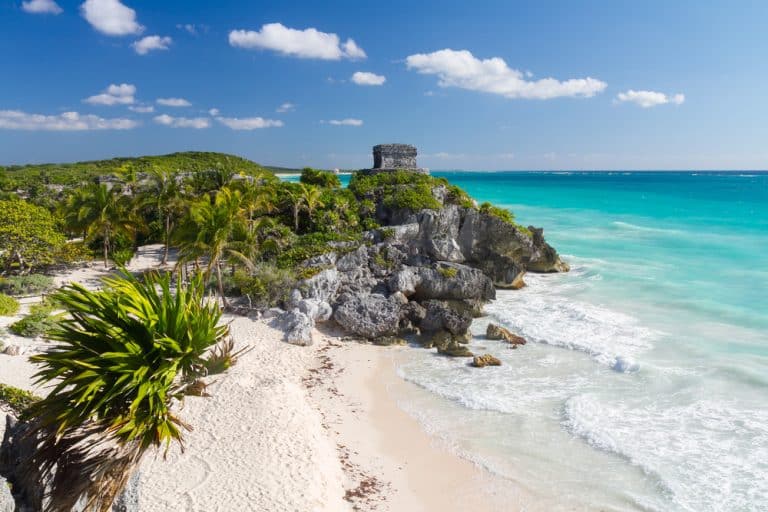
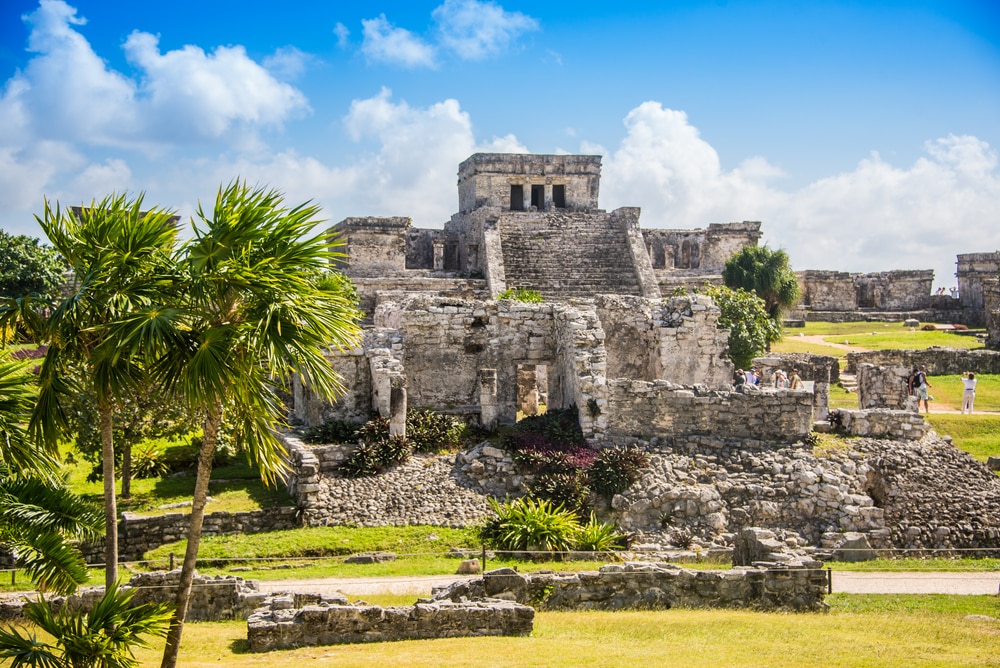
Mayan ruin in Tulum, Image: DC_Aperture / shutterstock
The greatest features of Tulum are the ancient ruins of the legendary Mayans and the so-called Canabas. In earlier times, these were simple huts directly on the beach, whose hammocks served as sleeping accommodations. In the present, however, there are also luxury huts. They can be found in the coastal area between Tulum and Punta Allen.
The idyllic city is located on the Caribbean coast of Mexico. Tulum is located about 130 kilometers south of Cancun. The fascinating Mayan ruins are only 2 kilometres from the town. Until the 90s, the village of Tulum was relatively quiet and tourism was limited to simple huts and a few shops. From Cancun, the visitors usually only went to Tulum for a day trip.
Since 2008, the city of Tulum has been the capital of the 9th municipality in Quintana Roo and the number of inhabitants has increased. The approximately 18,000 inhabitants live mainly from tourism. Hotels, bars and restaurants in the centre of the municipality are among the offers. There are also fitness centres, boutiques, internet cafés and supermarkets. In addition, Tulum offers its guests a relaxing and quiet atmosphere.
Tulum is composed of its town center, the hotel zone, which is about 5 kilometers from the beach, and the Mayan ruins, which are well worth seeing.
The sights of Tulum
Of course, charming Tulum also has some attractive sights to offer its visitors:
Visit the archaeological site of Tulum
Probably the most important sight in Tulum is the archaeological site with its famous Mayan ruins. The city was founded between about 1200 and 1520, when the great time of the Mayans was gradually coming to an end and began to decay. However, Tulum was able to flourish through trade.
Admission to the ruins is paid, but well worth it. Another attraction is the beautiful beach in the immediate vicinity of the ruins. If you prefer to avoid tourists, you can take a boat tour, which is offered by many Mexicans at a reasonable price. A boat tour is one of the highlights of a vacation in Tulum.
Visit the city walls and other facilities
Image: cocarole / shutterstock
Tulum is surrounded by a defensive wall on three sides. It reaches a height of 5 meters and a width of 6 meters and takes on impressive dimensions.
Also worth a look is the Casa del Noreste temple. On a platform, the remains of the wall and two columns can be viewed. On a cliff at the port of Tulum is the small temple Templo del Dios del Viento. It stands on a round platform, which was considered unusual for the Mayans. From the temple, the visitor has a fantastic view of Tulum, its harbor and the wide ocean.
The Old Port
There is not much left of the former old harbour in the present. However, it has a wonderful sandy beach with a castillo perched on a rock. Sometimes it is also allowed to swim there. Otherwise, the old castle is worth a visit.
The Templo del Dios Descendente
The Templo del Dios Descendente is the temple of the descending god. It also contains a stucco sculpture of this deity, which was given the name “Ah Mucen Cab” by the Mayans. This meant the god of bees. But the natives also associated it with lightning and rain. The temple was built on an old building.
Other temples to visit in Tulum
One of the temple attractions is the Templo de los Frescos. It is located in the center of the area that has been walled. Several superstructures and changes took place. Inside the temple there are frescoes, some of which have undergone restorations. They represent various gods of the Mayans. For safety reasons, visitors are only allowed to admire them from a distance.
Other interesting temple complexes are the Templo del la Serie Inicial and the Templo del Mar, which is a little off the beaten track.
The Cenotes
There are numerous cenotes around Tulim. They provide immediate access to the cave water systems of Yucatan. Many of them are good for diving, snorkeling or swimming.
Activities around Tulum
Because Tulum has many beautiful beaches, the place is ideal for a beach holiday. Because it is further from the city to the beach, accommodation in the hotel zone is recommended. From there, the beach is just a stone’s throw away.
The shopping of Tulum
If you would like to take home a souvenir of your trip to Mexico, you will find it in Tulum. Between the parking lot and the ruins, there are many souvenir stalls with beautiful souvenirs, most of which have to do with the Mayans.
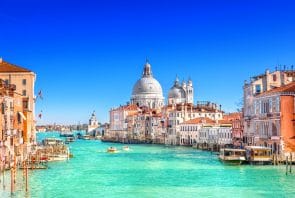
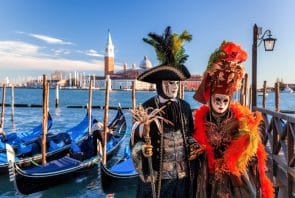
When we think of Venice, we think of Casanova, masked balls and the glorious times when the jewel on the Adriatic Sea in Italy was a meeting point for merchants and traders. Churches, bridges and palaces reveal a lot about the history of the lagoon city in Veneto. Walking through the narrow streets, you can get a glimpse of the former atmosphere. Taking the gondola down the Grand Canal is a must for many lovers. Venice fascinates visitors from all over the world – but the ravages of time gnaw at the city.
What makes Venice special
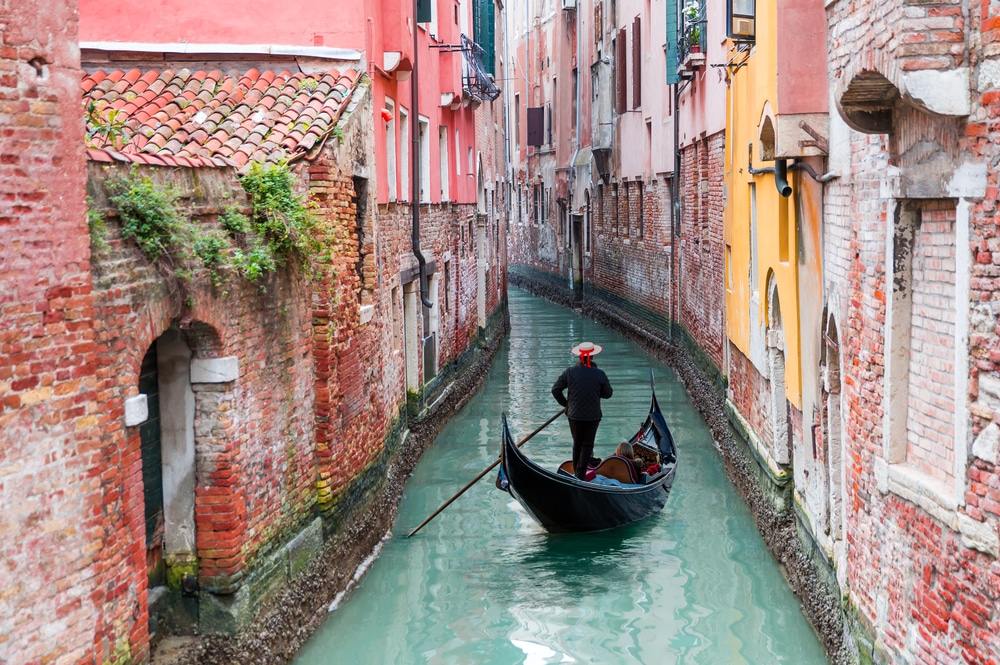
Gondoliers in the green canal, Image: muratart / shutterstock
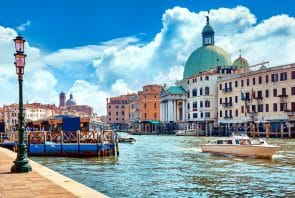
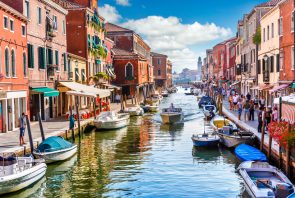
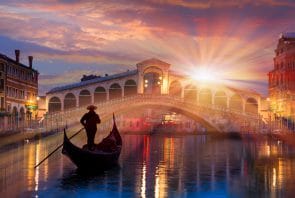
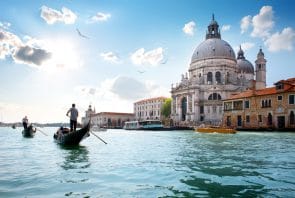
The city on the water is built on more than 100 islands in an Adriatic lagoon. More than 400 bridges connect the individual islands with each other. About 150 canals serve as traffic routes on the water. Vaporetti, public transport on the water, and the legendary gondolas transport people around the city. You can also explore the narrow streets on foot.
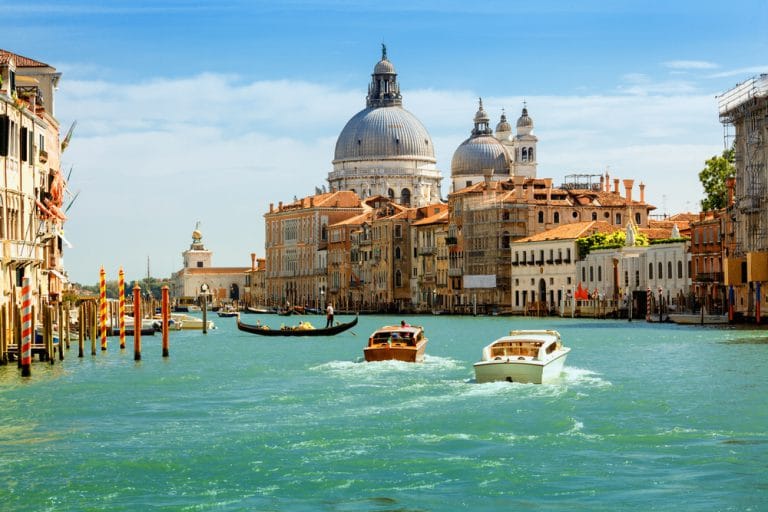
During a trip on the great canals, you pass the imposing facades of palaces and churches, luxurious hotels and residential buildings. From this perspective, it looks like all the buildings were built on stilts in the water. In fact, the city stands mostly on the muddy bottom of the lagoon. Even though the front of the buildings on the canal side is supported by tree trunks everywhere, sandbanks form the foundation of Venice.
Piazza San Marco, Image: TTstudio / shutterstock
To immerse yourself in the special flair of the lagoon city, the best way to get around is on foot. Since there are hardly any roads for cars, you can park your car in one of the parking spaces in Piazzale Roma, the “gateway to the old town”. Parking spaces (e.g. in the San Marco garage) are correspondingly rare and expensive. It is better to park the car in Mestre and travel by public transport.
At high tide (“Aqua alta”), the sea water overflows its banks in some places in Venice. To avoid getting your feet wet on a city trip, it’s better to find out about the water level – or pack your rubber boots.
At the legendary Venice Carnival, guests from all over the world flood the city’s hotels and attractions. Affordable alternative accommodation can then be found on the mainland. Venice is most beautiful (and not quite as crowded) in autumn or spring. The summer months of July and August are the busiest and the canals sometimes smell strong due to the high temperatures.
To regulate the tourist crowds, Venice has set an entrance fee of €3 for day tourists. Guests who stay longer in the city pay a local tax. The city administration is investing the money in the restoration work and infrastructure that is necessary in many places.
Sights in Venice
The Doge’s Palace, Image: Catarina Belova / shutterstock
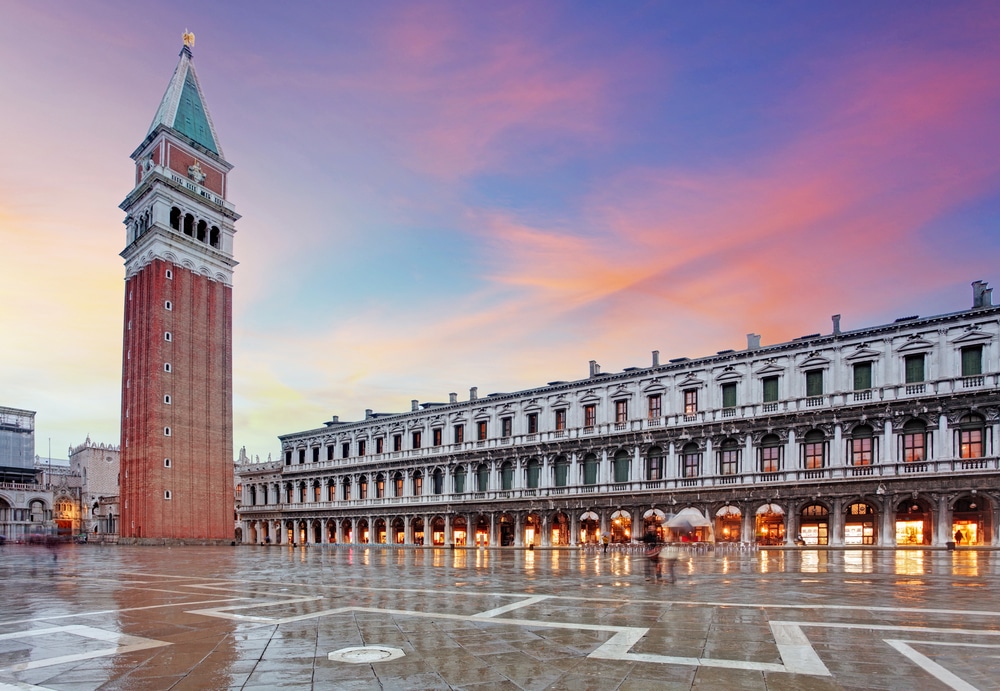
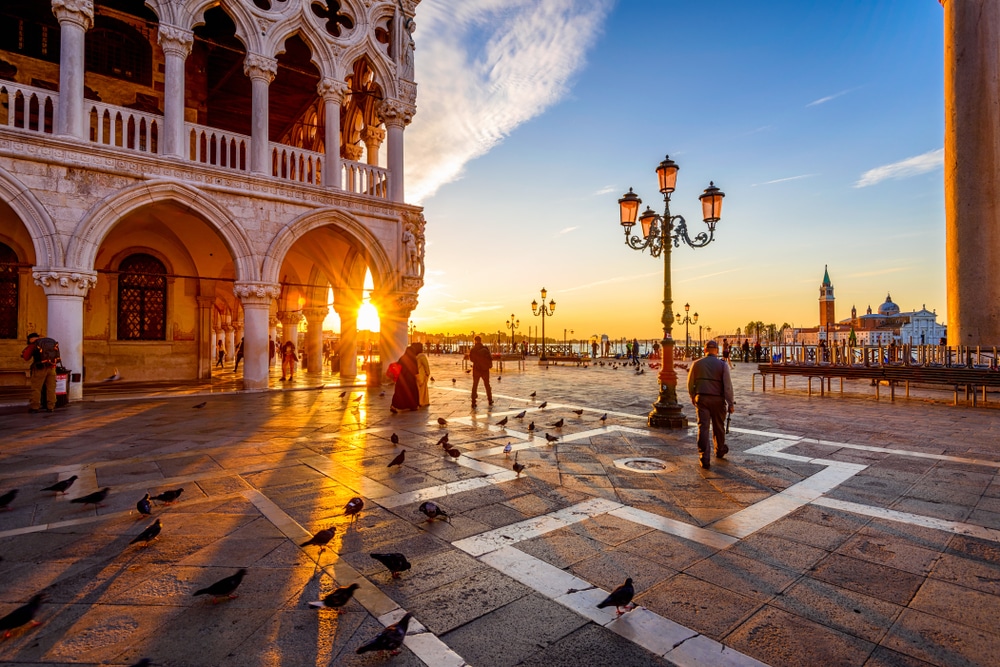
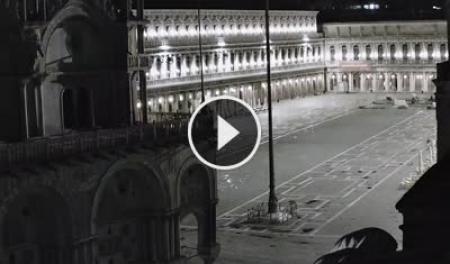
In the district of San Marco, directly on the Grand Canal, lies St. Mark’s Square. The 82-metre-wide and 175-metre-long “Heart of Venice” is a tourist magnet. The always lively square is surrounded by St. Mark’s Basilica, St. Mark’s Tower and the popular Doge’s Palace – many important sights at once. Stay away from the pigeon feeding souvenir photo on St. Mark’s Square:
As a measure against pigeon droppings, there is an official ban on feeding. Anyone who gets caught paying a fine of 500 euros. St. Mark’s Basilica (Basilica di San Marco) is the most important church in the city. The over 900-year-old “golden basilica” is not only a holy place, but also a monument to the splendor and glory of ancient Venice. The St. Mark’s Tower can be visited in more detail for 8 euros admission.
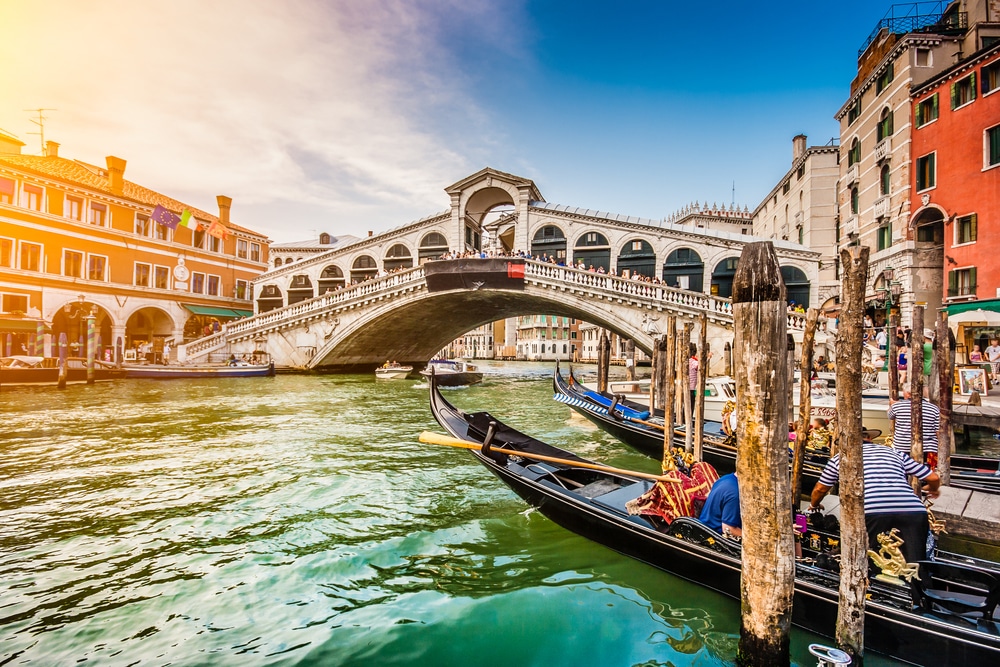
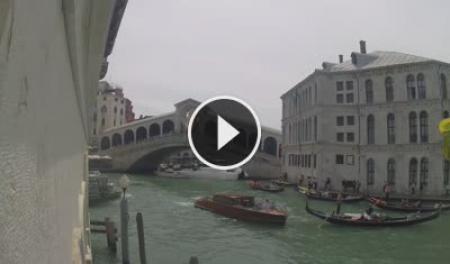
The world-famous Doge’s Palace used to be the seat of the head of state of Venice. For 19 euros, you can also see the palace from the inside and be transported back in time through the paintings and the magnificent rooms. The connection between the Doge’s Palace and the prison is the famous Bridge of Sighs. From this Venice landmark, prisoners used to take a last look at freedom. The particularly popular Rialto Bridge, one of the first stone bridges in the city, is also always well attended.
View of Venice, Image: Mariia Golovianko / shutterstock
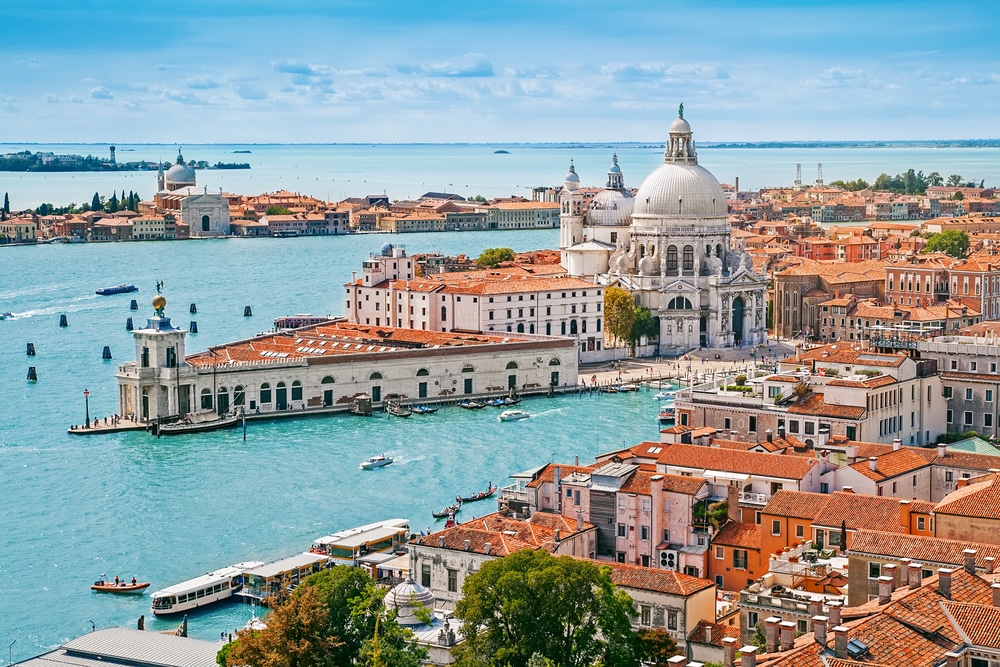
Early morning is suitable for a souvenir picture. At this time of day, you can still enjoy the view from the bridge to the Grand Canal, Venice’s main waterway, relatively undisturbed. A boat trip on the Grand Canal – whether gondola or scheduled boat – is a must on a trip to Venice. From the water, the full splendor of the city is revealed. With a little imagination, you can guess the past, despite the crowd of the many boats. By the way: A gondola ride is an unforgettable event, but it also costs a proud 100 euros. For an extra breeze of romance, you can ask your gondolier to drive you through the more secluded side canals. Less romantic is the vaporetti, which stop at various stops in the city.
Culinary delights in Venice
The Rialto Bridge, Image: canadastock / shutterstock
In order to eat well and at a reasonable price in Venice, it is better to leave the tourist paths. Authentic Venetian cuisine can be found mainly in an osteria or trattoria, both of which are rather cozy restaurants. Venice also has some noble “ristorante” to offer. Typical delicacies are, in addition to various pasta creations, for example “Fegato alla Veniziana” (calf’s liver in white wine and onion sauce) or “Baccalà mantecato” (cooked cod in parsley, garlic and olive oil). As a snack next to a good glass of wine, “polpette” (meatballs) or “folpetti” (octopus) are suitable.
To fully enjoy the Italian food culture, the typical menu sequence is recommended: “Antipasti” as a starter, the “Primo Piatto” (pasta or risotto), followed by a dish with fish or meat as a main course. A good red wine should not be missing with the meal, as well as the dessert and the espresso at the end.
Beauty is transient
If you walk through the “Serenissima” with your eyes open, you will see crumbling facades and the museum character of Venice. The eventful history of the city is still noticeable, but its current infrastructure is mainly geared towards the many tourists from all over the world. You won’t find a real Italian way of life in Venice, but you will find a fascinating look into the past.
More impressions from Venice
Grande Canal in Venedig, Bild: Adisa / shutterstock
Kathedrale San Simeone Piccolo in Venedig, Bild: Yasonya / shutterstock
Dubai offers travelers a lot to see. The megacity on the Persian Gulf has undergone rapid change since the discovery of the oil fields. In just a few decades, the traditional desert city became one of the most prosperous cities in the world. Beyond luxury, however, Dubai is above all a melting pot where tourists and trendsetters from all over the world come together. Culture and art therefore also have their place in the city. In the following, some of the most beautiful sights and excursion destinations are presented. Book with ebooking and get the best place.
The Palm Jumeirah
The 5.72 km² man-made archipelagos in Dubai Harbour are an exciting stop on any tour of the city. Dozens of luxurious hotels and apartments are currently being built on the sand-filled islands, which are lined up next to each other in the shape of palm leaves and look like a palm tree from the air. Restaurants, clubs and more round off the tourist offer. Visitors can stay overnight here directly in accommodation and enjoy the view of the blue sea. Boat tours for sightseeing are also sold around the islands.
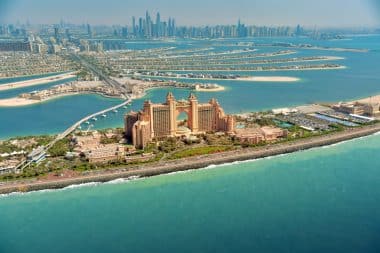
Atlantis The Palm
View of Dubai and the well-known hotel “Atlantlis, The Palm”
In the middle of The Palm Jumeirah lies the famous luxury hotel Atlantis The Palm, which opened in 2008. More than 1500 rooms on 22 floors and 23 restaurants can be found in the noble building. The luxury resort attracts holidaymakers with exceptional Arabian-style furnishings. In addition to gastronomy and spa programs, a wide range of leisure activities with sea lions and dolphins promises good entertainment for children. For non-hotel guests, the nearest Atlantis-style The Lost Chambers Aquarium Hotel, with several thousand fish, lobsters, sharks and other marine life, is worth a visit.
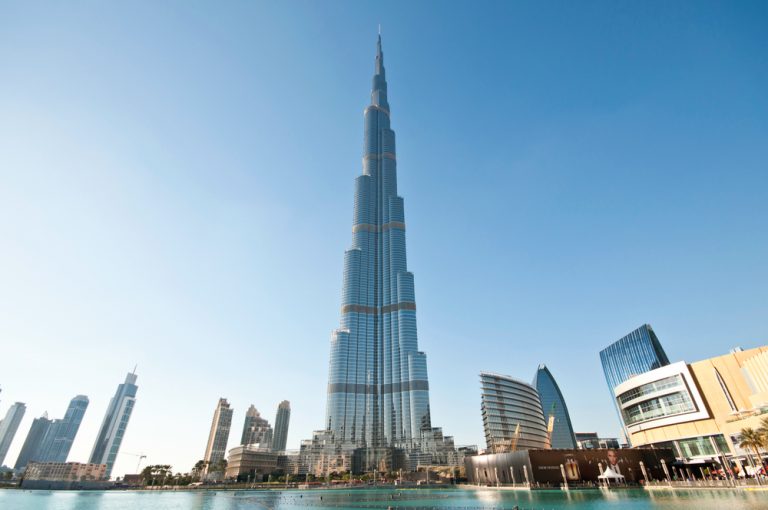
Burj Khalifa
The Burj Khalifa is the largest skyscraper in the world. It is located in the middle of Downtown Dubai, one of the highlights for every holiday. The 828 m high building was opened in 2010 and designed by an exclusive American architect. For a fee, the Burj Khalifa in Dubai offers spectacular views from its observation deck over the vibrant desert metropolis. Inside there are numerous hotels, office space and restaurants that invite you to feast and linger. Outside the high-rise, tourists can also admire the unique water feature.
Dubai Fountain
The largest water fountain in the world is located in Dubai’s downtown on the Burj Kalifa Lake and the skyscraper of the same name. If you want to discover Dubai, you should take a close look at this spectacle on foot. Alternatively, boat tours on the lake are also available. Musical accompaniment, together with lighting, provides an exciting water feature every half hour from 6 to 10 p.m. or 11 p.m. The fountain’s fountains reach over 100 meters into the sky.
Ski Dubai
Skiing in the desert is not a contradiction in Dubai. In the middle of the Mall of the Emirates is the large hall Ski Dubai. There, tourists can prove their skills in real snow on five downhill runs, slalom and co. and enjoy a unique indoor experience on the ski lift. A day at the Snow Park includes other highlights for families, such as an aquarium with real penguins. Inexperienced skiers are instructed in exclusive courses under the supervision of the local team.
Mall of the Emirates
For young people and families, the shopping centre is a must-see on the list. The huge shopping center on Sheikh Zayed Road, about 15 minutes from downtown, was created as a temple of experience. In addition to shopping facilities for clothing, jewellery and the like, it offers a wide range of entertainment options. Highlights include the indoor ski hall and the Planet arcade. There children will find a colourful package of attractions from carousels to bumper cars. Cafés, restaurants and a cinema complement the shopping experience and invite you to a relaxing day out.
Burj al Arab
The luxury hotel Burj al Arab impresses with its unique architecture in sailing style and proud prices. It is located on an artificial island in the immediate vicinity of Dubai’s center and is considered the most luxurious hotel in the world due to its unusual furnishings. In the building there are several hundred large suites with their own butler, swimming pools, restaurants and other amenities for well-heeled guests. As a landmark of the city, the Tower is a popular photo motif by day and night. With prior reservation, it is possible to dine in one of the hotel’s posh restaurants or at tea time.
Wild Wadi Water Park
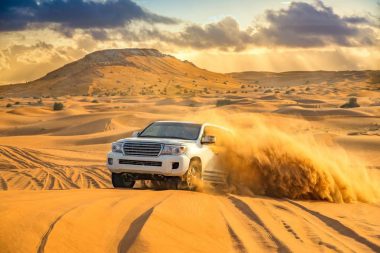
Off-road tour through Dubai’s desert, Image: Victor Maschek/shutterstock
In our recommendations for Dubai, the Wild Wadi water park, located in the immediate vicinity of the Burj al Arab, should not be missing. A day at this amusement park promises pure fun on countless slides, swimming pools, wave pools, an artificial river and surf waves in the water. Selected spa experiences complete the adventure day. Stylistically, the area is based on historical buildings in Arabia of past centuries. The name Wadi refers to the raging rivers of the same name in the Arabian desert, which are formed after rainfall.
Dubai Museum
The municipal museum is an insider tip for all those who are looking for peace and quiet from the busy everyday life. It is located in the building of a former fortress and is dedicated to the representation of former life in the desert metropolis. During the visit, you can learn everything about the history of the former trading city on the Persian Gulf, which was controlled over time by the Portuguese sailors and later by the British. In addition to former settlements and everyday objects, the exhibits also show pre-Islamic history and the rapid development of the metropolis after the oil boom.
Dubai’s Desert
Outside the city walls, the Dubai desert holds great potential for nature lovers. The extensive, dry sandy landscape is home to many mammals, reptiles, insects and birds, including the beautiful oryx antelopes.
On a desert safari by jeep, families, couples and singles discover the landscape and take part in fun activities such as camel riding or sandboarding. It is also worth spending the night in a traditional Bedouin tent in the group. On this occasion, dance shows, henna painting and other nice activities are usually held. Now you can exchange ideas with other travelers over a cup of tea or coffee and marvel at the starry sky at night.
Gold & Spice Souk
The traditional spice market in the eastern district of Deira is located directly on the Dubai Creek and attracts with a great culinary variety. Several hundred stalls offer their colourful spices to market visitors at the Spice Souk. The refined product portfolio ranges from high-quality saffron to chili. Haggling is the order of the day here, because the dealers are willing to sell and like to talk directly to their customers. On the neighboring Gold Souk, a rich range of jewelry of precious gemstones, jewels and gold productions vie for the favor of the people.
Dubai Opera
In the desert metropolis you can also experience real high culture. The Dubai Opera House, which only opened in 2016 directly on the water in the city centre, shows all genres of art from classical concerts to plays. Tips on the programme of events can be found on the opera’s own website, where the diverse programme is vividly presented. In addition to attending the actual events, interested parties will also be offered architectural tours of the imposing building. There you can find out all the background information about the construction of the brand new opera house.
Fuerteventura is one of the popular Canary Islands, which are very popular in both summer and winter. Only about 4.5 hours away by plane, eternal spring reigns on the Canary Islands.
Who wouldn’t want to escape the winter depression and travel to the Canary Island in December, January or February, in the gray months in Germany, to soak up the sun.
The climate and temperatures around winter
In the winter months, temperatures of about 20 degrees Celsius still prevail here. With a water temperature of about 19 degrees and 8 hours of sunshine a day, you can still take a beach holiday here even at this time of year.
All the attractions on the island are open all year round, so you can enjoy the same activities and visit the same sights as in summer.
In winter, it is even better to hike, cycle or walk. Thanks to the mild temperatures , it is never too hot, but also never too cold.
In the evening it gets noticeably cooler and a jacket or sweater should be present in your luggage.
If you are still on the beach, you will notice the wind that comes up. Since this wind sometimes does not subside during the day, it is often possible to practice various water sports as well. Sailing, surfing or kitesurfing are on the program.
The main tourist resorts in Fuerteventura
Corralejo
Corralejo is a holiday resort with a special flair. Many surfers from different regions of the world live here. In front of the city are the breathtakingly beautiful dunes, where you have the feeling of being in the middle of the Sahara. Fantastically white beaches, the marina, great restaurants, and the water park make for an unforgettable holiday.
Costa Calma
Costa Calma, Image: Dennis Kartenkaemper / shutterstock
The beautiful place is located on the Jandia peninsula in the south of the island. Tourism plays a major role in Costa Calma, because this is exactly where the holiday hotspot is in summer as well as in winter.
Numerous hotels, bars and restaurants characterize the entire village. The hotels have a low design so that they fit into the cityscape. High-rise buildings are not welcome on the entire island.
Instead, there are many small villa-like houses and holiday apartments that are visited by guests from all over the world.
Morro Jable
Like the other resorts, Morro Jable is located directly on the Atlantic Ocean. The city center is in the valley, the residential areas are on the hill. A special feature in Morro Jable are the two car ferries that depart for Las Palmas and Gran Canaria . Through these connections, the place has become busy.
Behind Morro Jable there are volcanic mountains that rise up to 807 meters. The highest mountain is the Pico de la Zarza. In the center there are cube-like concrete houses in white color, so typical of Spain and the Canary Islands.
Caleta de Fuste
Since 1740 there has been a fortress here called El Castillo. It is a popular destination for tourists and day visitors who visit the place. Of course, there are also numerous hotels and apartments that extend to the sea.
Numerous large yachts are moored in the marina. During a walk through the harbour you can get a taste of maritime flair. Caleta de Fuste is especially loved by English families.
The most beautiful beaches of Fuerteventura
Playa de Sotavento de Jandia
It is probably the most famous beach on the island, where not only sun worshippers and water rats get their money’s worth, but also surfers and kitesurfers. Especially in winter, there is always a wind blowing here. Over a length of 20 kilometers, it is divided into the two beach sections Playa Risco del Paso and Playa Barca.
Playa de Matorral
Playa de Matorral, Image: Elena Krivorotova / shutterstock
If you spend your holidays in the south of the island, you can use Playa de Mattoral. It is a dream beach and is reminiscent of a South Sea paradise. Some claim it is the most beautiful beach on the entire island. And it has over 80 beaches.
The bathing quality is distinguished by the Blue Flag. There is also a hiking highlight here, the lighthouse of Jandia, where the other sandy beach also converges. Particularly attractive in this area is the salt marsh nature reserve Humedal Saladar de Jandia.
Playa de Esquinzo
Another dream beach is Playa de Esquinzo near Jandia. It can be reached via a staircase. In the beach bar you can stop and linger. There are toilets for guests and lifeguards ensure safety on the beach.
Playa de las Playitas
If you love solitude and don’t mind dark sand from volcanic eruptions, this is the place for you. Playa de Las Playitas is located in the east of the island near the village of Gran Tarajal. Here you will find numerous shops and bars.
Activities and activities
Fuerteventura has numerous sandy beaches to linger in, but also culture and the Oasis Park, a beautiful animal park on 800,000 square meters.
Here you can find all the animals you can imagine. This park is a highlight, especially for families with children.
If you want to see whales and dolphins in their natural habitat, you can book a boat trip to the Atlantic. On large and small yachts you go out to sea and the dolphins and whales approach the boats. Usually drinks and nibbles are served on the journey. At the end of the day, there will be a swimming break before reaching the coast again.
In addition to the animal experiences, you can also experience pure thrills on the island. How about a buggy tour into the dunes. It starts in Corralejo and leads to the dunes of the region. We then continue to Tamaragua for a very special off-road adventure. In a small restaurant directly in the volcanic landscape, typical Spanish products are offered.
Fuerteventura is also perfect for sports holidays. Kitesurfing is very popular on the island and gives a kick to all sports enthusiasts. The perfect trade winds invite you to this experience.
Kitesurfing in Fuerteventura is suitable for beginners and advanced kitesurfers. Numerous surf schools have settled on the island and also show beginners water sports.
Our Austrian adventure begins early in the morning at Augsburg train station. Full of anticipation for a varied week in the mountains, we board the IC of the Deutsche Bahn, which arrives on time. The seat reservation worked wonderfully and so we enjoy a relaxed train ride and admire the diversity of the passing landscape. With a delicious cappuccino from the on-board restaurant, we browse through the websites of our destinations and get an overview of Mallnitz, Weissensee and Werfenweng – all members of the Alpine Pearls network.
Arrival at Mallnitz train station, Image: Diemar Denger
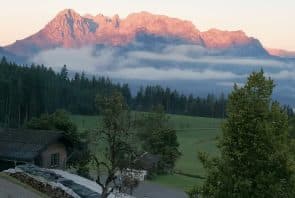
The train takes us further south to the Alpine republic. There, the exciting places are waiting to be tested and discovered – we are ready! The first “pearl” on our (almost) climate-neutral journey through “Austria” is Mallnitz. The approximately 760 inhabitants in the Carinthian municipality have dedicated themselves to environmentally friendly tourism. “Mallnitz is one of the so-called ‘Alpine Pearls ́’,” explains hiking guide Adi Straner, who likes to take sporty visitors to the Hohe Tauern National Park to high peaks. “This is an association of 19 locations in five countries – in Germany, Austria, Slovenia, Italy and Switzerland. Anyone who joins is committed to enabling holidaymakers to stay without a car without their mobility suffering as a result.” Station transfers, on-demand buses, hiking and ski buses, e-vehicles and much more are all part of the mobility guarantee. The theory is available for those interested around the clock on the homepage www.alpine-pearls.com. We already understand how the concept works in reality at Mallnitz-Obervellach station, from where it continues with a shuttle service. The distance to our Hotel Bergkristall is only one kilometre, so a slightly longer stone’s throw.
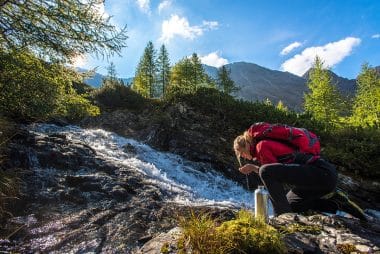
The climatic health resort, towered over by steep mountain walls, is manageable: a larger municipal road, a church, shops for daily needs, the village square. Once over the Seebach and the Mallnitzbach, then it goes back to the starting point. The next day, a detour to the visitor centre on the outskirts of the village, which is particularly popular with school classes, beckons. The homepage even offers a virtual tour, we would like to take a closer look at the exhibitions. In the so-called “Ranger Labs”, a variety of experiments on the subject of nature, climate or herbs await. If you want to continue to deal with green content, you will find a number of hiking trails in all directions on the doorstep of the visitor center.
Mallnitz is a real pearl for a hiking holiday in summer, Picture: Franz Gerdl
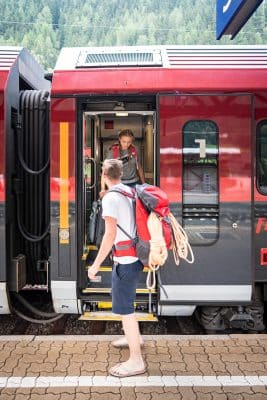
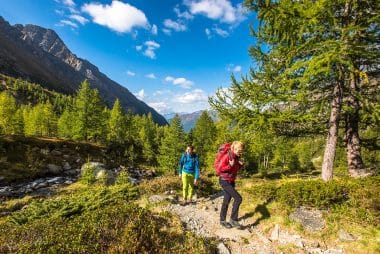
For example, a walk along the Mallnitz valley circular trail to the natural jewel “Stappitzer See” is a good idea. The view over the Hohe Tauern is simply fantastic, and we enjoy the moment. Next to the road, wild horses run back towards the village as if they were human pedestrians. The tour here is flat, so you don’t have to perform any top sporting feats to hike around the “Alpine Pearl”. In the late afternoon, we go back to the hotel refreshed and with great new impressions. From there, too, there is a panoramic view of the three Mallnitz valleys – the Tauern, Seebach and Dösen valleys. In winter, the Ankogel mountain railways take the ski bunnies to an area with 25 kilometres of first-class groomed slopes. Who knows, maybe during our next stay here in Carinthia. After three days, we continue comfortably and gently by train to the next Austrian “pearl”, Weissensee. This time with the ÖBB (Austrian Federal Railways). We leave the station on time and make ourselves comfortable.
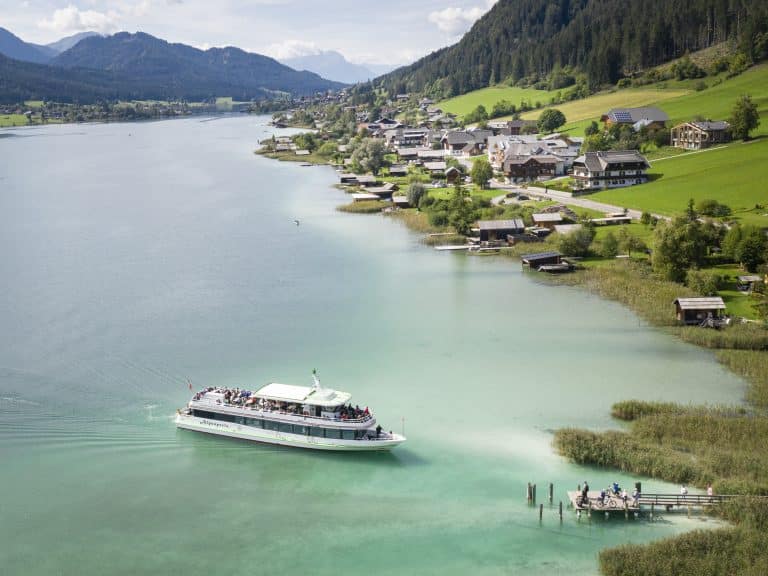
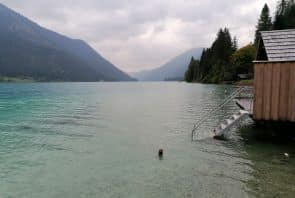
Carinthia is also here, here too there is a fabulous panoramic view to enjoy. This time mainly over the shimmering blue lake of the same name, which stretches below our hostel. Water-related activities are a must in this magical place, if not on the surface, then at least on the surface. So we start on a tourist ship of the Müller family on a trip between Techendorf, Neusach, Naggl to the Dolomitenblick, end of the 11.9 km long Weissensee – and immediately back again. The 1st electric hybrid passenger ship Austria glides gently over Lake Weissensee. Now in winter, nature sets a limit to the driving pleasure, if you want, you can now try your hand at ice skating, ice diving or ice hole fishing, for example. A walk around the water is worthwhile at any time of the year, the view down to the bottom of the lake is always fascinating.
In this pearl, too, hiking trails entice you to head away from the valley to the surrounding peaks. In summer, for example, hiking guide Franz Lackner offers a joint hike from the Paterzipf, over the Lakasteig to the Hermagorer Bodenalm. After 2.5 sweaty hours, the mountaineer is rewarded with a snack and award-winning cheese from the hotel’s own cheese dairy on the Bodenalm. In the cold months, Weissensee can be tested as a fairly undiscovered ski area for the whole family. The fjord-like landscape also offers numerous hours of sunshine in winter, which can be enjoyed on two boards. In any case, hiking guide Lackner is convinced that “everyone will find fun and variety here on holiday. We are also happy to help visitors get the most out of their holiday.” We like to take him at his word. After two more nights in Carinthia , we get back on the train, which this time takes us to Werfenweng in Salzburger Land. This time we get to enjoy the ÖBB Railjet. As soon as it enters the station, the train impresses with its modern design. Excellent Wi-Fi and an on-board restaurant with surprisingly good snacks round off the offer perfectly. The W3 shuttle is already waiting for us at Bischofshofen train station and takes us directly to the hotel.
The Hohe Tauern National Park, Image: Franz Gerdl
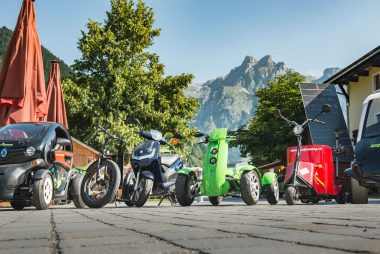
And you can also rely on E-Lois. Punctually at the agreed time, the municipality’s own taxi, which operates in the local area, is in front of the accommodation. In Werfenweng, no tourist with a guilty conscience has to get into his own car – more than a handful of holidaymakers fit into the shared taxi. E-Lois is only one part of the extensive green offer with which the municipality in Pongau is particularly distinguished. “A large, climate-neutral fleet of pedelecs, e-mountain bikes, e-cars and much more awaits you – free of charge!”, it says on the homepage of the “Alpine Pearls”.
Those in need of relaxation are spoilt for choice: over 80 environmentally friendly vehicles are available on call. Guests will receive the key for use immediately upon arrival. On request, the W3 shuttle will pick them up directly at the train stations in Bischofshofen, Werfen or Pfarrwerfen. Anyone who has arrived on the high plateau in this way in a climate-friendly way and stays overnight in a partner business is entitled to the discounted Werfenweng Card. The small magic card is handed over to the arrivals at the tourist office. Now guests can take part in an extensive range of activities that also benefit the environment – there is a choice of hikes and excursions in summer and romantic tours by carriage in winter. All free of charge.
A climate-friendly vehicle fleet, Image: TVB-Werfenweng, Christian-Schartner
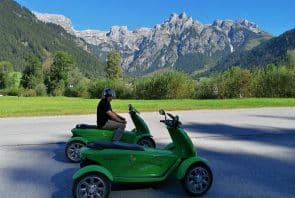
First of all, we decide on the well-maintained range of wheeled vehicles in Werfenweng. First we go on green scooters, which promise a lot of fun and do not overwhelm even the inexperienced. In the rental station on the village square we secure the two highly sought-after jet flyers. The employee of the tourism association patiently explains how the mini runabout works. “After a short time, everyone gets it,” he promises, and he is right. First we jet beyond the end of the village to the “Barbarahof”, a large hotel complex in the middle of the mountains. On the way we roll past a meadow, the landing site of the daring paragliders. The paragliders usually take off from one of the suitable places on the Bischling and then sail down in wide orbits. A few skilful lunges on the lawn, and they are back on the territory of the small, fine community. Impressed, we stare up at the cloud of paragliding umbrellas in front of the mighty mountain backdrop before we return our green hops to the local rental shop. Because here many more environmentally friendly two- and four-wheelers are waiting to be tested extensively: For example, the red vehicles called “Biga”, which resemble gladiator cars. In addition, several Segways, a velotaxi or even a sporty mini car, which we decide on after a short consideration. At 45 km/h, it goes leisurely up to the Wengerau Alm restaurant, where visitors seem to embrace three nearby walls of the Tennengebirge.
If you like it a little faster, you can also opt for a BMW i3 in Werfenweng. At night, the electric vehicle – like a whole series of “colleagues” – is plugged into the socket in the immediate vicinity of the village square. With the small car, longer distances of 200 kilometers are no problem, for example to neighboring St. Johann im Pongau. In the evening, you can enjoy the panorama of the Salzburger Land at night on a ride on the Rosnerköpfl village railway. The next day, unfortunately, the W3 shuttle is already at the door of the accommodation, and the return trip by train is on the agenda.
Result:
Travelling to the Alps by train is easier than you think. Without traffic jams, without stress – simply travel and arrive in a relaxed manner. And: Thanks to the wide range of mobility offers in the Alpine Pearls holiday resorts, we were able to pursue all activities as desired and thus discover the places excellently! By train to the Alpine Pearls: highly recommended!
This trip took place with the support of DB and ÖBB.
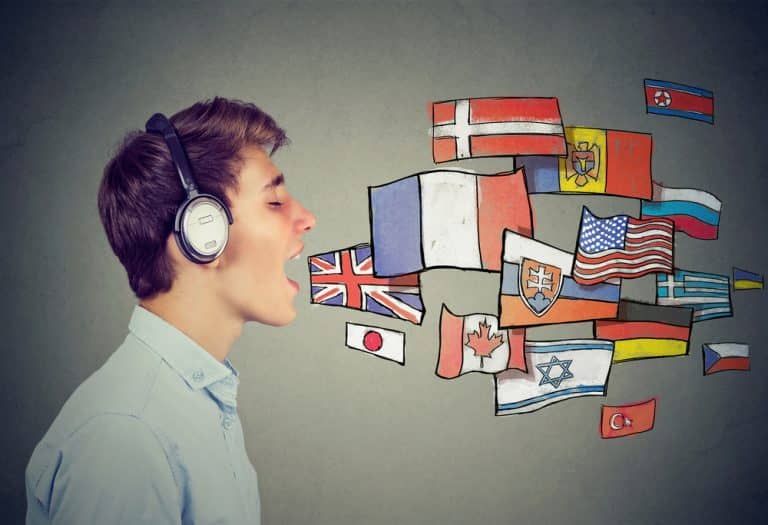
Language trips allow us to learn a foreign language in a special way. Through language, we get closer to the local people. This allows us to discover and explore the country and culture more attentively. All this leads to unforgettable holiday experiences that remain in our memories in addition to the language.
Many good reasons for a language holiday
There is hardly a better way to learn or deepen a foreign language than to go on a language trip. Probably the most important advantage of language holidays is that the language accompanies you around the clock. What has been learned in the course can be applied immediately after class: while sightseeing, in the restaurant, on the street and in the accommodation. Another positive thing about a language trip is that the course teachers are native speakers. Thanks to their training, they use creative methods to convey the learning content without resorting to other languages. This may seem difficult at first, but it ensures quick learning success. And if the lessons become too strenuous, there is no reason for stress. After all, it’s all holiday time and the rest of the day is at your leisure!
English courses in Germany
Tourists from all over the world like to travel to Germany: not only to get to know the people and the German culture, but also to be able to learn the German pronunciation or to improve their German . Their motives are different. Some want to do something for their education in addition to their vacation. Others want to study or work in Germany and use the language trip to find out whether Germany is the right choice. Well-known destinations for a language holiday in Germany are cities such as: Munich, Heidelberg, Freiburg, Hamburg or Cologne.
Useful information about language holidays
Course type
For holiday travellers who want to learn or deepen their knowledge of a language, the language schools usually offer so-called intensive courses. These include four to five lessons per day. The courses typically start every Monday and allow a flexible entry into the different language levels. Many language schools offer excursions in addition to the lessons: a short guided tour of the city, a visit to the museum or an excursion into the countryside. A language teacher accompanies the participants, conducts conversations with them and thus promotes the active use of the language.
Accommodation
Normally the hotel is one of the preferred accommodations. For a language trip, private accommodation with the locals is recommended. Thus, the close contact with the hosts offers another opportunity to use the language. Alternatively, it is advisable to rent a room in a shared apartment. The contact with the roommates provides further exercises in language skills. The language schools often help in the search for such accommodation.
Educational leave
In 14 federal states, there is an entitlement to educational leave. Under certain conditions, a language trip can be recognised as educational leave. This means that employees receive five additional days of vacation per calendar year from their employer, which they can use for a recognized course. It is therefore worthwhile to check whether there is an entitlement and which course is eligible.
Popular places to learn English and Spanish
There are many interesting and beautiful places around the world for a language holiday. For the world-famous languages English and Spanish, the selection is particularly large.
For those who want to improve their English and don’t want to travel far, London is an excellent choice. In addition to London’s highlights, this popular destination for language travel offers numerous other leisure activities such as museums, galleries and weekly markets. If you are looking for a lot of sun and warmth on your language holiday, Malta is the place to be. With almost 300 days of sunshine a year, the island attracts many tourists: an ideal place to practice the language together with people from all over the world. Outside of Europe, the English language can also be learned wonderfully. Attractive destinations here are: Auckland in New Zealand, San Francisco and New York in the USA or Brisbane in Australia.
Spain is the closest destination for us when it comes to learning the Spanish language. And despite Spain’s distinct dialects, tourists can learn dialect-free Spanish at any language school in the country. Among the most popular destinations are the cities of Barcelona and Madrid, with their diverse offerings of art, architecture and culture. Long-distance travellers will find a variety of extraordinary places for a language trip in South and Central America: Ecuador’s capital Quito, the Inca city of Cusco in Peru or the Caribbean city of Cartagena in Colombia – to name just a few. Each country has its subtle peculiarities of the Spanish language. The special thing about all of them, however, is that they are all slightly different from the Spanish of their place of origin Spain.
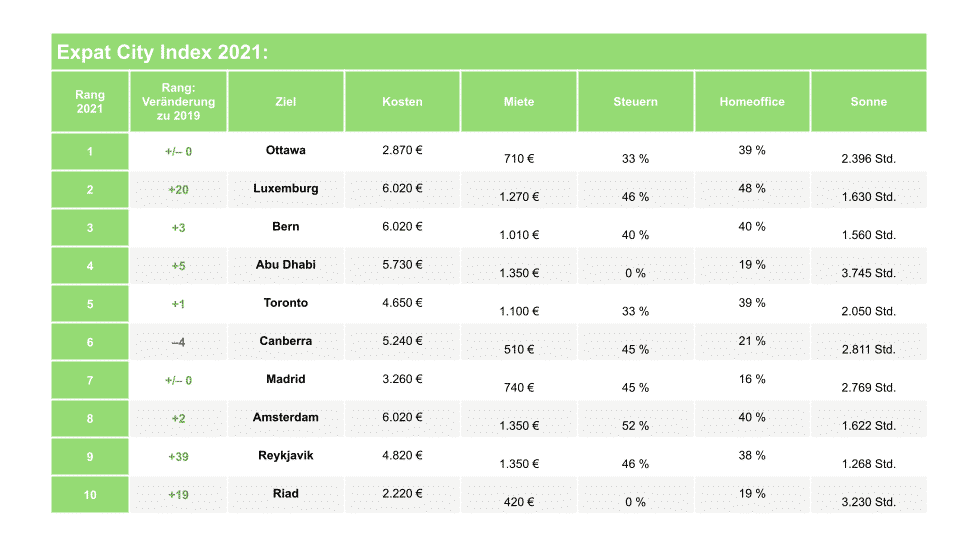
Emigrate successfully, but where to? With the Expat City Index 2021 , the construction financing experts at LoanLink24 have published a study that results in a current ranking of the best cities in the world for emigrants. The comprehensive analysis of seventy cities on 25 influencing factors was first carried out in 2019. The new edition with the latest data, including earnings, cost of living, hospitality, quality of life and remote work, allows a meaningful comparison of the conditions for expats before and after the pandemic.
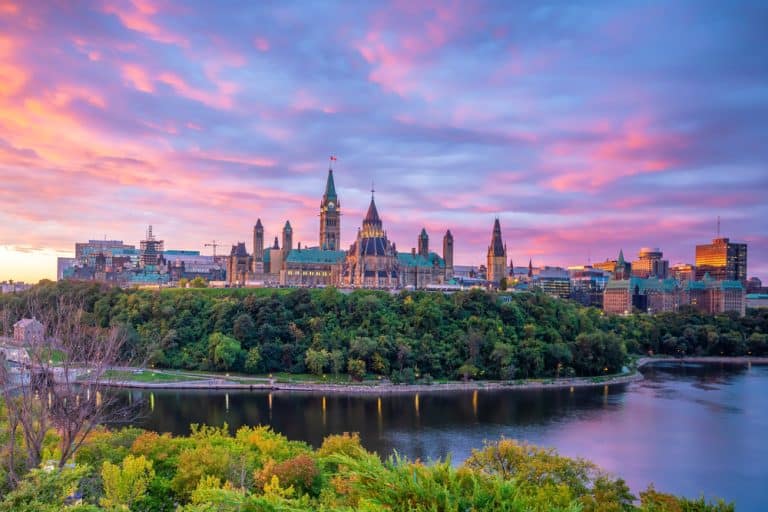
The Canadian capital of Ottawa successfully defends its top spot as the best destination for expats. Low living costs, an average working week of only 37 hours at full employment and attractive environmental conditions make Ottawa extremely livable.
Expats who prefer to stay in Europe should take a look at Luxembourg and Bern. Both cities offer expats the highest quality of life, a lot of security and good earning potential. However, they are also comparatively expensive. A family has to raise about 6,020 euros a month to maintain their standard of living. Expats also need to invest a little more for a permanent home. In Luxembourg, a property costs an average of around twelve annual salaries, in Bern about nine annual salaries.
The home office has celebrated its triumphal march over the world of work during the pandemic. In this study, the proportion who worked from home last year serves as an indicator of where flexible and hybrid working is likely to remain an integral part of the world of work in the future. With 47 percent of employees working from home, Luxembourg leads in this factor, followed by the Netherlands and Switzerland with 40 percent each.
German cities such as Frankfurt, Berlin and Munich have lost significantly their attractiveness for expats since the last survey in 2019. Other countries have become much more attractive than Germany over the pandemic. Reykjavik, the capital of Iceland (from 50th to 9) and Riyadh, the capital of Saudi Arabia (from rank 29 to rank 10).
“The pandemic has permanently changed the way we live and work. With the increasing spread of hybrid work models, the number of those who are thinking about emigrating will also grow,” says Anna Friedrich, press spokesperson for LoanLink24. “With this study, we want to offer prospective expats points of contact that should help them find the ideal emigration destination.”
Other exciting findings
Expats can find by far the highest earning potential in Zurich and Bern.
No income tax (0 percent) is due in Bahrain, Qatar, Saudi Arabia and the United Arab Emirates. At 57 percent, Sweden charges the highest income tax rate.
With an average of 49 hours a week, expats work the longest in Mexico City.
With a rent of 220 euros, you pay the least for a small apartment in a city location in Mumbai, India. Living for rent in San Francisco, USA, is ten times as expensive.
The data analysis reveals Taipei, Taiwan, as the most hospitable city for expats. Foreigners are least welcome in Tripoli, Libya.
In Luxembourg, public transport is free. In contrast, a single ticket in Bern costs about 3.90 euros, making it the most expensive in the world.
The Russian capital Moscow is the most congested city in comparison. The residents of Abu Dhabi, United Arab Emirates have the fewest problems with traffic jams.
Of course, expats get the furthest with their English skills in countries with English as their official language. This is followed by Reykjavik, Amsterdam and Tel Aviv. Knowledge of English, on the other hand, is of little help in Riyadh, Tripoli and Bangkok.
An expat family in Buenos Aires, Argentina needs around 485 euros per month to maintain their standard of living. In San Francisco, on the other hand, a family needs a monthly income of about 9,550 euros to make ends meet.
On average, employees in Riyadh, Saudi Arabia, are entitled to 37 vacation days. Only eight days of vacation are the standard in Hanoi, Vietnam.




 In the summer, the exhibition “Dobrna through the ages” was on display in the “two-hundred-year-old spa park of Dobrna (Slovenia).