Which countries offer the best conditions for speaking a new language optimally in the near future? The learning platform Preply has dealt with this question and conducted a study that should provide answers. The result is the European Language Index , which analysed the language learning environment of 27 EU countries.
According to the study, Luxembourg offers the best conditions for language learning. It is followed by the Scandinavian countries of Sweden, Denmark and Finland. Luxembourg scores with an education system that introduces all schoolchildren to a foreign language as early as primary school. In addition, natural linguistic diversity in Luxembourg contributes to its leading position. In addition to Luxembourgish, German and French are also important official and lingua franca.
According to the study, a good language learning environment is characterised by a high population and language diversity, foreign language teaching as an integral part of the education system and a wide distribution of foreign-language TV programmes, preferably in the original language with subtitles.
With a placement in eleventh place, Germany narrowly misses entering the top 10 of the best countries for language learning. Although around 79 percent of people in Germany have knowledge of at least one foreign language, the corresponding language level still leaves room for improvement. Only about one in three Germans can converse fluently in a foreign language.
While the widespread distribution of foreign-language films in the original language with subtitles in countries such as Sweden, Denmark, Finland and Cyprus helps to promote foreign language skills among the population, foreign-language films in Germany are almost without exception shown dubbed. The high prevalence of dubbing had an overall negative impact on the result of Germany.
“It has been proven that it is easier for us to learn an additional foreign language if, on the one hand, we are already supported in primary school and, on the other hand, if foreign languages are naturally integrated into everyday life here and there. This happens, for example, when you come into contact with native speakers or when you watch a film in the original sound. With the European Language Index, we want to provide an overview of the different conditions for language learning in Europe,” says Kirill Bigai, founder of Preply.
For professionals and leisure fans: Globe Chaser App
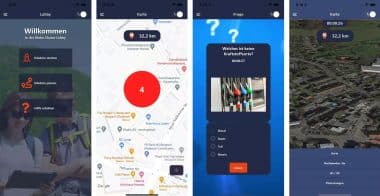
Event organisers, agencies, tourism businesses and private users are delighted with an innovative app. Globe Chaser lets you experience your free time even more intensively. Scavenger hunt and rally, city tour and tips for the holiday are part of the app. Team building is one of the topics that is very popular here. So far, the app is available for common Android and iOS devices, but extensions are on the way.
Professional tour operators such as tourism businesses can test the application free of charge, after which favourable tariffs apply. If you are privately interested in this leisure app, you don’t have to pay anything at all, but get something extra from us, namely a monthly experience and the possibility to save your own gadgets, routes and experiences.
Your advantage: our target groups
When developing our app for tourism businesses and families, we thought of all those who like to be on the go or make sure that others come to their leisure time. Our main focus is therefore on travel and tourism companies, event agencies and companies and, of course, last but not least, individuals and families. The app offers tailor-made experiences for every area of tourism:
Globe Chaser App for Companies and Agencies
The Global Chaser App
Companies and agencies that focus on team building can choose from activities that strengthen commonalities and allow a wide variety of people to grow together. Once planned, you can save tours, city rallies and scavenger hunts and adopt or modify them for new customers. In the application’s dashboard system, agencies have a calendar at their disposal that reminds them of the start of the next project.
If you need a route for last-minute participants, the One Click Route Editor takes care of the event planning for you. Agencies can also call up routes that have already been completed. The app is also a valuable support for leaders of youth groups, for trainers and teachers. Excursions in terms of further education can be designed just as easily and quickly as pleasure rides.
Planning aid for travel and tourism businesses
For tourism businesses and tour operators , the app offers new ways in terms of tourism. Sights on the route and at the destination can be easily linked to the route. The result is an exciting game in which all hotspots in the region are included. Adults and children alike get their rights.
But that’s not all: The app for tourism has a connection to well-known encyclopedias, so you can also draw on the full range here. The opportunity to present your own photos and videos increases the appeal of any hike or rally. Thanks to the app, you no longer need your own guides for the entire tour, it takes over the city tour for your customers on simple tours.
Stark: Scavenger hunt and city tour as a private leisure activity
Numerous experiences await families and groups of friends: With the help of the app, you can plan children’s birthday parties that will be remembered for a long time. You don’t have to invest a lot of time in this. You can combine birthday parties and scavenger hunts effortlessly. Exciting tasks for the holiday provide variety. For example, you can set search tasks, incorporate certain physical exercises and have questions answered. Once the task is completed, the way to the next stop is cleared.
What is popular with the little ones also appeals to the grown-ups here. You can make the bachelor party, the class reunion or the family celebration excitingly different thanks to the app. Self-taken photos document the rally, so that you have a retrievable memory. In the private sector, the app is absolutely free of charge, you can try it out and use it at any time without obligation.
App and technology
The app is currently available in German and English. You can use it on popular smartphones and tablets. The prerequisite is Android or iOS/IpadOS. Thanks to the app’s special technology, different devices with different systems can work together within the experience you create or choose, making it ideal for tourism businesses and agencies.
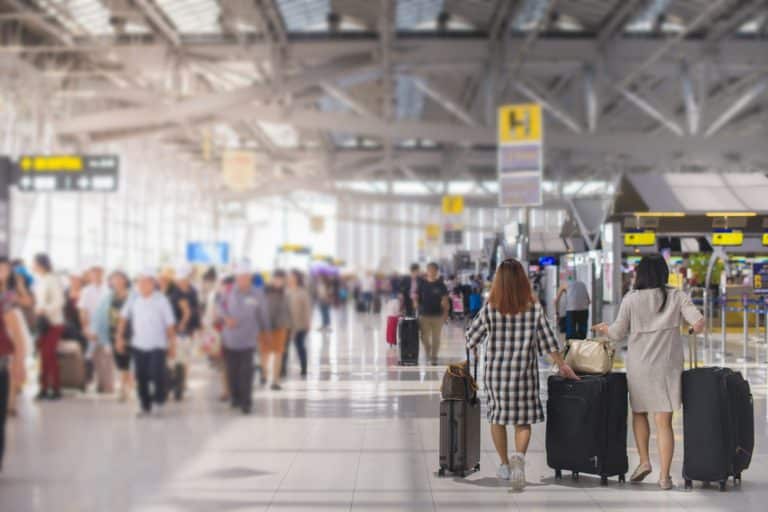
In times of Corona, there are a few things to consider when traveling. Of course, this also applies to air travel. There are new hygiene standards and safety precautions at the airport and on the plane. So if you want to go on holiday by plane, then precise preparation is necessary. In the following article, we provide you with a checklist in which we summarize the most important points.
What should be considered before the flight?
Before you plan a trip, you should find out about the current situation at your destination. Knowing the current notices, warnings and obligations is extremely important. You can consult this website of the Federal Foreign Office for this purpose.
Because a negative corona test is an important prerequisite for entry into most countries, many airports have set up stations in Germany where passengers can be tested for the virus.
The following applies to all guests entering Germany by plane: They must show a negative test at check-in at the point of departure – even if they enter Germany from a non-risk area.
Without such a negative test, no flight is possible. Excluded from this are recovered and fully vaccinated.
How to get to the airport
The journey to the airport is currently often done individually with your own car, which is then left at the airport parking lot. But that doesn’t necessarily have to be the case. Bus or train work just as well, you just have to comply with the safety measures, which also apply at the airport.
When arriving by public transport and shuttle service, the Infection Protection Act must be observed in any case. If the airport is located far from the city, such as Frankfurt Hahn Airport, airport transfer is a good option. The tickets can be bought conveniently online, travel stress-free with the Shuttle bus from Frankfurt Hbf. to Frankfurt Hahn Airport and no longer have to look for a parking space.
Addendum from 01 December 2021:
And don’t forget to compare parking prices at the airport. Depending on whether you park near the terminal or in the surrounding area with a shuttle transfer, you can save dramatic parking fees. You can compare the prices e.g. on www.park-sleep-fly.net/de/
Conditions at the airport
At most airports, guests are only allowed to enter the hall with their ticket. However, the area that cannot be left by accompanying persons is clearly marked in these cases. Signs on site explain how guests must behave.
At airports in Germany, a medical mask is mandatory for all passengers aged six and over. These include FFP2 and FFP3 masks, KN95/N95 masks without valves and surgical masks. On the one hand, this mask requirement only applies in the airport building and, on the other hand, on the tarmac and on the flights of most airlines – as well as when passengers re-enter Germany. In addition, the airports have increased the regulations on cleaning and regularly disinfect the surfaces.
Passengers should check in online before the flight during Corona and check in their luggage at the automatic drop-off counters. This shortens the time they have to spend at the airport with a mask before the flight. Nevertheless, a time buffer should be planned, as there may be longer waiting times.
At check-in, at the gate, at the security check and after landing, the necessary distance of 1.50 to 2 should be maintained. Markings on the ground and signs help with this.
The conditions during the flight
Important rules apply when boarding the aircraft as well as at the seat. Above all, passengers should keep their distance. In general, every passenger wants to get on board quickly, but guests should wait a little longer and therefore avoid a large crowd. Many airlines currently board according to group numbers, which can be found on the board pass and call the guests when it is their turn.
These increased regulations for protection when flying during the Corona period also ensure that many airlines can only take one piece of hand luggage per person on the plane, all others have to be checked separately. The hand luggage should be compact enough so that passengers can quickly stow it on board and not hold up the other passengers for too long.
At the seat, the middle seat usually remains free, in any case the mask requirement applies to all passengers. This again includes medical masks. It is advisable to take several masks with you, as these are not provided by the airlines.
In any case, air travel is also possible during the Corona crisis. However, they should prepare for the new hygiene standards and safety precautions.
35 years ago, the Egyptologist Herman van der Velde, during his own travels in Egypt, found that group tours should be offered with more individual freedom in order to generate more unique travel experiences. With that, the Djoser concept was born.
From the very beginning, Djoser Reisen has cared about the local population, the culture and the nature of the destinations. Sustainability resulted from this as an essential component of the trips: Djoser is the first tour operator on the German-speaking market to offer CO2-neutral tours. So far, more than half a million guests from Germany, Austria, Switzerland, the Netherlands and Belgium have been able to discover over 100 destinations in this authentic way with Djoser.
Image: rudiPro / shutterstock
Individual freedom with the comfort of a group tour What sounds paradoxical is Djoser’s unique recipe for success. The individual freedom allows the local travellers to do something alone even without a group, to get to know the country and its inhabitants, but also the diverse culinary offers on their own. Of course, the travel companion offers parallel excursions and restaurant visits for all those who prefer joint activities. Djoser lovingly compiles the best itineraries for groups of an average of 15 participants, books flights with renowned airlines, authentic hotels, comfortable buses and includes the most important excursions and sights in his program.
Travel with a heart for the world
With Djoser you will discover the most beautiful corners of the world, from tropical rainforests to extensive savannahs and desert landscapes with little vegetation. At the same time, you will be completely immersed in a culture and experience contact with the local population up close. Atmospheric, family-run accommodation, special transport and culinary discoveries round off the unique travel experience and create memories for eternity.
This is exactly why Djoser has been working with small local partners for many years. Together, they come up with the most beautiful routes, involve the local population and support local projects.
CO2 compensation included in the tour price
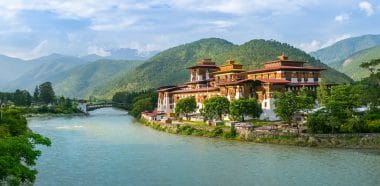
Punakha Dzon Monastery in Bhutan, Image: Khanthachai C / shutterstock
Sustainability is of great importance to Djoser. In addition to its commitment to supporting local communities, Djoser is the first tour operator in Germany to offset CO2 flight emissions and include them in the travel price. Djoser calculates the amount of CO2 released and, in cooperation with the world market leader South Pole, invests in various projects worldwide, e.g. in a solar collector park in Thailand, in order to save the same amount of CO2 elsewhere in the world. All these measures have a long-term, sustainable positive impact on the climate, so that future travellers can also discover the beauty of the world.
Exclusive 50 Euro discount for the readers of Reisemagazin-Online:
Poor connections, delayed flights, too few seats at the gate or inadequate food: Even if you are looking forward to your dream vacation in the future, the flight there can get on your last nerve. Which airports do it differently, i.e. particularly well, in terms of passenger friendliness, is shown by a ranking of the travel experts at Omio. In a study, they examined causes of stress, such as flight delays, passenger traffic and travel routes to the airport and combined them with information about the available equipment and arrived at the following top 10:
Barajas Airport (MAD) in the Spanish capital Madrid is the most passenger-friendly airport in Europe. The international airport is comfortably equipped and has relaxation areas, showers and children’s playgrounds, among other things. MAD also impressed in the evaluation with a wide range of shopping facilities and restaurants. 133 shops and 54 restaurants and bars are available to passengers in Madrid. Only a few flight cancellations and an above-average number of punctual flights make Barajas the best airport in Europe.
One year after its opening, the German capital airport BER finds itself in 10th place in a European comparison. 35 shops and 39 restaurants and bars serve around 93,000 passengers every day. The new building has important comfort features, such as a relaxation area, showers, power outlets, pharmacy, lounges and smoking area. Two S-Bahn lines and a regional train line connect the city centre, which is about 20 kilometres away, with the airport south of Berlin. This means that BER Airport is solidly accessible in a European comparison, but does not stand out particularly positively or negatively in terms of connections.
The most punctual airport in comparison is Copenhagen Kastrup, CPH. 96 percent of flights land and take off on time. With 140 shops, no other airport has as many shopping opportunities as Rome-Fiumicino. Most of the gastronomy – 79 restaurants and bars – is located within Moscow’s Sheremetyevo International Airport.
With 241,370 passengers a day, London Heathrow is the busiest airport in comparison. The airports of Prague, Oslo, Ankara and Podgorica are absolutely non-smoking areas. They do not have any designated smoking areas, the evaluation shows.
15 routes on which you can easily travel in a climate-conscious way
Sustainable choices are taking up more and more space in everyday life. Significantly more people want to take responsibility and change their behavior for the sake of the climate. This is also shown by a recent YouGov survey commissioned by the travel search engine Omio. The representative survey showed that travelers from Germany are willing to make some compromises for the sake of the environment: More than one in three (39 percent of respondents) would accept a travel time up to 30 minutes longer if the trip were more sustainable. For more than one in five (23 percent), a travel time of up to 60 minutes longer would even be justifiable, and twelve percent would even accept a two-hour longer journey.
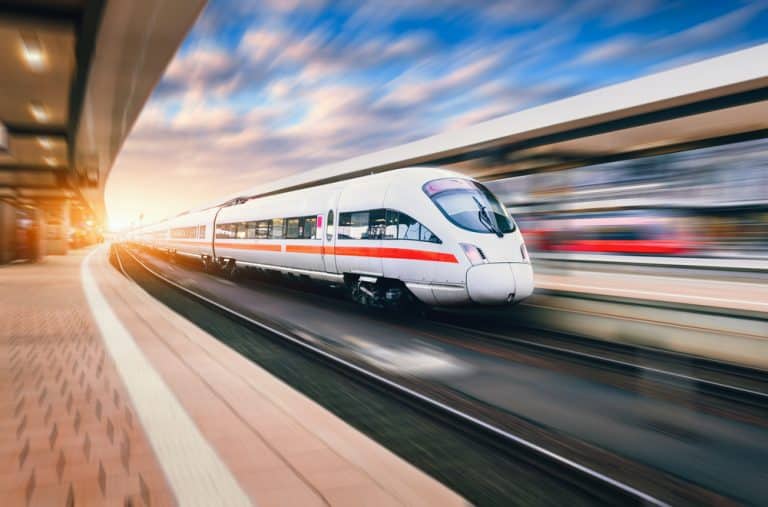
Three routes in which the train is significantly faster than the airlines are (source: Omio):
Frankfurt am Main <> Cologne
124 min. faster by train than by plane and saves 25 kg of emissions
Hanover <> Frankfurt am Main
27 min faster by train than by plane and saves 33 kg of emissions
Stuttgart <> Paris
15 min. faster by train than by plane and saves 74 kg of emissions
It is hardly surprising that members of GenZ are much more concerned about the environment. In this group, 69 percent of respondents accept a longer travel time in favor of the climate, compared to only 56 percent of the population as a whole. In general, respondents in Germany are quite willing to use the train instead of the plane. Almost one in two respondents (45 percent) say they prefer trains to planes if the connection is faster. The long-distance bus, on the other hand, is not so well received. When deciding between bus or plane, the price seems to play a role above all. One in five respondents would choose the bus if the ticket was significantly cheaper.
Routes in which the train is not significantly slower than the plane (source: Omio):
Frankfurt am Main <> Paris, +22 min., but 63 kg emissions saved
Frankfurt am Main <> Munich, +30 min., but 38 kg emissions saved
Berlin <> Food, +32 min., but 49 kg emissions saved
Düsseldorf <> Hamburg, +34 min., but 47 kg of emissions saved
Frankfurt am Main <> Amsterdam, +39 min., but 48 kg emissions saved
Munich <> Zurich, +41 min., but 43 kg of emissions saved
Munich <> Vienna, +42 min., but 62 kg of emissions saved
Hamburg <> Frankfurt am Main, +44 min., but 68 kg of emissions saved
Berlin <> Munich, +47 min., but 48 kg of emissions saved
Hanover <> Amsterdam, +55 min., but 47 kg of emissions saved
Berlin <> Frankfurt am Main, +58 min., but 49 kg of emissions saved
<> Cologne Hamburg, + 59 min., but 195 kg emissions saved
The summer holidays are now over and we are getting closer and closer to autumn. But that doesn’t mean that you have to hide at home now and wait for spring. No. Quite the opposite: Even in the autumn and winter months, there are great places to discover throughout Germany. And if you prefer to wait until it gets warm again, you can keep the places presented here in mind, because they are beautiful to look at in summer and winter.
The Lake Constance Region
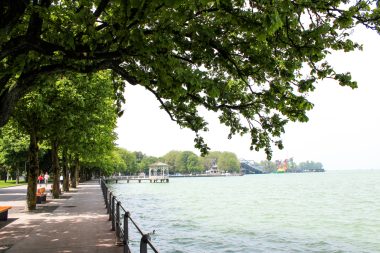
Relaxing at Lake Constance, Image: Yolo Art / shutterstock
The first region that we recommend everyone to visit is the Lake Constance region in the south of Germany. This is where the national borders of Switzerland, Germany and Austria meet on Lake Constance. The result is a great mix of snow-capped mountain peaks in Switzerland and Austria on the one hand, as well as great lidos on the German side and above all Meersburg Castle on the other side. There is really something to discover and experience here in any weather.
Berlin
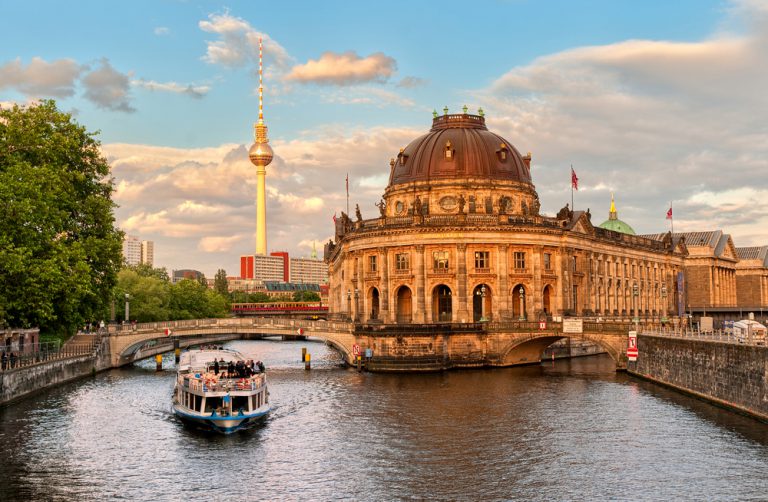
From the south, it goes to the northeast of the country. This is where the capital of the Federal Republic is located: Berlin. In the meantime, however, Berlin is much more than just the capital of Germany. It is a melting pot of cultures where the most diverse people and ways of life come together and create a unique cultural mix. From the well-known shopping mile on Kudamm to Alexanderplatz, there are many attractions and sights from Germany’s eventful history. The Spielbank Berlin, which was founded in 1975, is also worth a visit, although today you can also gamble away real money directly on your own PC or mobile phone thanks to online casinos such as the NetBet Casino . The odds in online casinos are usually even better than in classic gambling halls. In addition, a visit to the fragments of the Berlin Wall as well as to the Victory Column and the Brandenburg Gate is absolutely and really worth a visit at any time of the year.
The Harz Mountains
From the hustle and bustle of the city we move back into nature. More precisely, to northern Germany, where the Harz Mountains , the highest mountain range in northern Germany, run through the federal states of Lower Saxony, Saxony-Anhalt and Thuringia. The highest point of the elevation, which belongs to the summit group of the low mountain range, is the well-known Brocken. But even beyond the Brocken, the Harz has something for everyone. Especially the Devil’s Wall a little north of the Harz Mountains, which stretches over a length of 20 kilometers, is worth a visit. The elevation appears to have been created by unnatural forces and vividly demonstrates the work of tectonic plate shifts in Germany as well.
Mecklenburg-Western Pomerania
Rügen is one of numerous holiday highlights in Mecklenburg-Western Pomerania, Image: Sina Ettmer Photography / shutterstock
We stay in the north of the Federal Republic and move to the outermost tip and the northernmost state of Germany: Mecklenburg-Western Pomerania. Here, the country has a lot to offer in terms of nature and holiday factor. Not only is the Mecklenburg Lake District located here. No. The way to Rügen to the Königsstuhl is also not far. The majestic contrast of white rocks and blue sea can enchant the observer in a split second and make you forget all stress. According to tradition, the 118-metre-high chalk cliff gets its name from the fact that the Swedish King Charles XII led a naval battle against the Danes from here.
Saalfeld Fairy Grottoes
Now it’s back to the east of the Federal Republic, more precisely to Thuringia. Here, visitors can expect a very special natural spectacle and an extraordinary sight. The Saalfeld fairy grottoes seem to have fallen out of time. The stalactite cave has developed over time and tells numerous stories. But the origin is not, as one might assume, supernatural beings, but mining work in the Thuringian Slate Mountains. Today you can explore the caves on foot and by boat and enjoy the numerous colorful chambers. There is guaranteed to be something for every visitor.
An evaluation shows where mountain sports enthusiasts get their money’s worth when hiking, winter sports, skiing, climbing, mountaineering and mountain biking
Out of the city, into nature: In the Alps, idyllic tranquillity, fresh mountain air, crystal-clear lakes and a unique panorama await. The diversity of the landscape guarantees an experience of nature, whether you prefer hiking, climbing, skiing or mountain biking. With an evaluation of data, the sports equipment supplier Keller Sport has looked around the five major Alpine countries to find out where outdoor enthusiasts and mountain sports enthusiasts can find particularly good conditions for outdoor fun in the Alps. The analysis looked at the tourist offer, assessed the attractiveness of the landscape on the basis of the highest peaks and national parks and shows where particularly good conditions for various mountain sports can be found.
Winter sports and skiing
The Alps invite you to winter sports, Image: Richard Williamson / shutterstock
The coming ski season is eagerly awaited. After the 2020/21 season was almost completely cancelled, many enthusiastic winter sports enthusiasts and also the tourism industry are hoping for an early start, an extra thick snow cover and, if possible, no incidents in connection with the coronavirus. What is certain is that the new season will be characterized by hygiene rules, 3G and mandatory masks. Austria in particular is broadly positioned in terms of tourism with around 16,000 overnight stays and 997 mountain huts. Germans in particular are hot for winter sports, the study shows.
Climbing and mountaineering
The most fearless alpine athletes are probably climbers and mountaineers by far. Hardly any slope is too steep, hardly any weather too bad when it comes to climbing up the peaks of Europe’s largest high mountain range. Probably the most famous Alpine panorama in the Swiss Alps, there are 191 peaks over 3,000 metres and 48 peaks over 4,000 metres (with 300 metres of prominence). In terms of numbers, however, Switzerland is surprisingly topped by the Italian Alps. They have 217 peaks over 3,000 meters and 38 peaks over 4,000 meters. One of the most famous mountain ranges in the Italian Alps are the Dolomites.
Wander
Hiking inspires young and old, Image: Dudarev Mikhail / shutterstock
One of the most popular outdoor activities in the Alps is hiking. The selection of unique hiking routes is huge. The longest network of hiking trails can be found in the Italian Alps with a total of 60,000 kilometers, followed by Austria with 50,000 kilometers and France with 46,000 kilometers. Trend data, which were also analysed in the evaluation, show that Switzerland is the most popular Alpine country among hikers. A total of 287 mountain huts along the Swiss routes, which stretch through the Swiss Alps over a length of 22,000 kilometres, offer opportunities to rest.
Mountain biking
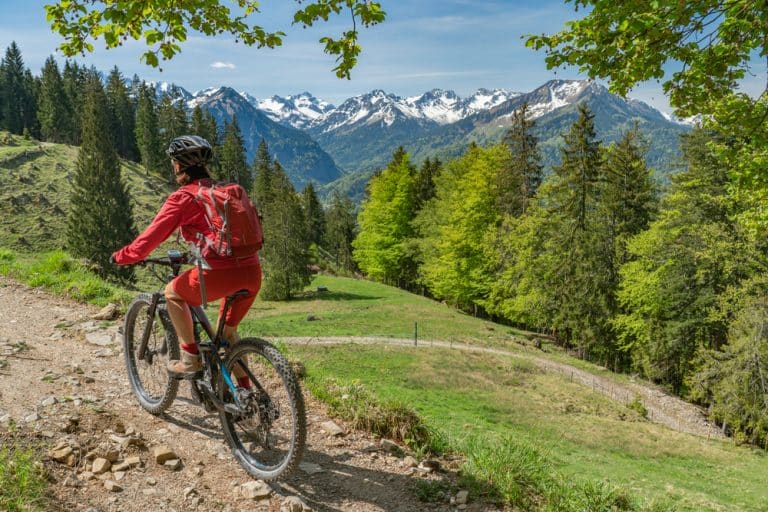
With the growing prevalence of bikes with electric motors, excursions along more challenging routes and trails are also becoming increasingly popular. The Alpine countries offer a wide variety of different routes, from adventurous and stony trails with jumps to long panoramic routes with plenty of resting opportunities. As the venue for the Tour de France, one would think that the French Alps offer particularly good conditions for mountain bikers. The evaluation confirms this assumption, at least in part. On a multi-day tour through the French Alps, 718 campsites, more than 17,000 other overnight accommodations and 159 mountain huts await you to stop and linger.
Result
The picturesque mountain worlds of the Alps offer outdoor fans such a multifaceted selection of possibilities as hardly any other region in Europe. Whether in Germany, Austria, Italy, France or Switzerland, all countries offer some form of action during the day and something to relax in the evening. In the overall evaluation of the study, the sports outfitter selects Italy as the “ultimate Alpine country”. The Italian Alpine regions offer the best conditions for an active holiday in the mountains, according to the explanation.
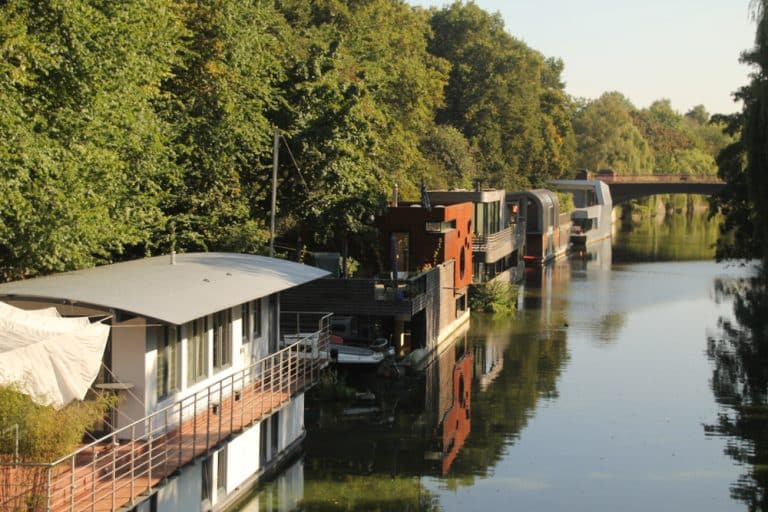
Are you longing for the perfect combination of relaxation and adventure? Then a holiday on a houseboat is the right thing for you: enjoy the sun on deck while you sail through idyllic river and lake landscapes. You are completely free to design your trip: Whether you want to relax in the sun, swim in a secluded bay, do water sports, fish, or prefer to visit cities is entirely up to you. As you explore the rivers, lakes, and canals on your route, you don’t have to sacrifice the comforts of home. Renting a houseboat is not only incredibly diverse, but also easier than you might think. Create unforgettable memories!
No driver’s license? No problem!
Most houseboats can now be rented without hesitation without prior knowledge or experience. The regulations vary depending on the area and region, but many of the most beautiful houseboat areas can already be navigated with a charter license. For the license, only about three hours of instruction on the steering of the boat is required and it is valid for the entire rental period. This briefing is usually carried out directly by the boat owner for a small extra charge. You go through theory and practice together – and you’re ready to go! Take this opportunity to inquire with your landlord about the locks and lock opening hours in your holiday area.
There are many good reasons to rent a houseboat
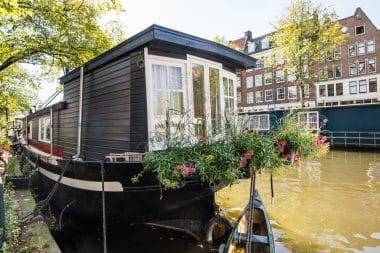
Houseboat in Amsterdam, Image: Kite_rin / shutterstock
Renting a houseboat is becoming more and more popular, and not without reason: In addition to being close to the water, you have the luxury of having comfortable accommodation with your means of transport on a houseboat! Discover the most beautiful places and enjoy the amenities of your floating apartment. You don’t have to back down: Most houseboats today are modernly furnished and equipped with everything you could wish for. They usually have a kitchen, bathroom, living room and sleeping area and are large enough for families or groups of friends with a capacity of up to 12 sleeping places.
Independence and flexibility are a big bonus of the houseboat. As your own captain, you’ll enjoy the freedom to customize your vacation as you see fit. Whether you anchor in secluded bays or busy harbours is entirely up to you. Take the opportunity to go swimming whenever you feel like it and then dry off on the deck in the sun. Bathing fun for young and old is guaranteed!
When you holiday on a houseboat, you may be staying on the water, but you can go ashore whenever you want for walks and explore the places along the way. Discover not only picturesque lakes and river landscapes on your houseboat adventure, but also culture, history and culinary delights on land!
Where can you go? The most popular houseboat destinations
There are many dream destinations that are made to be explored by houseboat. The most popular houseboat areas are even nearby!
Holidays at home have become increasingly popular not only since the Corona pandemic. With over 1000 lakes and numerous waterways, Germany is the perfect destination for a boating holiday. The most famous houseboat regions are in the northeast, where an almost endless river and lake landscape awaits you. One of the most popular destinations is certainly the Mecklenburg Lake District. The entire area can be navigated without a licence and is extremely beginner-friendly due to the few locks. The Müritz, an inland lake in the heart of the Great Lake District, is particularly appreciated by recreational captains. The Berlin and Brandenburg waters can also be navigated by houseboat. However, a boat license is required for a boat tour through Berlin’s city center along historic places such as the Reichstag and Museum Island. The numerous tributaries of the Havel offer an endless selection of routes and anchoring opportunities, even for beginners. The river is connected to numerous bathing lakes and the towns on its banks provide a beautiful panorama along the route.
With its numerous waterways, rivers, canals and sea, the Netherlands is also one of the most beautiful destinations for a houseboat charter. The Dutch metropolis of Amsterdam is particularly beautiful from the water. What better way to explore the “Venice of the North” than on a trip through the typical canals. They stretch all over the city and take you past important landmarks. Friesland in the north of the country is also known for its enchanting water landscapes. It is particularly suitable for family trips by boat. In South Holland you sail past typical windmills and blooming tulip fields – a ride through a picture-book panorama!
France is considered the country of water tourism par excellence: countless waterways run through the entire country and connect the various waters of the regions with each other. One of the most popular areas for new houseboat captains is the Canal du Midi in the south of the country. Past the picturesque southern French city of Toulouse , it reaches into the Mediterranean. A tour on the Nantes-Brest Canal takes you across Brittany in northwestern France. Experience breathtaking natural landscapes and discover the traditional history and culture of the “Grande Nation” from the water!
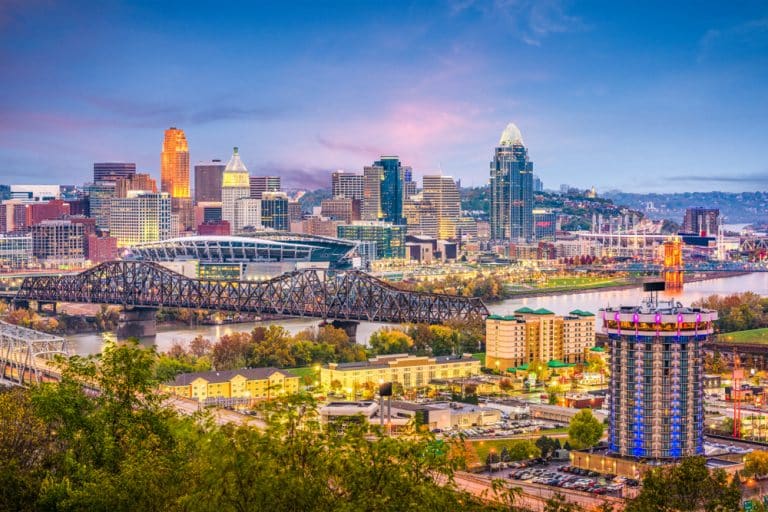
Cincinnati is the third largest city in Ohio and offers numerous attractions with its historic architecture, diverse cultural offerings and sports scene. What can you expect from this city, which is also called the “Paris of America”, “Athens of the West” or “Queen City”? Here are some highlights that can make a trip to Cincinnati unforgettable.
Museums in Cincinnati
The Contemporary Arts Center is an art museum in Cincinnati. The building that has housed this museum since 2003 was designed by architect and Pritzker Prize winner Zaha Hadid. The museum does not have a permanent exhibition, but concentrates on new developments in painting, sculpture, photography, architecture and performance art with changing exhibitions. This principle led this museum to exhibit many early works by artists who later became famous, such as Andy Warhol, in the past.
Another very worthwhile destination for art lovers is the Cincinnati Art Museum. This has a collection of more than 67,000 works. Among them are paintings by such well-known artists as Peter Paul Rubens, Frans Hals, Lucas Cranach the Elder and Andrea Mantegna.
Sports facilities
Sports fans can visit several stadiums and arenas in Cincinnati that play baseball, American football, basketball, ice hockey, and soccer. The baseball team of the Cincinnati Reds – five-time winner of the “World Series” – plays its home games in the Great American Ball Park, which has space for more than 40,000 spectators. Even larger is the Paul Brown Stadium with 65,000 seats. This stadium is the home ground of the Cincinnati Bengals American football team. Ice hockey fans can attend Cincinnati Cyclones games at the Heritage Bank Center. Since 2015, football fans have also been getting their money’s worth: In this year, FC Cincinnati was founded, which plays in the 26,000-seat TQL Stadium.
Since 1999, the “Flying Pig Marathon” has taken place every year on the first Sunday in May. A total of more than 30,000 athletes will take part in the weekend’s running events.
Parks in Cincinnati
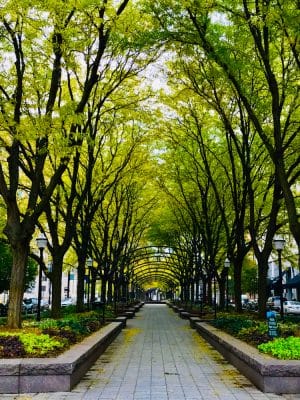
Out and about in Piat Park, Image: Jeffrey Dean Tyler / shutterstock
If you just want to relax with a walk in the countryside, you can stroll through Piatt Park in Cincinnati, the oldest park in the city. Here you can walk in the shade of the trees or see the statues of the two US presidents from Ohio – James A. Garfield and William Henry Harrison.
Eden Park is much more extensive. From here you can overlook the Ohio River and spot the neighboring state of Kentucky on the opposite bank. In this park is the Krohn Conservatory, a well-known greenhouse with a palm garden, bonsai collection, orchid exhibition and tropical house.
Cuisine
Cincinnati has many culinary options, from gourmet restaurants to bars (“Arnold’s Bar and Grill”), ice cream parlors (“The Creamy Whip”) and burger joints (“Zip’s Cafe”). A special regional specialty is Cincinnati chili, a spicy meat sauce used with pasta and hot dogs. The Taste of Cincinnati festival attracts over 500,000 visitors each year. It always takes place in May on Memorial Day. More than 40 restaurants take part in the festival each time with their creations and compete for numerous prizes.
Attractions in Cincinnati
The Music Hall
If you like classical music, you should definitely visit the Cincinnati Music Hall. It is a magnificent building designed in the Venetian Gothic style, completed in 1878 and listed as a historic monument since 1975. In the large main hall, the Springer Auditorium, there is room for more than 2200 listeners. The ceiling of the hall is decorated with magnificent paintings and, since the 1970s, has also been equipped with the now famous Music Hall chandelier, on which there are 96 individual light bulbs. In this grandiose atmosphere, you can enjoy performances by the Cincinnati Symphony Orchestra, the Cincinnati Ballet or the Cincinnati Pops Orchestra.
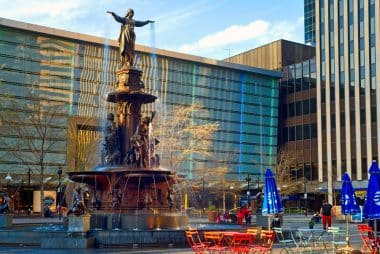
The Tyler Davidson Fountain, also known as the “Genius of Water,” is one of Cincinnati’s landmarks and is one of the most recognizable works by German sculptor August von Kreling. The fountain, built in 1871, is one of the most visited sights in the region. It is located in the center of Fountain Square and is surrounded by hotels, restaurants, shops, and office buildings. The impressive bronze sculpture in the middle of the fountain is 13 meters high.
The Aronoff Center
The Aronoff Center opened in 1995. Here, the inclined culture lover can attend musicals, plays, concerts and stand-up comedy shows. The building was designed by star architect César Pelli.
Oktoberfest Zinzinnati
Oktoberfest Zinzinnati is based on the German Oktoberfest and is considered the largest event of its kind in the USA. Here you can choose from over 100 different types of beer and marvel at numerous fun activities: the dachshund race “Running of the Wieners”, the supposedly “world’s largest duck dance”, the “Cosiness Games” and bratwurst eating competitions.