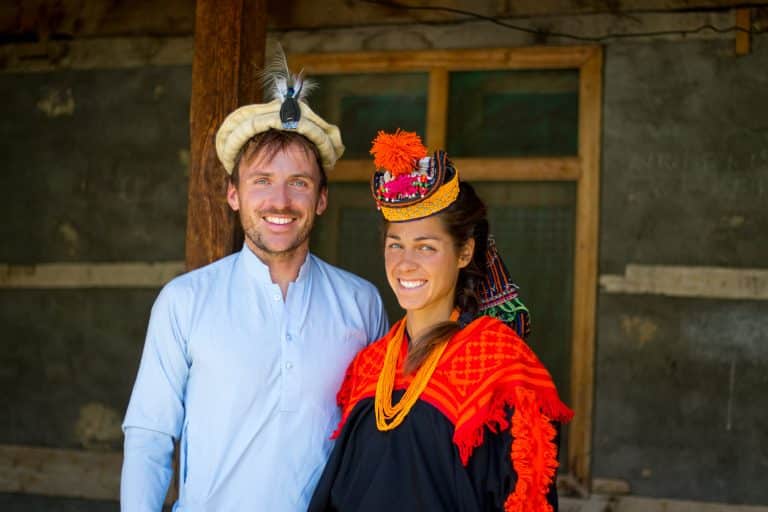
Bastian Maria is a travel-loving photographer from Friedrichshafen on Lake Constance. In March 2020, Bastian and his wife Viviane planned to hitchhike around the world from Germany to Japan. Reisemagazin Online met Maria and Viviane with Bastian:
Reisemagazin Online: First of all, how did you come up with the idea of hitchhiking to Japan ?
Viviane: Bastian and I are both very enthusiastic about sports. Above all, the Olympic Games have fascinated us since our childhood. In 2012 in London and in 2016 we were able to experience the Games in Rio de Janeiro up close. After these two events, it was clear to us that we wanted to travel to Tokyo in 2020.
And why hitchhiking?
Viviane: We thought long and hard about how we could make our trip sustainable and as close as possible to the local population. So that we can immerse ourselves in cultures that are unknown and exciting to us. In addition, we wanted to be as sustainable as possible. If a car is driving in one direction and there is space, why shouldn’t we just go with it?!
2020 was the outbreak of the Corona pandemic. Did the pandemic affect the start of your trip?
Bastian: Yes, definitely. We had quit our apartment and job and had already deregistered from Germany . When we wanted to leave, all borders were suddenly closed. Actually, we wanted to start in March 2020, but had to wait until June. Then the first national borders slowly opened again.
And how did Covid affect you during the trip?
Image: Bastian Maria
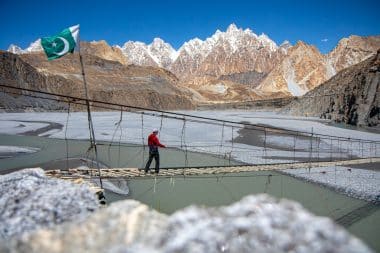
Bastian: During the trip, it was especially challenging when it came to entering a new country. It was often not entirely clear which tests and which entry requirements were valid. Entering the country by land was usually not possible. Nonetheless, Covid has taken us to countries we wouldn’t have traveled to without the pandemic. For example, when we had to leave Kyrgyzstan, Pakistan was one of the few countries that allowed tourists into the country. Unforgettable moments and unplanned experiences have been created there. All in all, everything went mostly smoothly. Except that we never made it to Japan.
Why didn’t you make it to Japan?
Viviane: Japan did not reopen its borders before the Tokyo Olympics. Only the athletes, coaches and officials were allowed to enter the country under strict conditions. Even relatives, such as the parents of athletes, were not allowed to enter Japan.
How was the moment for you when you realized that you wouldn’t make it to Tokyo?
Viviane: First of all, we were a bit sad and it took the wind out of our sails a bit. We asked ourselves the question, what are we actually on the road for? However, we quickly agreed that Tokyo was actually “only” the reason for the trip. The actual destination has not changed during the trip.
How would you describe your goal then?
Bastian: From the very beginning, it was important for us to come into contact with foreign cultures. And as close as possible. We wanted to get in touch with people through couchsurfing and hitchhike from A to B. Get to know the country and its people in a personal way. Off the beaten track. Maybe support non-profit organizations in between.
You have certainly experienced a lot as a result. Is there that one moment that you would describe as the most impressive event of the almost two years of world travel?
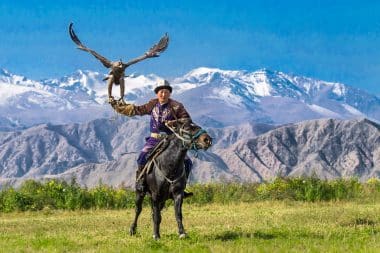
Image: Bastian Maria
Viviane: It’s not possible to define the one highlight. However, there are a few events that you probably only experience once in your life. This includes hunting with an eagle hunter in the mountains of Kyrgyzstan. In Pakistan we were allowed to attend a traditional Punjab wedding for five days. In Turkey , we were allowed to hitchhike on a sailboat on the Aegean coast for a few days.
Reisemagazin Online: “If the trip was not finished by the Olympic Games, what motivated you to end the trip? Or is the journey not over?”
Viviane: I got pregnant on the trip in Sri Lanka . This was no reason for us to go home directly. However, Bastian and I agreed that the child should be born in the familiar home in Germany if possible. And so it was that we stayed in Sri Lanka for three months in Zanzibar before we were in Germany at Christmas in the 7th month of pregnancy. The birth in March 2022 was without complications. Since then, we have been a happy trio.
That’s great news. What are you currently doing and how are you planning your near future?
Bastian: Viviane and I are both self-employed. We are using the current time intensively to further expand our independence. From our trip, we are planning a travel lecture entitled: Thumbs Up – The Hitchhiker’s Guide to Japan. Here we would like to share our experiences with pictures, videos and stories.
In the near future, we would like to go to South Korea and still like to travel to Japan. Of course, we missed the Olympic Games, but to experience the country and the people would still be a great wish of ours. From now on, of course, the three of them.
I wish you all the best for your project. Thank you very much for the interview.
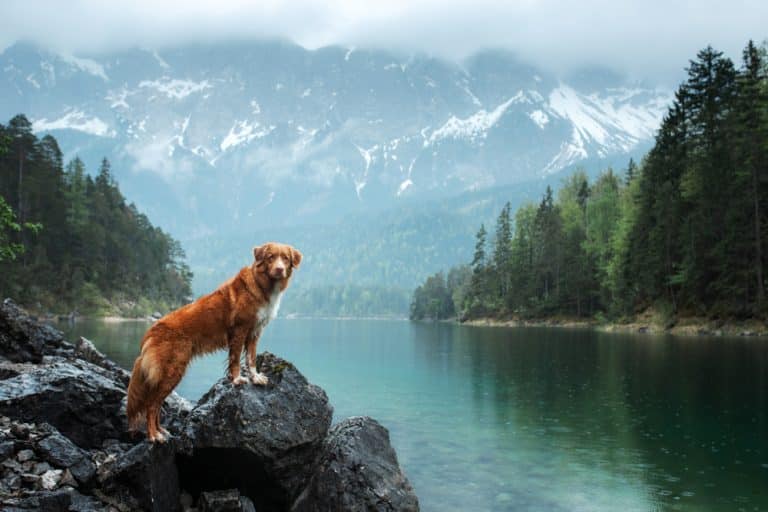
Of course, dog lovers always want to have their darlings on paws with them on holiday.
Most holiday countries have now adapted to travellers with dogs. Nevertheless, there are a few countries where dogs enjoy a lot of freedom or have more fun than elsewhere and that’s exactly what we’re introducing to you now.
6 most beautiful holiday destinations with dogs worldwide
1. Austria
Hardly any other country in Europe has adapted to holidaymakers with dogs as much as the Alpine republic. Austria not only attracts with idyllic guesthouses, chic hotels or cosy holiday apartments where dogs are welcome.
Austria is simply a dream country if you want to walk or hike your dog extensively .
In Austria’s mountain railways , dogs usually travel free of charge, but you must always have a muzzle with you.
2. Italy
“La dolce vita” not only pleases us two-legged friends, but also the dogs. Italy is a dog country and the times when scatterers roamed the country in a neglected state are over, at least in central and northern Italy.
The muzzle requirement also only exists on paper (nevertheless, as a foreigner you should better have a folding muzzle in your pocket) and nowhere else do so many dogs run on a leash or peacefully along the promenade as in Italy.
Enjoy the day at the beach together with your four-legged friend, Image: PIC by Femke / shutterstock
Thailand has the easiest entry conditions for people with dogs from the EU that you can imagine.
Apart from a pet passport, a chip, a rabies vaccination and a health certificate from the German official veterinarian, you don’t need anything.
In order to protect your favorite four-legged friend well, it can make sense to take out dog health insurance in advance. Some providers also guarantee foreign protection.
In the country itself, animals of all kinds are held in honor, as the Thais are all Buddhists . Only black dogs are sometimes viewed critically, as some Thais are then afraid of dark spirits.
The best time to travel to Thailand is between November and February, because the rest of the year is part of the rainy season in Thailand.
Unlike other Mediterranean countries, dogs are welcome on most beaches.
In some places, you can even rent a lounger for your dog on the beach.
5. Canada
Another perfect long-distance destination for people with dogs is Canada. Canada is a very safe destination and entry is very easy: all you need is the EU pet passport, a microchip and the mandatory certificate of a current rabies vaccination.
Then incredible landscapes and the perhaps dog-friendly people of this earth await you in this fantastic country. In particular, cuddly, very large, rare or cute terrier breeds are admired, petted and pampered everywhere.
What more could you want?Kayaking with your dog in untouched nature! City breaks in Vancouver, Quebec or Ottawa! Trekking through nature and seeing only beauty and wild animals for days!
If this sounds tempting to you, you should check airlines right away, transport the dogs and think carefully about whether your dog can take the flight.
By the way, many airlines allow small and medium-sized dogs to fly in a box in the passenger compartment.
6. Norway
To get to this natural paradise, you don’t have to go through flies or complicated procedures. Since Norway is tapeworm-free and wants to stay that way, all you need is proof of current tapeworm treatment and a pet passport.
The journey is easily possible by boat from northern Germany, Denmark or Sweden.
After a few hours of leisurely driving, cozy cities like Oslo and Bergen, endless expanses, great (but even in summer cool!) Beaches and of course the fascinating fjord landscapes.
Result
Europe and the whole world offer beautiful and worthwhile holiday destinations with dogs. No four-legged friend really wants to stay in his dog cave !
While Europe stumbles from crisis to crisis, the countries of Central Asia are redefining themselves with China’s help. Travel book author Thomas Bauer tells of encounters in Tbilisi, Tehran and Samarkand.
“Everythingis Chinese!” says Adil, pointing to the four-lane road that connects the popular Lake Issykkul with Kyrgyzstan’s capital Bishkek. The journey used to take six hours, now only two and a half.
“All this is Chinese” is often heard when traveling between Eastern Europe and Central Asia – whether it’s roads and railway lines, nuclear power plants and dams, or toys and food.
While Europe is increasingly concerned with itself, a fundamental paradigm shift is taking place in a huge area that has received little attention in this country. It becomes more visible the closer you get to China .
New self-confidence from Istanbul to Tbilisi
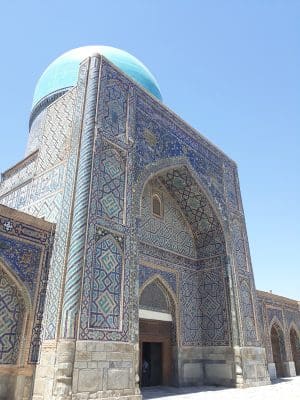
Bibi Chanum Mosque in Samarkand, Uzbekistan, Image: Thomas Bauer
“In the past, there was only one goal for us: Europe.” That’s what Hamza, who plays music on a party ship in Antalya , says. What he politely conceals from the German guest is that Europe is no longer a promise. Instead, the company is increasingly orienting itself towards the economically strong countries of the Arabian Peninsula and turning to Asia.
In the past, it was different: the whole country looked expectantly to the West; the economically weak eastern part of the country, Anatolia, was turned its back. In the meantime, however, the incomparable location between Orient and Occident is increasingly understood for what it is: a geostrategic trump card that opens up new perspectives.
Meanwhile, Hamza tries to impress a black-eyed dancer by turning up Okan & Volkan’s vows of love. “Halden Anlamaz”, it echoes across the sea – a hit created from Turkish folklore, Arabic influences and Western pop music.
Further east, in Armenia’s capital Yerevan, people do not speak well of Turkey . The latter still refuses to commemorate the victims of the massacres in the First World War appropriately. Armenia, which in 301 was the first country in the world to elevate Christianity to the state religion, has always been a bone of contention. For centuries, Romans and Persians fought over the fertile area. It once stretched from the Mediterranean to the Caspian Sea; today, the mountainous country offers a habitat for just three million people. Eight million Armenians live outside their country. Even the national symbol, Mount Ararat, where Noah’s ark is said to have stranded, is no longer in the country, but a few kilometers behind the border – in Turkey, of all places.
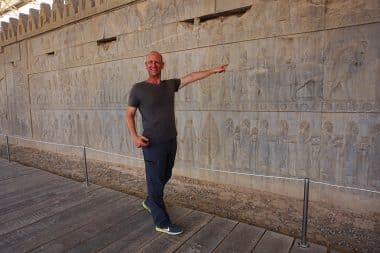
Thomas Bauer in the Old Persian Residence City of Persepolis, Image: Thomas Bauer
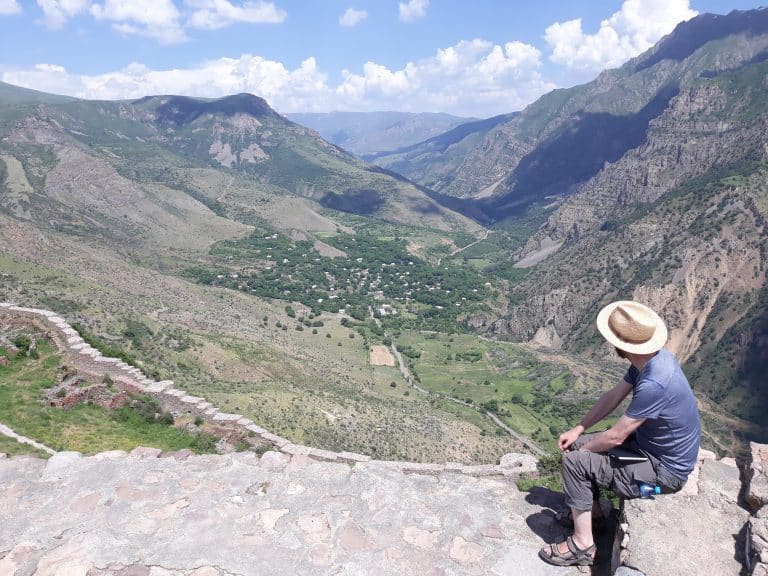
As soon as you leave the capital, you feel thrown back decades. Cows and goats cross pothole-strewn roads, “marshrutkas”, the Russian form of shared taxis, puff up dust-dry windings. Wherever you turn, your gaze quickly reaches a mountain that you can hardly get enough of – especially since a monastery that seems to have fallen out of time usually balances spectacularly on its abyss. Those who hold out here will be just as hard and frugal as the rock massifs that shape the landscape for a long time.
In the neighboring state of Georgia , on the other hand, they have managed to establish profitable tourism, which is kept alive with bus tours and bicycle excursions. The latest craze is a 240-meter-long glass bridge over the Dashbashi Gorge, with a diamond-shaped bar in the middle.
Especially in the villages, there is still genuine hospitality, which is expressed by feasting extensively with each other. The unsuspecting guest, who takes a seat at a long table for the first time, may think that the feast is over after an hour. After all, as a rule, people have not only eaten the starter – stuffed eggplant or a hearty soup – and a fish, but have also helped themselves unrestrainedly to the almost addictive cheese bread “Khachapuri”. Not to mention the wine, which the table master pours with a new toast with each course. But the fun is just beginning! Now the main course is served, shish kebab for example or mutton stew, in any case meat, with plenty of rice or potatoes and a few alibi vegetables. Of course, you drink wine with it again. Only when it comes to dessert do they hold back: some fruit and a coffee are enough – after all, the next feast begins in the early evening.
What a friend and colleague had driven you crazy when you left for Iran! You would be kidnapped there, they said, robbed anyway, spat on by fanatics and imprisoned by the mullah regime.
None of this is true. Instead, you meet friendly people who are looking for conversation, but who lack the intrusiveness that is widespread in large parts of the Orient. Yet they have reasons to hate the “Western” guest: After all, the sanctions ensure that money slips between their fingers and they have to keep their heads above water with two or more jobs. For example, they may clean hotel rooms in the morning, then cut customers’ hair and spontaneously become taxi drivers and tour guides as soon as they see a foreign visitor.
Iran’s cities are spectacularly beautiful. Tehran is a modern city where women wear body-hugging clothes and men sing along to the hits of Eminem and The Weeknd. The buildings of Isfahan and the gardens of Shiraz overwhelm you from the very first moment. In between, however, you drive for hours through semi-deserts, wastelands. At just under 50 degrees, the last shrubs wither. In the dried-up riverbed of the Zayandeh, children play football.
Iran has a water problem. Lake Hagun is completely dry at times, Lake Urmia, ten times larger than Lake Constance, could follow in a few years. This is not only due to climate change, but also to the construction of dams and the excessive irrigation of agricultural land. Perhaps, it is said behind closed doors, that is why the government is agitating so exaggeratedly against Israel and the USA: to distract from its own inability to solve the country’s most important problem. Iran is dying of thirst.
The lovable rascals of Uzbekistan
“That’s 30,000 soms, after all, I took a detour!”
Rustam smiles innocently, but at the same time sits up in the driver’s seat of his taxi and looks around him demandingly – a mixture that probably only someone who has offered services for a long time can manage. Of course, he only drove longer because, contrary to his assurances, he had no idea where in Samarkand the hotel he was looking for was located. The sum corresponds to five times the normal price; Rustam also speculates that his co-driver may only have a 50,000-som note. Then he could regrettably raise his shoulders, claim that he unfortunately has no change and see if he can get away with it. On the other hand, its price is still significantly cheaper than what a taxi driver would charge in Germany . In this respect, it is ultimately a good deal for both sides.
Even though Tehran is the largest city on the Silk Roads, its heart clearly beats in the Uzbek oasis cities of Bukhara and Samarkand. Their names alone create images of magnificent mosques, bustling bazaars and lovable rascals. And all this is true! Especially the thing with the lovable rascals.
The buildings score with sophisticated statics, curves and domes. They lack the unimaginative angularity that has the upper hand in Europe. In addition, they are richly decorated with artistic, sometimes mysterious mosaics. Above all, however, they always have new varieties of blue. Despite all their undeniable presence, they therefore seem strangely light. Perhaps they even express a longing for the sea – no wonder in one of only two countries in the world that are “double landlocked”, i.e. neither themselves nor one of their neighboring countries have access to the sea (the other such country is Liechtenstein).
Despite all the enthusiasm, one should not forget that most of the buildings were built by slaves. After Tamerlane, also known as Timur Lenk or Amir Temur, became sole ruler in 1370, he began his cruel and successful campaigns of conquest. Master builders, craftsmen and artists of the defeated peoples were brought to Samarkand, where they had to build mosques and palaces in honor of the foreign ruler.
30 years after the collapse of the Soviet Union, Uzbekistan is aware of its own strength. In the semi-deserts, gold and oil are mined. The “Afrosiyob” electric train, equipped with Spanish high technology, takes you to all the country’s major cities in no time at all – at a ridiculous price and with a service that would make any Deutsche Bahn employee sink into the ground in shame. Uzbekistan has even managed to build up its own car industry. The tourist potential of the Ferghana Valley is only just being discovered.
This increases the chances that typical German idiosyncrasies will continue to meet an Asian-influenced mentality in the future: While people in Germany like to address things directly, the relevant statements in Uzbekistan take place between the lines. Did the “yes” sound enthusiastic or hesitant? People also like to ask if they are happy at the moment: “Are you happy?” Anything other than a “But of course!” would not only be met with complete incomprehension, but would also be an affront to the hosts. After all, you are offered a lot (even if you don’t want some of it). You can give feedback that you are satisfied. About every half hour.
The “brother” that can be heard everywhere, however, does not correspond to the jovial American “bro”. After all, it stems from a completely different image of the family: the family, like the neighbourhood (“mahalla”), offers orientation, but at the same time sets tight boundaries. You take advantage of opportunities and earn money, or marry and raise children. Individual life plans that go beyond this framework are not planned. This is another reason why Uzbek hospitality often slips into over-care. Above all this, however, lies a trust in God, a devotion with a tendency to fatalism, which, combined with the local aversion to haste and hecticness, can be quite suitable to increase the feeling of vacation.
An old trade network leads to a multipolar world
Some Silk Road myths persist in Europe. For example, that there is a Silk Road. This has always been a network of trade routes. The name “Silk Road” was first used in 1877 by the German geographer Ferdinand von Richthofen. On the trade routes, not only silk was transported, but also furs, carpets, porcelain, jade and rhubarb roots, a popular laxative. In return, horses, jewelry, garlic, frankincense and kohlrabi were purchased. Ideas and inventions made their way to Europe – including paper and banknotes, the spinning wheel, the compass and the stirrup.
Above all, however, the Silk Roads are by no means a thing of the past; They are alive and kicking. China is expanding it with incredible investments. For 2000 years, from 500 BC until the discovery of America and the shift of trade to sea routes, the Silk Roads formed the backbone of global trade. China wants to build on this and is now focusing on the “Digital Silk Road”, fiber optic cables, 5G coverage and mobile payment. The “China Standards 2035” research project aims to promote Chinese instead of “Western” standards.
“You used to be the masters of the world,” Adil says with un-Asian openness, while in front of us Lake Issykkul, framed by four-thousand-metre peaks, seems like a promise. In the meantime, we have been on the road together for a few days. “In the future, however, there will be more than just one center of power. And somehow that’s fairer than a world according to the will of the USA, isn’t it?”
The fact that Europe is not interested in Central Asia could soon come back to haunt it. While in this country people no longer seem to be able to think outside the box due to ever new crises, elsewhere the course for the future is being set. You don’t have to approve of the current developments. But you should take a look: The future of all of Central Asia depends on silken paths.
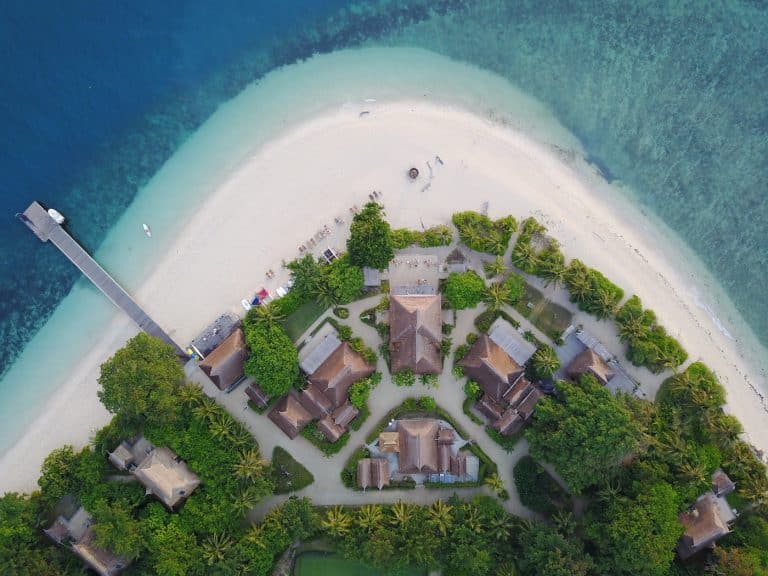
Nikoi is a 15-hectare island 8 km off the east coast of Bintan, Indonesia. Family-friendly Nikoi is a unique private island that prioritizes sustainability and groundbreaking design. The hotel offers 22 exceptional handcrafted rooms for a maximum of 42 guests. The barefoot island can also be rented as a whole.
Long gone are the days when a hotel can call itself eco-friendly just because guests use their towels multiple times. The fact that the bar for sustainability needs to be raised much higher is shown to us by the private island of Nikoi near Singapore. Its multi-award-winning concept is in charge of sustainable tourism and plays a pioneering role in this area. Four defining pillars form a holistic balance: sustainability, community, culture and trade.
The rooms
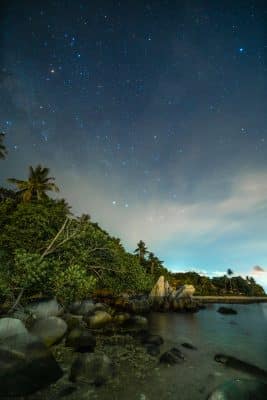
Villa on Nikoi at night
The American architect Peter Timmer, who has a passion for working with local materials, was commissioned to integrate the hotel complex into the breathtaking natural landscape with a sustainable design. Peter Timmer developed an architectural style that combines the typical design of solid driftwood with the grace and simplicity of modern design. An absolute design highlight is the double-arched roof, which acts like a chimney, pulling the hot air upwards and keeping the houses cool even without air conditioning.
He masterfully created a total of 15 two-storey beach houses with direct beach access and a large outdoor lounge, which extend over an area of five hectares and thus guarantee complete privacy for every guest. The remaining ten hectares of the island have been left as a nature reserve and are used by guests to explore.
The restaurants
There are two restaurants on Nikoi, one for families and one for couples or families with older children. Alternatively, guests can dine on the beach or on a private balcony. For those looking for something special, picnic baskets can be ordered and taken to one of the nearby deserted islands of your choice or to a secluded spot on Nikoi.
Some of the restaurants are supplied by the in-house farm. With an eye to the future, Nikoi has planted cashews, avocados, cocoa, nutmeg, and procured a wide range of unusual and ancestral species.
Spa & Leisure
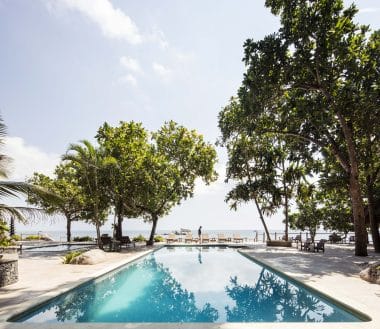
Main pool on Nikoi
The spa is located in three large safari tents near the pool. Only natural products – such as local coconut oil – are used for treatments. And best of all, there are even massages for the kids!
Diving, stand up paddle boarding, yoga, tennis, windsurfing, sailing, fishing, hiking, spa treatments or simply lazing on the white powder beaches – there really is something for every guest here.
How to get there
The Indonesian island is located 85 km south of Singapore in the South China Sea. Nikoi is very accessible via Singapore International Airport. From Singapore, take a 55-minute ferry to Bintan, where a Nikoi representative will escort you to the Speed Boat Terminal and the island.
The Czech region of South Bohemia is characterized by its beautiful natural landscape. For centuries, people have lived in the region without destroying its natural beauty. Industrialization has largely passed the region by, and so the region continues to produce outstanding craftsmen, artisans and artists to this day.
The cultural and historical heritage of the region is correspondingly large, and so venerable towns, historical monuments and authentic villages nestle in the beautiful landscape of South Bohemia. The cultural richness of the region results not least from its border location. Before the 2nd World War, citizens of German origin lived in South Bohemia for several centuries, who were deeply rooted here, and the Austrian nobility also exerted great influence on the region for many centuries.
Natural paradise South Bohemia
South Bohemia has a high landscape value, as numerous protected areas ensure that the natural landscape is preserved. Extensive pine forests, peat bogs, ponds, picturesque valleys and the rugged mountain landscape inspire visitors.
The South Bohemian Basin with its beautiful towns and numerous ponds covers a large area of the region. In addition, the Bohemian Forest, the Gratzen Mountains, the Chicken Mountains and the Bohemian-Moravian Highlands attract visitors. There is a lot to discover for nature lovers and so the region is also a popular destination for an active holiday. In particular, the Sumava Biosphere Reserve and the Trebonsko and CHKO Blansky les Protected Landscape Areas are characterized by their high recreational value. There are wonderful places that invite you to enjoy the peace and quiet and the peaceful atmosphere. The entire region is criss-crossed by wonderful hiking trails, so that very individual hiking tours can be planned.
South Bohemia’s most beautiful old towns
Budweis
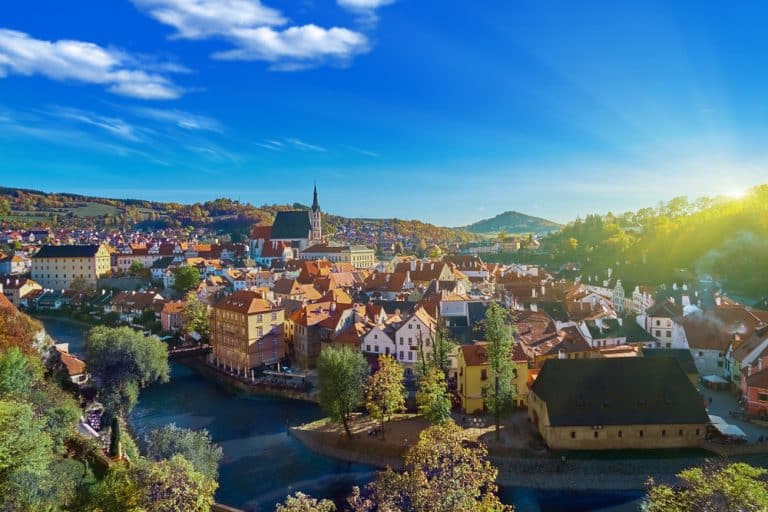
České Budějovice in South Bohemia, Image: k r e f / shutterstock
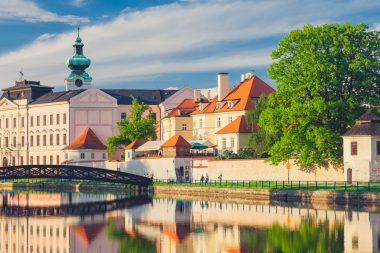
The historic city centre of České Budějovice is particularly charming. If you go on a discovery tour here, you will take a little architectural journey through time, because architectural pearls from the Middle Ages, Renaissance and Baroque can be found here. From the remains of the city wall to the Dominican monastery with the church of the Sacrifice of the Virgin Mary, there is a lot to discover. From the 17th century onwards, the city was a German-speaking enclave and this is also reflected in the sights of the city. Numerous entrepreneur villas from the 19. and the beginnings of the The 20th century are well worth seeing and were architecturally influenced by German and Austrian architecture. When it comes to historic České Budějovice, a visit to the České Budějovice Brewery is not to be missed, as brewing dates back to the 13th century.
UNESCO World Heritage Český Krumlov
Český Krumlov’s historic old town was already placed under monument protection in 1963. In 1992, the old town was also listed as a UNESCO World Heritage Site. There is a lot to discover in the narrow, winding streets of the old town. Particularly beautiful is the old market square with its fountain, which is bordered by neat town houses and commercial buildings. The most famous building in the city is Cesky Krumlov Castle, which was designed on the model of Prague Castle and is now the second largest historical building in the Czech Republic. A highlight is the baroque palace theatre with its stage technology preserved in its original condition. Other sights in the old town are the Cloak Bridge, the Minorite and Poor Clares Monastery, the Marian Column and many more.
Other listed city centres
In addition to the old towns of České Budějovice and Český Krumlov, the historic centres of Třeboboře, Neuhaus, Zlabings, Prachatice and Tabor are also inspiring. In all these cities, the historic core is very well preserved and there are numerous sights, so a visit to the cities is worthwhile in any case.
Castles and villages worth seeing in the region
UNESCO World Heritage Site Hollschowitz
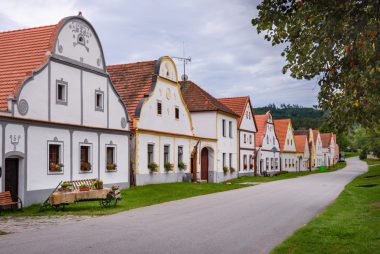
Hollschowitz, Image: Thomas Dekiere / shutterstock
South Bohemia in the Czech Republic is characterized not only by cities worth seeing, but also by beautiful villages. Hollschowitz in particular is an attraction for tourists from all over the world, because the small village, which belongs to the municipality of Jankov, presents itself with beautiful farms in the South Bohemian peasant baroque. In addition to the farms, the plague column also bears witness to the history of the place and the region. Around the village square are 17 farms, all of which are very well preserved.
Frauenberg Castle
Frauenberg Castle is considered the most beautiful castle in the region. The castle originated from Kamyk Manor, which was converted into a Renaissance castle in the 1580s. Later, the castle was redesigned in the style of Romanticism. The work was completed in 1871 and the Tudor Gothic chateau has since become one of the most impressive buildings in South Bohemia. It is worth visiting the castle, because inside the castle you will also be amazed by numerous works of art, valuable pieces of furniture, coffered ceiling, a neo-Gothic chapel and much more.
Rothlhotta Castle
The Renaissance moated castle Rothlhotta catches the eye thanks to its red color. The castle was built on a rock in an artificially created pond. The building was first mentioned in 1465 and was transformed into a Gothic fortress in 1530. In the course of history, there have been smaller and larger changes. In the middle of the 19th century, the gables were adapted to the neo-Gothic style and a castle tower was added to the building
For many people, the mobile phone is an indispensable companion in everyday life. But what accessories are really necessary when you travel?
Which mobile phone accessories are really useful for travel and holidays?
There are many different types of mobile phone accessories that some people consider useful and others consider superfluous. However, if you plan to use your phone frequently while traveling or on vacation, some of these gadgets are actually very useful. Here are four mobile phone accessories that are essential for travel and holidays.
1. A charging case
A charging case is a charger that allows you to charge your phone on the go. This is especially useful if you’re going to be on the road for a long time and want to use your phone all day long.
2. A phone case
A phone case from https://www.handyhuellen.de/ protects your phone from scratches and bumps. An iPhone 14 Max case is especially useful if you travel a lot and often carry your phone in your pocket or backpack.
3. A waterproof phone case
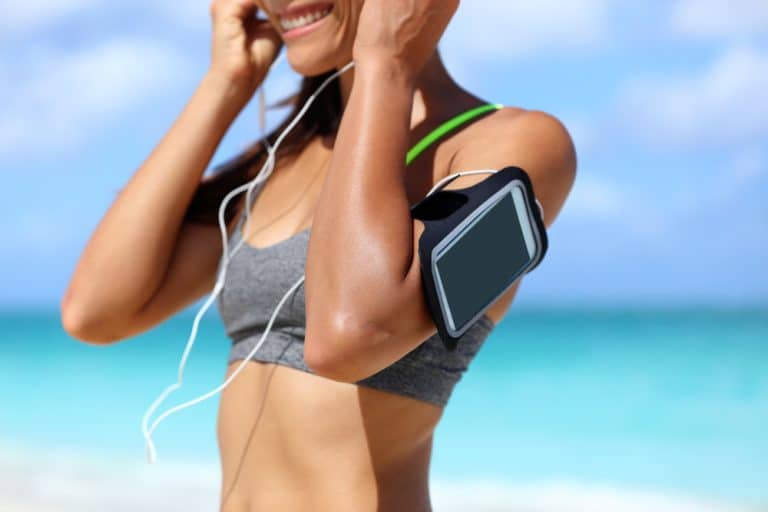
If you plan to use your phone at the beach or while swimming, it’s important to keep it in a waterproof bag. These pockets protect your phone from sand and water, preventing it from being damaged. There are also waterproof bags with extra compartments for other important items such as wallet and keys.
4. A telescope lens for the camera
If you plan to take a lot of photos with your phone’s camera, a telescope lens is a useful accessory. These lenses allow you to get closer to distant objects and take better photos. There are different types of telescope lenses for connecting to different types of cameras. So, look for a lens designed specifically for your phone’s camera.
What should you look out for when buying mobile phone accessories?
If you buy mobile phone accessories for travel or vacation, there are a few points you should pay attention to. First of all, it is important that the accessories are suitable for the mobile phone. Many people buy mobile phone accessories without first finding out whether they are suitable for their mobile phone model at all. This can lead to problems if, for example, you buy a charger and it turns out that it is not compatible with the mobile phone. So you should always check beforehand whether the desired mobile phone accessory is really suitable for your own mobile phone model.
Another important point is the quality of the mobile phone accessories. Many people opt for cheap accessories because they think that they can be just as good as expensive accessories. Unfortunately, this is not always the case. Often, cheap accessories are of poor quality and don’t work as well as expensive accessories. So you should always keep in mind that you should not skimp on the quality of the mobile phone accessories.
Last but not least, the warranty of the mobile phone accessories is also an important point. Many manufacturers do not offer a warranty on their accessories or the warranty is very limited. This means that you are not entitled to a replacement in the event of a defect in the accessories. So you should always check whether the desired accessory has a sufficient warranty before you buy it.
Result
If you plan to take your mobile phone with you when travelling or on holiday, there is a wide range of useful mobile phone accessories. In any case, a phone case is an essential accessory to protect your phone from bumps and scratches.
Finally holidays and now you want to learn? That sounds boring for the kids at first. But it’s not at all – this is about fun and beautiful experiences. The learning effect comes all by itself.
Do English holiday camps really do anything?
Students probably have other things on their minds during the holidays than cramming English. This raises the legitimate question of whether a holiday camp makes sense. And is it even possible to achieve success in such a short time?
The answer – a clear yes. Since English is spoken all day, the children learn to use the language in everyday life. In this way, they get into situations that cannot be practiced at school. In a safe environment , they are allowed to ask questions and try things out. Even reserved pupils who tend to be quiet in class are given the space to develop freely.
Sometimes children need a few days to warm up and come out of themselves. This environment is much easier to create in a camp than in school.
Advantages of English Holiday Camps
A holiday in a camp has many advantages for your child:
No pressure: There are no grades or tests, no pressure to perform for your child creates a relaxed learning atmosphere in which mistakes are allowed
Small groups: Unlike school classes with about 25 children, there are small learning groups, so children get a chance more often, are allowed to ask more questions and receive more intensive care
Native speakers: English camps often have native speakers, so children learn at a high level and without an accent
Sustainable and meaningful: Your child learns exactly what is important in real everyday life – the combination of seeing, hearing, understanding and speaking ensures long-term success
Especially at holiday camps nearby, the children have the opportunity to continue to see their new friends. The camp can motivate them to further improve their English together. Often the children want to participate together again next year.
Learning English at the holiday camp, Image: FamVeld / shutterstock
In order to make the separation easier for the children, it is a good idea to stay within Germany and close to home, especially during the first camp visits. Here, too, there is a large selection of high-quality and great camps, your children can learn English in Munich, for example, with FokusCamps. There they have the opportunity to learn English and jump into the next lake and take part in other adventures – under supervision, of course.
You should also keep this in mind:
Competent care: Your child should be professionally cared for and in good hands
Group size: Find out about the size of the learning groups, smaller groups are better and more effective – the children should work in groups at the same level
Leisure program: Different camps offer different programs, let your child decide which activities he or she wants to do when choosing
Tip: If your child doesn’t want to go to a holiday camp all alone, join forces with other parents. They are certainly happy to spend the holidays together with their best friend.
Once your child has noticed how much fun the camp is and that great new friendships are made there as well, the registration for next year is probably already secure.
Result
English holiday camps are a meaningful activity for students, where they can continue their education in a playful way and still get their money’s worth with leisure programs. If you let your child have a say in the selection, then the anticipation is greater and it doesn’t take any persuasion on your part.
Have you ever wondered what the United Arab Emirates (UAE) actually are? The UAE consists of much more than just Dubai. Dubai may be the most populous country, but it’s only the UAE’s second-largest emirate or “state” – and even then, it only accounts for 5% of the UAE’s landmass.
In total, there are seven emirates in the UAE (by land area):
Abu Dhabi (67,340 km2)
Dubai (3,885 km2)
Sharjah (2,590 km2)
Ras Al Khaimah – RAK (2,486 km2)
Fujairah (1,165 km2)
um al-Quwain (755 km2)
Ajman (259 km2)
As you can see, Abu Dhabi is by far the largest emirate, but NOT the most populous. Dubai is the most populous city in the UAE.
Abu Dhabi
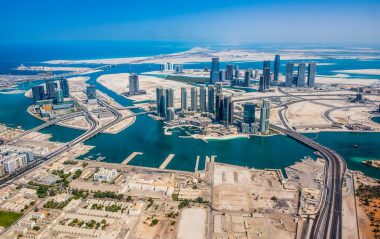
View of Abu Dhabi from the helicopter, Image: Ali Suliman/shutterstock
Abu Dhabi is the capital of the United Arab Emirates. It is not only the capital, but also the second largest emirate in the world with a population of about 1.6 million people. Abu Dhabi is ranked as one of the richest cities in the world, with the majority of its revenue coming from petroleum products. This emirate accounts for about two-thirds of the UAE’s economy. In contrast to Dubai, which is more Western-oriented, Abu Dhabi cultivates more cultural traditions. Abu Dhabi is also a major tourist attraction that is visited by most people for cultural reasons, such as to visit the Sheikh Zayed Mosque, have fun on the sandy beaches, visit Yas Island and the famous Ferrari World Abu Dhabi .
Dubai
Dubai is the most populous emirate of the United Arab Emirates with about 3.3 million inhabitants. The emirate has developed mainly through trade and tourism. It is the most advanced of the seven emirates. Dubai is classified as an alpha city due to its strong economy. In contrast to neighboring emirates such as Abu Dhabi, Dubai’s oil reserves are depleted. Although it started as a port, Dubai has evolved into a luxurious emirate that houses the world’s tallest building.
Sharjah
Sharjah is the third most populous city in the United Arab Emirates with about 1.2 million inhabitants. This city borders Dubai. Most people who work in Dubai prefer to live in Sharjah because the cost of living is cheaper compared to Dubai – however, Dubai offers better-paying jobs. Sharjah has developed in both the economic and tourism sectors.
Ras al-Khaimah
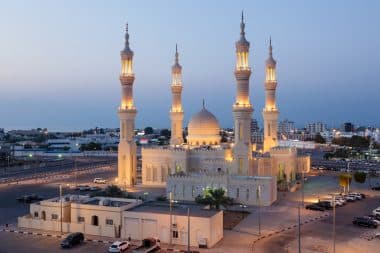
Zayed Mosque in Ras al-Khaimah, Image: Philip Lange / shutterstock
Ras al-Khaimah is located in the northern part of the UAE and borders part of the Omani territory, the Musandam. The population of this emirate is 263,000 people, with Emirati citizens forming the largest group. Some of the most famous attractions in this emirate include shopping, nature, parks, water parks, and amusement parks. In the shopping centres you can get everything your heart desires. Fine jewellery, watches or robust hard-shell suitcases.
Fujairah
The population of this emirate is estimated at 127,000 people. The capital is located in Fujairah City. The economy of Fujairah is not very developed. It depends on government subsidies awarded by Abu Dhabi. Most of the emirate’s residents work in the service sector, with the government prohibiting foreigners from owning more than 49% of the shares in companies or organizations.
um al-Quwain
With a total population of 73,000 people, um al-Quwain is the most sparsely populated state in the UAE. Unlike the other emirates, Quwain has no oil or gas deposits. Therefore, its economy relies mainly on income from hotels, tourism, and parks.
Ajman
Although Ajman is the smallest emirate, it is the fourth most populous state in the UAE with around 490,000 inhabitants. The main tourist attractions in this area include cultural destinations, hotels, and shopping malls. The commercial sector is also well developed in this state.
Top 5 Things to Do in the United Arab Emirates
Burj Khalifa
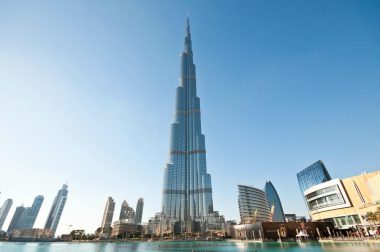
The Burj Khalifa, the tallest building in the world
The world’s tallest building, the Burj Khalifa, is a must-see and one of the best tourist attractions in Dubai, United Arab Emirates. This iconic monumental structure is not only the tallest skyscraper in the world, but has also broken numerous other world records, including the world’s fastest elevator and the world’s tallest observation deck. This skyscraper offers stunning views, and tourists can walk to the top for stunning 360-degree views of the city, the Dubai Fountain, and the Arabian Gulf.
Dubai Desert Conservation Reserve
The Dubai Desert Conservation Reserve, the oldest national park in the United Arab Emirates, is one of the largest regions in the country dedicated to preserving the last intact desert and priceless natural heritage. Tourists can discover a variety of plant and animal species here, while better understanding the measures taken to protect endangered species and preserve their natural environment. These include hedgehogs and antelopes, spiders and scorpions, as well as a variety of plants native to the region.
Great Sheikh Zayed Mosque
Even if you are not so pious, a visit to the Sheikh Zayed Grand Museum or the Grand Mosque will amaze you. It is one of the best tourist attractions in the United Arab Emirates. Considered the largest mosque in the United Arab Emirates and the eighth largest mosque in the world, the Grand Mosque is the resting place of the UAE’s oldest president, Sheikh Zayed Bin Sultan Al Nahyan. The mosque, which can accommodate 40,000 worshippers, is decorated with marble, ceramics, crystals, semi-precious stones and gold.
Louvre Abu Dhabi
Abu Dhabi has another major attraction to add to its already long and captivating itinerary. The Louvre Abu Dhabi opened its doors at the end of 2017, making the city an even greater cultural and aesthetic place. With its charming and impressive architecture, the construction of the Louvre is a work of art in itself. But compared to the many works of art that the museum houses, it is only a small detail. The Louvre, which makes a significant international impression, is a must-see for all art lovers.
Sharjah Desert Park
Sharjah Desert Park covers a vast area and consists of three parts: the Natural History Museum, the Arabian Wildlife Centre and the Children’s Farm. He helps his tourists to get to know the plants and animals of the United Arab Emirates better and to explain the scientific methods of nature in the most entertaining way possible. This wonderful museum is located 28 km from Sharjah and is a must-see, especially for nature lovers.
List of 20 other top tourist attractions in the United Arab Emirates:
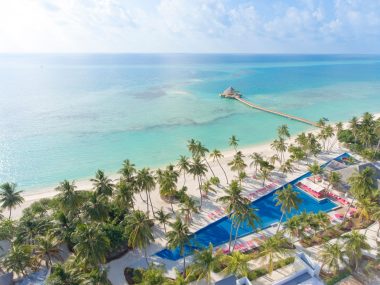
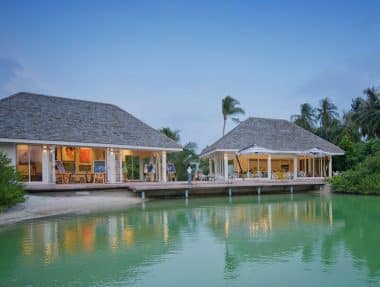
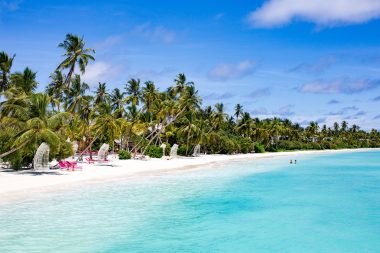
The bohemian 5-star lifestyle resort Kandima Maldives stretches over a length of three kilometers in the Dhaalu Atoll in the Indian Ocean. As the southern part of the Nilandhe Atoll, which is geographically and administratively divided into two parts, the Dhaalu Atoll is one of the smaller atolls in the Maldives at 23 x 38 kilometres. Of the approximately 50 islands, only five are inhabited by locals. On numerous islands, which are now uninhabited, there are several relics of the old Buddhist cultures. For thousands of years, the Dhaalu Atoll has been considered a special place of power, with a quiet and almost untouched nature of blue lagoons and white beaches.
The island is just a 30-minute flight from Male International Airport to the domestic airport in Dhaalu Atoll, followed by a 20-minute boat ride to the island. The Kandima-Resort experience is always a little different from normal: creative, unusual, surprising, unconventional and never boring – from the décor to the activities to the cuisine. Kandima Maldives innovatively embodies the best that the modern Maldives has to offer. Kandima prides itself on genuine hospitality with a personal touch and a resort with innovative solutions that use the latest technologies.
About Pulse Hotels & Resorts Pulse Hotels & Resorts was founded in 2015 and is the umbrella brand for a range of innovative and modern hotels and resorts built on a core philosophy: “Be smart, playful, rooted and responsible”. As a creator of extraordinary experiences, the company uses commercial and innovative thinking to develop hotels, resorts and properties that fascinate, inspire and excite.
Kandima Maldives is an almost revolutionary lifestyle resort concept in the luxury segment of the Maldives, but at affordable prices. The resort is part of Pulse Hotels & Resorts and caters to guests of all ages: families, couples, groups of friends, and honeymooners. Whether you’re looking for relaxation, water and island adventures, wellness, fitness or just time with your loved ones, this beach resort with 264 accommodations offers something for everyone. The resort has one of the longest outdoor pools in the Maldives. Football, tennis and volleyball courts, gym, aquaholics water sports and diving centre and much more, make it arguably one of the sportiest resorts in the Maldives. The impressive resort wants to be “a place for everyone” and offers affordable holidays in the heart of the Maldives.
10 unusual details
The power of the coconut
The Maldivian coconut is a local beauty star: large and plump, it is harvested on the islands and processed without the use of artificial ingredients. In the esKape Spa, coconut milk and coconut oil are used for treatments that nourish the skin in the long term.
Pool record
New pool party dimensions: with a length of 100 meters, Kandima is one of the longest pools in the Maldives. Paradisiacal conditions for every enthusiastic swimmer.
Sport for everyone
Image: Kandima Maldives
The selection of sports on offer, especially in the water sports sector, makes the Kandima the most “sporty” resort in the Maldives. Whether classic ball sports and aqua fitness, gym, diving tours or yoga on the beach: nowhere is exercise more fun than on the island. Stand-up paddling and jet skiing are not to be missed.
Glass canoe
A tour in a glass canoe gives an undisturbed and unforgettable view of the underwater world and around the resort. The home of the whale sharks, manta rays, dolphins, turtles and the coral reefs can be observed safely and after a few paddle strokes. If you don’t like paddling at all: take one of the dolphin tours offered and get very close to the dolphins jumping and swimming around.
Kandiland for children
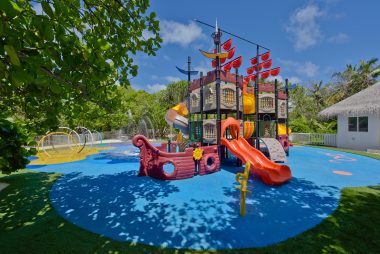
Kandima Kids Club, Image: Kandima Maldives
K stands for children! The kids “Club Kandiland” is open every day for children from 4 to 12 years old and offers program and fun for the young guests. Particularly popular: the unique water playground and the climbing wall. Once a week there is a mini disco at the beach club.
Insta-Snap
The large swings hanging on ropes in the water are the perfect backdrop for photos and are often used for posing and posting. The resort also has its own photo studio: a professional team of photographers offers personalized photo and videography services tailored to the needs of guests.
Local cuisine
Local Love: Maldivian cuisine can be tasted once a week at a large Maldivian buffet at the Azur restaurant. Traditional live music will be played.
K for Cinema
Caribbean cinema: On the big screen on the beach, you can watch Hollywood classics and films by Maldivian artists in the open-air cinema in the evening.
Medical Care
An in-house hospital with state-of-the-art medical technology such as ultrasound, X-ray and decompression chamber is available to guests around the clock. German GPs, nurses, a dentist and a dive safety officer are always on site and stationed at the resort.
Understanding
Kandima guests come from all over the world, so the staff speaks many different languages, including English, Mandarin, Hokkien, Russian, Arabic, French, Hindi, Thai, German, Croatian and Swedish!
The accommodations
Studios & Villas: Smart, spacious and stylish!
Image: Kandima Maldives
The 264 studios and villas are anything but ordinary: the bright and spacious rooms are stylishly and comfortably furnished, and each dwelling comes with an open, spacious bathroom. The outdoor areas of all room categories are large and provide a view worthy of a photo wallpaper. The studio and villa size ranges from 55 m2 to 105 m2.
Each domicile is equipped as standard with an in-room entertainment system with 40-inch LED TV, minibar, hairdryer, safe and coffee machine. Depending on the equipment, a semi-outdoor bathroom with bathtub and rain shower, a freestanding bathtub with sea view or a private terrace with whirlpool and access to the lagoon are further living highlights.
Sunset Aqua Pool Suite
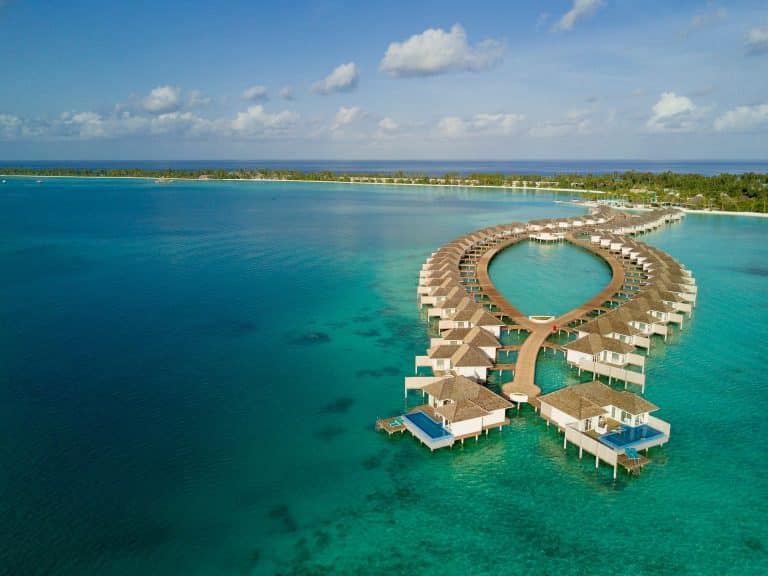
Located at the top of the Aqua Villa jetty, the Sunset Aqua Pool Suite offers the best spots to watch the sun disappear behind the horizon. The accommodations have a spacious living area, a separate bedroom, a huge infinity pool and a private overwater deck with sun loungers.
Ocean Pool Villa
These ultra-cool villas are among the best of both worlds: half beach and half water. From its own private pool, guests have uninterrupted views of the Indian Ocean.
Aqua villa (with and without whirlpool)
Located above the water, with direct access to the lagoon, these villas are perfect for those who want more sea. Whether from the private terrace with sun loungers or the bathroom, the view is unobstructed over the extensive lagoon. Some of the Aqua Villas also have a Jacuzzi.
Sunset or Sunrise Beach Pool Villa with Hot Tub
Located right on the beach overlooking the lagoon, these spacious villas are perfect for watching either the sunrise or sunset. A private deck extends to the pool with endless views of the Indian Ocean. The villas are equipped with a king-size bed and sofa bed. On the wooden veranda at the front there are sun loungers and a private jacuzzi.
Beach villa with whirlpool
Located right on the beach, these spacious villas are ideal for enjoying the sand. The villas overlook the crystal clear lagoon side of the island and feature a king-size bed, sofa bed, wooden terraces at the front with sun loungers and a private jacuzzi.
Beach & Sky Studios
Image: Kandima Maldives
Welcome to your own cool and stylish retreat. From here, guests can enjoy the perfect view of the extensive Kandima lagoon above the treetops. There are eight Family Sky Studios, connected by a lounge area, perfect for a group of friends or families who want to stay close to each other.
Gastronomy
In the Kandima Resort, ten restaurants and bars offer culinary variety and delicacies from all over the world. Whether in a group or a romantic meal for two on the lonely beach, no culinary wish remains unfulfilled. A delicious mix of Maldivian and international cuisine with reference to local ingredients and home-grown vegetables and herbs provides variety and joy for the next meal.
Destination Dining
On request, the Kandima resort also offers individual catering: Whether it’s a beach BBQ dinner for a group of friends or a romantic dinner on a desert island, a private chef and his crew will ensure perfect dining.
Deli
In the casual and stylish food boutique, you will find everything you need for a quick bite, and the fresh delicacies can also be enjoyed on your own premises. The deli has a delivery service, which can be easily ordered via the K’ app.
Meal Plans
Dishes from the fresh and varied buffet, à la carte every evening in a different restaurant or would you prefer room service? For the culinary supply, Kandima offers a selection of different meal plans that reflect the individual needs of the guests. All categories, from the extensive Platinum all inclusive to Dine around all inclusive, Full Board Plus, Half Board Plus and Bed & Breakfast, also include free access to gym, table tennis and darts, as well as 24-hour check-in and check-out.
Restaurants & Cafes
Azure
This chic beach house is located on the beach, has indoor and outdoor seating. During the day, Azur offers a small but fine menu. At night, it becomes an elegant beach restaurant with numerous Mediterranean dishes, fish, tapas, steaks, pizza from the oven and delicious wines from its own wine cellar. With an expansive garden area, Azur is also perfect for outdoor gala dinner events for larger groups or families and friends.
Flavour or Zest
The freshest flavours from around the world can be found in this stylish, bright, modern dining room restaurant with multiple live cooking stations and self-service areas. Chefs from all over the world prepare the tempting dishes right in front of the guests. There is also a children’s corner with mini furniture, special food and a play area for the little VIPs.
Aroma
Perched above a natural lake, the Aroma Café serves specialty coffees from the fertile highlands of southern Ethiopia to beans from smaller family-owned businesses in Batin Baru, Indonesia. The café regularly hosts painting and handicraft courses with local artists.
Smoked
Smoked is all about perfect steaks, fresh fish and incredible sunset views. Meat, fish and vegetarian dishes are prepared in the open BBQ kitchen and teppanyaki grill: from perfectly seasoned babyback pork ribs from the smoking pit to dinosaur-sized tomahawk steak.
Sea Dragon
Inspired by ancient architectural designs of the Far East, this restaurant is an attraction in itself. Sea Dragon offers authentic Asian cuisine with a modern twist, from freshly caught fish from the waters of Dhaalu Atoll to succulent lobsters and crabs.
Bars
Live music and DJs
Music plays a big role in the Maldives. International DJs provide the special beach feeling with the appropriate music. Every Wednesday and Saturday, local bands play live music.
Forbidden Bar
Access to the Forbidden Bar is through a psychedelic tunnel and is only accessible to adults. Live DJs from all over the world play late into the night and bartenders mix the tastiest cocktails on the island.
Breeze Pool Bar
Breeze is the place to relax, unwind, dance or watch the stunning sunset. While live bands and hip DJs provide the right beach sound, guests can enjoy a tropical cocktail or a puff from a shisha pipe.
Beach Club
The Beach Club is the perfect meeting place for families and couples alike. DJs entertain holidaymakers with party tunes, and fruity drinks can be found at the bar. Those looking for relaxation can retreat to the stylish cabanas above the turquoise pool.
Pool Party & Happy Hour
With house beats from Maldivian DJs, fruity cocktails, a chic atmosphere and a magnificent view of the Indian Ocean in the Beach Club and Breeze Pool Bar, grey, cold everyday life from the DACH region is quickly forgotten. During happy hour, even at a bargain price.
Activities and recreation
The sportiest resort in the Maldives
Welcome to the tropical activity jungle, which is open around the clock and for which boredom is a foreign word. Whether it’s speed, action, relaxation or the beauties of the underwater world – there is almost nothing here that does not exist. The resort has state-of-the-art sports facilities such as the BURN Fitness Center, a fitness pavilion, tennis, badminton and beach volleyball courts, and a soccer field right next to the ocean. The three-kilometre-long beach is perfect for jogging or yoga in front of an exemplary sunrise.
Ashore
Fitness In the BURN Fitness Center, guests can train their fitness independently or with the help of a personal trainer. The offer also includes numerous group courses such as Aqua Fun & Fit, Pilates, Kross Fit, TRX Suspension Training, POUND® Fit, boxing and traditional yoga, as well as the popular aerial yoga (yoga in a cloth).
Tennis In addition to racket rental, the internationally renowned Sunball Tennis Academy offers a large and professional tennis service: individual, partner or group lessons for all levels from beginners to tournament players, courses and camps for children and teenagers, singles, doubles and children’s tournaments as well as weekly group lessons for testing.
Soccer
Pitch perfect! A game in the shade of the palm trees with the ocean as a backdrop? The resort’s football field offers the ideal combination of sport, fun and holiday feeling.
Beach volleyball
A no-brainer on every beautiful beach is, of course: beach volleyball. The super soft sand is particularly suitable for hitting a few balls and, of course, throwing yourself on the ground as it should be.
Skydiving A small jump out of the plane, but a great souvenir for eternity: the breathtaking 360-degree view of the unique Kandima (Desti)Nation. This ultimate adrenaline booster is right for professionally licensed skydivers, extreme adventure enthusiasts or beginners who want to jump tandem with one of the experienced instructors.
The water world
Diving/Diving School Dhaalu Atoll is one of the most pristine regions in the country. The waters of the atoll are perfect for beginners, but advanced divers can also explore even greater depths and enjoy the thrill of drift diving in stronger currents.
Snorkel
A platform allows guests to snorkel at the edge of the reef and experience the fantastic underwater world of Kandima. Occasionally, some dolphins swim to the reef and “greet” the snorkelers.
Water Sports & Excursions
Kandima’s diving and water sports centre AQUAHOLICS offers a wide range of water activities and excursions, such as para-sailing, kite surfing, deep-sea fishing or visiting a neighbouring island inhabited by locals.
The Kids Club
Kandiland
The little VIPs are just as important as the adults. In fact, they are so welcome in this place that Kandima can truly be described as a dream destination for families. Kandiland, Kandima Kids Club, is run by a dedicated, multilingual team of certified childcare providers and offers a daily program full of fun and informative activities. Children from 4 to 12 years old are welcome at Kandiland. Parents of infants (12 months to 4 years) can also take advantage of a baby-sitting service. Very special: you are welcome to take the little ones with you on spa appointments, because the wellness professionals of the esKape Spa have great treatments on offer especially for children.
The Spa
A massage with a view of the ocean and – with a bit of luck – even dolphins jumping around in the water: the award-winning esKape Spa is visited by most guests more than once, because this place is as magical as if from another world. Total relaxation and soothing beauty treatments, peelings with regional ingredients and massages in the Maldivian, Thai or Balinese style. They are particularly proud of the rich products obtained from the local coconut, whose trees are allowed to thrive with nothing but sun, salt water and sand. For the production of coconut oil and milk, the company deliberately works with traditional suppliers from the Maldivian islands in order to involve and support the local community.
Escapism
A full-body scrub that leaves the skin feeling smooth and renewed. This is followed by a unique Maldivian Ocean Dream massage with a variety of techniques that relieve deep-seated tension. Salt water from the local ocean is used for the massage.
Sea Coconut Secret
Maldivian coconut is revered by locals for its nourishing and calming properties. The wellness journey begins with a ritual to care for the feet, followed by a gentle exfoliation. The skin exposed to the sun is given a suppleness that lasts for many days.
Paradise me
A two-hour treatment that includes massage, peeling and a treatment with coffee syrup. An energizing caffeine kick for the skin. Thanks to the vitamins and antioxidants in coffee, wrinkles are reduced and pigmentation disorders of the skin caused by sun exposure are eliminated.
Eskape Honeymoon Package
Each of the six treatment rooms is equipped for couples’ massages. In this way, the bond of marriage can begin with a real pampering time: tensions in the body are treated away, the inner fire of the body is awakened to strengthen the nerves and gain clarity and joy.
Nourish and Glow
After an intensive body peeling, the skin is extensively massaged with the nourishing Gold Dry Body Oil: relaxation plus a velvety soft, golden shimmering complexion.
Eskape for little guests
While the parents are pampered, the kids get the same “Oh-so esKape” treatment! The treatments take place together with mum and dad in the room.
Kool Things
‘I Do’ With a View
From the perfect marriage proposal to the crazy bachelorette party to the most stylish honeymoon, Kandima Maldives always offers a brilliantly designed backdrop for a dream wedding time. Those who say “I do” on the (Desti)Nation will enjoy the tailor-made service of the professional wedding planners.
The bride and groom have various options for the wedding ceremony: floating above the turquoise sea or on the beach with their feet in the white sand. From “Only-Us-Two” on a small wooden island in the middle of the turquoise blue water, to a big party on your own private island with all-round service: everything that belongs to the wedding can be booked. The photo shoot as an eternal memory, the wedding cake according to your own ideas, the wedding breakfast the next morning…
No matter what details you want on this day: a Kandima wedding is always unique. When the bride and groom stand on the soft, coral-white sand, the water glistens in the background and they start their life together as Mr and Mrs, it is anything but ordinary.
If you still need support for your marriage proposal, you will also find professional support here. The resort is also happy to host bachelor parties, family celebrations on a large and small scale and professional meetings and events.
Adopt a coral
The sponsorship program, which is intended to counteract the death of coral reefs due to the warming of the oceans, was launched in 2017 and is led by marine biologist Lee Miles on site. Coral reefs, which are bleaching and dying due to rising ocean temperatures, can help protect the islands and their marine life from wave action and erosion of the shoreline when healthy. For the program, broken pieces of coral are collected from the sea and transplanted into artificial coral frames. The “healed” corals are transplanted back into the reef and attached with a handful of cement to a custom-made metal rack bearing the name of the respective sponsor.
The program is a fantastic way to help the reefs where there aren’t as many corals to be found. Those who take on a sponsorship can track the growth of the adopted coral frame online, as the marine biologist regularly sends pictures via email.
Hospital with decompression chamber
The in-house hospital with state-of-the-art medical technology such as ultrasound, X-ray machine and decompression chamber is available to guests around the clock. German family doctors, nurses, a dentist and a dive safety officer are always on site and stationed on the island.
The decompression chamber is the only facility of its kind in Dhaalu Atoll and all the other neighbouring atolls, and its function fills a gap in the Maldives’ offerings. The decompression chamber complements the fully equipped medical facility at the Kandimas’ resort.
Awards
Agoda – Gold Circle Award
Maldives Travel Awards 2019 – Leading Designer Resort
South Asian Travel Awards 2019 – Leading F&B Resort – Maldives
Luxury Lifestyle Magazine Readers’ Travel Awards 2019 – Runner-up : The Best Hotel In Asia category
2018 World Luxury Restaurant Awards – Smoked Restaurant – Indian Ocean Top Luxury Grill
2018 World Luxury Restaurant Awards – Smoked Restaurant – Indian Ocean Top Luxury Steakhouse
2018 World Luxury Restaurant Awards – Sea Dragon Restaurant – Indian Ocean Top Chinese Cuisine Restaurant
LUX Global Excellence Awards 2018 – Best Luxury Holiday Resort – Maldives
LUX Global Excellence Awards 2018 – LUX Customers Choice Award 2018 – Maldives
LUX Global Excellence Awards 2018 – Best Authentic Fine Dining Asian Restaurant 2018 – Sea Dragon Asian Restaurant
Maldives Travel Awards 2018 – Best Designer Resort
Maldives Travel Awards 2017 – Newcomer of the Year
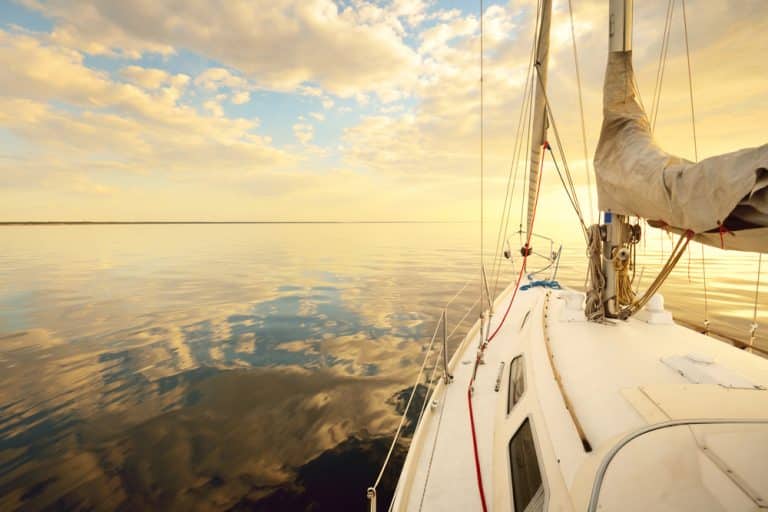
Take the boat out into the big wide sea. The fresh air blows into your face, the song of the seagulls sounds and the sound of the waves surrounds you. Is there anything more beautiful? Simply drive to wherever you spontaneously feel like it, explore beautiful places and harbours, find fantastic beaches, enjoy picturesque bays and simply switch off. That sounds like a plan? Then be curious about what else the Baltic Sea has to offer!
City trip along the Peene
Rent a boat or rent one (tip: rent a boat in the Baltic Sea) and you’re ready to go. This tour starts in the cute, small community of Neukalen. Here you will find quaint monuments, a great, small old town and restaurants that will spoil your palate. After this detour, you continue by boat to Verchen. The village, located at the northeast end of Lake Kummerow, is something very special, because the village impresses with its location and beautiful nature. A water hiking rest area and various beaches are just waiting to be found by you. By the way, in Verchen you will find the largest low moor landscape in the entire European region! The tour continues, you set off for Demmin.
Nature tourists in particular get their money’s worth here. In addition, the Hanseatic city of Demmin offers many venerable buildings, including the Marienhain, which was named after St. Mary’s Church. It stood there until 1630, when it was completely destroyed. Off to the boat and on to Jarmen. Here, too, you will find various water hiking rest areas that offer pure idyll. Great church buildings and an old well, integrated into a restaurant, are special sights. We continue on the Peene to Anklam. This is where the Peene ends. But before that, there is still a lot to see. In addition to beautiful windmills and time-honoured buildings, you can expect a wonderful park and cultural institutions. The best thing about this tour is that the whole open Baltic Sea is now in front of you.
Island hopping in the Baltic Sea
An absolute Baltic Sea highlight: Usedom, Image: travelpeter / shutterstock
In the German Baltic Sea alone, there are over 50 islands, but not all of them are inhabited. The largest and most inhabited of these islands are Rügen, Usedom, Fehmarn, Poel, Ummanz and Hiddensee. Each one has its own special charm. It is therefore definitely worthwhile to charter a boat and then go on a big tour.
Rebuke
On Rügen, the chalk cliffs are particularly admirable. The insanely imposing sea view at this point takes everyone’s breath away. You also have to see the Sellin pier, which offers a truly amazing panorama.
Usedom
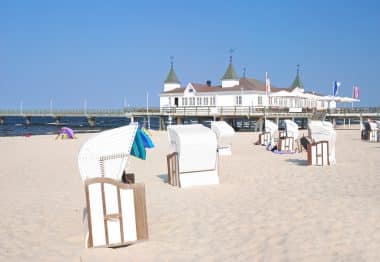
Usedom offers white beaches and stunning sand sculptures. There are great lidos to be found there and on Usedom, family holidays are always a great idea. From the butterfly farm to the mini golf courses to ostrich farms, everything is possible here. Here you can experience the entire diversity of the Baltic Sea!
Fehmarn
Fehmarn is known, among other things, for the magnificent Fehmarnsund Bridge, which offers a brilliant sight, especially at sunrise and sunset. There is also something for rock music fans. The Jimi Hendrix memorial stone is placed here, commemorating the talented musician. Furthermore, the many mills and lighthouses here are always worth a visit.
Poel
The Baltic Sea island of Poel, Image: Sina Ettmer Photography / shutterstock
Poel has various harbours on offer, which are particularly popular with water sports enthusiasts. Nature fans are also well catered for here, because the bird sanctuary island of Langendwerder is predestined to observe colourful and cheerful mudflats and water birds. With experienced guides, you can get all the information you need here.
Ummanz
Ummanz may be less well known, but it is no less beautiful. This small island represents the idyll in its purest form. Green, flat areas, farms, streams, rivers and home-style restaurants. The sight alone conveys such a calm and relaxed atmosphere that Ummanz should not be left out of an island hopping tour.
Hiddensee
Hiddensee is something for all those who love romantic nature. Untouched land meets sandbanks and cliffs. Here you can see sights that you don’t see often these days. A dreamlike natural paradise awaits you, where endangered animal species are protected by a national park. Hiddensee is an absolute must on your itinerary through the Baltic Sea!
If you decide to rent or borrow a boat, don’t save at the wrong end. It is better to rent it a little longer than too short. Not that you end up getting annoyed because you had to miss out on one of these beautiful destinations. It is definitely worthwhile to explore the Baltic Sea extensively and to give each anchor point enough time. Pack your partner, family or friends, rent a boat and go exploring! You can live on such an adventure for the rest of your life. Of course, a boat license is a prerequisite for such a longer trip. But even if you don’t have one yet, it’s definitely worth tackling. The Baltic Sea simply has too many beautiful spots on earth that need to be explored. So what are you waiting for?
Our tip: SamBoat
At SamBoat you can rent your suitable boat with just a few clicks. After you have found your suitable boat, make a non-binding booking request. If this has been accepted, you can pay for the boat directly online. The boat owner will also receive your payment directly. This allows you to concentrate fully on the boat handover on site. Make sure that the description given in the advertisement is correct.