

Logo Reisemagazin
Sunday, September 6, 2026
Home Blog Page 201

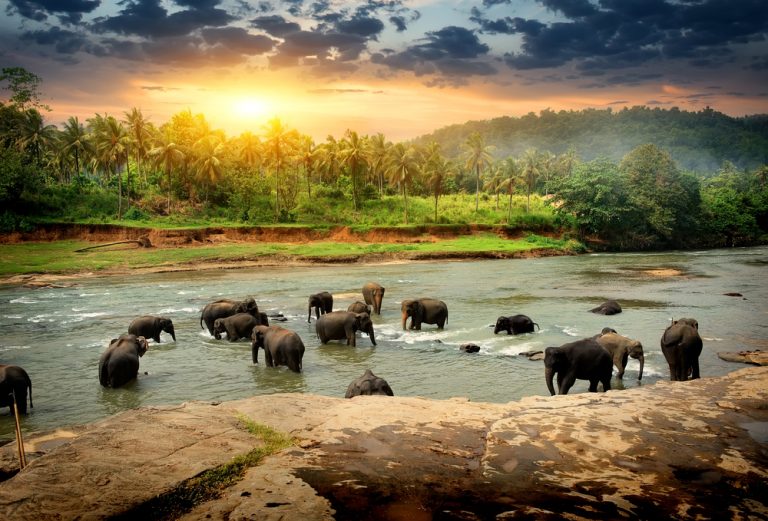
Sri Lanka – where elephants bathe in tranquil lakes

0

The sun flashes between the roof of the palm trees, a gentle murmur can be heard from the nearby sea and the cry of a monkey from nearby. Sri Lanka is an exotic paradise for dreaming, and the vervet monkeys are called “hat monkeys” here because of their “hairstyle” and middle parting. They populate the country’s rainforests and feed mainly on fruits, of which there are many in Sri Lanka. Sri Lanka is an island nation south of the Indian subcontinent, and the country has been overshadowed by a bloody civil war between Tamils and Sinhalese for a long time. For almost ten years, the large island with its numerous ethnic groups has been pacified, and people hope that this peace will not be fragile in the future. Sri Lanka has woken up from a nightmare and has very willingly opened up to tourism, because this is an important source of income for the country, which is otherwise financed by a plantation economy with the production of rubber and tea.

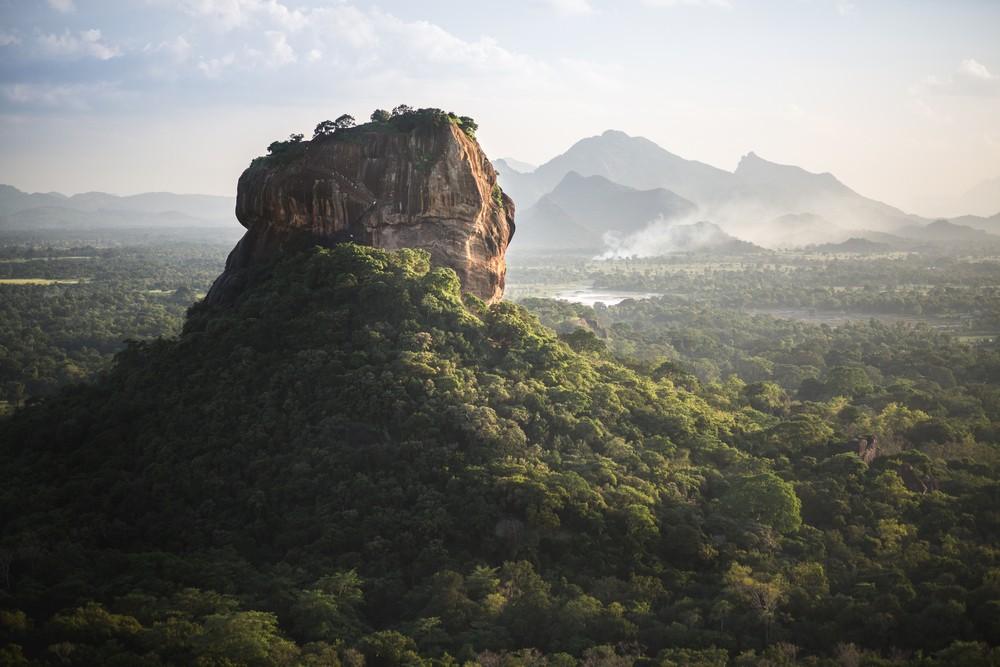
Sri Lanka, Sigiriya
The Sigiriya (Lion Rock) in Sri Lanka, Image: SylvainB / shutterstock

Sri Lanka is an animal and cultural paradise in equal measure. The island is manageable and hardly larger than the German state of Bavaria. It is crisscrossed by a species-rich jungle and green hills, where hard-working hands are needed on the tea plantations. The most beautiful photo experiences on a round trip always occur when elephants are looking for refreshment in one of the many quiet lakes on the island. The pachyderms are slightly darker than the Indian elephants and only a few males have tusks, which largely protects them from ivory poachers.

The national parks enjoy the special attention of the Department of Wildlife Conservation and are the pride of the country. In the Udawalawe Reserve, holidaymakers go on safari in an off-road vehicle – or on foot accompanied by experienced rangers. Only the leopards have survived the era of wars in Sri Lanka and are multiplying magnificently. Especially in Yala National Park, where there is said to be the largest population of spotted leopard beauties and where there is a good chance of getting them in front of the camera. Ferns grow tree-high in some parts of the national parks, and they are the refuge of crocodiles, mongooses, monkeys and numerous bird species.

Korallenriff Sri Lanka
A coral reef in Sri Lanka, Image: Dudarev Mikhail / shutterstock

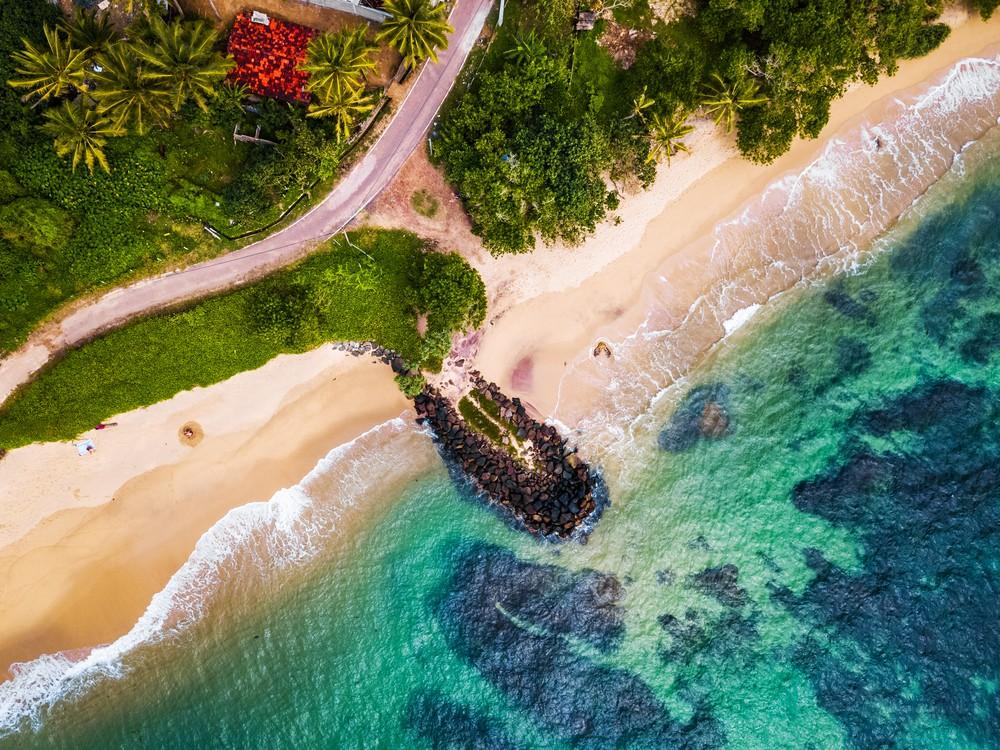
Sri Lanka has many faces and the island is both wild and beautiful. And that’s why we speak of the “Pearl of the Indian Ocean”, which is not taken from the brochures of international tourism, but is a very old predicate. As early as the Middle Ages, Sri Lanka was given this nickname by sailors because they particularly liked the white beaches lined with palm trees. The natural healing method Ayurveda was born in Sri Lanka and is practiced in many hotels and resorts on the island.

The picturesque beaches at Kikkaduwa and Beruwala are also so popular with holidaymakers because the beaches there slope very gently into the sea and because snorkelers and divers are taken with the coral reefs. “Trinco” is the name given by the inhabitants of Sri Lanka to a coastal town in the northeast. It is the short form for Trincomalee, which can be translated as “temple” and is deeply rooted in the consciousness of the islanders. According to legend, a huge temple once stood here under the rule of the Tamils – the largest in all of Asia. But so far, no one has found the remains of the so-called “Tirukoneswaram”, and no one knows whether the temple was destroyed by the Portuguese conquerors or whether it was the victim of natural forces.

The roads in Sri Lanka are mostly very winding, but behind every serpentine a new miracle can open up. The island, which was still marked on the maps as “Ceylon” some time ago, is full of secrets and surprises and is a region for experienced globetrotters that wants to be rediscovered after the past of a civil war.

Travel information Sri Lanka

Capital de facto: Colombo
de jure: Sri Jayawardenepura
Seat of government Sri Jayawardenepura
Form of government Republic
Presidential system
Currency Sri Lankan Rupee (LKR)
Area approx. 65,610 km²
Population approx. 20,877,000 (2017)
Languages Sinhala, Tamil
Electricity grid 230 volts, 50 Hz
Area code +94
Time zone UTC+5:30


Poland – Monasteries, churches and lots of countryside

0

Where in Europe can you find a city with no less than 5,500 houses that are protected by a monument? The answer can be found in Poland – in Krakow! Trips to this tradition-conscious country lead to a region on Germany’s doorstep and to a diverse nature. Sometimes it is wild and unspoilt, then again lovely. And it harmonizes with the historic metropolises in a country that is characterized by the religiosity of its people and lives on the memory of a long struggle for freedom. Poland is the largest of the European agricultural countries with tiny farms that are hardly profitable. But a new idea developed in the country that gives tourism a chance. Since then, many a farmer has opened his homestead to holidaymakers.

Inmitten einer polnischen Stadtlandschaft mit modernen Wolkenkratzern steht unter einem teilweise bewölkten Himmel ein hohes, kunstvoll verziertes Gebäude mit einer Turmspitze. Grüne Bäume und städtische Straßen umgeben die Gebäude.
View of Warsaw, Image: PHOTOCREO Michal Bednarek / shutterstock

A wild world even spreads in abundance here and there in Poland. It is a charming wilderness with centuries-old oaks – for example, in the reserve of Bialowieza. Some of these trees reach astonishing proportions and heights, and among them graze the last of the continent’s free-living bison. Anyone who hikes through these quiet forests as a holidaymaker hears unusual sounds of nature and smells that they can hardly describe. The four Polish national parks in the northeast are the green lungs of the country and stretch up to the border with Lithuania. Storks find their food in the meadows, and with a little luck you can even observe a moose from the observation towers along the hiking trails.

It is said of the youth in Poland that they were born in the East and at home in the West. Many of them have acquired the German language after completing their studies and are very open-minded towards holidaymakers in their country. The pubs, discotheques and restaurants in Poland have largely given themselves a modern touch, and the capital Warsaw is one of the rising stars among European metropolises. Hotel skyscrapers grow into the sky there, and if you want to see Warsaw from above, you should go to the observation deck of the 234-meter-high Palace of Culture.

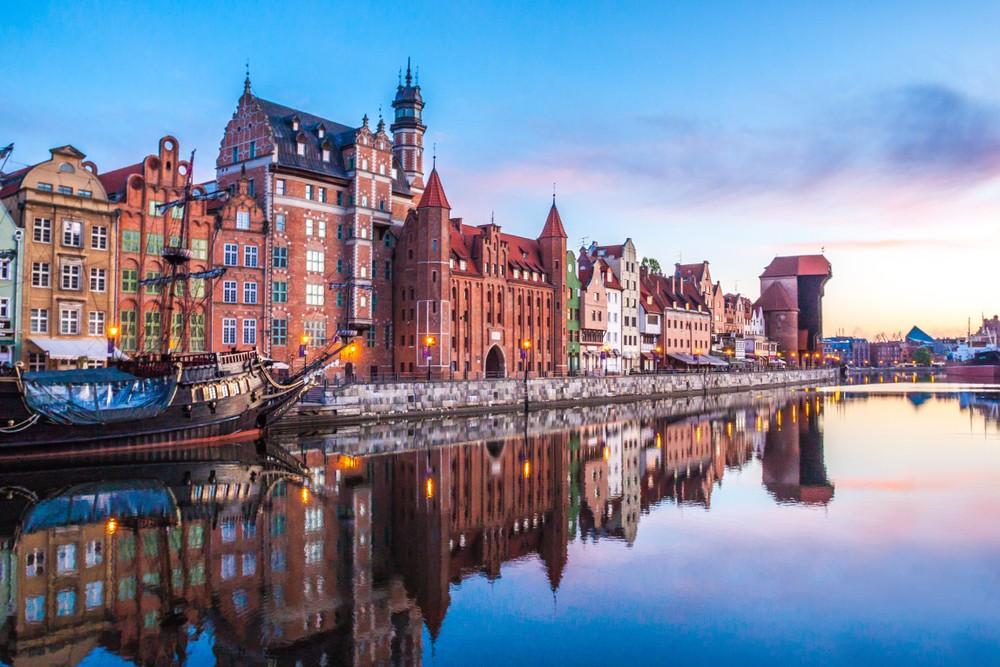
Poland, Gdansk
Gdansk is also worth a visit, Image: Tomasz Guzowski / shutterstock

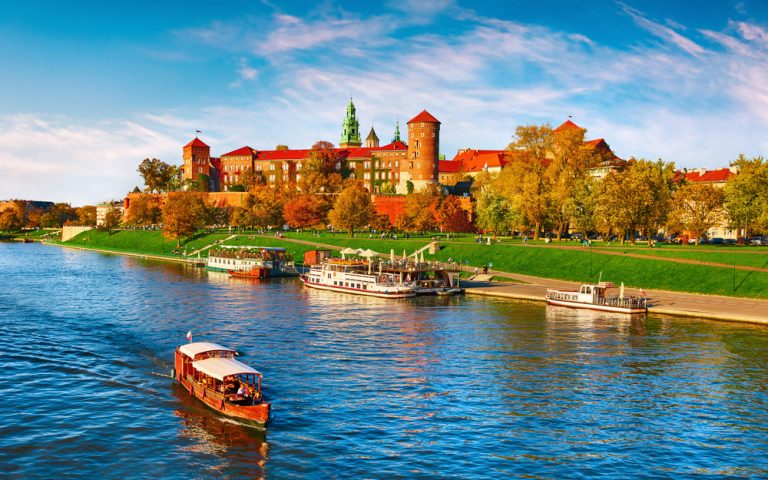
Krakow, which was the real centre of power in Poland until 1596, is completely different. In this city, a thousand-year history is alive and shows itself in a golden-shining splendor. Many see Krakow as a mixture of Jewish wit, Viennese humour and a pinch of oriental charm. In St. Mary’s Church, the high altar by the German carver genius Veit Stoss is a real eye-catcher, and the historic market square has always been a meeting place for the people of this city. In the famous Café Novorolski, the tradition of a coffee house is maintained, and the people of Krakow speak of it somewhat irreverently as a “cake temple”.

Krakow’s unique atmosphere has been attracting artists and students alike for many years. This is also because this town was never destroyed and the Wawel Castle was preserved, as were the almost one hundred monasteries and churches. A special flair spreads in the mountains of the Sudetes, which are crisscrossed by a network of hiking trails and attract skiers in winter. Gerhart Hauptmann lived here. “The Weavers” were created there. The Museum of the Hauptmann Brothers opens its doors in Szklarska Poreba, and a German-Polish meeting place has been established in the Gerhart Hauptmann House in Jagniatkow.

Although historic Wrocław has Polish, Bohemian and Prussian roots, it is mainly Silesian. The Oder flood of 1997 hit the city deeply, but it has since spruced itself up again. The so-called “Centennial Hall” by architect Max Berg fascinates with the largest free-floating dome in the world, and the old town with the cathedral island in the Oder is a listed building.

Travel information Poland

Capital Warsaw
Form of government parliamentary republic
parliamentary democracy
Currency Złoty (PLN)
Area approx. 312,679 km²
Population approx. 38,427,000 (2016)
Languages Polish
Electricity grid 130 volts, 50 Hz
Area code +48
Time zone UTC+1 CET
UTC+2 CEST (March to October)


Nepal – at the foot of an icy peak and very poor

0

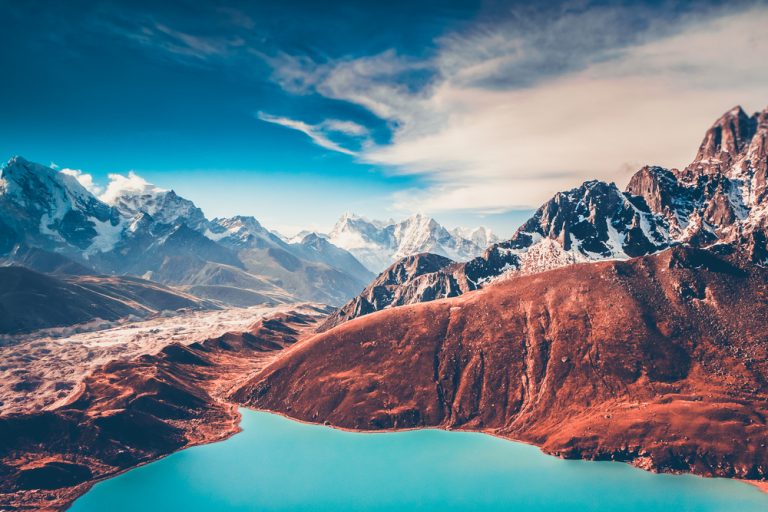
Nepal, the country beneath the icy peaks of the Himalayas, has retained its unique charm. It has remained a dream destination and neither the movement of the hippies nor the horror of a devastating earthquake could do anything lasting to this region. The Nepalese are still convinced that their long way to nirvana leads through their capital Kathmandu. And anyone who strolls through this mystical metropolis as a visitor sometimes holds their breath. The temples and gods are decorated with flowers in Nepal. Many of the once fifty temples, pagodas and palaces in the center of Kathmandu were restored or at least provisionally repaired after the earthquake. Nepal owes this in particular to the income from tourism, because year after year more than 800,000 visitors travel to this poor and yet so rich country because of its culture.

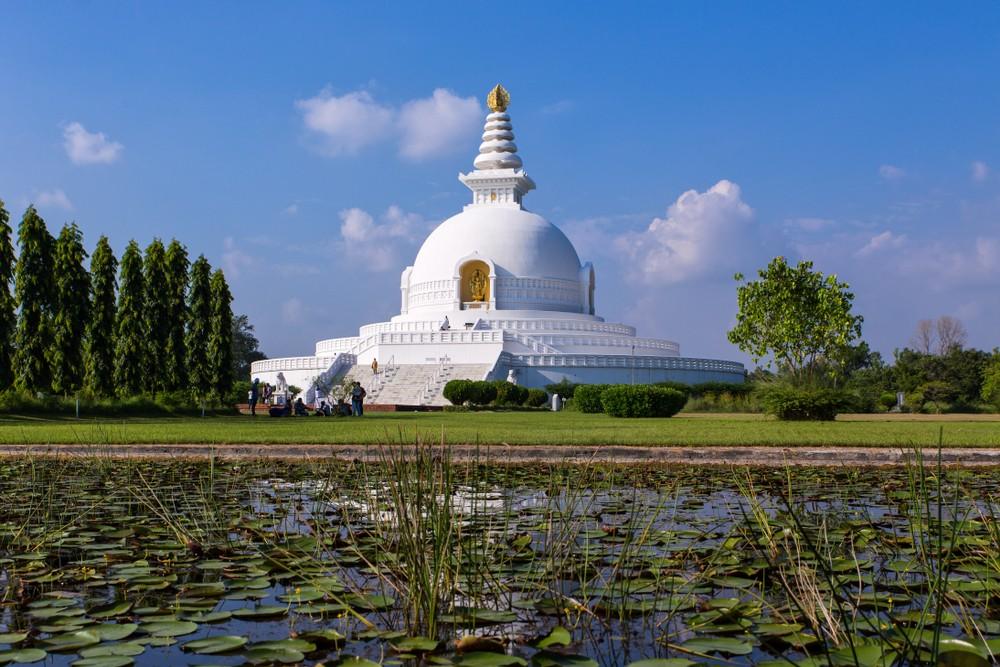
Nepal, The Shanti Stupa Monument, Pokhara
The Shanti Stupa Monument, Pokhara, Image: Damian Pankowiec /shutterstock

England’s Queen Elizabeth II signed up for a visit to Nepal ten years after her coronation in 1961, causing considerable problems for her hosts. They wanted to offer the regent a worthy setting, but the dwarf state between India and Tibet was hardly prepared for this. So a small castle was hastily built, which was later converted into a restaurant. At that time, Nepal was still a blank spot on the map of international tourism. This only changed ten years later, when the “flower children” discovered this region for themselves. Probably also because the stuff that dreams are made of, which is forbidden in many places, was inexpensive and available everywhere.

The hippies left and the holidaymakers came. This was a blessing for the country, because now the license fees of an Everest ascent were joined by income from tourism. New hotels were built in Kathmandu and Pokhara, and those guests who expected a luxurious standard of accommodation also felt at home at Shangri La. The Hotel Shanker was housed in a hundred-year-old palace and in the Hotel Dwarika’s visitors encountered a dignified elegance that they would hardly have expected in this region.

Ein Wanderer mit einem roten Rucksack geht auf einem Bergpfad in Nepal durch einen mit Fahnen geschmückten Steinbogen, umgeben von üppig grünen Hügeln und fernen Gipfeln unter einem teilweise bewölkten Himmel.
A man on the Annapurna circuit trek in Nepal, Image: MOROZ NATALIYA / shutterstock

Almost twenty million people are at home in Nepal. Most of them live by cultivating their fields in the valleys and on the slopes of the mountains. But the usable area is very small, so that this country is still one of the poorest in the world. But the mountain farmers of the Gurung people bear their obvious poverty with great dignity.
If you don’t feel fit enough for trekking as a vacationer, you should at least try hiking in Nepal. Because in this country the sky knows no boundaries and the paths lead to lonely areas or to steep and green mountain slopes. The distant peaks of the Himalayan massif are enthroned above everything. For the guests from another world, this is a departure into breathlessness, because the air at altitude is quite thin. Kathmandu is already 1,500 meters above sea level. From the small airport, planes take off for an Everest sightseeing. The view of the highest mountain on earth is an unforgettable experience – provided there is a sky without clouds.

The flowering rhododendrons, which have their real home in the Himalayas before they adorned gardens in Europe and elsewhere, are the companions on hikes through Nepal. From the rice terraces and Poon Hill, the view falls on Annapurna and the mighty Dhaulagiri. The ice deserts of the eight-thousanders are within reach, especially in Pokhara. The city is the gateway to the historic kingdom of Mustang. The somewhat different Nepal can be seen on a safari in the Royal Chitwan National Park on the border with India. On the back of an elephant, visitors have the chance to experience tigers and rhinos in their ancestral territory.

Travel information Nepal

Capital Kathmandu
Form of government Parliamentary Federal Republic of Germany
Currency Nepalese Rupee (NPR)
Area approx. 147,181 km²
Population approx. 29,305,000 (2017)
Languages Nepali
Electricity grid 230 volts, 50 Hz
Area code +977
Time zone UTC+5:45


Malaysia – to headhunters and orangutans in the rainforest

0

The rivers of Malaysia are said to be as clear as gin. This may well be a somewhat glorified depiction, because here and there the floods in the mysterious jungle are rather murky. But if you glide through this green wonderland in the longboat of the locals, you feel like you’re in paradise and tend to dream.

The country, which affords an elective monarchy and in which the king rules for only five years at a time, is spread with its thirteen states on the Malay Peninsula and parts of the island of Borneo – separated by the South China Sea. Deep forests dominate the scenery north of Singapore as well as in Sarawak, where the last nomads of Southeast Asia live. This region is considered the far and wild east of the state.

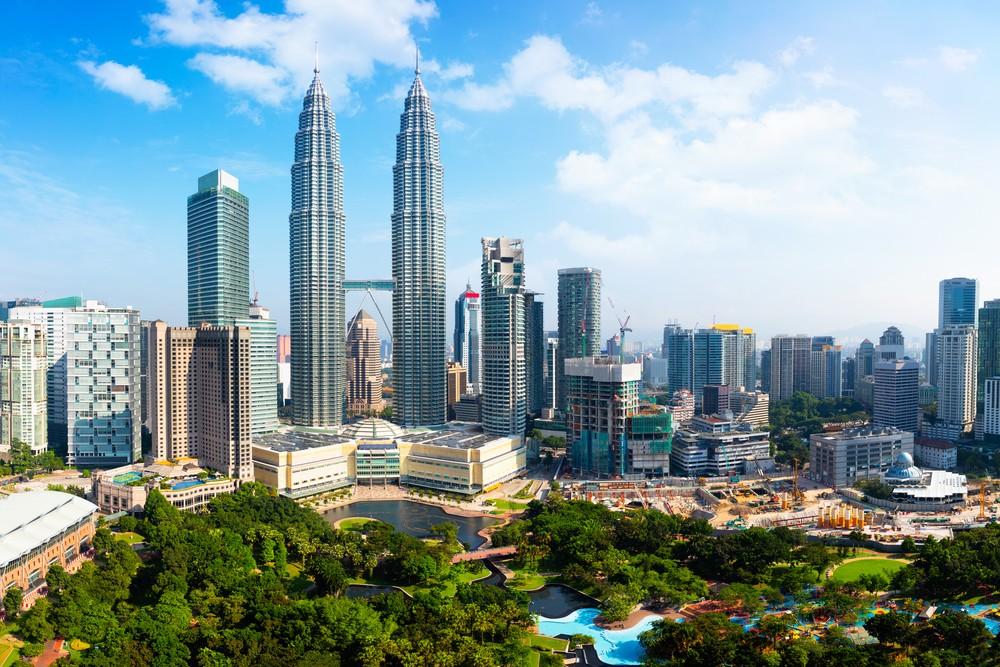
Malaysia Kuala Lumpur
Malaysia’s capital Kuala Lumpur, Image: Patrick Photo / shutterstock

If you choose a trip to Sarawak for your holiday, you are embarking on a journey through time. Because in the middle of the rainforest with its many colorful butterflies, wild boars and isolated clouded leopards live the descendants of Borneo’s notorious headhunters. Many a tourist is haunted by a strange feeling when he sees a bundle of wire with skeletonized skulls under the ceiling of the longhouses of the people of the Iban tribe in Sarawak.

They are the gruesome remains of Japanese soldiers who fell victim to headhunters during their invasion of Borneo during World War II. Since that time, the manhunt has been banned in Malaysia.

There are only a few roads on the third largest island in the world, and if you turn your back on the metropolis of Kuching, you will end up in the jungle after a few meters. The rainforest still exists – despite the state-ordered and apparently lucrative tree clearance. In Gunung Mulu National Park on the border with the oil-rich neighboring state of Brunei, boat trips and hikes lead to the famous caves. 67 species of mammals and over 260 different species of bird life are at home in the jungles of Malaysia. But also 74 species of frogs, tree monkeys, bearded pigs, honey bears and rhinoceros birds.

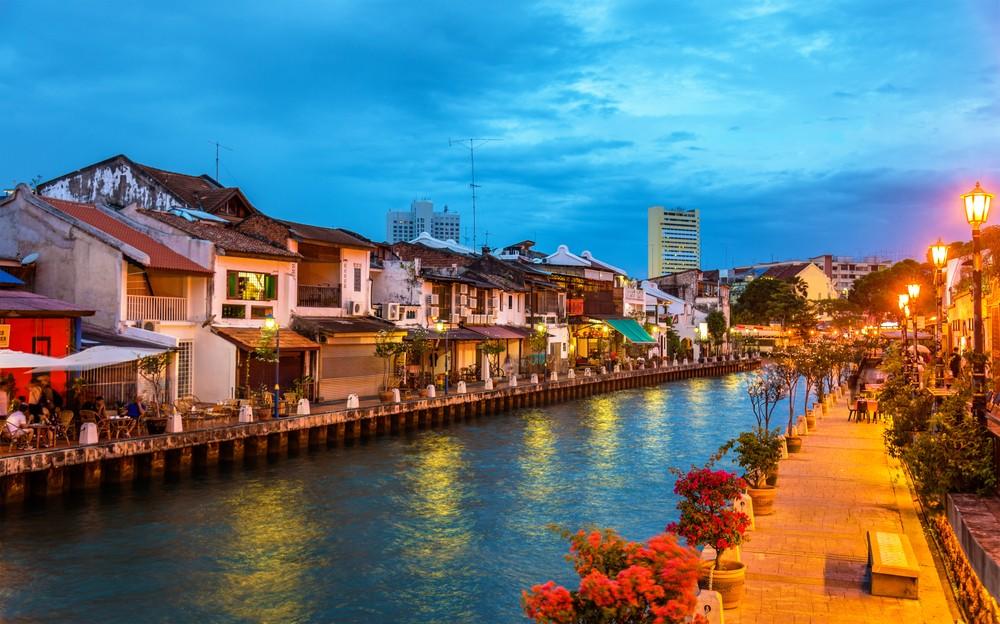
Ein malerischer Kanal, gesäumt von farbenfrohen historischen Gebäuden und prächtigen Blumen, an dem Menschen in Straßencafés speisen und in der Abenddämmerung unter blauem Himmel am Wasser entlang spazieren.
Malacca in southwestern Malaysia, Image: Leonid Andronov / shutterstock

It is an unforgettable experience to listen to the sounds of the forest after dark and to enjoy the lovemaking of the fireflies. The Semenggoh Wildlife Centre was founded in 1975 and is a breeding and reintroduction station for orangutans. The animals are fed twice a day, and a guide explains where the orphaned or maltreated creatures were caught and how they want to nurse them back to health in the rehabilitation center. Many orangutans previously lived in captivity of private owners.

The contrast to a visit to the Malaysian part of Borneo is a round trip across the peninsula. Many holidaymakers start in Singapore or fly directly to the capital Kuala Lumpur with its skyscrapers and the Bangunan Sultan Abdul Samad Palace, the longest of all buildings. Behind the impressive backdrop resides the country’s Supreme Court. The Petronas Towers tower over the city and were the tallest buildings in the world until 2004. The Observation Deck on the 86th floor connects the two towers. The KL City Gallery is a museum and conveys impressions of the becoming and being of the city. In the Bukit Bintang district, all those who want to shop in a big city will get their money’s worth. This also applies to Chinatown on Petaling Street with a colorful spectacle every evening.

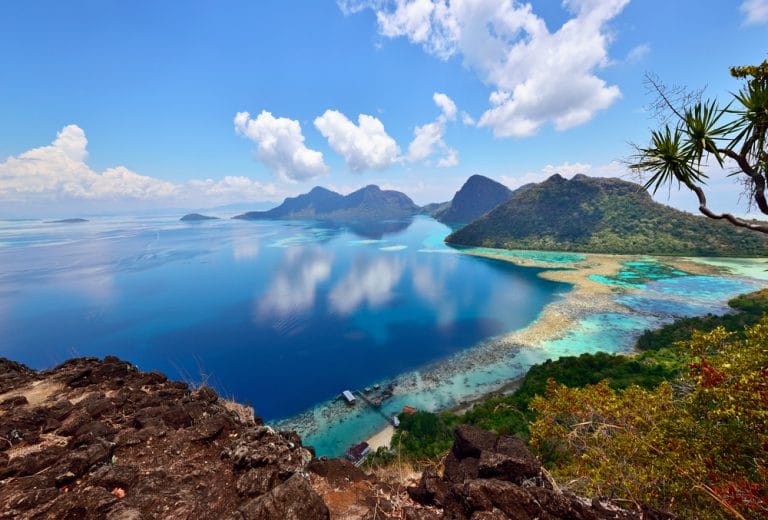
The kingdom on the Strait of Malacca delights visitors on a round trip but also with wonderful beaches. On the South China Sea, the word Perhentian can be translated as “place to linger” in the north. The colorful fishing boats bob in the small harbor, and turtles lay their eggs on the beach at night. The island of Tioman with its fine sandy beach is not only a popular destination for backpackers.

And Langkawi is the collective name of a group of around a hundred limestone islands on the border with Thailand. Penang is a melting pot of cultures and something like the epitome of the diversity of peoples of this interesting country in Southeast Asia.

Travel information Malaysia

Capital Kuala Lumpur
Form of government Federal, parliamentary electoral monarchy
Currency Ringgit (MYR)
Area approx. 330,290 km²
Population approx. 31,164,000 (2017 est.)
Languages Malaysian
Electricity grid 230/240 volts, 50 Hz
Area code +60
Time zone UTC+8


Madagascar – Wonders and Paths in the Land of Smiles

0

This is a land of smiles, lobsters and lemurs. Madagascar is a country beyond Africa, and it is so very different from many regions of the Black Continent. On this large island, holidaymakers can expect a very wide range of impressions and encounters with people who have allied themselves with nature. Knowing full well that this idyll is their greatest treasure.

Madagascar invites you to extensive round trips, because the island is as big as Belgium and France combined. Imposing mountains, green rice terraces, a steppe in the highlands and tropical forests. All this alternates permanently before the eyes of the viewer. The coastline of Madagascar measures 4,800 kilometers, and the beaches are almost always deserted and paradises for divers and snorkelers.

Madagascar, Beach
A picturesque beach in Madagascar, Image: YuG / shutterstock

The deep south of Madagascar begins in a semi-desert not far from Tuléar. Although it rarely rains here, visitors feel that this region is full of life. After all, aloe, euphorbia and didiera thrive here. The farmers in this remote area herd their goats and hope for the blessing from above, which rarely comes in the form of wet cooling. A tasty goat’s cheese is produced here, and the people of this region profess Christianity – but also the creator god Zanahary. They seek advice from their deceased and regard them as mediators between heaven and earth. Superstition has become entrenched in the consciousness of many inhabitants of the Malagasy south.

There are also beaches in the south, but if you are looking for a postcard motif, you should look around in the tropical north of the island. For example, at Ramena, at the Baie de Sakalava or at Mer d’Emeraud east of Diego Suarez. The divers find a shipwreck on Nosy Be at a depth of twenty meters, where schools of colorful fish have settled and the coral reefs are fairly unscathed. Manta rays and whale sharks can be found there, as well as more than thirty different species of dolphins and whales. They find an excellent habitat in the Mozambique Channel of the Indian Ocean.

Madagascar, Wildlife
The animal world in Madagascar is diverse, Image: alfotokunst / shutterstock

Most holidaymakers only know the shy lemurs from the local zoos, but in Madagascar you can observe them in the wild. It is only strange that the Romans, of all people, gave this name to the semi-apes, although the animals were never native to Italy . But the Romans used lemur in their mythology to refer to the spirit of a dead person, which probably led to the people of Madagascar recognizing their reincarnated ancestors in the cute lemurs. In the tropical forests and the deep gorges of the fourth largest island in the world, the lemurs feed on insects and leaves.

Flora and fauna present themselves in Madagascar in their most abundant form, and on the beaches of the mostly uninhabited smaller islands, even the rare red-tailed tropicbirds breed. Thanks to the large number of endemic creatures, Madagascar is something like a museum of creation and a Garden of Eden. The cornucopia of nature also opens up in the Anjajary Nature Reserve, where the bungalows by the sea meet all the requirements of eco-tourism. They are oases of peace in a land of smiles.

Often, the rivers are the fastest way to get around in the jungle of the island. If you entrust yourself to the boats of locals on the Pangalanes Canal, you will pass picturesque villages every now and then, whose houses crouch on the shore and where the women do the laundry and whose children play in a flourishing water world. Madagascar fulfills all the wishes of holidaymakers for a stay in an exotic environment. A dinner by the light of the candles, the lapping of the waves and an indescribable starry sky at night. Madagascar is a poor and yet so rich country.

Travel information Madagascar

Capital Antananarivo
Form of government Republic
Semi-presidential system of government
Currency Ariary (MGA)
Area approx. 587,295 km²
Population approx. 24.900.00
Languages Malagasy and French
Electricity grid 127/220 volts, 50 Hz
Area code +261
Time zone UTC+3


City trip – exciting days in the metropolises of this world

The latest surveys confirm the general trend: the city trip is not only extremely popular with short vacationers. What makes city trips so attractive is quickly apparent: Within a few days, city travellers can immerse themselves in the culture and traditions of a country, explore numerous sights and, last but not least, take part in a wide variety of local events. But what specifically distinguishes a city trip from other forms of vacation? And what are the advantages of a city trip?

This is what distinguishes the city trip

France Paris, Eiffel Tower
The Eiffel Tower in Paris, Image: Catarina Belova/shutterstock

The central characteristic of a city trip can already be seen from the name: On a pure city trip, the holiday takes place exclusively in a selected city. For this reason, large metropolises such as state capitals are among the most common destinations. With a wide range of cultural events, sights and, last but not least, a well-developed infrastructure, these and other larger cities offer countless opportunities to spend varied days in the city – without having to travel long distances in between. Compared to a round trip or a beach holiday, the main differences are on the one hand in the location and on the other hand in the degree of activity. On city trips, holidaymakers are usually out and about in the city during the day and visit various tourist highlights from museums to architectural monuments, while in the evening hours the local nightlife is explored.

Advantages of a city trip

City break, Bruges
For those who like it a little quieter, Bruges is a good destination for a city trip, Image: TTstudio / shutterstock

Hour-long journeys in the car or by public transport, complicated searches for the booked accommodation, long distances to the nearest supermarket, monotonous beaches that offer little variety in the long run – all these possible annoyances on a holiday in the countryside or on the beach are eliminated on city trips. Those who travel in the well-known metropolises enjoy various advantages instead:

  • The journey to the desired city is usually short and comfortable. Since the common destinations have their own airport or at least a well-developed transport network, the trip can usually be organized with a direct flight or a direct train connection.
  • A convenient transport system can be used on site. The subway, bus and the like make it easy to get around the city centre. Often, cheap tickets are available especially for tourists, with which all important destinations can be reached. Since there is often a lot of activity in large cities even at night, there are sufficient local transport connections even at late hours.
  • On a city trip, you can visit numerous highlights of a country within a short time and get to know a wide variety of people. In this way, holidaymakers can gather a wide variety of impressions of a city and its inhabitants within a weekend.
  • During the city trip, holidaymakers stay in a single accommodation. Thanks to the short distances, all important places can be explored from a fixed location. Travelers who want to explore the nightlife in particular should attach importance to accommodation close to the center.
  • City trips offer security. In international metropolises, inexperienced travelers can easily find English- or German-speaking people who will be happy to help them. In addition, extensive information material about the offers on site is available.


Experience city trip – this is what awaits holidaymakers

Immerse yourself in the history of the city, visit architectural masterpieces, discover the cultural life, talk to locals, taste typical local specialties, get to know the dazzling nightlife – city trips can set different accents depending on your interests.

In principle, holidaymakers have two options to choose from when it comes to organising their trip: In the case of a package tour , accommodation and meals and, in some cases, the sightseeing programme are determined in advance. With such a trip, there is no need for the effort of dedicated planning and inexperienced holidaymakers in particular can be sure not to miss any central highlight of the city. Individual travel as a second option, on the other hand, offers the advantage of being able to set priorities in a self-determined way. For example, if you want to get in touch with the city’s residents, you can stay directly with locals and visit restaurants where holidaymakers are otherwise rarely guests. In addition, spontaneous ideas can be easily realized.

But no matter which form of travel you choose: Varied experiences with a unique flair are guaranteed on city trips.


Creole cuisine

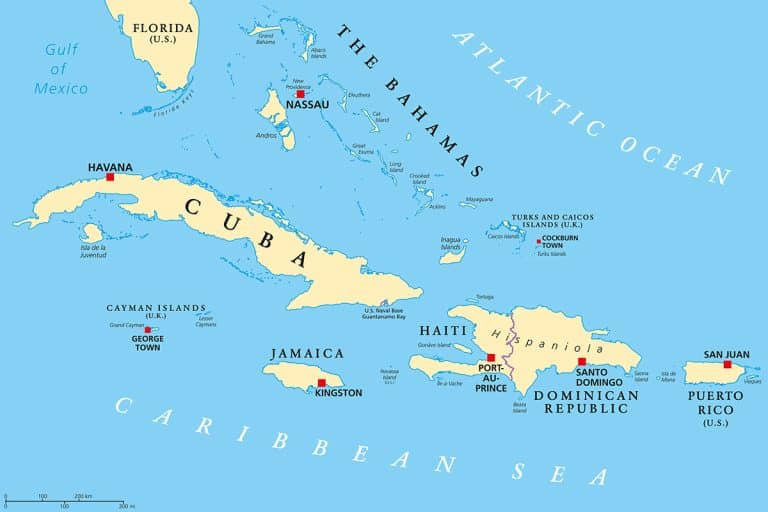
The mixture of the most diverse European, African and indigenous influences has created a unique form of culinary cultures in the Caribbean. Today, the term Creole cuisine is known not only for the various recipes and dishes from the Caribbean region, but also for the most famous dishes from Louisiana in the United States. A look at the Creole cuisine is always worthwhile – the culinary treasures are hidden here in abundance.

Creole cuisine – where does it come from?

Actually, Creole cuisine only re-enacts the history of the Caribbean islands . This form of culinary development is mainly due to the influence of the many immigrants and former slaves who were brought to the Caribbean and the neighboring areas under the European colonial powers . In addition, the origin can of course also be found in the fact that many people in this region were very poor for a long time and therefore had to know how to help themselves with creative recipes. In the meantime, Creole cuisine is no longer only widespread on the Caribbean islands – most experts associate it primarily with Louisianacuisine.

It is therefore difficult to determine an exact origin. While on the islands of the Caribbean the black African influences are particularly clear, in the USA the mixture of immigrants – especially from France – and the slaves who were already native to this area at that time has become established in the USA. Today, these two subtypes of Creole cuisine are still connected by a common spice rack and access to certain ingredients.

What makes Creole cuisine so unique?

Creole dishes live above all from a variety of special spices. In both parts – i.e. both in the Caribbean and in Louisiana – chilies, for example, almost always find their way into the dishes. In addition, spices such as cinnamon, coriander, cloves, curry and anise are particularly popular among the dishes. There are strong regional differences in the weighting of the various spices – but the range has remained the same over the years.

Typical ingredients can of course also differ from region to region. While fish and seafood of all kinds are the standard on the islands of the Caribbean, Creole cuisine has developed a bit in Louisiana and also offers chicken in many dishes. However, it is and remains the case that the former dishes of the poor still play an important role today. Shrimp, oysters, and catfish — a regional specialty in the southern U.S. — are just a few of the seaborne bases for exotic cuisine. In addition, beans of all kinds, rice and other legumes find their way into the various dishes of Creole cuisine.

Typical dishes of Creole cuisine

Creole cuisine, curry
A Caribbean curry, Image: Re Metau / shutterstock

If you want to try something from this very special cuisine for yourself, you will find what you are looking for, especially in Louisiana. Here, a unique culture for soul cuisine has developed around New Orleans , i.e. Creole cuisine and Cajun cuisine. Many restaurants offer dishes from earlier times in traditional or modern variants. The two stews Jambalaya and Gumbo are good dishes to start with. They are usually not served too spicy and offer a varied and rich portion of the most diverse ingredients and spices for which Creole cuisine is known throughout the world.

More courageous is the one who dares to try the various crab and lobster dishes, for example. Here you should check beforehand how it is with your own sense of spiciness – especially in the Caribbean, the chili is very popular in every meal.

In addition, the Creole cuisine of the Caribbean and Louisiana offers an interesting change and is a good example of the former cuisine of slaves and immigrants that has made it into modern times.

Estonia – A country with Nordic charm

0

Forests and meadows as far as the eye can see. The cloud mountains are reflected in the deep moors. The beaches invite you to long hikes, and beyond the coast there are no less than 1,500 islands. With romantic fishing villages and its traditional Nordic charm, Estonia is a pearl of the Baltic States and a region of quiet tones. It is located far in the east of the continent, and since the people there always oriented themselves towards Europe even in the years of oppression by the powerful neighbor Russia, they do not speak of the Baltic Sea in Tallinn and elsewhere but of the “West Sea”. Estonia is a quiet beauty that – like Latvia and Lithuania – gave itself freedom from August 1989 onwards with the so-called “Singing Revolution”. Now these countries have come of age and have opened up to tourism with their abundance of natural resources.

Estland Natur
Nature in Estonia has a lot to offer, Image: Elvis Antson / shutterstock

Always take it easy – that is the motto on the Estonian mainland and on the large and small islands in the “West Sea”. This is also the case on Saaremaa in the Bay of Riga , where the villages are surrounded by stone walls and the houses are thatched. The capital Kuressaare could be a copy of a Scandinavian metropolis, and accordingly many holidaymakers from Norway and Sweden spend their best time of the year here. Between the colourful wooden houses sits the imposing Bishop’s Castle. It occupies a special status in the Baltic states because it is the only one that has been almost completely preserved since the Middle Ages. Anyone who visits the castle, which is now a museum, is invited to take a walk through the history of Saaremaa. Kuressaare has recently made a name for itself as a health resort, not only in Estonia.

The coastal strip of Estonia measures almost exactly 3,800 kilometers. For centuries, the sea has been the source of well-being for people who used to hunt seals and still indulge in fishing today. The routes of the Hanseatic League led to the capital Tallinn. From there, England in particular was supplied with wood, honey, rye, wheat and furs. However, the central location of Estonian ports meant that conquerors and notorious sailors took a liking to this Baltic region. Traces of these activities lie on the bottom of the Baltic Sea and are interesting points for divers.

Luftaufnahme einer grasbewachsenen Halbinsel in Estland mit vereinzelten Bäumen und geparkten Autos, umgeben von steilen weißen Klippen und blaugrünem Wasser, unter einem teilweise bewölkten Himmel.
The island of Saaremaa, Image: krivinis / shutterstock

How about frog legs as an appetizer of the menu? Estonian cuisine has many surprises in store. In the numerous first-class restaurants, the regional products are primarily served, and if you look around the weekly markets, you will find everything that grows in the gardens of the inhabitants. One of the hits are the pickled cucumbers, which are of a special quality. Estonia is a magnificent place for connoisseurs.

Myths and legends have been alive in Estonia for centuries and are passed down from generation to generation. The quiet magic of the country is also manifested in the belief in the imperturbability of nature. For most people, this green is “sacred” – and by that they also mean the stones, trees and rivers. The tallest pine tree in the world can be admired in the south of Estonia, in Pölva County. It is estimated to be around 215 years old and has now reached a height of 47 meters.

Culture enthusiasts are drawn to Tallinn’s Old Town, where a medieval façade meets an Art Nouveau backdrop, and where the path to Toompea Hill is still bumpy and roughly paved. Since the revolution, new life has made room for itself within the old walls. For almost eight hundred years, Estonia was controlled by others – now the people enjoy their autonomy. In the early morning and evening, a fanfare sounds over Tallinn and the national flag is hoisted on the highest tower. The Estonians see this as a sign of their new freedom.

Travel information Estonia

Capital Tallinn
Form of government parliamentary republic
parliamentary democracy
Currency Euro (EUR)
Area approx. 45,339 km²
Population approx. 1,319,130 (2018)
Languages Estonian
Electricity grid 230 volts, 50 Hz
Area code +372
Time zone UTC+2 EET
UTC+3 EEST (March to October)


Ecuador – a country between the poles of the earth

0

This country has an unusual namesake: the equator. Where the globe puts on a kind of belt, Ecuador can be found – in the middle of the poles of the earth. If you know your way around South America, you will find everything here that makes up this part of the subcontinent. Nature has given the country many wonders and it provides holidaymakers with a number of magical moments during their journey. In the villages of the mysterious rainforest, in the interesting thermal baths, on the impressive Pacific coast, in the foggy regions with their green gorges and on the glaciers of the Andes.

The people of Ecuador are proud of the special geographical location of their country, and the inhabitants in the immediate vicinity of the equator mark their place of residence with a “zero”. If you can find a certain charm in the colonial past of these countries, you will be thrilled by the houses of Quito’s old town. The testimonies of a long-forgotten era exude a very special charm, and a stroll through the city is like a walk through the history of the country.

But the capital does not want to be a museum but a lively metropolis, even if the visitor is crept up here and there by the feeling that in Quito the hands of the clock have stopped at some point. The former conquerors from Spain have left their mark on Ecuador. With churches from the 16. and 17th century and above all with the Compania de Jesus, with its intricate basalt columns and the golden splendour inside. Indigenous peoples lived in Quito before the Spaniards, whose cult objects and statues from pre-Columbian times can be admired in the Casa del Alabado.

Ein Sandstrand in Ecuador mit sanften Wellen unter einem teilweise bewölkten Himmel. Unterkünfte mit Strohdächern aus Holz und Palmblättern säumen das friedliche, menschenleere Ufer.
On the beach you can unwind, Image: Mark52 / shutterstock

Located at an altitude of 2,850 meters, Quito is an ideal starting point for round trips through this beautiful country with its different faces. The contrast between the icy heights of the volcanic giants and the exotic lagoons against the backdrop of impressive mountains is enormous. Even though the “country under the equator” is the smallest among the countries of South America, a round trip is almost inevitable. For example, to the region of the more than 6,200-meter-high Chimborazo, the country’s landmark, with its glittering glaciers. Or to Cotopaxi. With its proud 5,900 meters, it is the highest still active volcano in the world. The people at the foot of the Fire Mountain call it “Dulce cuello de sol”, which can be loosely translated as “Sweet Neck of the Sun”.

Visitors to the Mindo Nature Park glide over the roof of the trees on steel ropes, and those who go to Cayambe at the right time and meet the indigenous people there can enjoy the ritual Aya Huma dances. The peoples of the highlands in Ecuador were apparently already familiar with the solar system a thousand years ago, because they joined their five pyramids in the Andes to form a huge astronomical system. The country’s Indians still paint their faces today when they hunt in the lowlands of the Amazon with spears and blowguns.

Ecuador, Quito
View of the historic center of the capital Quito, Image: Fotos593 / shutterstock

The inhabitants of Ecuador speak of the “whispering streams” when they describe the Oriente region, the species-rich rainforest of the Amazon. Holidaymakers penetrate with swaying dugouts over the quiet Rio Napo to the tropical lowlands of the Amazon, where the colourful hummingbirds are the constant companions. The historic haciendas are appreciated by guests as comfortable accommodations.

From the mainland, boat trips lead to a unique showcase of evolution – the Galàpagos Islands. A thousand kilometers off the coast, thanks to the remoteness, a paradise for the inhabitants of the sea was created. It is a zoo without fences and a particularly worth seeing piece of a beautiful country.

Travel information Ecuador

Capital Quito
Form of government Republic
Presidential system
Currency U.S. Dollar (USD)
Area approx. 283,561 km²
Population approx. 16,863,000 (2018)
Languages Spanish
Electricity grid 120-127 volts, 60 Hz
Area code +593
Time zone UTC−5


Argentina – Tango, gauchos and the vastness of the pampas

0

Tango – behind the five letters in Argentina hides a philosophy. In this South American country, tango is synonymous with danced thoughts, and the music speaks of love and desires. For the Argentines, this dance is tender and aggressive at the same time, and anyone who is on holiday in Buenos Aires, the small towns of the pampas or in Patagonia will be accompanied by the sensual sounds of tango. This is a country of glaciers full of elemental force, with huge national parks and evergreen rainforests. And Argentina is a region for people who are open to unusual encounters.

Argentina, Buenos Aires, Congress Palace
The Argentine Congress Palace in Buenos Aires, Image: saiko3p / shutterstock

After years of civil war, Argentina’s tourism strategists invented the advertising slogan of the “Land of the Six Continents”. And they are probably right, because in their homeland there are fundamentally different climatic and landscape conditions. There are the wastelands of the deserts, the impenetrable jungles, the icy regions of the Andes and, last but not least, the wonderful beaches. These are all Argentina’s trump cards and arguments for round trips in the land of the gauchos. But even in the vastness of the dry pampas, the holidaymaker is never completely alone. And even if it’s just the company of wild cats and the maned wolf, which is notorious among farmers as a chicken thief.

The inhabitants of Buenos Aires are said to be quite haughty, because if you ask them about the characteristics of Argentina, many of them think that the country actually consists only of their city and a huge nothingness. Of course, this is a wrong assessment, because this proud Argentina has many faces. In Buenos Aires , the unique settings and the contradictions of commerce and culture are confusing. World stars such as Toscanini and Stravinsky found their stage in the Teatro Colón and Avenida 9 de Julio is considered the heart of the metropolis and the widest boulevard in the world and a shopping paradise.

Patagonia
Torres del Paine National Park, Image: cge2010 / shutterstock

At the beginning of the history of Buenos Aires The port of La Boca was born, where the plaintive sounds of the tango can be heard from the bars and where old and young try their hand at dancing more or less smoothly and the guests from another world get very close to the soul of this city. More than 13 million people live in Buenos Aires, and if you want to leave the narrowness and dynamism of this big city, you should go to the Delta de Paranà, forty kilometers away. The confusing freshwater system stretches from Diamante to the mouth of the Rio de la Plata.
The legendary Andean Railway leads to the Chilean border and up to an altitude of 4,500 meters. Actually, the train mainly transports grain, but passengers are also transported in a wagon. One thinks that the horizon in the Puna Desert with its extinct volcanoes and endless salt lakes reaches here and there to the distant clouds. This is an adventurous ride of a different kind.

But Argentina has surprises in store that hardly anyone expects. For example, the mansions of the pampas as testimonies to a time when the so-called cattle barons afforded magnificent villas and a luxurious lifestyle. Some buildings are a kind of homage to the quality of living of the European nobility of the early twentieth century. About a hundred of these estancias have been preserved. Some of them resemble French castles with their green parks.

The vastness of Patagonia has a special charm in a region where the nearest neighbour is only far beyond the horizon. Unreal yet fascinating is the storm-tossed Beagle Channel. Enthusiasts of extraordinary landscapes will find their Eldorado in the icy pinnacles of the Fitz Roy massif or in the petrified forests near Santa Cruz. At the foot of Argentina, the Panamericana, the “dream road of the world”, ends. Patagonia is full of wonders – apparently created on a particularly beautiful day in the story of creation. Argentina is a country for vacationers who can’t wait to satisfy their wanderlust.

Travel information Argentina

Capital Buenos Aires
Form of government Federal republic
Presidential democracy
Currency Argentine peso (ARS)
Area approx. 2,780,400 km²
Population approx. 44,293,300 (2017 est.)
Languages Spanish
Electricity grid 220 volts, 50 Hz
Area code +54
Time zone UTC-3