

Logo Reisemagazin
Wednesday, June 17, 2026
Home Blog Page 197

Pelagie Islands: Italy’s gem

0

On a trip to the Pelagie Islands, you will undoubtedly come across a beautiful spot on earth. The delightful Italian archipelago, kissed by its location in the heart of the Mediterranean, enriched with a remarkable vegetation. The landscapes of the archipelago captivate with a breathtaking diversity that is unparalleled in this region. A haven of peace of dream beaches, dominant rocky landscapes and a beautiful underwater world: this is how you could describe the Pelagie Islands.

An archipelago with many impressions

The “Pelagie Islands”, consisting of the three small islands of Lampedusa, Linosa and Lampione, extend over 25 square kilometres. Although these are relatively small islands, the popular holiday region remains in the memory of many tourists. The three islands not far from Africa boast many natural beauties. With just under 6,200 inhabitants, the archipelago, which politically belongs to the Autonomous Region of Sicily, is considered an idyllic place with many quiet places. Lampedusa is the largest of the three islands with an area of 20 square kilometers. At the same time, it is the southernmost island in Italy.

Because of its proximity to Africa , there are hot desert winds here. With an average of 16 degrees, Lampedusa is still comparatively warm even in winter. On the island of Lampedusa, white sandy beaches alternate with steep rocky cliffs. The contrasting place is simply considered an Eldorado for nature and water lovers. So the 8-kilometre-long island is just made for a beach holiday. It is also known for the hawksbill turtles that lay their eggs in the local bays. In order to protect the endangered animals, large parts of the region have been protected for several years.

No less interesting are the islands of Lampione and Linosa. While the island of Linosa, located in the northern part of the archipelago, is home to almost 500 people, the 4-hectare island of Lampione is uninhabited. Nevertheless, the small Mediterranean island is worth a day trip simply because of its impressive wildlife.

Arrival on Pelagie Islands

Scoglio del Sacramento, Lampedusa
Scoglio del Sacramento on Lampedusa, Image: bepsy / shutterstock

From the port of “Porto Empedocle” in the south of Sicily, numerous ferries operate. Throughout the year, there are daily connections to the two islands of Lampedusa and Linosa. Especially in summer, you can commute regularly between Sicily and the Pelagie Islands. Alternatively, you can get to the island of Lampedusa by small plane from some Italian cities, such as Palermo and Catania.

There are also hydrofoils between the islands of Linosa, Lampione and Lampedusa, which make it easy and quick to explore the three individual islands.

Pelagie Islands Tourist attractions

Linosa, Pelagie Islands
Linosa, Image: jackbolla / shutterstock

A mecca for nature lovers is the island of Linosa. The island, which originated from volcanic rock, is home to rare plant species that grow solely on the island.

In addition to many different cacti plants, the mastic plant, a species of caper plant, characterises the landscape of the island. Since Linosa is quite sparsely populated, the island offers plenty of idyllic and natural places to relax. The 5 square kilometre island can also be explored on hiking tours. So you will not only come across beautiful flora here, but also mysterious caves and grottos that make adventurous diving expeditions possible.

The coasts of the island have very clear and pure water, which is rarely found in the Mediterranean. Last but not least, the multifaceted island is in possession of three other interesting sights with Monte Nero, Monte Rosso and Monte Vulcano . The three craters, of which Monte Vulcano is the highest at 195 meters, together with the lava sand beach near Gaia Pozzolana, are considered a real volcanic creation.

Divers will definitely get their money’s worth during their holiday on the Pelagie Islands. With whales, dolphins and many species of fish, the local sea invites you to snorkel and dive extensively. If you are looking for some variety, Lampedusa is a great place to choose from. Romantic bathing bays, such as Cala Croce or Cala Maluk, offer pure bathing fun.

Lampedusa also includes the so-called rabbit island “Isola dei Conigli”. Located on the south coast of Lampedusa, the offshore rocky spur has a paradisiacal beach that has even been voted one of the most beautiful beaches in the world. In the marine reserve there are also the loggerhead turtles to marvel at. A real highlight is the Madonna statue “Madonna del Mare”, which lies sunk in the sea just off the coast of the island.

Video Madonna del Mare on Lampedusa

Adventurous exploration tours nevertheless reveal themselves to the visitor on the uninhabited island of Lampione, whose only structure is a lighthouse powered by solar energy. From a geographical point of view, the rocky island belongs to the African Plate. You should definitely see the impressive wildlife of Lampione. In the local nature reserve “Riserva Marina Isole Pelagie” there is a resting place for European migratory birds. Last but not least, the underwater world of the island with its corals, crustaceans and sharks is considered an amazing place for divers.

Pelagic Islands holidays: culinary delights of a special kind

A holiday on the Pelagie Islands is not only a pleasure for the eye, but also for the stomach. Dishes created with freshly caught fish are served in the local restaurants as well as the traditional lentil soup. Lentils are grown on Linosa, along with wine and capers. Inspired by African and Sicilian cuisine, couscous with fish is also on the menus here. Paired with ingredients such as garlic, olive oil and ground almonds, plus a Sicilian white wine, this original dish undoubtedly ranks in the top league of gourmet food.

A guest at the Lochmühle amusement park

If you live within or near the Rhine-Main area and are looking for a loving amusement park for your toddlers, you are in good hands at the Lochmühle amusement park in Wehrheim / Taunus. Formerly a grain mill – now a popular day trip destination in the Taunus for over 40 years.

The attractions at the Lochmühle amusement park

Playground Lochmühle
Playground, Image: Lochmühle Amusement Park

The offer of the Lochmühle amusement park is primarily aimed at toddlers between 4 and 10 years of age. If you expect spectacular roller coasters or virtual reality worlds, you are certainly in the wrong place here.

In return, the visitor gets a whole range of attractions that make the offspring happy. The tour of the park begins quietly and relaxed with a visit to the animal nursery, a hatchery with many small chicks.

Right next door, you can get a first overview of the park in the Taunus Tower. After all, here you pull yourself up in a two-seater seat with a rope and then let yourself “fall”. This creates a slight feeling of free fall.

A mushroom and a chain carousel are offered alternately for the little ones. On the aerial tramway, there is also the first “adrenaline kick” for the older park visitors. However, this driving device is very popular, but the waiting times are limited to up to about 10 minutes.

Then you pedal and take the helicopter train into the air and over large parts of the park.

Tractor track in the Lochmühle, Picture: Freizeitpark Lochmühle

After getting off, you can already hear the exuberant atmosphere on the 16 spacious trampoline fields nearby. For all visitors who need a first refreshment after pedaling and trampoline session, a small self-service restaurant is available directly above the trampoline fields.

After the refreshment, a small dream comes true for many children. For a small surcharge of two euros, the amusement park offers pony rides. An adult accompanies his child on a ten-minute circular route. If you are not quite comfortable riding a living being, you can also use the electric donkey or let off steam on the giant jumping cushion.

Two spacious playgrounds invite you to climb, slide and romp in the sand. In this part of the park, the highlights of the park are also waiting for you.

Giant slide Lochmühle
Giant slide, Image: Lochmühle Amusement Park

Giant slide

Armed with a slide bag, young and old can indulge in sliding fun on six lanes at the same time

Luna-Loop

Overhead ride for up to two people

Schinderhannes swing

Electric boat swing. The longer you pull on the rope, the higher the swing. A real highlight

Squirrel Train
Squirrel Railway, Image: Lochmühle Amusement Park

Squirrel Train

There is a bit of a roller coaster feeling here. Unfortunately, the travel time is quite short with two laps on the almost 130m long track.

Robinson Wave Ride

At high speed, you first go forward for a few laps and then a few laps backwards through the wave-shaped round

Water bob

Also known as Nautic Jet. An interplay of acceleration, free flight and water fun

If you prefer something a little quieter, you can visit the park with the Polo Express, feed the animals in the petting zoo and get to know food grown with the tractor railway.

Catering in the Lochmühle

In addition to some self-service restaurants, the park provides a large number of barbecue huts and barbecue areas by appointment. For food you have brought with you, you can sit in the cozy, numerous pavilions.

Entrance fees & opening hours Lochmühle amusement park

Opening hours

Due to Corona, expected from 27 March to 24 October 2021
Open daily from 9:00 a.m. to 6:00 p.m. (also on public holidays)
Ticket office closes and last admission at 4.30 p.m.
Running from 10.00 a.m. to 5.30 p.m.

(Due to weather conditions and the number of visitors, the offer and opening hours are subject to change


Prices
Visitors under 100 cm (height measurement with shoes): free admission
(Attention: due to the new sizes, the former intermediate size for children has been omitted)

Visitors from 100 cm (children & adults): € 17.00
Visitors from 65 years: € 14.00
Disabled persons from GdB 70 (on presentation of official Licence number): € 14.00
Accompanying person (entered in the ID): € 14.00
Dogs (incl. dog toilet): € 1.00
Group tickets (from 20 pers.) (According to written letters. Register.) € 15.00 Corona conditional: see homepage!

Kindergartens and school classes on request due to Corona: see homepage)

Status: 2021


Maldives with children

For a long time we had the desire to spend our vacation in the Maldives . Since our son will start school this year, we took the opportunity to fly for the last time outside the holidays on summer vacation.

Of course, the question arose when planning the trip: Are the Maldives the right destination for our two small children (6 & 3 years old) and is the long flight time not too exhausting for our children.

Why choose a holiday in the Maldives with children

If you think about what is important for the children on holiday, you quickly end up with the following points, among others:

  • Swimming Pool
  • Beach
  • Sea
  • Be quiet
  • Spending time with parents

All of this is offered to children in the Maldives. If you then find out about the individual tourist islands in advance, you will find a large number of islands with special additional offers for children such as a children’s club and children’s disco. However, my children did not take advantage of this at all. The pool and the pleasantly warm (not hot) beach were too tempting.

Why not go on holiday to the Maldives with children

Spontaneously, it is difficult for me to find points against a Maldives vacation with the little ones. I try to take off the rose-colored glasses and come to the following points

  • Long flight time
  • No “special” excursions at the holiday destination
  • Possibly less choice in food

One thing is clear. The flight time is very long at just under 10 hours (direct flight from Frankfurt) or about 14 hours with a change in Dubai or Abu Dhabi . In addition, after arrival in Male, there is the onward transfer by seaplane or speedboat. We have already decided in advance that our children will be able to use the entertainment program on board, at least for a while. Our arrival and departure was completely unproblematic and the children were quiet. They simply slept through most of the flight, including a transfer in Dubai, so that they were halfway fresh when they landed at 8 a.m. local time in the morning.
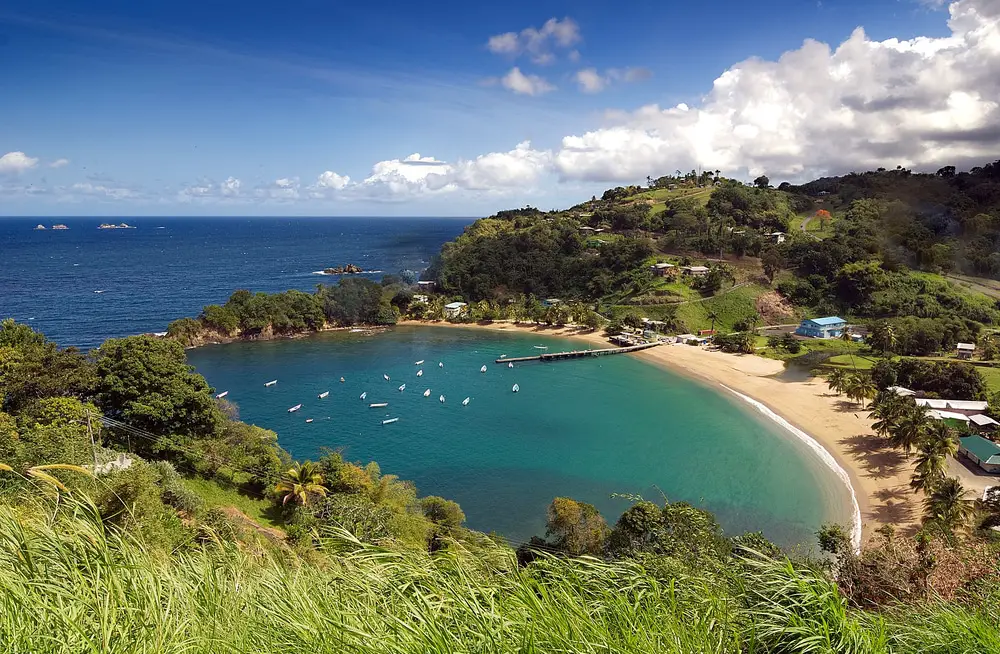
Seaplane Maldives
A special experience: With the seaplane over the islands of the Maldives, Image: Reisemagazin Online

Excursions on site are honestly in short supply. Of course, the resorts offer day trips. For example, to neighboring islands or dolphin watching. For adults, a wide range of diving trips. We have renounced these excursions. The dolphin family swam a few meters past our terrace every evening anyway.

My children are very critical when it comes to food. Which is why the topic of nutrition was mainly about pasta for 14 days. If the children are not so fussy, you will be offered a decent selection in the higher-quality resorts – even for toddlers. Nevertheless, you should try in advance whether the chosen food is not too spicy.

The climate in the Maldives

Maldives
Arrival at the jetty, Image: Reisemagazin Online

While we in Germany slowly but surely have to get used to new record temperatures every year, the Maldives consistently offer temperatures around thirty degrees. Admittedly, with very high humidity. However, since we drove in the official rainy season, it was often cloudy. Which we personally found very pleasant, even if you still have to protect the children with sunscreen and UV shirts throughout.

A note on the subject of sunscreens: When buying, look for “reef and coral-friendly” sunscreen. Conventional sunscreen damages the sensitive corals.

Speaking of the rainy season: Weather apps and weather forecasts almost stopped us from traveling to the Maldives at the end of May / beginning of June. After all, there was talk of the highest amounts of precipitation and many thunderstorms. In total, we only had continuous rain on one of 14 days during the day, so we couldn’t go to the beach or pool. Otherwise, there were only short rain showers in the evening or in the early morning hours. Thus, these months are also a highly recommended travel time for the Maldives. Especially since in the summer months you can also save a little money on the travel price,

Preparing for the Maldives

Passport & Vaccination

Image: Reisemagazin Online

Since we booked only five weeks before the planned travel date, the planning had to be pushed forward quickly. After checking the passports (minimum validity of 6 months), we dealt with the topic of “vaccination”. In general, the following vaccinations are recommended when traveling to the Maldives:

  • Tetanus
  • Diphtheria
  • Hepatitis A + B
  • Typhoid
  • Measles for all children

Luggage & Toys

After all vaccinations could be carried out in time before the start of the trip, it was time for the luggage. We have taken into account that you only need a few clothes in the Maldives. In the resorts, long trousers are usually not required for dinner, so that you don’t leave a bad impression even with chic shorts. Likewise, you don’t need any additional closed shoes on the barefoot islands, which saves a lot on luggage.

So we filled a suitcase almost exclusively with toys and snorkeling equipment. However, the latter can be rented at any time, usually free of charge, at the hotel. However, we prefer our own equipment.

Not to forget a small first-aid kit (a letter from the doctor must be carried for prescription medication) and sufficient sun protection,

Holidays with children in the Maldives

Image: Reisemagazin Online

After arriving at the main airport on the airport island near Male, after a very short stay in the lounge of Trans Maldivian Airways (operator of the seaplane fleet), we went by seaplane to our resort, the Sun Aqua Vilu Reef in the South Nilandhe Atoll. After about 45 minutes of flight time, we were picked up at the jetty directly by boat and greeted friendly by the staff.

At check-in, we were given a flower necklace and served fresh coconut water directly from the coconut for refreshment.

So the right holiday feeling came up right away. After just a few minutes, the island’s own parrot lady sat on my shoulder and accompanied me and my family to our spacious bungalow with open bathroom (2 showers + 1 bathtub). Satellite TV, coffee making facilities, daily fresh water and free Wi-Fi were included. We had booked all-inclusive. However, the prices of the minibar were surprisingly moderate at 3 dollars for cola and 4 dollars for a 0.3-liter beer. The room was cleaned twice a day. This seemed a lot to us, but makes sense due to the sand that you drag into the room during the day.

Our beach section was supplemented by our own swing on which all four of us found space. So you could really relax in the shade.

Ray feeding Maldives
Ray feeding, Image: Reisemagazin Online

Unfortunately, the following two weeks flew by. Much to the delight of the children, the sand castle retained its shape throughout the holiday. During construction, various crabs supported us with the construction of tunnels and caves.

In general, it can be said that a holiday with children in the Maldives is by no means boring. On the contrary. The children are mostly busy themselves, so that we adults did not miss out on reading and relaxing.

Since each bungalow has its own section of beach, you didn’t have to control your children as strictly as is usually the case on busy beaches. If you take into account the children’s needs in terms of toys and entertainment when planning your trip, nothing stands in the way of an unforgettable holiday with the whole family in an impressive atmosphere.

Puerto Rico – Dream vacation in the Caribbean

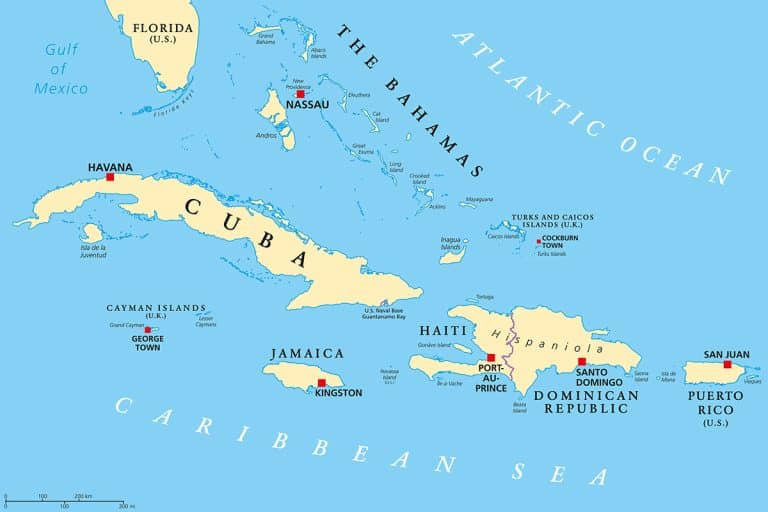
Puerto Rico is the easternmost and smallest island of the Greater Antilles, which also includes Cuba, Jamaica , and Hispaniola . The U.S.-administered country is a destination that is still relatively unknown to Europeans, although it fulfills all the clichés of the Caribbean . However, the port of San Juan, the capital, is visited daily by numerous cruise ships, whose passengers then want to discover Puerto Rico in one day and are guided through the picturesque old town in groups for a few hours.

Old San Juan

Capitol of Puerto Rico
Capitol of Puerto Rico, Image: Sean Pavone / shutterstock

Puerto Rico and its approximately 3.5 million inhabitants exude a very special flair that can best be described as a combination of Spanish tradition and the American way of life. The cobblestone streets of the historic old town and the colourful houses are a living example of the architecture of the Spaniards in the 16. and 17th century.

During a stroll through the city, the historic cathedral, Fort El Morro and the largest Spanish castle on American soil, San Cristobal, are among the most important sights. The area is best discovered on foot and at every corner another exciting photo motif reveals itself to the visitor. In the typical Caribbean shopping street Fortalezza Street, you can browse for souvenirs and souvenirs in small shops and market stalls.

Puerto Rico offers a variety of natural beauties and should definitely be explored as part of a round trip, because the country is much too beautiful for a pure beach holiday. If you organize your stay on your own, you will soon realize that it is not easy to move around the island by public transport. It is advisable to rent a car to drive to the many places worth seeing in the island state.

Ponce, the Pearl of the South (La Perla del Sur)

Cueva Ventana
Cueva Ventana is a cave in Arecibo, Puerto Rico, Image: Tinapat Kotumrongsak / shutterstock

The second largest city in Puerto Rico is Ponce, located on the south coast. The place impresses with its colorful mix of styles. Art Deco or Neoclassical buildings stand right next to houses of Creole architecture. Ponce is also home to the most photographed building in the country: the old red fire station, which now houses a museum. Other highlights of the city include a sugar mill and a rum museum, which can be visited and give a good insight into these traditional industries.

El Yunque National Park

Salinas, Puerto Rico
View of the municipality of Salinas, Image: Felix Lipov / shutterstock

A visit to this impressive national park in the northeast should not only be on the excursion program for nature lovers. Various hiking trails lead through the more than 100 km² site and can be walked or ridden. The treetop walk, which starts at the visitor centre, offers a completely different perspective of the rainforest from a height of 20 metres. In the protected area, you have the opportunity to get to know 240 different types of rainforest trees and to encounter thundering waterfalls along the way.

The lush, tropical vegetation is also a perfect habitat for many animal species and so, with a little luck, you will get to see one of the coqui frogs, which find ideal conditions here. Its characteristic croaking can be heard in many variations throughout the night. Puerto Rico’s endemic species also include the silver-gray Angela Warbler and a colorful parrot species. In addition, you can meet the native iguanas (iguanas) all over the island, which can grow up to two meters long. Although they are an absolute plague for the locals, they always delight tourists.

The most beautiful beaches of Puerto Rico

San Juan
San Juan, Image: ESB Professional / shutterstock

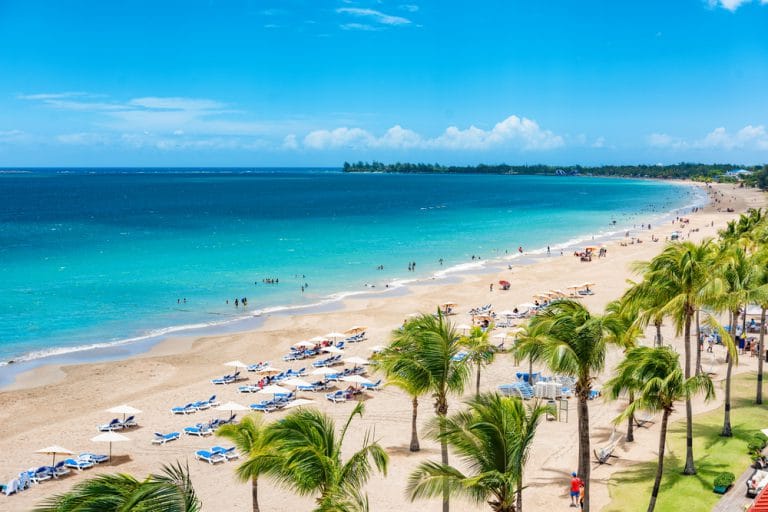
The Caribbean state has numerous palm-fringed, fine sandy coastlines that seem to have sprung from a travel catalogue. For water sports enthusiasts, for example, the Crashboat Beach near Aguadilla on the northwest coast is ideal. Boat and diving excursions are offered here, as well as jet skiing and paragliding. Rincon Beach, on the other hand, is where surfers meet and this hotspot is also known for its fantastic sunsets.

Snorkeling fans get their money’s worth in many places in Puerto Rico and some of the offshore small islands are also absolute snorkeling paradises. The islands of Vieques and Culebra, among others, are particularly popular. If you prefer a quieter beach, you can drive through a barren desert landscape, which forms an incredible contrast to the otherwise lush green nature on Puerto Rico, to the extreme southwest coast. In Cabo Rojo there is a hidden small bay.

The best time to visit Puerto Rico

San Juan, Puerto Rico
San Juan, Image: Gary Ives / shutterstock

The Caribbean has a tropical climate with relatively constant temperatures all year round. Most precipitation falls in the months of April to November, when, with the exception of the drier south, there can be heavy rainfall in some places. The best time to travel is in the period from December to April, when temperatures rarely exceed the 28°C mark and the risk of hurricanes is extremely low.

Culinary specialties in Puerto Rico

Puerto Rican cuisine is influenced by Spanish and Creole influences. As everywhere in the Caribbean, rice and chicken are among the most popular dishes. Sweet potatoes and deep-fried dumplings filled with meat or crabs are also often on the menus. In terms of drinks, of course, all international soft drinks are available and among the types of coffee, café con leche, which consists of equal parts espresso and condensed milk, is considered a speciality. The many tropical fruits that grow here are enjoyed by locals and visitors alike.

Puerto Rico is a dream destination that is just as suitable for beach vacationers and water sports enthusiasts as it is for nature lovers.

Costa Brava – the rocky coast of Catalonia

0

Many people are particularly familiar with the Costa Brava because it is one of the most popular bathing and beach areas in Europe . But the coastal strip of Catalonia is much more than that. A unique landscape, many great cities nearby and sights wherever you look complete the picture of the real Costa Brava.

And while there is little to be said against a holiday in a hotel and on the beach to relax, you should take your time to explore this special stretch of Spain. So you not only learn a lot about the country and its people, but you can also discover a variety of great places and beautiful nature.

What is the Costa Brava and what does it stand for?

The Costa Brava was given the name by a journalist. However, the “wild coast” is relatively close to life here. It runs from the French coast in the mountains through Catalonia and ends about 60 kilometers north of Barcelona . This also means that the famous city is not part of the Costa Brava at all – a common misconception that shouldn’t really matter. Because even without Barcelona, there are a wide variety of sights and interesting places in this region that you should visit. Above all, the fact that many of the villages and small towns still have the charm of the Middle Ages invites many visitors.

Tossa de Mar, Costa Brava
Beach in Tossa de Mar, Image: S-F / shutterstock

Above all, you should be aware that a holiday on the Costa Brava does not necessarily have to be associated with partying. But it’s hard to escape the beach. It is not the fine sandy beaches in the tourist areas that exert the greatest attraction, but the wild and hardly touched coasts in the north and near the mountains. It is not difficult to find a coast and a bay where you are completely alone and can therefore take in nature.

Living and experiencing on the Costa Brava – what are the sights?

The Costa Brava owes its name above all to the impressive stone coasts in the north of the region. Over many kilometers, the mountain ranges continue to drop and reveal a rugged coast, which can only be found in this form in a few places in Europe. Therefore, many hikers and athletes are drawn to this region, as they can explore the almost untouched nature by bike or on hikes. Water sports also play a role – the Costa Brava is known for its windsurfers, among other things.

Later, further south, there are fine sandy beaches that are also used by holidaymakers. So there is a great diversity in nature, which is one reason why the Costa Brava is very popular with holidaymakers today for a variety of reasons.

The Costa Brava is particularly known for the many small towns in the interior of the country, which sometimes still look as if they were taken almost directly from the Middle Ages. In direct contrast to this are the small fishing villages and towns such as Cadaqués, which with their unique charm are not only an attraction for holidaymakers, but also show the life that has hardly changed here for many hundreds of years. Only fishing plays only a subordinate role compared to tourism.

If you want to visit a particularly beautiful city in the region, you should move a little away from the coast and take the path to Girona. The typical Catalan cuisine awaits you as well as a fortress in the area, which has never been polished and therefore dates directly from the Middle Ages. In Girona, you can also experience the typical inhabitant of the region, the proud Catalan, who has shaped his very own culture for so many centuries, which can sometimes be very different from the rest of Spain’s culture.

Culinary and special things in the Costa Brava region

A lot has already been said about the possibilities for activities on holiday on the Costa Brava. For example, options are available that are wonderful for sports or hiking. Visits to the villages, in the mountains or on the coasts are almost mandatory. However, you won’t find a German or an English map everywhere. On the other hand, the people are cordial and will help to find the best food in the restaurants and the most interesting places in the immediate vicinity of the villages and towns.

If you are looking for culinary delights, this is the place for you. Typically, the coasts are home to the fresh fish and seafood that are so typical of the north of Spain . But a culture of its own has also been preserved in other ways. Hearty stews and spicy food are not uncommon here, and the typical tapas can also be found in almost every place. So if you are looking for refreshment after a long hike, you will find many interesting and delicious options.

A short break on Sylt

Sylt – the queen of the North Sea but also the island of the rich and beautiful. The special charm of the island? Endless white sandy beaches, picturesque dune landscapes, pretty villages with small and large Frisian houses, cosy cafés, well-known star restaurants and lots of North Frisian cordiality.

Sylt an island of contrasts

Red Cliff
The Red Cliff, Image: Thorsten Schier / shutterstock

Experience diversity in a confined space! Sylt is the largest German North Seaisland and enchants holidaymakers and locals alike with a unique natural landscape and the healthy stimulating climate of the North Sea. The island stands out from its neighboring islands due to its unusual shape. Again and again, she braces herself with all her strength against the tides and heavy storm surges. Sometimes it loses – more and more often recently.

In the north of the island lies List and the Ellenbogen. In the south, the island ends behind the small harbour town of Hörnum and the Odde of the same name. To the west lies the main town of Westerland. Here you will find the train station, the island airport, numerous shops and health clinics. In the east you will find original villages with farms and the impressive excursion destination Morsum-Kliff. If you look at the long history of the island, you will read about Keitum whalers, German-Danish wars, storm surges and the military base in the Second World War. But you also learn a lot about old Frisian traditions and the inhabitants of the island. Royal Frisians first settled on Sylt in 900 AD.

View of Sylt, Image: IURII BURIAK / shutterstock

The worst storm surges hit the island in 1436 and 1362. At that time, the floods engulfed entire villages! First the village of Eidum and the village of Steidum. The northern part of the island – Listland – was a Danish exclave for many years. Even today, motorists have to pay tolls on the narrow road at Lister Ellenbogen.

Today, Sylt is one of the most expensive holiday destinations in Germany. Holiday properties and luxury villas have been built in the villages since the 60s. Many wealthy people treat themselves to a second home on the island to spend days off on Sylt. Locals, on the other hand, are commuting more and more often between Sylt and the mainland, as there is hardly any affordable housing left for them. This development makes you think. But despite everything, the Queen of the North Sea does not lose its beauty! You simply have to have been here once to feel the special charm of the island on your own body.

The centre – I want to go back to Westerland

Alter Kuraal Westerland
View of the old Kursaal in Westerland, Image: Konrad Weiss / shutterstock

Westerland has developed from a dreary fishing village to a tourist stronghold. This was ensured by the spa boom in the 19th century. With the inauguration of the Hindenburgdamm, the number of overnight stays rose rapidly. Today, the arriving visitors from Westerland are spread out in all directions of the island. When you enter the station forecourt, you are first greeted by weird green men.

The “Travelling Giants in the Wind” were designed by the Kiel artist Martin Wolke. Behind it stretches the pedestrian zone. Along Friedrichsstraße, there is a lively hustle and bustle all year round. Here, well-known brand shops and department stores, bookstores and tea shops are lined up. If you go west, you will reach the beach and see the blue sea. There are beach chairs here and concerts are regularly held in the beach shelter. In addition, especially in the high season, many events take place, such as the Harley Davidson meeting. Then Friedrichsstraße is transformed into a huge motorcycle mile.

The south of Sylt – the tip of the island

Kampen, Sylt
Typical Frisian houses in Kampen, Image: Pawel Kazmierczak / shutterstock

Behind the Sylt villages of Rantum and Hörnum lies the southern tip of Sylt. She is called Hörnum-Odde. At its narrowest point, it is just 300 meters wide. Nowhere else can you get closer to the North Sea than here. A natural spectacle of a special kind, which you should definitely experience for yourself. From Hörnum follows a beautiful walk along the beach, past the red and white lighthouse of the community further and further out. The houses are getting smaller and the walkers fewer. After 15 kilometers you have reached the southern tip and can take in the unique silence. Hörnum-Odde is also known as the Achilles’ heel of the North Sea. There is much more to discover in the south of the island: The Rantum Basin, for example, is a nature reserve and breeding ground for countless bird species. Exciting guided tours for visitors take place here. In the village itself there is the Sylt spring – the island has been pumping its own mineral water from a deep well to the surface for over 25 years. It is also a popular event location where great events for young and old visitors take place all year round. From the harbour in Hörnum, great excursions out to the North Sea depart every day. Popular tours take place to the seal banks off the island.

The north of Sylt – parties under the elbow

Lighthouse Sylt
Image: Jenny Sturm / shutterstock

Celebrities meet in Kampen. There are countless small fashion and jewellery boutiques, well-known bars, nightclubs and expensive hotels. But the small Frisian village can do so much more. The almost undeveloped natural landscape around the former captain’s village exudes special charm. First and foremost is the Uwe Dune – known as the highest elevation on the North Sea island.

The dune rises 52.5 m into the air on the southwestern outskirts of Kampen. Visitors reach the top of the sand dune via a large wooden staircase. From the viewing platform you have a fantastic view over the island and on a clear day you can even see the Danish mainland on the horizon. The dune was named after the Sylt freedom fighter Uwe Lornsen, who became a national hero during the Frisian independence movement.

Going in a north-easterly direction, on the other hand, you will reach the Vogelkoje – a nature reserve that was used to catch wild ducks as early as the 18th century and is now considered a sanctuary for breeding bird species.

Final tips for your short break on the island

It is a phenomenon that every Sylt vacationer knows: Already when crossing to the island, the feeling of vacation sets in, like a switch that is suddenly flipped. The most famous train in northern Germany is certainly the car train to Sylt. The Hindenburg Dam has been connecting the North Sea island with the mainland since 1927.

During the 35-minute crossing, travelers first pass meadows full of wind turbines and isolated farms, then it becomes quieter. The Wadden Sea and the North Sea follow and soon you can see the island. The first salt marshes appear on the shore. Horses, Scharfe and stately Frisian houses follow before you reach Westerland and can cover the last stretch to your accommodation. The red car train commutes daily between Westerland and Niebüll. The double-decker train transports up to 150 vehicles and many times as many people back and forth between the villages.

The 5 most beautiful places to visit in Menorca

Mallorca’s sister island has a lot to offer. Below you will find our list of the most beautiful sights of Menorca.

Menorca’s capital Mahón

Menorca, Mahón / Maó
Mahón / Maó, Image: Karol Kozlowski / shutterstock

You don’t have to look far for sightseeing spots on the Spanish island of Menorca . The capital Mahón in the east, also known as Maó, has a rich history and many attractions to offer.

If you arrive in the city by sea, you will pass through the second largest natural harbour in the world. Over a length of almost six kilometers, ships have been sheltered from the weather and attackers for several hundred years.

Another landmark is the church of Santa Maria in the middle of the city. Here is a famous organ by the Swiss Johann Kyburz from the early 19th century. Historical paintings and archaeological finds can be admired in the Museo de Menorca. This is located in the more than 500-year-old monastery of Sant Francesc – in the immediate vicinity of the old town with its winding alleys.

Historical excavation sites

Archaeological excavations can be discovered not only in the museum, but also scattered throughout the island. Among the sites, the Talayotic settlement of Torre d’en Galmés – one of the largest in the Balearic Islands – and the Talati de Dalt are particularly well known. The latter is located a few kilometers from Mahón and is considered to be extremely well preserved. It is said to have been built as early as 400 to 200 BC. Here you can still admire the huge stones, whose arrangement is reminiscent of the British Stonehenge .

Idyllic old town alleys in Ciutadella

Ciutadella de Menorca
Ciutadella de Menorca, Image: tuulijumala / shutterstock

Ciutadella, located in the west of the island, was the capital of Menorca until the 18th century. Here, the Plaça des Born square and the town hall there form the centre of everyday life. A white obelisk in the middle of it is intended to commemorate a raid in the 16th century. The square is surrounded by noble palaces, fortresses and many small alleys where you can find bars, restaurants and boutiques.

An extraordinary building in the Gothic style is the Cathedral of Santa Maria de Menorca. An interesting fact is that it was built from the minaret of the main mosque at the time. This can still be seen today in the tower chapel or the bell tower.
Other sights in Ciutadella are the Bishop’s Palace, as well as the monastery church Església des Socors, which is considered the most beautiful Renaissance church on the island.
Relaxation can be found in the quiet courtyard of the Augustinian monastery in the south of the old town.

The sacred mountain of Monte Toro

Monte Toro
Monte Toro, Image: gNesher / shutterstock

For all those who want to do sports during their holiday, an ascent of Monte Toro is a good idea. With its 357 meters, it is also suitable for the less fit and rewards hikers on their way with impressive viewpoints. In good weather, the neighboring island of Mallorca can be seen. It is faster to reach the summit by car. Once at the top, visitors can expect a statue of Christ from 1949, as well as a pilgrimage church and a monastery from the Middle Ages.

Cala Galdana

Cala Galdana
Cala Galdana, Image: Pawel Kazmierczak / shutterstock

If you want to relax from the many cultural impressions of Menorca, you will find the right opportunity to do so in the bay of Cala Galdana on the south coast of the island. Surrounded by protective coastal rocks, an approximately 500-metre-long, golden-yellow sandy beach awaits visitors. The clear, turquoise waters are great for snorkeling or relaxing in one of the sun loungers available for rent. The seven-kilometre-long Barranc d’Algendar gorge also ends at the shell-shaped beach. Over the years, an impressive variety of plants and animals has developed here.

Grenada – the jewel of the Caribbean

The Caribbean island of Grenada is the southernmost of the Leeward Islands. La Grenade was what the French called the island in colonial times: the jewel. And she is a jewel indeed. It is of volcanic origin, only 18 kilometers wide and about 34 kilometers long, but the extinct volcanoes rise up to 840 meters out of the sea.

The island is almost completely covered with rainforest. Dreamlike beaches invite you to linger, while inland, untouched nature, crater lakes, waterfalls and hot springs beckon. And despite all this, Grenada is still considered an insider tip and is not flooded by crowds of tourists.

Caribbean dream beaches

Saint George's, Grenada
Saint George’s, the capital of Grenada, Image: Claudio306 / shutterstock

Whether beaches with fine light sand that slope gently into the water and are therefore ideal for families, black-gray beaches that are reminiscent of the volcanic origin of the island or beaches where the palm trees grow into the sea and the coconuts practically fall into your lap: here everyone will find their own personal dream beach.

And with all this, you can still find beaches where you are really lonely. For example, in the north of the island there are some small offshore islands that are uninhabited and can only be reached by boat. Only a few find their way there. A detour is worthwhile for those who want to experience Robinson’s loneliness.

Grenada – A paradise for all divers and other water sports enthusiasts

On an island like Grenada, water sports are of course the top priority when it comes to outdoor activities. Surfing is not possible, the water is too calm and the winds too calm. But divers and snorkelers get their money’s worth in the waters off the island. In addition to the coral gardens with their colorful tropical underwater wildlife, parrotfish, diadem angelfish, surgeonfish and other colorful sea creatures, the Grenada coast is also considered a top wreck area. Around a dozen shipwrecks can be discovered during dives, including “Bianca C”, which is often referred to as the Titanic of the Caribbean .

Waterfall Grenada
Image: Hugh O’Connor / shutterstock

Another highlight is the Scultpure Park. The underwater museum with an area of more than 800 square meters was created in 2007 by the English diver Jason de Caires-Taylor. In the meantime, the approximately 80 figures are populated by sea urchins and corals. Fish also enjoy it.

The calm sea off Grenada is also ideal for another water sport: stand-up padding. Kayak tours are also offered. And of course, swimming in the turquoise blue sea is always a pleasure. But there is also the possibility to take a refreshing dip in most of the natural pools at the waterfalls inland.

Outdoor activities in unspoiled nature away from the sea

Most of Grenada is covered with rainforest. The easiest way to discover the natural beauties is to take a tour of the island by car along the coastal roads. But there is also the possibility to walk on paths, some of which still go back to the paths of the indigenous people. There are now marked hiking trails, for example up to the summit of Qua Qua, Grenada’s second highest mountain at 700 meters.

Another hiking trail leads to the Seven Sisters, seven contiguous waterfalls. The crater lake Grand Etang is also a popular hiking destination. If you want to go even further into the rainforest, you have the opportunity to be guided by a guide and discover very special natural beauties; Craters, waterfalls and a flora and fauna of exotic beauty.

St. George’s, the capital of Grenada

Capital of Grenada
Image: Pawel Kazmierczak / shutterstock

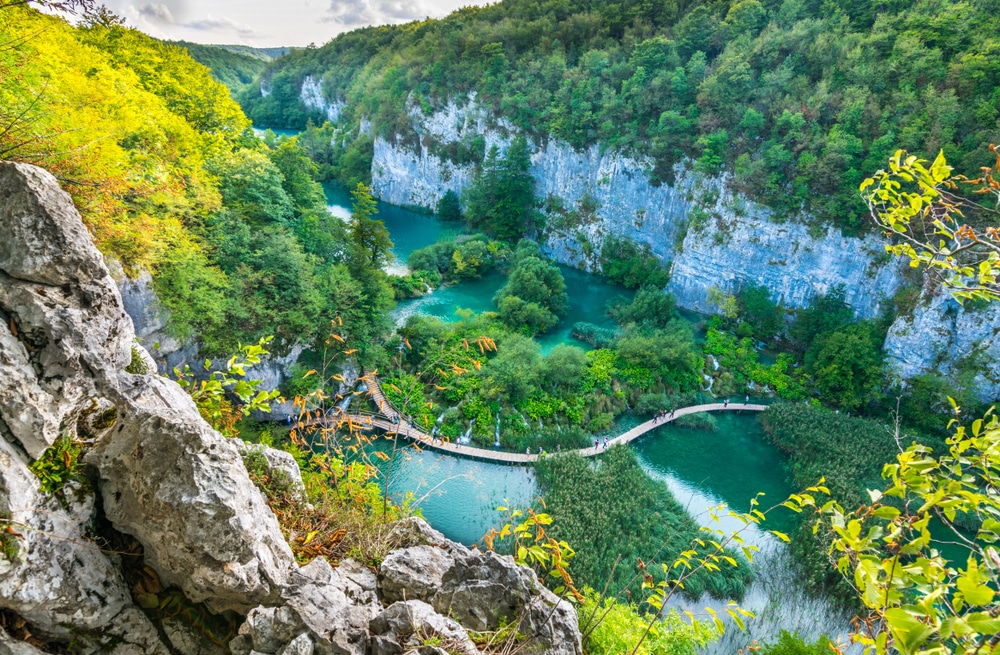
St. George’s was founded by the French in the mid-17th century as Fort Royal. In the course of history, the city changed affiliation several times. The French and Britons exercised colonial rule over town and country and left their mark. Three forts lie above the city and those who dare to climb will be rewarded with a fantastic view over the city, harbor and surrounding area. The city itself stretches steeply up into the hills. But the most impressive thing is probably the city’s large market. Here you can find an abundance of typical fruit and vegetables, spices, but also souvenirs.
Culinary

In addition to all the scenic advantages, Grenada is also considered the spice island of the Caribbean. Mainly nutmeg is grown here, but also cinnamon, cloves, ginger and other spices. Grenada’s cuisine is correspondingly spicy. It is Creole, influenced by African, Native American and Indian influences. The sea is never far away, and so fish and seafood play a major role. But chicken and other types of meat are also popular.

The tropical fruits such as pineapple, mango, cashew fruit, papaya or soursop are also unsurpassed in taste, which are worlds better than the imported goods in our latitudes straight from the tree. Grenada’s national dish is oildown. The colorful mixture of different types of bananas, breadfruit, callaloo, a kind of spinach, coconut milk, spices and, depending on taste, other vegetables and meat or fish, is usually only served at larger festivals, as it is very complex to prepare and therefore not practical for home use.

Inextricably linked with Grenada is nutmeg. It can even be found on the flag of the island state. And it is not only used as a spice. It is considered a cultural asset and is used for what feels like everything the kitchen has to offer. They are processed into jam, oil, syrup, liqueur or rum.

Guadeloupe – where France meets the Caribbean

Experience France and the Caribbean at the same time on one holiday – isn’t that possible? It’s possible! In Guadeloupe. The indigenous people call the archipelago in the Caribbean “Karukera”, the place of beautiful waters. This belongs to France and is considered largely undiscovered among travelers.

In the immediate vicinity are the British overseas territory of Montserrat to the northwest and the Republic of Dominica to the south. The island of Martinique, which also belongs to France, is located 120 kilometers to the south.

Soufrière, Guadeloupe
Soufrière, the highest mountain on Guadeloupe and the Lesser Antilles, Image: Filip Fuxa / shutterstock

More than a dozen volcanic islands belong to Guadeloupe, six of which are inhabited – Basse-Terre, Grande-Terre, Marie-Galante, La Désirade and the Îles des Saintes. From lonely sandy beaches to forested mountains, the archipelago’s scenic diversity stretches. The two main islands of Basse-Terre and Grande-Terre together form the wings of a butterfly. They are separated by a mangrove swamp spanned by a few bridges.

Guadeloupe – Breathtaking nature with guaranteed relaxation

Terre-de-Haut, Iles des Saintes
View of Iles des Saintes, Image: Jakob Fischer / shutterstock

Only about 400,000 people live in Guadeloupe. The archipelago is considered one of the only 25 UNESCO biosphere reserves in the world. Thanks to its volcanic origin, there are golden and black beaches in addition to chalky white beaches. All of them invite you to laze in the soft sand.

Flower lovers will get their money’s worth at the Deshaies Botanical Garden in Basse-Terre. On seven hectares of land, you can marvel at breathtaking flowers from all over the world, including orchids, hibiscus and bougainvillea.

The tiny islands of La Désirade, Marie-Galante or Les Saintes are only about an hour’s ferry ride from the main islands and invite travellers who want to experience absolute solitude to visit as part of a day trip. During hikes through the nature reserve, you may be lucky enough to discover rare species such as the Lesser Antillean iguana, the Désirade skink or the Gaïac.

Image: Claudio306 / shutterstock

Hikes through the species-rich flora also promise relaxation. At the eastern end of Grande-Terre, a path leads up the cliffs to the Pointe des Châteaux, which offers spectacular views of the Atlantic Ocean and the Caribbean Sea.

A major attraction of the archipelago is the Guadeloupe National Park on the island of Basse-Terre, which covers an area of 75,000 hectares of rainforest.
Active holidays in Guadeloupe

Located in the national park is the Grande Soufrière volcano. It is considered an active volcano that last spewed lava in 1976 and is accessible to travelers. The ascent is considered moderately demanding. The summit is at an altitude of 1467 meters. Once at the top, a view into the crater is possible.

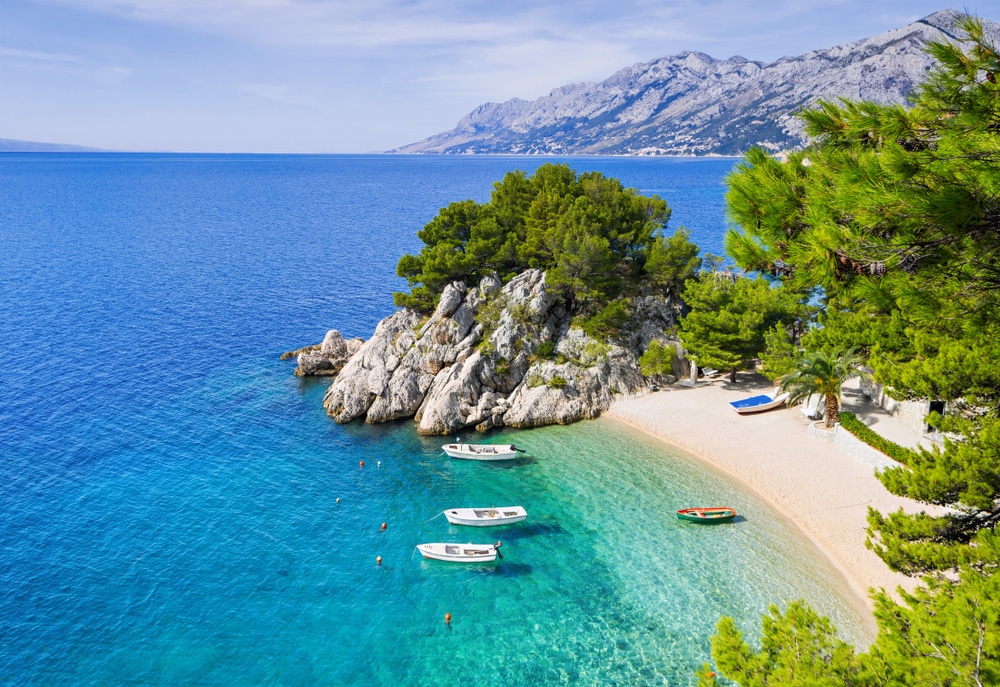
For water sports enthusiasts, there is the possibility of snorkeling, surfing and diving. That
Even for travelers who have had enough of sunbathing on the beach, Guadeloupe offers a whole host of activities such as surfing.

Eventful colonial history and diverse cultural mix

Gouadeloupe from above
Image: Robert Bleecher / shutterstock

Christopher Columbus first set foot on Basse-Terre in 1493. The Caribs, the indigenous inhabitants of Guadeloupe, successfully resisted colonization by the Spaniards, but were no match for the French who invaded later. In 1674, the archipelago fell to France, then to England and back to France. The import of African slaves for work on sugar cane plantations began. After slavery was abolished in 1848, Indian servants took over the work on the plantations. In 2015, the Mémorial ACTe Museum opened, commemorating the history of slavery. It is considered part of the UNESCO slave route project.

The colonialist history is particularly visible on Marie-Galante – it is characterized by windmills and the ruins of a sugar factory.

To delve deeper into the present-day culture of the archipelago, the numerous festivities in the villages are particularly suitable. Here you can dance to various traditional music styles such as Gwo’ka, Biguine Vidé and Zouk.

Guadeloupe as a destination with other advantages

Even the high season on the small French Caribbean islands is not characterized by mass tourism – unlike other Caribbean islands. Of course, there is also the rum typical of the Caribbean , which can be tasted in distilleries.

Small markets full of traders also exude Caribbean flair – in addition to coconuts, inger and tamarind, punch can be bought in hand-painted bottles that make good souvenirs to take home.

Those who love French baguettes, pastries, good butter and cheese are also in the right place in Guadeloupe. The French influence is clearly noticeable and adds to the charm of the archipelago. Since this belongs to France and thus to the European Union, the official currency of the Euro and currency exchange and conversion is not necessary. Anyone who, as a citizen of the European Union, falls in love with one of the islands of Guadeloupe and wants to stay, can do so indefinitely without major obstacles and additional work permits.

The climatic conditions in Guadeloupe are not characterized by extremes. Thanks to north-easterly trade winds, the tropical climate is mitigated, so that temperatures on the coast vary between 25-28 degrees Celsius.

Jordan – unspoiled pearl in the Middle East

The Kingdom of Jordan is currently still one of the “insider tips” among travel destinations, because many Germans are concerned about traveling to Jordan in view of the political situation in the surrounding areas or have simply not heard of the country between the Dead Sea and Iraq.

Jordan has extremely hospitable people, thousands of years of history with wonderful historical sites, delicious dishes, a very varied landscape and so much more to offer. Almost 10 million people live in Jordan whose official language is Arabic. The country’s largest international airport is located in the capital Amman, a direct flight from Germany takes about 4 hours.

Amman – Capital of Jordan

Amman, Jordan
View of the capital Amman, Image: mbrand85 / shutterstock

Most travelers reach Jordan via the airport in the capital Amman. Many people head straight from there to the numerous sights further away, even though Amman itself is more than worth a visit.

The Jordanian capital has transformed into a modern metropolis in recent years and shows the country’s eventful history. The tourist highlight of the city is the very well preserved and lovingly maintained Roman amphitheater from the 2nd century AD, which was built into one side of the Jaufa hill. In the summer months, there are also regular performances and events that bring the millennia-old theatre back to life. In the rest of the city, too, numerous contemporary witnesses from the time of the Romans can be discovered, including an ancient citadel and the Temple of Hercules.

In addition to sightseeing, a visit to Amman is also an excellent way to get in touch with the country and its people off the beaten track. The Jordanians are a very hospitable people and so it can happen that they are invited to tea directly after a nice conversation.

Rock City Petra

The rock city of Petra is by far the most famous and therefore also the most touristically developed attraction in Jordan and makes many a visitor lose words due to its size and splendour. You can reach the rock city, which has been a UNESCO World Heritage Site since 1985, through a 1.2 kilometer long and 80 meter deep gorge, at the end of which the temple complex of red rock opens up.

The more than 800 buildings and sacrificial sites of the rock city are built directly into the red sandstone and decorated with extremely detailed decorations. Special highlights of the Petra Valley are the Pharaoh’s Treasury: a monumental funerary temple whose entrance is adorned with gigantic columns, and the Roman Theatre: a theatre carved directly into the rock with 3000 seats.

Crusader Castle of Kerak

Kerak
Kerak, Image: Anton_Ivanov / shutterstock

The city of Kerak is located in the western part of the country and has always been an important settlement and seat of numerous rulers. A particularly impressive witness to these times is the ruins of the Crusader castle, built between 1142 and 1161.

Shortly after its completion, this position of the Crusaders was attacked and besieged, but it was not successfully taken until 1187 by Saladin’s army, which marked the end of the Crusaders in the Middle East. From the middle of the 13th century until the end of the First World War in 1918, the fortress was then in Turkish hands.

In 2008, the ruins were extensively renovated and restored and have since become an increasingly popular destination for visitors. The fortress is perched on a rocky outcrop, so you can enjoy a great view of the surrounding area from above. Inside the castle there is a small archaeological exhibition that shows finds from the different eras that the castle has lived through.

Mount Nebo

Nebo
Mount Nebo, Image: Julie Mayfeng / shutterstock

Also located in the western part of Jordan is Mount Nebo. It is known as the place in the Bible from which Moses was able to see the Promised Land for the first time. Today, the mountain has become a popular destination for visitors because of this biblical passage, as well as because of the incomparable view over the Dead Sea and the Jordan Valley to neighboring Israel.

On the mountain there are also the remains of an ancient church from the 3rd century AD. and some very well preserved mosaic panelling, which can be seen in a small museum. Not far from the mountain is the mosaic city of Madaba, which is also mentioned in the Bible. A visit to St. George’s Church, which is decorated with numerous ancient mosaics, is particularly worthwhile here.

Wadi Rum

Wadi Rum
Wadi Rum, Image: Matthias Kestel / shutterstock

In the south of Jordan is Wadi Rum, a desert landscape that was created from a dried-up river. This 100-kilometre-long desert of red sand and rock impresses not only with its unreal landscape, but also with rock carvings from prehistoric times as well as spectacular sunrises and sunsets. In 2011, the landscape of Wadi Rum was declared a World Heritage Site and today attracts numerous visitors from all over the world. The highest mountain in Wadi Rum is Jebel-Um-Dami, from whose 1800-meter-high summit visitors can see as far as the Red Sea and the border of Saudi Arabia on a clear day.

Dead Sea

Dead Sea
The Dead Sea, Image: Fadi Sultaneh / shutterstock

The Dead Sea is one of the most impressive landscapes in Jordan, along with Wadi Rum. With a salinity of over 300 grams per liter of water, the Dead Sea is one of the saltiest waters in the world. The density of the water here is so great that a person can float on the surface without sinking. The Dead Sea is located on the border with Israel in one of the deepest depressions on earth, far below sea level and is actually a lake. There are numerous spa and wellness offers around the Dead Sea, because the soils and minerals from the lake play a major role in the cosmetics industry.