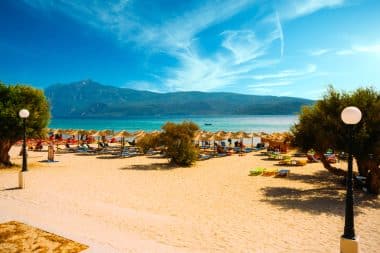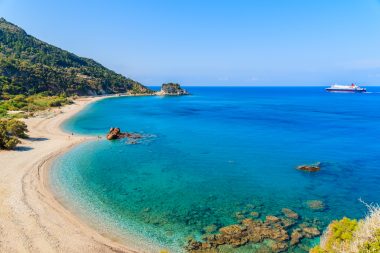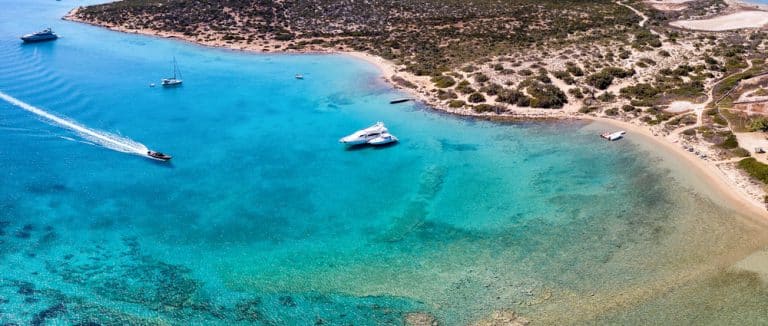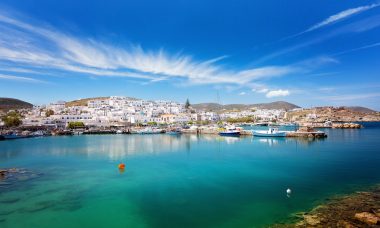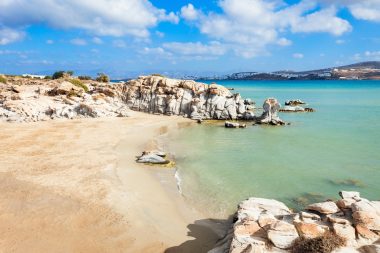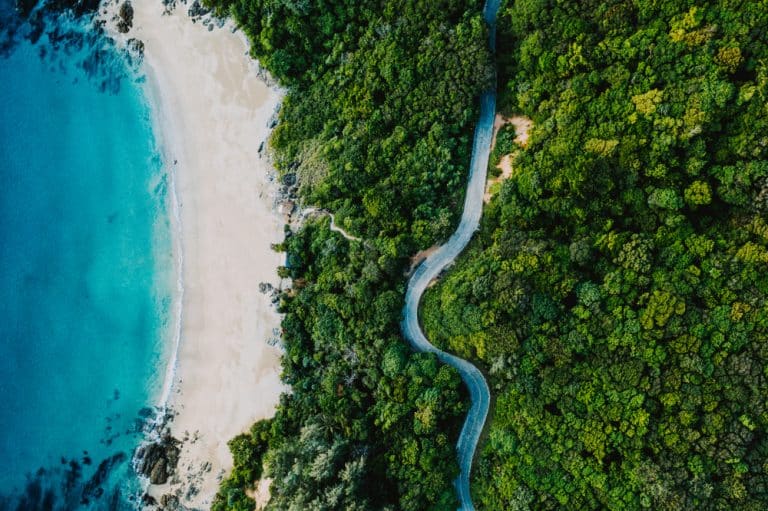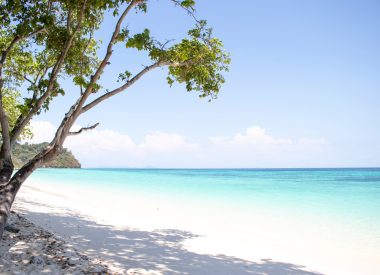
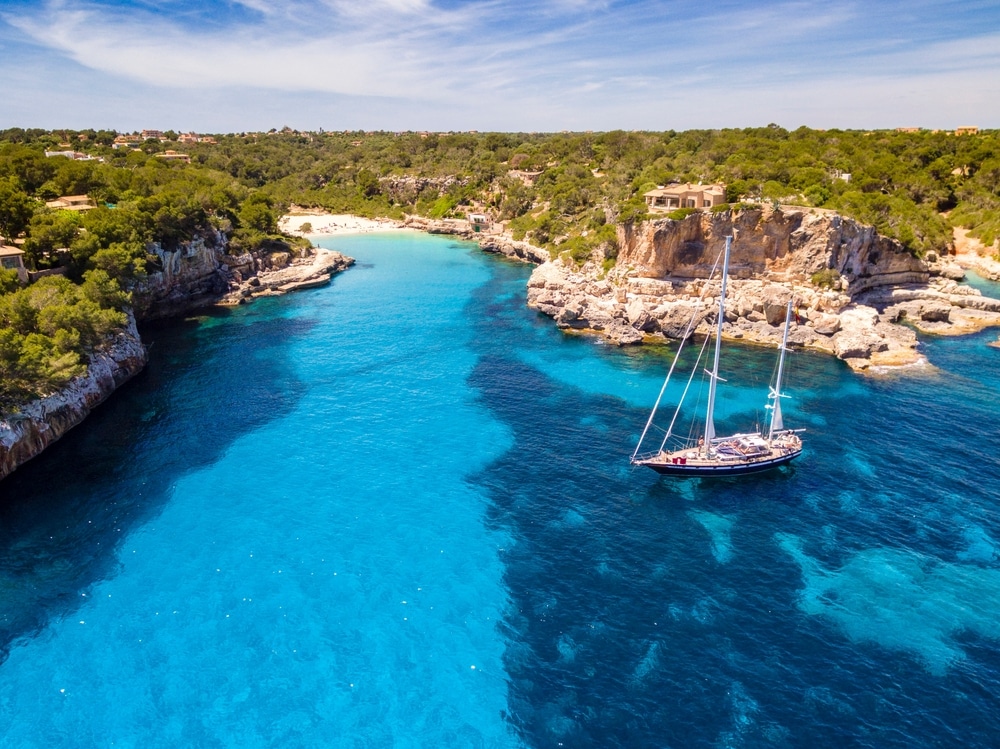



In our five-part series “Mallorca – in the magic of the south”, we draw a comprehensive picture of the popular Spanish Balearic island, provided with a wealth of valuable information and background knowledge. Who has always wanted to know where the most remote corners and villages are? In which neighborhoods are the best tapas bars hidden? Where are the most beautiful beaches, free of mass tourism? Which mountain peak should you climb? One thing is certain: Mallorca is an island for everyone. Impressive mountain regions with glittering salt lakes, quaint restaurants with typical Mallorca cuisine, stalactite caves, wonderful beaches and colourful fiestas that stand for Spanish liveliness – Mallorca can certainly not be accused of a lack of variety of offers. The individual regions of the island have different characteristics. With the following series, we would like to give suggestions for selection.
Palma and the southwest coast – intoxicating wealth in a small area: full of contrasts, surprises and contradictions
The lively capital Palma and island beauty invites. It is located on the Bahía de Palma, a deep bay in the southwest of the island. In the most beautiful city on the Mediterranean, the heart of the island beats. Mallorca’s sophisticated metropolis and capital is Palma. Even though the official name of the city is no longer “Palma de Mallorca” since the end of 2016, little has changed. The sun-drenched city still offers something for every taste: beautiful beaches, excellent food, a terrific shopping experience and excessive celebrations. Between a rich historical heritage and urban flair, the beautiful capital combines many advantages. To really enjoy the atmosphere of the city, it is recommended to leave the car in an underground car park or in one of the blue marked parking zones. Palma’s city fathers are focusing on traffic calming.
Palma at a glance – escapes and surprises
The heart of the city beats at the huge Plaça d’Espanya. Most of the roads flow together here. Winding, narrow and cobblestone streets give the old town its special charm. Gothic places of worship, old city palaces, peaceful courtyards. magnificent aristocratic houses, incense-filled church darkness – wealth is palpable almost everywhere. Not to forget the hustle and bustle in the glaring light of the market halls. In Palma, the visitor strolls through one of the largest preserved medieval cities in the Mediterranean.
La Seu
Like a gigantic ship, La Seu blurs into the sea of houses in Palma. The imposing Gothic cathedral is not only the largest building on the island, but certainly also the most precious. Similar to a hen, the most famous island building towers over the sea. The cathedral inspires with a 110-meter-long nave, high columns and a fascinating rose window, which conjures up colorful plays of light when the sun is shining. No less enchanting is the Gaudi candlestick above the altar. Recently, you have been allowed to climb onto the roof of the impressive building. From the top, there is a breathtaking view over the city and the sea. The Castel de Bellver offers great insights and views. The city’s royal castle is located about three kilometres from Palma and surprises with remarkable insights into history as well as a fascinating view over the city and the harbour. Palma’s harbour is where the horns of the cruise ships sound loudly in summer and awaken dreams of the big wide world. The waterfront stretches from one end to the other, overlooking the labyrinthine old town. For foot-weary city visitors, a one-hour harbor tour with Cruceros Marco Polo is a good idea. After this relaxing change, Porto Pi, the shopping paradise, beckons. It is located at the end of Avendia Juan Miro, not far from the port of Palma.
Ballermann
What would Palma be without its cesspool of sin? Contemplative, quiet, restrained? In any case, the locals are fed up. The flow of visitors has been getting out of hand for some time. Full alleys, excessive rents and, last but not least, the countless cruise passengers that flood Palma’s old town. To upgrade the Platja de Palma, the city administration adopted a master plan in 2015. Within 10 years, the notorious cesspool of sin is to become a venerable holiday mile. Restaurants, beach bars, shops and clubs – Platja de Palma is being diligently renovated. The hotels go one better and grow exclusively upwards. Meanwhile, several new boutique hotels are being built. Former, often run-down accommodations already rank in the four-star category. The party remains. Only in the future she should be more civilized.
Oases of peace and trendy districts with a lot of charm
Extensive pedestrian paths in the heart of Palma, Image: Dmitrii Sakharov / shutterstock In 1231, after the expulsion of the Arabs, Palma flourished. In the 15th/16th century, nobles and rich merchants built a new building. In the nineteenth century, fortified palaces were built all over the city to protect against pirate attacks. Today, behind the mighty walls, enchanted gardens with flower beds, covered loggias and small fountains enchant. Many old palaces have been converted into shops and galleries. One of the most beautiful city palaces is undoubtedly the Casa Soleric on Passeig del Born. It forms the cultural center of the city. Santa Catalina stands for conviviality and enjoyment. The bohemian district enchants with a very special atmosphere. Once a wicked fishermen’s quarter – today the family-friendly “Eck”: Palma’s favourite neighbourhood attracts visitors with cute shops, Spanish delicacies and selected gourmet products. From 8 p.m., the entire district will be transformed into an internationally decorated open-air table.
Beautiful places and culinary insider tips
A break from a stroll through the city, sit down somewhere and just look, that’s what you can do on Palma’s squares. Let’s linger briefly at the traffic-calmed town hall square. With a beaming smile, you can serve delicately melting sweets in the ice cream parlor on Plaça del Cort. No less seductive is the selection of “Tast” in Carrerd de la Unió. The Tapas Bar is famous for its specialties. The best grilled fish, but at fairytale prices, is conjured up by the chef in the east of Palma. “Es Mollet” also offers a beautiful view of the small port of Portixol. On the other hand, Sibilla is cheap and also delicious: the restaurant stands for all those who are hungry. In the traffic-calmed shopping street of Blanquerna, you can find the perfect breakfast, lunch and dinner at great prices.
Culinary tips for Santa Catalina:
“La Golondrina”, the vegetarian restaurant.
“Bros” with Spanish-Mediterranean cuisine.
“Simply Delicious” with dishes from the Middle East.
“Can Frau”, a popular bar in the market hall of Santa Catalina.
Sun, beach and sea
On the enchanting southwest coast, just a stone’s throw from Palma, there are 15 fantastic beach sections. Hidden bays on the turquoise blue water invite you to dream. A six-kilometre-long sandy beach leaves nothing to be desired. For all party-goers: Only section 6 declares itself a party stronghold. Palma has a lasting effect; Frédéric Chopin once found the right words: “I am in Palma, under palm trees…; at night you can hear guitar and singing for hours… In a word, a wonderful life.” Mallorca, Part 2 – The Northwest of Mallorca Mallorca, Part 3 – The North of Mallorca Mallorca, Part 4 – The Southeast of Mallorca Mallorca, Part 5: The Center of Mallorca
Lake Tahoe attracts around 15 million guests from all over the world every year.
Deep forests, extensive floodplain landscapes and rugged canyons provide a nature rich in contrasts with countless outdoor activities and sights.
In this article, you will learn where Lake Tahoe is most beautiful and what activities you can do to enrich your vacation.
Lake Tahoe in the Sierra Nevada
The Sierra Nevada is one of the three most important mountain ranges in the western United States.
On the border between California and Nevada is the deep blue Lake Tahoe.
In addition to its unique natural features, it is also characterized by its status as the largest and at the same time one of the highest mountain lakes in the United States.
Its crystal-clear water, which is due to a low algae occurrence and excellent air quality, is striking.
Lake Tahoe and its nature
Due to its dreamlike nature and its unique location at an altitude of 1899 meters, the area has already served as a venue for the Winter Olympics and as a filming location for well-known series; such as Bonanza or a Colt just in case.
Here you can immerse yourself in the extensive landscape, relax on the beach or explore the ski resorts in winter.
Where is the most beautiful place on Lake Tahoe?
Lake Tahoe is home to many beautiful spots, whether you’re camping, traveling as a family, or vacationing as a couple.
Beaches, mountains, hiking trails, but also the gastronomic scene and beguiling natural monuments convince with an incomparable mix.
Swimming beaches at Lake Tahoe
Zephyr Cove Beach is a popular sandy beach on the south shore of Lake Tahoe.
Here, holidaymakers will find an excellent tourist infrastructure with numerous leisure activities such as swimming, pedal boating and jet skiing.
With the excursion steamer you can discover the area from unexpected perspectives and admire the ravishing sunset over the lake in the evening.
From Emerald Bay, the Vikingsholm Hiking Trail takes you to impressive waterfalls: the Upper and Lower Eagle Falls.
There, the masses of water cascade into the depths and offer captivating motifs for the holiday album.
Cities near Lake Tahoe
South Lake Tahoe in Eldorado County is a popular attraction for vacationers.
Surrounded by beaches and ski lifts, the border with Nevada runs along the eastern outskirts of the city.
On the other side are some large hotels with casinos where you can put your lucky hand to the test.
Tahoe City combines relaxation and original shopping.
Galleries, shopping malls, coffee roasters and top-class gastronomy are just as popular with tourists as the authentic local history museum Gatekeepers, where you can learn everything about the history of the country and its people.
In Palisades Tahoe, on the other hand, you will find a perfect location for your next winter vacation.
The Olympic Valley is only about 12 minutes by car from the lakeshore.
On your descents through the enchanted winter land you can enjoy the boundless beauty with a view of the lake.
Sights on Lake Tahoe
Sunrise over Emerald Bay, Lake Tahoe, Image: Chris Rubino / shutterstock Only 1.5 kilometers from Lake Tahoe is the 2968-meter-high Mount Tallac at the foot of Fallen Leaf Lake.
The quiet area is ideal for challenging hikes with impressive panoramas and offers picturesque pitches for holiday guests with campervans.
So you can benefit from the flair of North American nature at breakfast.
Vikingsholm Castle on the shores of Emerald Bay seems truly enchanted.
The Scandinavian style of construction was inspired by the Nordic stave churches and can be visited during part of the year.
A visit to the US Forest Service is also a highlight.
Many hiking trails start from this starting point, such as the Rainbow Trail, which is only 600 meters long and is particularly suitable for an excursion with children.
In the Stream Profile Chamber, an underground panoramic pane provides true-to-life impressions of the lake with its rich fish population.
Skiing & Winter Sports at Lake Tahoe
Lake Tahoe also attracts enthusiastic winter sports enthusiasts in winter with 767 kilometres of slopes.
Skiing and the like are possible in a total of 14 ski areas.
The Heavenly and Palisades Tahoe stations, which impress with unconditional snow reliability at over 3000 meters above sea level, are particularly popular.
Around 30 percent of the slopes are especially suitable for professionals.
The best restaurants on Lake Tahoe
Lake Tahoe and its surroundings are home to a varied restaurant landscape.
From cafés with a view of the lake, to steakhouses and pizzerias, to prominent addresses such as Gordon Ramsay’s Hell’s Kitchen: every gourmet gets their money’s worth here.
In addition to the local beers, you should not miss the delicious fish and game specialties during a culinary excursion.
Notable local eateries include Lone Eagle Grill in Incline Village and Jake’s on the Lake, which serves award-winning California-Hawaiian fusion cuisine.
Haarlem is the picturesque capital of the province of North Holland.
It combines history, culture and charm in a unique mixture.
With famous museums, cosy restaurants, picturesque canals and historic facades, Haarlem has everything for a city trip.
A walk through history
Haarlem’s historic centre is a true open-air museum.
Strolling through the narrow streets and along the canals, visitors feel transported back in time.
The well-preserved buildings tell of a time when Haarlem played an important role in Dutch history.
Frans Hals Museum
A highlight is the Frans Hals Museum, which displays works by the famous Dutch painter Frans Hals as well as other artists of the Golden Age.
The museum is housed in two historic buildings.
It promises an insight into the art and culture of the 16. and 17th century.
It’s a must-see for art lovers with a collection that amazes visitors.
Teylers Museum
The Teylers Museum, the oldest museum in the Netherlands, is another of Haarlem’s cultural treasures.
With a collection of art, science and natural history, the museum promises a journey through time.
From fossil skeletons to scientific instruments, there’s something for everyone here.
Architectural masterpieces
Haarlem’s architecture is another highlight of the city.
The imposing buildings and historic facades are beautiful to look at and tell the rich history of the city.
Grote Markt and St. Bavo’s Church
The Grote Markt is the heart of Haarlem and a lively meeting place for locals and visitors. Here you will find the impressive St. Bavo Church, a Gothic cathedral famous for its architecture and organ. The organ was played by Mozart and Handel and is a masterpiece of organ building.
Mill De Adriaan
The mill “De Adriaan” is another landmark of the city.
Originally built in 1779, it was rebuilt after a fire in 1932.
Today, the mill is a museum that shows the history and functioning of Dutch windmills.
From the top of the mill, visitors have stunning views over the city and surrounding landscapes.
Colourful floral splendour
Haarlem is known for its bulb fields and plays an important role in the Dutch flower industry.
The city is the starting point for the famous “Bloemencorso”, an annual flower parade in which colourful floats drive from Noordwijk via Lisse to Haarlem.
Thousands of visitors from home and abroad come every year to experience this flowery spectacle.
Flower markets
The flower markets in Haarlem are a paradise for flower lovers.
Here you can buy a wide variety of flowers and plants, from tulips to exotic orchids.
A visit to one of these markets is an experience for the senses and showcases the city’s rich botanical tradition.
A lively cultural scene
Small picturesque street in Haarlem, Image: Dmitry Rukhlenko / shutterstock Haarlem has a vibrant cultural scene with numerous theatres, art galleries and events.
The city is known for its variety of cultural events that take place throughout the year.
Festivals and events
Among the most popular events are the Bevrijdingspop Festival, the music spectacle Haarlem Jazz & More, the art event Kunstlijn and the Open Monumentendagen (Open Monuments Days).
These events attract visitors from all over the world and provide a colorful program of music, art and culture.
Art galleries and theatres
Haarlem is home to many art galleries and theatres that guarantee numerous performances and exhibitions.
Whether modern art, classical plays or innovative performances – everyone will find something that inspires here.
Culinary delights
Haarlem is a foodie’s paradise.
The town has a variety of restaurants, cafes and bars serving regional and international cuisine.
Meneer Frans
The trendy lunch café Meneer Frans has a cozy interior and a beautiful outdoor area.
Whether it’s coffee, breakfast or lunch – everything tastes fantastic here.
The café is located in the same building as the Van Duivenboden Interieur shop and is a popular meeting place for locals and visitors.
DeDAKKAS
DeDAKKAS, a restaurant on the top parking deck of a multi-storey car park, impressively demonstrates how empty roofs can be used to create green and liveable places.
The restaurant promises great views over the city and serves delicious dishes made from local and organic ingredients.
Sustainability and nature
Main square in the center of Haarlem, Image: Wolf-photography / shutterstock Haarlem attaches great importance to sustainability and environmental protection.
The city supports numerous initiatives and activities that promote awareness of a sustainable lifestyle.
Haarlemmer Kweektuin
The Haarlemmer Kweektuin is a green oasis with its own organic garden, a greenhouse and various sustainable projects.
The Kweekcafé serves organic and regional dishes and is a popular meeting place for anyone interested in the environment and sustainability.
Zuid-Kennemerland National Park
West of Haarlem is the Zuid-Kennemerland National Park, a beautiful nature area with dunes, forests and beaches.
Miles of hiking and biking trails lead through the picturesque landscape.
With a bit of luck, you can even spot wild grazing animals such as Scottish Highland cattle and Konik horses.
Fiets Food Route
A special recommendation is the “Fiets Food Route”, a bike tour that leads to the best cafés, restaurants and shops in the city.
On the way, you can enjoy regional specialties and handmade delicacies from sustainable production.
The tour is ideal for those who want to be environmentally conscious and discover the culinary highlights of Haarlem.
Haarlem: The 7 most important sights in Haarlem
Haarlem, a picturesque city in the Netherlands, offers a wealth of historical sites, charming alleyways, and cultural treasures.
Often referred to as a smaller and quieter Amsterdam, the city has its own charm and is a wonderful destination for culture and history lovers.
Here are the seven must-see attractions in Haarlem that you shouldn’t miss.
1. Grote Kerk (St. Bavo’s Church)
The Grote Kerk, also known as St. Bavo’s Church, is the most striking structure in Haarlem. This Gothic church from the 14th century is known for its imposing architecture and the famous organ by Christian Müller, on which Mozart once played.
2. Teyler’s Museum
The Teylers Museum is the oldest museum in the Netherlands and houses an impressive collection of works of art, fossils and scientific instruments.
It is a fascinating place to discover history and science.
3. Frans Hals Museum
The Frans Hals Museum is dedicated to the work of the famous Dutch painter Frans Hals.
It displays an impressive collection of paintings from the Golden Age of Dutch art.
4. Molen de Adriaan (Windmill Adriaan)
The Adriaan windmill is an iconic symbol of Haarlem.
The original mill was built in the 18th century and destroyed by fire in 1932, but was later rebuilt.
Today, visitors can tour the mill and learn more about its history.
5. Hofjes (Haarlem’s courtyards)
The Hofjes are historic courtyards built in the 17th century to provide a home for elderly single women.
These tranquil oases are still well preserved today and offer a glimpse into life in times gone by.
6. Corrie ten Boom House
The Corrie ten Boom House is a moving museum that documents the life of the Ten Boom family and their efforts to save Jews during World War II.
It is a poignant example of courage and humanity.
7. Het Dolhuys (Museum van de Geest)
Het Dolhuys, now known as Museum van de Geest, is a unique museum dedicated to the history and understanding of mental health.
It is located in a former asylum and offers a fascinating and sometimes challenging experience.
The 3 most important museums in Haarlem
1. Teyler’s Museum
The Teylers Museum is the oldest museum in the Netherlands and offers a fascinating collection of art, science and history.
It is a must-see for any visitor interested in the history of science and art. Address: Spaarne 16, 2011 CH Haarlem, Netherlands Opening hours: Tuesday – Sunday 10:00 am – 5:00 pm Admission: 13 EUR for adults, 2 EUR for children
2. Frans Hals Museum
The Frans Hals Museum houses one of the most important collections of Dutch art of the Golden Age.
It is a fascinating museum that displays the works of Frans Hals and other masters of the time. Address: Groot Heiligland 62, 2011 ES Haarlem, Netherlands Opening hours: Tuesday – Sunday 11:00 a.m. – 5:00 p.m. Admission: 15 EUR for adults, children under 18 years free
3. Het Dolhuys (Museum van de Geest)
Het Dolhuys is a unique museum that deals with the topic of mental health.
It offers an in-depth and thought-provoking experience. Address: Schotersingel 2, 2021 GE Haarlem, Netherlands Opening hours: Wednesday – Sunday 11:00 a.m. – 5:00 p.m. Admission: 15 EUR for adults, 7.50 EUR for children
Where to stay in Haarlem
Luxury Hotel: Hotel ML
Hotel ML is a luxurious 4-star hotel located in a historic building in the heart of Haarlem.
It offers elegant rooms and first-class service. Address: Klokhuisplein 9, 2011 HK Haarlem, Netherlands
4-star hotel: Carlton Square Hotel
The Carlton Square Hotel offers comfortable rooms and an elegant ambience.
It is centrally located and is ideal for travelers looking for comfort and convenience. Address: Baan 7, 2012 DB Haarlem, Netherlands
3-star hotel: Ambassador City Centre Hotel
The Ambassador City Centre Hotel offers cosy rooms and a central location directly opposite the Grote Kerk.
It’s a great choice for budget travelers. Address: Oude Groenmarkt 20, 2011 HL Haarlem, Netherlands
Budget Hotel: Stayokay Haarlem
Stayokay Haarlem is a budget accommodation that offers both dormitories and private rooms.
It is ideal for young travelers and backpackers. Address: Jan Gijzenpad 3, 2024 CL Haarlem, Netherlands
Popular Restaurants in Haarlem
1. Jopenkerk
Jopenkerk is a unique brewery and restaurant located in a former church.
It offers a wide selection of craft beers and a varied menu. Address: Gedempte Voldersgracht 2, 2011 WB Haarlem, Netherlands
2. De Lachende Javaan
De Lachende Javaan is an Indonesian restaurant known for its authentic rijsttafels.
It is a must for lovers of Asian cuisine. Address: Frankestraat 27, 2011 HT Haarlem, Netherlands
3. Specktakel
Specktakel offers international cuisine with creative dishes from all over the world.
The menu changes regularly, and the restaurant is known for its innovative menus. Address: Spekstraat 4, 2011 HM Haarlem, Netherlands
4. Restaurant ML
Restaurant ML is an upscale restaurant in the Hotel ML and offers excellent cuisine in a stylish ambience.
It is particularly known for its excellent wine and food pairings. Address: Klokhuisplein 9, 2011 HK Haarlem, Netherlands
As the third largest city in the state of Texas and number eight of the largest cities in the USA , Dallas enjoys great recognition all over the world. Many people classically associate Dallas with the television series – which had a reboot on Netflix in 2012 – the Dallas Mavericks (Dirk Nowitzki’s basketball team until his retirement in 2019) and the Dallas Cowboys, one of the most famous football teams in the world. However, the city has much more to offer than the typical Texan flair that is so often brought to the screen. A visit to the city is worthwhile in a cultural, culinary and social way.
Dallas – what do you need to know about the Texan city?
Ferris wheel in Dallas, Image: D Guest Smith / shutterstock Many people automatically associate Texas with their general image of America. The world of cowboys, sweltering temperatures, hospitality and diversity is no coincidence. While the state of Texas is commonly known for its warm but also very traditional people, Dallas combines this flair with the unique feeling of an American metropolis. This is where the most diverse cultures and classes meet. Cultural highlights border on the wonders of modernity, skyscrapers border on unique museums and the Texan climate gives an impression of why the state is often associated with the famous tornadoes of the USA. The official foundation of the city was in 1856. Over the decades, the metropolis has developed into one of the most important cultural and economic centers in the USA. Today, more than 6 million people live in the immediate vicinity of the city, which includes many outskirts in addition to the city center. Among other things, the city is particularly known for the fact that many buildings from the founding period are still preserved and fit effortlessly into the skyline of skyscrapers. Texan cuisine and a culture that is unique even for the USA round off the picture of the city for its visitors. The climate in Dallas takes a bit of getting used to, at least for Western Europeans: Although it is still relatively mild by Texas standards, sensitive minds should avoid the months of May to September. Temperatures above 30 degrees and very high humidity are the rule here. Autumn is probably the best time to travel to Dallas.
Top attractions in and around Dallas
One of the first things visitors notice in the city is the unique skyline. Over the centuries, the city’s many skyscrapers have become its landmark, and today the Bank of America Tower and the Renaissance Tower are popular destinations for tourists from all over the world. A walk along Swiss Avenue should probably give the best impression of this unique urban planning, especially because the path quickly leads to the historic center of the city, which seamlessly connects to the wonders of modernity. Many of the historic buildings from the city’s founding period have now been converted into galleries and museums that contain art treasures from various eras. If you’re already in the area, you should also take a detour to the City Park. This may not be as well-known as Central Park in New York City, but it offers residents a green lung in the middle of the skyscrapers. From here you can also quickly reach the Art District. The artistic centre of the city has become a trademark in recent years and many artists have studios and exhibitions here – an interesting contrast for a metropolis that is otherwise mainly associated with the economy. The highlight, of course, is the art museum with its 23,000 exhibits from all over the world.
Culture, cuisine and leisure in Dallas
It is not for nothing that Dallas is considered one of the cultural strongholds of America. In addition to the museums already mentioned, there are a variety of attractions in and around the city. From the nearby Six Flags theme park to the unique botanical garden and AT&T Stadium, home of the Dallas Cowboys, there’s plenty to keep you entertained for several weeks. The zoo and the adjoining aquarium are also worth the trip for visitors. The skyline of Dalles, Image: digidreamgrafix / shutterstock In addition to being known for its diversity and culture, Dallas is also known as the city of restaurants. In fact, there are few cities in America that can call a larger program of offers their own. The malls and restaurants offer a diverse selection of food from around the world. Nevertheless, a visit to Dallas should of course also be combined with the typical national cuisine: barbeque. The grilled dishes in thick sauces and marinades are world-famous and are probably nowhere as good as they are here in the specialized restaurants. They belong to the city and each shop has its own recipes and secrets for sauces and marinades.
And what else? What should you consider in Dallas?
Of course, there are some tips that can make your visit to Dallas an even more enjoyable event:
The rental car should be avoided for exploring the city: Dallas’ traffic jams are also legendary.
Trams and buses are the typical means of transport and together with a city map you are well equipped for the visit.
When visiting restaurants, you should always pay attention to offers. Due to the high level of competition, discounts and happy hours are not uncommon.
The typical cultural life of the city takes place between 10:00 and 18:00. These are most of the opening hours of the museums.
A visit to Dallas is worthwhile in any case. In the lists of great cities and sights in the United States, the city is often forgotten – but it has many of its own charms and memories to offer its visitors.
Top 7 things to do in Dallas
Dallas, the vibrant metropolis in the heart of Texas, is known for its rich history, impressive architecture, and vibrant cultural scene.
Here are the top seven must-see sights on your visit to Dallas.
1. The Sixth Floor Museum at Dealey Plaza
The Sixth Floor Museum is one of the most famous attractions in Dallas and is dedicated to the life and assassination of President John F. Kennedy.
The museum is located in the former Texas School Book Depository, from where Lee Harvey Oswald is said to have fired.
2. Dallas Arboretum and Botanical Garden
The Dallas Arboretum and Botanical Garden is a beautiful green space that spans 66 acres and features numerous themed gardens as well as seasonal flower arrangements.
It’s the perfect place for a relaxing stroll.
3. Reunion Tower
Reunion Tower is a Dallas landmark and offers stunning panoramic views of the city skyline from its observation deck.
At night, the illuminated sphere offers an impressive spectacle.
4. Dallas Museum of Art
The Dallas Museum of Art is home to an impressive collection of over 24,000 works of art from different eras and cultures.
It is one of the largest art museums in the United States and a must-see for art lovers.
5. Klyde Warren Park
Klyde Warren Park is a green oasis in the heart of Dallas.
Built over a highway, the park features playgrounds, walking paths, food trucks, and frequent events such as concerts and movie screenings.
6. Perot Museum of Nature and Science
The Perot Museum of Nature and Science is an interactive science museum that delights visitors of all ages.
It offers exhibitions on topics such as dinosaurs, natural sciences and technology.
7. Bishop Arts District
The Bishop Arts District is a trendy neighborhood in Dallas known for its boutiques, galleries, and restaurants.
It’s a great place to experience local art and culture.
The 3 most important museums in Dallas
1. Dallas Museum of Art
The Dallas Museum of Art offers a comprehensive collection that includes works spanning more than 5,000 years of art history.
It is one of the most important art museums in the United States. Address: 1717 N Harwood St, Dallas, TX 75201, United States Opening hours: Tuesday – Sunday 11:00 am – 5:00 pm Admission: Admission is free, special exhibitions may be subject to a fee.
2. Perot Museum of Nature and Science
The Perot Museum offers a variety of interactive exhibits that focus on science and nature.
It’s a great place for families and science buffs. Address: 2201 N Field St, Dallas, TX 75201, United States Opening hours: Monday – Saturday 10:00 am – 5:00 pm, Sunday 11:00 am – 5:00 pm Admission: $20 for adults, $13 for children (prices may vary)
3. The Sixth Floor Museum at Dealey Plaza
This museum tells the story of the assassination of John F. Kennedy and the events that shook the country.
It offers a moving and informative experience. Address: 411 Elm St, Dallas, TX 75202, United States Opening hours: Wednesday – Sunday 10:00 a.m. – 5:00 p.m. Admission: $18 for adults, $14 for children (prices may vary)
Where to stay in Dallas
Luxury Hotel: The Ritz-Carlton, Dallas
The Ritz-Carlton, Dallas is a luxurious 5-star hotel that offers first-class service, elegant rooms and an award-winning spa. Address: 2121 McKinney Ave, Dallas, TX 75201, United States
4-star hotel: Omni Dallas Hotel
Located in the heart of the city, the Omni Dallas Hotel offers modern rooms, a spa and stunning views of the Dallas skyline. Address: 555 S Lamar St, Dallas, TX 75202, United States
3-star hotel: Magnolia Hotel Dallas Downtown
Located in the historic post office building, the Magnolia Hotel offers stylish rooms, a rooftop terrace and a central location, ideal for both business and leisure travellers. Address: 1401 Commerce St, Dallas, TX 75201, United States
Budget Hotel: La Quinta Inn & Suites by Wyndham Dallas Downtown
This hotel offers comfortable rooms at affordable rates and a convenient location near Dallas’ major attractions. Address: 302 S Houston St, Dallas, TX 75202, United States
Popular Restaurants in Dallas
1. Pecan Lodge
Pecan Lodge is a must-see for BBQ lovers.
It offers some of the best briskets and ribs in Dallas and attracts both locals and tourists. Address: 2702 Main St, Dallas, TX 75226, United States
2. Uchi Dallas
Uchi Dallas is an upscale Japanese restaurant known for its innovative sushi creations and exquisite sashimi dishes. Address: 2817 Maple Ave, Dallas, TX 75201, United States
3. Javier’s Gourmet Mexicano
Javier’s offers authentic Mexican cuisine in an elegant setting.
It is especially known for its seafood and steak dishes. Address: 4912 Cole Ave, Dallas, TX 75205, United States
4. The Capital Grille
The Capital Grille is known for its top-notch steaks and excellent service.
The restaurant offers an elegant ambience and an extensive wine list. Address: 500 Crescent Ct, Dallas, TX 75201, United States
Bibliography
Information about attractions and museums: Visit Dallas
In Porto, it smells of incense and money. In almost every corner you can feel the rule of canons and merchants, while long-established patrician families set the tone. Henry the Navigator was born here. At a historical moment, he acted as the director of world history. However, you will look in vain for feudal palaces. The king left behind neither castle nor castle. Only the merchants’ stock exchange palace granted lodging to visitors to the city. Porto is not a city of eye-catching individual buildings, but a confused work of art in Portugal.
Porto – between “scraped” beauty and creation
The Douro River flows through Porto, Image: Sean Pavone / shutterstock Porto, the secret capital of Portugal, was named European Capital of Culture in 2001. At the same time, it stepped out of the shadow of its rival sister city of Lisbon. Traditionally, the relationship between the two cities is cool – Porto has always been the “eternal second”. If you like Lisbon , you can’t love Porto? Wrong: The fling to Portugal’s north is worth it! Porto also has it – this extraordinary dilapidated charm. The location directly on the water gave the city in the north of Portugal its name: Porto – in Portuguese port – is located on the right bank of the Douro, only a few kilometers from the mouth of the river. The old merchant town is built into the narrow steep bank of the Douro. Wedged between the river and the rocks, the city initially gives its visitors the cold shoulder. The second largest city in Portugal stretches terraced along two mountain slopes. Medieval alleys lead down to the river. The Ponte de Dom Luis I, completed in 1885, spans the river. Like Lisbon, Porto rises on the banks of an estuary, is located by the sea and is home to charming old houses. There are historic trams, glass elevators, good food, cute cafes and a casual scene. The prospects are no less magnificent. From the Ponte de Dom Luis I. alone, the view is spectacular. Warm colours, small alleys, crooked steps and a history that is reflected in the architecture give the city its very special charm. Strolling through the medieval streets of the old town makes you feel like you’re in another century. Visitors immerse themselves in an old world that also has a modern side.
A stroll through the city, casual and relaxed – simply Porto
The City Hall in Porto, Image: saiko3p / shutterstock The city of Porto is not rushing – it strolls, seems relaxed and calls for a leisurely arrival. Sloping winding alleys lead from Cais da Ribeira, the idyllic river port, up to the adventurously high old town. The bridges over the river valley to Vila Nova de Gaia, the seat of the Port wine cellars, are an attraction. A good starting point for a stroll through the city is the church tower Torre de Clérigos. It is the tallest church tower in Portugal and a landmark of Porto. From the top of the tower, there is a magnificent view of the city. Meanwhile, in the park of the Palácio de Cristal, the peacocks wrestle with the seagulls over discarded breadcrumbs. The tree-lined avenue of the impressive park has grown strangely and attracts attention again and again. Just opposite is a small church decorated with tiles all around – the Capela das Almas. Downhill we go to Praca da Liberdadem, the center of the city with the impressive town hall. Behind the town hall is a little gem – the Igreja da Trindade church with a stunning altar. From here, the path leads along the boulevard to the Mercado do Bolhao market. Passing noble boutiques and houses in Art Nouveau style, you touch what is probably the most beautiful façade of the city, that of the Caperola do Bolhão, a traditional grocery store from 1917. Soon a blue church building with two mighty towers stands out: Igreja de Santo Ildefonso, built between 1709 and 1739. No less impressive is the Teatro National São João on Praça da Batalha. The classic building is based on an original building from 1794. Ribeira Square in Porto, Image: vidalgo / shutterstock From there it goes down to the train station. São Bento Station is considered one of the most beautiful train stations in the world. The walls are decorated with impressive tile painting with scenes from the history of the city and the country. The new concert hall “Casa da Música”, on the other hand, reflects the modern face of Porto – designed and built by the Dutch star architect Kolhaas. We go back up to the cathedral of Porto. The originally Romanesque fortified church from the 12th/13th century. Today it has numerous Baroque elements. The Sacrament Chapel is remarkable. From the cathedral it is not far to the upper part of the Ponte Luis I bridge. There is a magnificent view of the waterfront promenades downstream. To the left are the port wine cellars and to the right rises the charming old town with its many small restaurants. Back down to the old stock exchange palace and the original market hall with a cultural center. Below the bridge, on the river promenade, many traditional restaurants invite you to take a break.
Between wine tastings and coffee house culture
For more than 300 years, the city has been famous for the port wines named after it. For years, the delicious drops are stored in wooden barrels and develop their typical fruity-sweet taste. Rustic port wine cellars invite you to taste. A magnificent bookstore goes beyond all ideas of a library. The “Cathedral of Books” is hidden behind a neo-Gothic, narrow façade and is one of Porto’s main tourist attractions. A special eye-catcher is the opulent, curved staircase with red steps that leads to the upper floor. The writer Joanne K. Rowling was once inspired here – this is how the swinging stairs of “Hogwarts” wizarding boarding school were created. Porto also has a long coffee house tradition. The Majestic is the most famous café in the city. It has been restored true to the original. Today it shines in the old/new face with the interior of 1921.
Magnificent views in Porto
The cable car in Porto, Image: ESB Professional / shutterstock Viewed from the banks of the Douro, Porto has the charm of a dreamy holiday resort. And yet the enchanting city is a lively metropolis. Jugglers perform tricks, musicians drum and tourists from all over the world jostle on the Douro quay. A boat trip on the Douro rounds off your stay in Porto. In a ravishing harbour setting, viewing Porto from the water is a real treat. The gigantic bridge construction spans above everything. In the sound of the surf, surrounded by the smell of sea water: an evening walk along the riverbank of the estuary and the long promenade along the Atlantic Ocean provides a beautiful end to this wonderful city trip. By the way: At nightfall, the view from the Ponte de Luis I bridge is breathtaking. Last but not least, the wonderful realization remains: This city is a total work of art, is full of magic and takes hearts by storm – you are in love with Porto.
Top 7 things to do in Porto
Porto, the charming city on the Douro, is known for its rich history, impressive architecture and famous Port wine.
The city combines tradition and modernity in a unique way and offers numerous sights that you should not miss during your visit.
Here are the seven must-see attractions in Porto.
1. Ribeira
The Ribeira is the historic heart of Porto and a UNESCO World Heritage Site.
The quaint, narrow streets and colorful houses on the banks of the Douro River offer a fascinating insight into the history of the city.
2. Livraria Lello
Livraria Lello is one of the most beautiful bookstores in the world.
The impressive interior, with its curved staircase and ornate glass windows, attracts visitors from all over the world.
3. Clérigos Tower (Torre dos Clérigos)
The Clérigos Tower is one of Porto’s most recognizable landmarks.
The baroque bell tower offers stunning views over the city after climbing 225 steps.
4. Palácio da Bolsa
The Palácio da Bolsa, Porto’s historic stock exchange building, is a magnificent example of neoclassical architecture.
The Arabic-inspired “Salão Árabe” is particularly impressive.
5. Dom Luís I Bridge (Ponte Dom Luís I)
The Dom Luís I Bridge is an iconic landmark of Porto.
The two-story iron bridge that crosses the Douro River connects Porto to Vila Nova de Gaia and offers spectacular views of the city.
6. Porto Cathedral (Sé do Porto)
Porto Cathedral, also known as Sé do Porto, is one of the oldest and most important religious buildings in the city.
The cathedral impresses with its Romanesque architecture and offers a magnificent view of the Douro.
7. Igreja de São Francisco
The Igreja de São Francisco is a Gothic church with an impressive Baroque interior.
The church is particularly known for its richly decorated gold decoration and the impressive lower church.
The 3 most important museums in Porto
1. Museu Serralves
The Museu Serralves is the most important museum of contemporary art in Portugal.
It displays a diverse collection of modern works of art and offers regularly changing exhibitions. Address: Rua Dom João de Castro, 210, 4150-417 Porto, Portugal Opening hours: Tuesday – Sunday 10:00 a.m. – 7:00 p.m. Admission: 12 EUR
2. Museu Nacional Soares dos Reis
The Museu Nacional Soares dos Reis is the oldest art museum in Portugal.
It houses an impressive collection of Portuguese artwork, including paintings, sculptures, and decorative arts. Address: Rua de Dom Manuel II, 56, 4050-342 Porto, Portugal Opening hours: Tuesday – Sunday 10:00 am – 6:00 pm Admission: 5 EUR
3. Casa da Música
Casa da Música is an architectural masterpiece and one of Porto’s most important cultural centers.
The building is known for its avant-garde architecture and regularly hosts concerts and other cultural events. Address: Avenida da Boavista, 604-610, 4149-071 Porto, Portugal Opening hours: Monday – Saturday 9:30 a.m. – 7:00 p.m., Sunday 9:30 a.m. – 6:00 p.m. Admission: 10 EUR (guided tour)
Where to stay in Porto
Luxury Hotel: The Yeatman
The Yeatman is a luxurious 5-star hotel with a magnificent view of the Douro River and the city of Porto.
It offers elegant rooms, a Michelin-starred restaurant and an award-winning spa. Address: Rua do Choupelo, 4400-088 Vila Nova de Gaia, Portugal
4-star hotel: NH Collection Porto Batalha
Located in the heart of the city, the NH Collection Porto Batalha offers stylish rooms, a modern design and excellent service.
It is ideal for travelers looking for comfort and central location. Address: Praça da Batalha, 62, 4000-101 Porto, Portugal
3-star hotel: Hotel Moov Porto Centro
Housed in a historic building, Hotel Moov Porto Centro offers modern, comfortable rooms at an affordable price.
It’s an excellent choice for budget travelers. Address: Praça da Batalha, 32, 4000-101 Porto, Portugal
Budget hotel: Hotel ibis Porto Centro
The ibis Porto Centro hotel offers simple but clean and comfortable rooms in a central location.
It is ideal for travelers on a budget who want to explore the city. Address: Rua da Alegria, 29-33, 4000-041 Porto, Portugal
Popular Restaurants in Porto
1. Café Santiago
Café Santiago is famous for its Francesinha, a traditional Portuguese sandwich.
The restaurant is popular with locals and tourists alike. Address: Rua de Passos Manuel, 226, 4000-382 Porto, Portugal
2. Cantina 32
Cantina 32 offers creative Portuguese cuisine in a trendy, industrial setting.
The dishes are innovative and the atmosphere is relaxed and welcoming. Address: Rua das Flores, 32, 4050-262 Porto, Portugal
3. ODE Porto Wine House
ODE Porto Wine House is an upscale restaurant specializing in Portuguese cuisine.
It offers a carefully curated wine list and an intimate atmosphere. Address: Largo do Terreiro, 7, 4050-603 Porto, Portugal
4. Taberna dos Mercadores
Taberna dos Mercadores is a small, family-run restaurant serving authentic Portuguese dishes.
It is known for its fresh fish and seafood specialties. Address: Rua dos Mercadores, 36, 4050-373 Porto, Portugal
Bibliography
Information about attractions and museums: Visit Porto
Elba belongs to the Tuscany region in Italy and is located about 10 kilometers from the mainland. After Sardinia and Sicily, Elba is the third largest island in Italy. Whether it’s a family holiday, a beach holiday or a hiking holiday – the island of Elba in the Mediterranean Sea with its Mediterranean climate and beautiful bathing bays really has something to offer for everyone. To discover the many highlights and sights with a mix of ancient culture and untouched nature, you should take a little time. Elba is characterized by a unique flora and a diverse landscape. Countless bays, crystal clear water and beaches lined with rocks attract many holidaymakers every year. Should it be a turbulent beach holiday or is a secluded beach section with less hustle and bustle more in demand? It doesn’t matter, because on Elba everyone finds their place in the sun. The most famous beaches of the island with a light sand are located in the bays of Golfo della Lacona and Golfo di Campo. Beautiful pebble and stone beaches are Padulella, Sansone and the beach of L’Enfola.
Magnificent diving areas and lofty heights
The Forte Focardo is located on the island of Elba, more precisely on the coast east of Capoliveri, Image: StevanZZ / shutterstock Natural caves and a wide variety of fish, turtles, crustaceans and corals captivate snorkelers and divers . In the clear waters, scorpionfish, moray eels and monk fish, among others, cavort. Experienced divers can dive to the remains of the German Ju-52 in the bay of Portoferraio. The aircraft is located about 300 meters north of the lighthouse at a depth of almost 37 meters. If you don’t want to see the fish in the sea, you can visit the aquarium of Campo nell’Elba. Here you can marvel at about 150 different fish species from the Mediterranean and many crustacean species. With its mountains and hills, Elba is also a great hiking paradise. For hiking enthusiasts, the ascent to Capanne, the highest mountain on the island with an altitude of 1,018 mtr, is worthwhile. From its summit you have an impressive view over Elba and as far as Corsica. And with a little luck, you can see mouflons (wild sheep) with their long, downwardly curved horns on the way ascent. If you don’t want to walk to the summit, you can also use the cable car. However, the journey is a bit adventurous, because the transport takes place via open metal baskets, which only have room for two people at a time.
Weekly market on Elba: haggling allowed!
The weekly itinerant market on Elba takes place in a different town every day. The market, where fruit and vegetables as well as many specialties of Elba are offered, is open from 8 a.m. to 1 p.m. each day. Souvenirs, leather goods, household appliances, shoes and clothes are also offered here. And haggling is not only fun, but also absolutely common here.
Places of interest on Elba
Portoferraio
Many holidaymakers arrive by ferry in Portoferraio, the capital of Elba. The picturesque old harbour with its fishing boats, sailboats and yachts is a nice destination. The wide waterfront promenade “Calata” dates back to the 18th century. There is something going on here until late at night in the numerous restaurants, bars and shops. But not only the harbor is worth seeing. In Portoferraio there are many medieval fortresses, interesting museums and churches.
Marciana Marina
Marciana Marina is a beautiful place with a marina from which glass-bottom boat trips can also be booked. The historic town centre and the natural bay of Cotone with its round watchtower are also popular. This was built in the 12th century to protect against pirates. In Marciana Marina there is also the cable car station that leads up to Monte Capanne.
Porto Azzurro
In the popular holiday resort of Porto Azzurro with its two mighty fortresses, yachts and fishing boats lie peacefully side by side in the harbour. The former fishing village not only has a beautiful historic district to offer, but also a cozy waterfront promenade that invites you to stroll and stroll in the evening. The promenade is also a very popular meeting place for the locals.
On a treasure hunt
La Sorgente beach, Image: leonori / shutterstock There are different types of rock on the island, such as pyrite, hematite, and magnetite. Today, however, mining no longer has the economic importance it used to have. Nevertheless, there are still some mines on the island that can be visited today as a museum. The “Parco Minerario” in Rio Marina is worth seeing. A small train takes you through the mining park. If you want, you can then arm yourself with a hammer and go in search of minerals yourself. The found “treasure” can of course be taken home.
Specialties of the Island of Elba
During an evening stroll through the nice little alleys or on the promenade, it always smells tempting. Often they are “fritto misto”, small freshly fried fish (anchovies, shrimps, young mullets, squid rings). The fried fish are served with lemon and parsley. But of course, other delicious dishes are also offered on the island. Particularly popular is the “Stockfisch alla Riese” with onions, anchovies, basil, tomatoes, peppers, olives, pine nuts, parsley, capers, oil, chili and salt. Other delicious specialties are the black squid risotto, stuffed arrow squid or the famous fish soup cacciucco.
Elba: The 7 most important sights
1. Villa dei Mulini (Napoleon’s Residence)
The Villa dei Mulini in Portoferraio was the official residence of Napoleon during his exile on Elba.
Today it is a museum that houses an impressive collection of works of art and personal belongings of Napoleon.
2. Monte Capanne
Monte Capanne is the highest peak on Elba and offers breathtaking views of the entire island and the surrounding sea.
You can reach the summit either on foot or by cable car.
3. Forte Falcone
Forte Falcone, an impressive fortress in Portoferraio, was built in the 16th century and offers a magnificent view of the harbour and the surrounding sea.
The fortress is an example of Renaissance military architecture.
4. Capo Sant’Andrea
Capo Sant’Andrea is a picturesque stretch of coastline on Elba known for its crystal clear waters and stunning rock formations.
It is an ideal place for snorkeling and hiking along the coast.
5. Spiaggia di Cavoli
The Spiaggia di Cavoli is one of the most famous beaches on Elba, known for its clear turquoise waters and fine sand.
The beach is ideal for swimming, sunbathing and water sports.
6. Villa San Martino
Villa San Martino, also known as Palazzina dei Mulini, was Napoleon’s summer residence on Elba.
Today it is a museum that offers insights into the life of the emperor during his exile.
7. Porto Azzurro
Porto Azzurro is a charming fishing village on the east side of the island, known for its picturesque harbor, narrow streets and lively atmosphere.
It’s a great place to sample local specialties and end the evening with a stroll along the harbor.
The 3 most important museums on Elba
1. Museo Napoleonico della Misericordia
The Napoleonic Museum in Portoferraio is dedicated to Napoleon’s exile on Elba.
It displays a collection of artifacts documenting his time on the island. Address: Via Guerrazzi, 4, 57037 Portoferraio LI, Italy Opening hours: Monday – Sunday 9:00 a.m. – 1:00 p.m., 3:00 p.m. – 6:00 p.m. Admission: 5 EUR
2. Museo Civico Archeologico del Distretto Minerario
This archaeological museum in Rio nell’Elba displays a collection of artifacts that document the island’s long mining history.
It is especially interesting for history and archaeology lovers. Address: Piazza del Popolo, 1, 57039 Rio nell’Elba LI, Italy Opening hours: Tuesday – Sunday 10:00 am – 1:00 pm, 4:00 pm – 7:00 pm Admission: 3 EUR
3. Museo del Mare
The Maritime Museum in Capoliveri is dedicated to the history of diving and maritime culture on Elba.
It also shows the history of the famous Polluce wreck. Address: Via Palestro, 2, 57031 Capoliveri LI, Italy Opening hours: Monday – Saturday 10:00 am – 6:00 pm Admission: 4 EUR
Where to stay on Elba
Luxury Hotel: Hotel Hermitage
Hotel Hermitage is a luxurious 5-star hotel located directly on the beach of Biodola.
It offers elegant rooms, three pools and first-class service. Address: Via Biodola, 1, 57037 Portoferraio LI, Italy
4-star hotel: Hotel Biodola
Hotel Biodola is also located on Biodola beach and offers comfortable rooms, an excellent restaurant and a relaxed atmosphere. Address: Via Biodola, 1, 57037 Portoferraio LI, Italy
3-star hotel: Hotel Gallo Nero
The Hotel Gallo Nero in Sant’Andrea offers cosy rooms with a wonderful view of the sea, an outdoor swimming pool and a friendly atmosphere. Address: Via Sant’Andrea, 5, 57030 Marciana LI, Italy
Budget Hotel: Hotel Casa Lupi
Hotel Casa Lupi in Marciana Marina is a charming, family-run hotel that offers affordable accommodation in a cozy environment. Address: Via Fattori, 3, 57033 Marciana Marina LI, Italy
Popular restaurants on Elba
1. La Taverna dei Poeti
La Taverna dei Poeti in Capoliveri is a charming restaurant known for its creative cuisine and the use of fresh, local ingredients. Address: Via Palestro, 3, 57031 Capoliveri LI, Italy
2. Osteria Libertaria
Osteria Libertaria in Portoferraio offers traditional Tuscan dishes in a cozy, rustic atmosphere.
The restaurant is particularly known for its pasta and meat dishes. Address: Via Guerrazzi, 7, 57037 Portoferraio LI, Italy
3. Ristorante Da Giacomino
This restaurant in Marciana Marina offers an excellent selection of fish dishes and a breathtaking view of the sea.
It is a perfect place for a romantic dinner. Address: Via del Cotoncello, 2, 57030 Marciana LI, Italy
4. Il Sottomarino
Il Sottomarino in Porto Azzurro is known for its pizza and seafood dishes.
The relaxed atmosphere and friendly service make it a popular meeting place. Address: Via Manganaro, 2, 57036 Porto Azzurro LI, Italy
FAQ: Important questions about Elba
What is the best way to get to Elba?
The best way to get to Elba is by ferry from mainland Italy.
There are ferry connections from Piombino to Portoferraio, Rio Marina and Cavo.
When is the best time to visit Elba?
The best time to visit Elba is from May to September, when the weather is warm and ideal for beach visits and outdoor activities.
What are the most popular activities on Elba?
Elba is known for its hiking trails, snorkeling and diving opportunities, as well as cultural attractions such as Napoleon’s residences.
Is Elba family friendly?
Yes, Elba is a family-friendly destination with many child-friendly beaches, recreational opportunities and a safe environment.
Is there public transport on Elba?
Yes, there are buses that connect the main cities and attractions on the island.
However, a rental car is recommended to explore the island flexibly.
Is it good to walk on Elba?
Elba offers numerous hiking trails, including the ascent to Monte Capanne and coastal walks with magnificent views of the sea.
What currency is used on Elba?
Elba belongs to Italy, and the currency is the Euro (€).
Bibliography
Information about monuments and museums: Visit Elba
One of the peculiarities of the Caribbean is that the distance between two islands can be as little as an hour and you can still find yourself in a completely new world. This contrast is particularly evident when heading from a destination to the island of Sint Maarten. The peace and tranquillity that can be found on many of the smaller islands is exchanged here for cosmopolitanism and a permanently active nightlife. St. Maarten has become the pulse of the Caribbean and is now a sought-after destination for vacationers from all over the world. The island itself can boast some interesting features.
The divided island of St. Martin & Sint Maarten
Happy Bay Beach, Image: Stephanie Rousseau / shutterstock A special feature of the island still shapes life here today: St. Martin is an overseas territory of two European nations. Only here is there a separate border crossing in the middle of the Caribbean on one of the islands. It is possible to cross the French and Dutch sides (Sint Maarten belonged to the Netherlands Antilles until 2010) with relatively little effort, because even before the introduction of freedom of movement through Schengen, there were corresponding agreements between the originally colonial masters of the island. It is perhaps this peculiarity that has ensured that the reputation of St. Martin and its cosmopolitanism has emerged. Meanwhile, the island is not only popular with tourists who want to experience a little of the island’s culture, but also the jet set, i.e. the rich and famous, are regular guests on the island. If you want to go on holiday to St. Martin – or Sint Maarten – you have a wide variety of models available. On the one hand, of course, there is the classic relaxing holiday in the Caribbean. On no other island have so many luxurious resorts and hotels been built in the last two decades, where holidaymakers can simply unwind and be pampered. The walk to one of the wonderful white sandy beaches is short and within a short time you are on an adventure of swimming, exploring, feasting and diving. But adventure holidays are also possible on the island. Those who come to the island for parties will not be disappointed either.
What is there to see on St. Martin?
View of St. Martin, Image: Multiverse / shutterstock Compared to other Caribbean islands, St. Martin is rather flat and therefore there are no large volcanoes to dominate the picture. Instead, it is mainly the beaches that enjoy a high degree of popularity and popularity all over the world. They can be found everywhere. The most famous of them even runs directly under the approach path of the island’s airport and is known for the pictures of tourists who can almost touch the undersides of the planes on their approach. Of course, the two capitals of the island are also of special charm. Philipsburg, the capital of the Dutch part, for example, is known for still having the charm of the colonial era and offers tourists an interesting insight into the era. If you want to see a little more of the island, you can rent a car and take a tour around the island either on your own or with guides. Even today, traces and testimonies of the past can be found here, showing a little of the island’s eventful history. In the end, however, you always end up on a beach and can enjoy this wonder of nature when you plunge into the waters at 28 to 42 degrees in summer and enjoy the pure sea. If you are a fan of diving, St. Martin is also the perfect base for your own activities. The seas of the Caribbean are not known all over the world for nothing. Many old ships from the time of the settlers can also be found on St. Martin and the seabed is an adventure playground for those who seek their fortune below sea level.
Culinary delights and life on the island of St. Martin
Everyone knows this sight. The landing of the planes in the capital Philipsburg, Image: Just dance / shutterstock Compared to other islands in the region, St. Martin is more European. This means that there is a typical restaurant and club life here, which you would also find at a holiday resort on the mainland. Nevertheless, the Caribbean charm remains, which can be found especially in the restaurants. The combination of European cuisine with Caribbean cuisine is interesting and conjures up many an exciting dish. If you still feel like doing something afterwards, you will certainly find a place in the many clubs and bars that make up the famous nightlife of the island.
Special sights and museums on St. Martin & Sint Maarten
1. Maho Beach
Maho Beach is world-famous for the planes that land just a few meters above the heads of bathers.
Located right next to Princess Juliana International Airport on Sint Maarten, the beach is a unique experience for any visitor.
2. Loterie Farm
Loterie Farm is a nature reserve on St. Martin that offers hiking, ziplining, and a luxurious pool area.
It is the perfect place to enjoy the tropical nature and relax.
3. Fort Louis
Fort Louis is a historic fortress located in Marigot, St. Martin.
From the fortress you have a spectacular view over the city, the bay and the surrounding islands.
It is a must-see for history buffs.
4. Sint Maarten Museum
This small but informative museum in Philipsburg, Sint Maarten, offers insight into the island’s history, culture, and nature.
It’s a great place to learn about the local people and their history.
5. Butterfly Farm
The Butterfly Farm is a magical place on St. Martin, where you can see hundreds of butterflies from all over the world in a tropical setting.
It is especially popular with families and nature lovers.
Hotels on St. Martin & Sint Maarten
1. Belmond La Samanna (Luxury Hotel)
Address: Baie Longue, Terres Basses, St. Martin
Description: A luxurious beachfront resort that offers a blend of elegance and relaxation.
It features suites and villas with breathtaking sea views.
2. Sonesta Maho Beach Resort (4-star hotel)
Address: Rhine Rd, Maho Village, Sint Maarten
Description: An all-inclusive resort near the famous Maho Beach, known for its comprehensive amenities and lively atmosphere.
3. Holland House Beach Hotel (3-star hotel)
Address: Front St 45, Philipsburg, Sint Maarten
Description: A stylish beachfront hotel in the heart of Philipsburg, ideal for travelers who want to be close to the action.
4. Hevea Hotel (Budget Hotel)
Address: 163 Boulevard de Grand Case, Grand Case, St. Martin
Description: A charming little hotel in Grand Case that offers cozy rooms at affordable rates.
Popular restaurants on St. Martin & Sint Maarten
1. Le Pressoir
Address: 30 Boulevard de Grand Case, Grand Case, St. Martin
Description: An elegant restaurant in a historic building that offers French cuisine with a modern twist.
2. The Palms
Address: 25 Airport Rd, Simpson Bay, Sint Maarten
Description: A relaxed restaurant in Simpson Bay that serves international cuisine in a relaxed atmosphere.
3. L’Auberge Gourmande
Address: 89 Boulevard de Grand Case, Grand Case, St. Martin
Description: A gourmet French restaurant in Grand Case, known for its excellent cuisine and personalized service.
4. Pineapple Pete
Address: Welfare Rd, Simpson Bay, Sint Maarten
Description: A popular restaurant serving Caribbean and international dishes in a lively atmosphere.
Getting to St. Martin & Sint Maarten
From Germany to St. Martin & Sint Maarten:
Flights to St. Martin/Sint Maarten:
There are no direct flights from Germany to St. Martin/Sint Maarten.
Travelers usually have to fly through larger airports in Europe (such as Paris, Amsterdam) or the United States (such as Miami, New York).
From Paris: Air France and KLM offer direct flights from Paris-Charles de Gaulle (CDG) and Paris-Orly (ORY) to Princess Juliana International Airport (SXM) on Sint Maarten.
From Amsterdam: KLM offers direct flights from Amsterdam Schiphol (AMS) to SXM.
Connecting:
Connecting flights from major airports in the United States (Miami, New York, Atlanta) to SXM are also a common option.
Duration of the trip:
The flight time from Europe (e.g. Paris or Amsterdam) to Sint Maarten is about 8-9 hours.
Everything is a bit crooked and too small, the atmosphere Mediterranean-loud – light, casual and life-affirming. Cologne is not a chic Micki city, here it is down-to-earth. Churches, pubs, carnival – the three “Cs” have made the city famous. The wealth coupled with piety transformed Cologne into a major construction site immediately after the turn of the millennium. At that time, the numerous churches and monasteries were built, which earned the city the name “hilliges Coellen” and still dominate its silhouette today. The Rome of the North has a lot more to offer than the three glamorous “Cs”.
Cologne: “Do boes en Stadt met Liev und Siel”
The crane houses, Image: Denis Topal / shutterstock Vis-à-vis Cologne Cathedral is a high-rise building with a special viewing platform. From the Triangle there is a beautiful view over the entire city over 100 meters. This view is also an inspiration to conquer Cologne in all its glory. At the Hohenzollern Bridge, which crosses the Rhine, you first admire the countless love locks. To seal the love, the lovers then throw the key into the Rhine. Art, one could say, is as much a part of life in Cologne as it is daily bread. The city has numerous museums that make Cologne a cultural metropolis. No less famous than the carnival in Rio are the Cologne Rose Monday parades, which are the highlight of the carnival on the Rhine. A walk along the Rhine is a must for every visitor. The river belongs to the city like the cathedral. It turned Cologne into a trading metropolis and it shapes the attitude to life of the Cologne resident, who is famous for his conviviality. Tip: At night, there is a fascinating view of the cathedral, town hall and the Groß-St. Martin-Kirche from the Deutzer Ufer on the right bank of the Rhine.
Cologne – Where the stones make history
It was the Romans who wrote the first chapter of Cologne’s history. Cologne is the only one of the Roman foundations on the Lower Rhine to have retained outstanding and supra-regional importance over the millennia. For almost 2000 years, the city has always been a kind of capital. Not even the Vikings could change this when they also attacked Cologne in 881. Some things have been preserved from Roman times, such as the 14-metre-high pillar tomb of Poblicius and the Roman tower on Zeughausstraße. On the south side of the cathedral is the Roman-Germanic Museum, which opened in 1974. It houses important collections of ancient art and culture. On the Alter Markt, the historic town hall with a magnificent Renaissance vestibule bears witness to Cologne’s importance as a European metropolis of the Middle Ages. 124 figures from Cologne’s city history adorn the tower of the Gothic town hall. Attention: Every full hour, a creepy guy with a floppy hat sticks his tongue out at everyone. Directly in front of it, other historical epochs become visible – remains of the Roman Stadtholderpalast and the later Jewish quarter. Also just a stone’s throw away from the town hall on the banks of the Rhine is the mighty Romanesque Great St. Martin’s Church with the crossing tower and the striking cloverleaf choir. In addition, the Church of St. Mary in the Capitoline Hill and the Church of St. Peter are worth a visit. The most important early modern secular building in Cologne is considered to be the Gürzenich, built from 1441-47 as a merchant and festival house. This reflects bourgeois self-confidence.
Cologne Cathedral
Window in Cologne Cathedral, Image: Thanutta / shutterstock The world-famous Cologne Cathedral is almost symbolic of the energy, perseverance and courage to face life of the city and its inhabitants. With its characteristic twin towers, it is considered Cologne’s trademark par excellence. It was to become the largest church in Christendom – and remained the most gigantic construction site in Europe for centuries. After a construction period of 632 years, the work was finally completed in 1880 with the installation of the finial. Magnificent and mighty, it forms the center of the city. For more than nine years, it was the tallest building in the world.
Opening hours Cologne Cathedral Opening hours daily November – April 6.00 am – 7.30 pm May – October 6.00 am – 9.00 pm Visits on Sundays and public holidays 1.00 pm – 4.30 pm
The bombs of the Second World War caused severe damage to the church, which was repaired by 1956. Cologne was badly destroyed in the Second World War. The city gives an impressive testimony to the time between economic crisis and reconstruction. The eventful political events in Germany in the 20th century are reflected on a small scale in the history of the city of Cologne. Many modern developments are inextricably linked with the name of Konrad Adenauer. The mayor at the time was a stroke of luck for Cologne. In the years between the world wars, he paved Cologne’s way into modernity.
It’s all in the mix – Dürer, Rembrandt and Picasso
The Rhine metropolis owes its wealth of museums to the great passion for collecting of its citizens. Cologne’s museums cover a wide range of topics. Institutions such as the Museum Ludwig enjoy a good international reputation for their holdings. The museum is known beyond the borders of the city and was named after the art collectors Irene and Peter Ludwig. In the immediate vicinity of the cathedral, it presents art from the beginning of the 20th century to the present day. Visitors can enjoy an impressive overview of the areas of drawing, painting, photography and sculpture. The focus is on works of Expressionism and the Russian avant-garde. Among other things, the oeuvre of Pablo Picasso is represented.
Opening hours Wallraf-Richartz-Muesum Tuesday to Sunday: 10 a.m. – 6 p.m. 1st & 3rd Thursday of the month: 10 a.m. – 10 p.m. On public holidays: 10 a.m. – 6 p.m. Good Friday, Easter Monday, 1 May, Ascension Day, Corpus Christi, Whit Monday, Day of German Unity (3 Oct.), Reformation Day (31 Oct.), All Saints’ Day (1 Nov), 2nd Christmas Day at the Wallraf: 10 a.m. – 10 p.m. On the first Thursday of every month (except public holidays), , the City of Cologne invites all its citizens to visit the permanent collections and the special exhibitions of the municipal museums free of charge. The identity card is valid as an admission ticket. Closed on Mondays As well as on Christmas Eve, Christmas Day, New Year’s Eve, New Year’s Eve and the carnival days: 11.11., Weiberfastnacht, Carnival Sunday & Shrove Monday.
No less impressive is the Wallraf-Richartz-Muesum with the most extensive collection of medieval Cologne paintings. German masters such as Dürer and Cranach can be admired as well as the painters Rembrandt and Rubens. The eight municipal museums that establish Cologne’s reputation as a metropolis of art and culture have all emerged from civic foundations.
Media metropolis as superlatives
Cologne can look back on a long tradition as a stronghold of media companies. Art bookstores, printers and many magazine and newspaper publishers have been based in the Rhine metropolis for more than 100 years. Over time, a varied media landscape has been able to develop. The largest part of Cologne’s media industry is made up of radio and television companies. Cologne doesn’t just call itself the “Media City on the Rhine”, but is the European media hub and the TV capital of Germany .
The most beautiful districts and pubs of the Rhine metropolis of Cologne
The best pubs and neighbourhoods in Cologne – Cologne: Best Locations
If you want to get to know the people of Cologne from their open fawn side, you don’t have to wait until Carnival, where things are really great, especially on Shrove Monday. In each of the many pubs you can feel comfortable with them when the “Köbes” (waiter) serves the brown Kölsch. There is no doubt that Cologne is a city with a high recreational value. On their way to the countless restaurants and bars on the Rhine promenade, guests embark on a culinary journey around the world. The most urban district with the charm of a fashion metropolis is located in southern Norstadt-Nord. In the “Belgian Quarter” countless boutiques, small shops, cozy restaurants and great galleries invite you to linger. There is an incredible amount to discover. Why Belgian Quarter? Quite simply: the street names of the trendy district refer to Belgian provinces and cities. Ehrenfeld, probably the hippest district of Cologne, is no less inspiring. On weekends, the club landscape becomes one big party zone. Hip, multicultural and alternative – artists, nerds and families feel equally at home here.
Cologne is just “Kölle” – exciting, versatile and above all real! Cologne is exciting, versatile and above all real! Cologne is just “Kölle”
Tip: A look at the left bank of the Rhine, the “schäl Sick”, is also worthwhile. Here, the mighty neo-Romanesque building of the “Deutzer Domes” houses the Heribertschrein, probably the most valuable piece of the church treasure of the former Benedictine Abbey of St. Michael. South of Cologne lies Augustusburg Castle in Brühl, framed by a French garden with strict lines, surrounded by forest.
Cologne: The 7 most important sights
Cologne, one of Germany’s oldest cities, is known for its impressive history, vibrant culture, and iconic architecture.
The city on the Rhine offers numerous sights that attract millions of visitors every year.
Here are the top seven must-see sights on your visit to Cologne.
1. Cologne Cathedral
Cologne Cathedral is the city’s most recognizable landmark and one of the largest Gothic buildings in Europe.
With its imposing towers rising into the sky and impressive interiors, the Duomo is a must-see for any visitor.
2. Hohenzollern Bridge
The Hohenzollern Bridge is not only an important traffic artery, but also a romantic place where couples attach love locks.
From the bridge you have a fantastic view of the Cologne Cathedral and the old town.
3. Old Town and Great St. Martin
The old town of Cologne with its narrow streets and historic buildings is a highlight for every visitor.
The Romanesque church of Groß St. Martin is one of the most striking buildings and towers majestically above the rooftops of the old town.
4. Rheinauhafen and Kranhäuser
Rheinauhafen is a modern district on the Rhine with impressive architecture, including the iconic Kranhäuser.
It is a popular place for walking, cycling and eating in stylish restaurants.
5. Museum Ludwig
The Museum Ludwig houses one of the most important collections of modern art in Europe, including works by Picasso, Warhol and Lichtenstein.
It is a must-see for art lovers.
6. Cologne Triangle
The KölnTriangle is a modern office building with an observation deck that offers stunning 360-degree views of the city and the Rhine River.
It is the perfect place to experience Cologne from a bird’s eye view.
7. Chocolate Museum
The Chocolate Museum in Cologne is a paradise for those with a sweet tooth.
It offers a journey through the history of chocolate, from the cocoa bean to the finished bar, and of course also offers samples.
The 3 most important museums in Cologne
1. Museum Ludwig
Museum Ludwig is known for its outstanding collection of modern art, including works by Picasso, Lichtenstein, and Warhol.
The museum also regularly hosts special exhibitions on various topics. Address: Heinrich-Böll-Platz, 50667 Cologne Opening hours: Tuesday – Sunday 10:00 am – 6:00 pm Admission: 11 EUR
2. Romano-Germanic Museum
The Romano-Germanic Museum offers a fascinating insight into the life of the Romans in Cologne.
The museum displays an impressive collection of Roman artifacts, including mosaics, statues, and everyday objects. Address: Roncalliplatz 4, 50667 Cologne Opening hours: Tuesday – Sunday 10:00 am – 5:00 pm Admission: 6 EUR
Wallraf-Richartz Museum & Fondation Corboud
The Wallraf-Richartz-Museum is one of the most important art museums in Germany and displays an extensive collection of paintings and sculptures from the Middle Ages to the 19th century. Address: Obenmarspforten, 50667 Cologne Opening hours: Tuesday – Sunday 10:00 am – 6:00 pm Admission: 8 EUR
Where to stay in Cologne
Luxury Hotel: Excelsior Hotel Ernst
Excelsior Hotel Ernst is a luxurious 5-star hotel located directly opposite Cologne Cathedral.
It offers first-class service, elegant rooms and two exquisite restaurants.
4-star hotel: Hilton Cologne
Centrally located near Cologne Cathedral, Hilton Cologne offers modern rooms, a fitness centre and a first-class breakfast buffet.
It is ideal for business travelers and tourists.
3-star hotel: Hotel Lyskirchen
Located in the Old Town, Hotel Lyskirchen offers comfortable rooms, a swimming pool and a sauna.
It’s a great choice for travelers looking for a central location at a reasonable price.
Budget hotel: A&O Cologne Central Station
The A&O Köln Hauptbahnhof offers simple but clean rooms at reasonable prices.
It is close to the main train station and is ideal for travelers on a budget.
Popular Restaurants in Cologne
1. Peter’s Brewery
Peters Brauhaus is a traditional Cologne brewery that serves delicious Rhenish specialties and fresh Kölsch.
The atmosphere is cozy and authentic.
2. At Grandma Kleinmann’s
Bei Oma Kleinmann is known for its huge schnitzels and the warm, family atmosphere.
A must for all those who love German cuisine.
3. Hanse Stube
The Hanse Stube at the Excelsior Hotel Ernst offers fine French cuisine in an elegant setting.
Ideal for a special dinner.
4. Fat cow
The Fette Kuh is a popular burger restaurant in Cologne known for its high-quality, handmade burgers and relaxed atmosphere.
FAQ: Important questions about Cologne
When is the best time to travel to Cologne?
The best time to visit Cologne is in spring and autumn, when the weather is pleasant and the city is less crowded.
The Cologne Carnival in February is also a highlight.
What is the best way to get around Cologne?
Cologne has a well-developed public transport system with trams, buses and subways.
The city is also easy to explore on foot or by bike.
How expensive is Cologne?
Cologne is relatively affordable compared to other major German cities.
There are plenty of budget options for food and accommodation, but also upscale offerings.
Is there a City Card in Cologne?
Yes, the KölnCard offers free travel on public transport as well as discounts for many sights and restaurants in the city.
What are typical souvenirs from Cologne?
Typical souvenirs from Cologne are Kölsch beer glasses, eau de cologne (4711) and chocolate products from the Chocolate Museum.
Is Cologne a safe travel destination?
Yes, Cologne is considered a safe travel destination.
However, as in any big city, you should take care of your valuables, especially in busy areas.
Are there beaches in Cologne?
There are no natural beaches in Cologne, but there are some beach bars and man-made city beaches along the Rhine that are very popular in the summer.
A white cathedral, pink flamingos and old trams, Camparis, Scala, football and noble style – this is Milan. Milan is certainly not a city of romantic love. It is the city of love at second sight. Milan doesn’t have the big Italian feeling, Milan isn’t the prettiest city in Italy, but maybe that’s why it’s so original. How strange does it feel to be in love with Milan of all places? A Milanese answers: “The street gets caught in your hair, the spotlight in your eyes, your heart tastes like asphalt and cars passing by – you are my city, which reminds me that I am one of many who feel this intoxication, because you are my city!”
Milan – Between style, charm and passion
Castello Sforzesco, Image: Viacheslav Lopatin / shutterstock Less famous than Rome or Florence, Milan is a leading economic center and a forward-thinking city with a rich history. The capital of Lombardy is the second largest city in Italy and one of the most vibrant and elegant cities in the country. A visit is worthwhile because of the imposing architecture of the Galleria Vittorio Emanuele, the oldest shopping arcade in the world. No less impressive is the cathedral, a marble building of gigantic dimensions with centuries of architectural history. From the roof terraces of the cathedral there are wonderful views. Humorous and unpredictable, a little stubborn and eccentric, arrogant and sometimes exhausting, that’s how Milan presents itself. The city with the highest population density after Naples is always on the move. In the Quadrilatero della Moda, the quadrangle of fashion, there is the world’s highest concentration of expensive designer boutiques. For most people, this window shopping is more like a visit to a museum. In everything they do, the Milanese have to look good – make a “bella figure”. This is especially true where the sidewalk becomes a catwalk. In Milan, fashion, art and its social influence should not be underestimated. Fashion and elegance are not only celebrated in Milan by the great designers. The Milanese are very proud when they wear the piece from an unknown tailor, which they consider to be the absolute insider tip.
To the heart of the city – in the rings of the city walls
The Cathedral of Milan, Image: Viacheslav Lopatin / shutterstock There is no river and no prominent mountain. However, Milan’s distinctly centralist structure rests on two rings. Cerchia dei Navigli is the first ring. Surrounded by a canal, it is located within the medieval city walls and is home to most of the sights. Within the second ring, which is based on old city walls of Spanish origin, there are other sights. The centre is the historic old town, dominated by the impressive cathedral. Step by step, you get closer to Milan, even with a furtive glance through magnolia hedges. Here you can meet the pink beauties (flamingos) in the private garden of Villa Invernizzi Fenicotteri. Milan is not an easy city for the tourist, it does not offer itself. Often you only see what you know. The city only shows itself at second glance. All you have to do is open a door. The courtyards of Milan are magical. Entering it is highly recommended. Normally, squares define Italian cities. The Milanese, on the other hand, lives in courtyards. Most of them are open to the public, such as the courtyard of Palazzo Camargno in the Lombard Renaissance, which is well worth seeing.
In the heart of Milan
Image: kavalenkava / shutterstock Take the tram to the center of Milan. The Milanese love their tram, the oldest public transport with the indestructible carriages that have been in use since 1928. At an approximate cruising speed of 11 kilometers per hour, you reach the first station: the Teatro on the Skala. First, the view wanders to the Piazza della Scala. This is probably the most curious ritual of happiness in the city. The Milanese call their Galeria Vittorio “the salon”. The dome of the famous shopping arcade is made of steel and glass and is almost as large as that of St. Peter’s Basilica. The Galeria was, so to speak, the first shopping mile of the 19th century, named after the first king of unified Italy. Soon attention turns to the noble mosaic floor, more precisely to the city coat of arms with the bull. If you now turn your heel on the “best piece” of the bull, it is said to bring good luck to people, according to a Milanese embassy – indeed, a curious ritual of happiness. This is fun for the tourists, only the testicles of the bull have to be restored regularly. After these impressions, you can treat yourself to a first, delicious aperitif. The best place to stay is in the Campari. It is here that Gaspare Campari is said to have served the red bitter substance for the first time. It is probably the most famous bar in the city.
To the largest mountain in Milan – ascent to the Duomo Terraces
The skyline of Milan, Image: Viacheslav Lopatin / shutterstock The metropolis of northern Italy combines vibrant life with glamorous historical ambience. Milan is not only the city of fashion, art and design, it also impresses with important religious buildings, beautiful churches and impressive collections of Italian painting. The cathedral is the most beautiful example of Gothic architecture and, next to the Cathedral of Seville , the largest Gothic building in Europe. In Milano, in the middle of the plain, the Cathedral of Santa Maria Nascente was the highest elevation for centuries. In a decree from the 1930s, it was regulated that no building could be higher than the golden statue of the Madonna, the Madonnina. But even it has not been able to stop the construction boom of recent years. The top of the Torre Unicredit alone is twice as high as the Madonnina. To make sure she wasn’t offended, copies of her were placed on some of the skyscrapers. Anyone who climbs onto the roof of the third largest church in Christendom also enjoys a short walk through art history. Here, too, there is a certain population density. The Madonnina watches over a people of stone – over three thousand saints and martyrs. Inside the cathedral stands Bartholomew. He wears his own skin over his shoulder elegantly like a coat. This probably gives it the honour of standing in the majestic interior. Milanese love their happiness rituals. At the main portal, it is the calf of a flagellation group that you have to touch. The square in front of the cathedral is like a big stage. Here you are never alone. The pigeons are omnipresent. From here you can admire not only the old town, but also the beautiful architectural décor of the church.
Of master builders and artists
Porta Sempione, Image: easy camera / shutterstock The Teatro alla Scala does not seem as imposing as one would expect due to its world fame. The hits of the 19th century were written by Giuseppe Verdi, Italy’s most beloved opera composer. In the foyer, he greets the guests streaming in, side by side with his no less famous colleagues. The view of the stage of Toscanini’s former place of work gives you goosebumps. Enrico Caruso and Maria Callas thrilled here. Opposite La Scala stands a pensive man on his pedestal – Leonardo from the small village of Vinci. He applied for a job in Milan and, thanks to his diverse skills, he got it. One of his places of work was the Castello Sforzesco, the Milan City Palace. The construction of the Kremlin supposedly provided inspiration. Da Vinci became one of the most important scientists and researchers of all time. Along the way, he created the most famous mural ever. In the church of Santa Maria de Grazie you can marvel at “The Last Supper” for 15 minutes by prior appointment. A real urban jungle is formed by the high-rise complex “Bosco Vertikale”, the vertical forest. With over 900 trees, the green high-rise towers provide important habitats for birds and clean air for residents. The award-winning Twin Towers are the work of architect Stefano Boeri. Milan and its contrasts are proverbial. A special scenery underlines this statement. Behind the skyscrapers, along the famous trendy mile Corso Como, behind house no. 10 is an idyllic courtyard with a garden café in Milanese style. This enchanting retreat results in a picturesque overall concept with a restaurant, gallery, music shop and bookstore. Tip: In the south of the city, the Milanese have also reclaimed space. Since 1993, there has been an extraordinary art foundation at the Fondazione Prada, just outside the center – a campus of art spaces. Not far away, the special location of an American in Italy beckons. Furnished by cult director Wes Anderson, the café conjures up a great atmosphere with the interior of the 50s. Also worth seeing is the haunted house tower of the old gin factory, whose façade is covered with gold leaf. He shines wonderfully, even when the sun is not shining.
Milan: The 7 most important sights
Milan, the vibrant metropolis of northern Italy, is known for its fashion, art and culture.
The city combines historical splendor with modern flair and offers a variety of sights that delight every visitor.
Here are the seven must-see sights on your visit to Milan.
1. Milan Cathedral (Duomo di Milano)
The Milan Cathedral is one of the largest and most impressive Gothic buildings in Europe.
The stunning architecture and the opportunity to visit the rooftop terraces make the Duomo an absolute must-see.
2. Galleria Vittorio Emanuele II
The Galleria Vittorio Emanuele II is one of the oldest and most magnificent shopping galleries in the world.
It connects Milan Cathedral with the Teatro alla Scala and is famous for its luxurious shops and restaurants.
3. The Last Supper (Cenacolo Vinciano)
Leonardo da Vinci’s masterpiece “The Last Supper” is one of the most famous works of art in the world and can be seen in the monastery of Santa Maria delle Grazie.
Prior reservation is essential.
4. Teatro alla Scala
The Teatro alla Scala is one of the most prestigious opera houses in the world.
A visit to a performance or a guided tour of the theatre and the adjoining museum is a highlight for music lovers.
5. Castello Sforzesco
Castello Sforzesco is an impressive fortress in the heart of Milan that now houses several museums, including the Museum of Ancient Art and the Museum of Musical Instruments.
6. Navigli district
The Navigli district is known for its picturesque canals and lively atmosphere.
It is a popular place for a walk to discover cafes, bars and boutiques, especially at sunset.
7. Parco Sempione
Parco Sempione is a large, green oasis behind Castello Sforzesco and an ideal place to relax.
The park is also home to the Arco della Pace, an impressive triumphal arch.
The 3 most important museums in Milan
1. Pinacoteca di Brera
The Pinacoteca di Brera is one of Italy’s most important art museums and houses an impressive collection of Italian Renaissance art, including works by Caravaggio, Raphael, and Tintoretto. Address: Via Brera, 28, 20121 Milano MI, Italy Opening hours: Tuesday – Sunday 9:30 a.m. – 6:30 p.m. Admission: 15 EUR
2. Museo del Novecento
The Museo del Novecento is a museum of modern art and displays works of the 20th century, including pieces by Picasso, Kandinsky and Modigliani.
The museum is located directly on the cathedral square and offers a magnificent view of the cathedral. Address: Via Marconi, 1, 20122 Milano MI, Italy Opening hours: Tuesday – Sunday 10:00 am – 7:30 pm (Thursday until 10:30 pm) Admission: 10 EUR
3rd Triennale di Milano
The Triennale di Milano is a design museum and cultural center dedicated to architecture, design and modern art.
The museum regularly hosts exhibitions and events. Address: Viale Emilio Alemagna, 6, 20121 Milano MI, Italy Opening hours: Tuesday – Sunday 10:30 a.m. – 8:30 p.m. Admission: 13 EUR
Where to stay in Milan
Luxury hotel: Bulgari Hotel Milano
Bulgari Hotel Milano offers luxurious rooms and suites in a tranquil garden in the heart of the city.
It combines modern style with classic Italian design elements and offers first-class service.
4-star hotel: Hotel Spadari al Duomo
Located just a few steps from Milan Cathedral, Hotel Spadari al Duomo offers elegant rooms and a rich breakfast.
It is ideal for travelers looking for a central location and comfort.
3-star hotel: Hotel Berna
The Hotel Berna is located near the main train station and offers comfortable rooms and excellent service.
It’s a great choice for budget travelers.
Budget Hotel: Ostello Bello
Ostello Bello is a popular hostel in Milan that offers budget accommodation in a friendly and sociable atmosphere.
It is centrally located and is ideal for young travelers and backpackers.
Popular Restaurants in Milan
1. Ristorante Cracco
Ristorante Cracco, run by renowned chef Carlo Cracco, offers creative Italian cuisine in an elegant setting.
It is one of the most famous restaurants in Milan and a must for gourmets.
2. Il Luogo di Aimo e Nadia
Il Luogo di Aimo e Nadia is a two-Michelin-starred restaurant that offers traditional Italian cuisine with a modern twist.
The dishes are prepared with fresh, local ingredients.
3. Pizzeria Spontini
Pizzeria Spontini is an institution in Milan, known for its thick, juicy pizza slices.
The pizzeria is popular with locals and tourists alike.
4. Trattoria Milanese
Trattoria Milanese offers traditional Milanese dishes in a cozy, rustic atmosphere.
It is the perfect place to try classics such as risotto alla Milanese or ossobuco.
FAQ: Important questions about Milan
When is the best time to visit Milan?
The best time to visit Milan is in spring (April to June) and autumn (September to October), when the weather is mild and the city is less crowded.
What is the best way to get around Milan?
Milan has a well-developed public transport system, including metro, trams and buses.
Taxis and ride-sharing services such as Uber are also widely used.
How expensive is Milan?
Milan is one of the most expensive cities in Italy.
Prices for hotels, restaurants, and activities can be high, but there are also inexpensive options, especially outside the city center.
What currency is used in Milan?
In Milan, as everywhere in Italy, the Euro (€) is used.
Credit cards are accepted in most shops and restaurants, but it is advisable to have some cash with you as well.
Is there a City Card in Milan?
Yes, the MilanoCard offers free entry or discounts to many attractions, as well as unlimited travel on public transport.
What are typical souvenirs from Milan?
Typical souvenirs from Milan are fashion items, design objects, panettone (traditional cake) and wines from the region.
Is Milan a safe destination?
Yes, Milan is considered a safe destination.
However, as in any big city, you should take care of your valuables, especially in busy areas and near tourist attractions.
Are there beaches in Milan?
Milan has no beaches, but the city is close to beautiful lakes such as Lake Como and Lake Garda, which are suitable for day trips.
It is not for nothing that the small city-state of Singapore is a destination for many Asian vacationers. Singapore brings together the multitude of Asian nationalities on a small island south of mainland Malaysia. Once a somewhat run-down port city and former colonial metropolis, the island is now a modern city, often referred to as “Asia light”. Singapore is not only very clean, it is also just a bit easier than other Asian countries. English is spoken and the variety of nationalities ensures that practically everyone will find their own little paradise here. With the temples of almost every religion, the impressive Marina Bay and the various city districts, it has become a world metropolis that should not be missing from any Asian traveler’s itinerary. View of Singapore from above, Image: Maylat / shutterstock In addition to the more than 5 million inhabitants, more than 13 million tourists are added every year. Nevertheless, you hardly feel any hectic or stress when visiting the island. Courteous service in the hotels and shops and well-organized buses and trains ensure that you quickly feel at home in Singapore. The modern shopping centres are always air-conditioned and also offer Europeans everything their hearts desire. But Singapore, with its colorful mix of different nationalities, also offers a typical Asian culture. Here, Chinese, Malays and Indians live very tolerantly with each other and the holidays are also made up of each of the cultures.
Tradition and modernity in Singapore
Picturesque backdrop: A boat sails through a canal in Singapore, Image: Efired / shutterstock Like hardly any other city, tradition and modernity come together in Singapore. Almost right next to the historic hotel “The Raffles” is the financial and economic center with its glittering skyscrapers and skyscrapers. The modern shopping centres on Orchid Road are popular with locals and tourists alike, as is Marina Bay with the Marina Bay Sands hotel and the Marina Bay Street Circuit. A popular photo motif here are the colorfully illuminated artificial flowers made of steel and glass and the mascot of Singapore, the Merlion, with the city skyline in the background. Typical of Singapore are also the different neighborhoods that embody the lives of their inhabitants. Whether it’s Little India with its Sri Veeramakaliamman temples, the Arab quarter of Kampong Glam or Chinatown, Singapore unites Asia in a very small area. But you don’t have to do without a nightlife either. In addition to Mohamed Sultan Road, the two entertainment districts on the Singapore River are also a popular destination for holidaymakers and locals with their many different bars, pubs and restaurants. The city’s rich history, on the other hand, can be experienced up close in the colonial quarter with the old parliament, Fort Canning and the cricket club. Families with children love the excursion island of Sentosa with its attractions, which include a walk-in aquarium, the Butterfly Park and the Vulcanoland theme park.
Travel information Singapore
Capital
Singapore
Form of government
Republic Parliamentary illiberal democracy
Currency
Singapore Dollar (SGD)
Area
approx. 719 km²
Population
approx. 5,607,300 (2016 est.)
Languages
Tamil, Malay, Chinese and English
Power supply
230 volts, 50 Hz
Calling code
+65
Time zone
UTC+8
Singapore: The 7 most important sights
Singapore, the dazzling city of lions, is a fascinating destination that combines modernity and tradition in perfect harmony.
From impressive architecture to lush green spaces, the city offers numerous sights that delight visitors from all over the world.
Here are the top seven must-see sights on your visit to Singapore.
1. Marina Bay Sands
Marina Bay Sands is one of Singapore’s most recognizable landmarks, offering stunning views of the city skyline.
The luxury hotel is also home to a casino, a shopping mall and the famous rooftop infinity pool.
2. Gardens by the Bay
Gardens by the Bay is a futuristic park that delights with its giant supertrees and impressive greenhouses such as the Flower Dome and the Cloud Forest.
Especially at night, the park shines in a spectacular play of light.
3. Sentosa Iceland
Sentosa Iceland is a popular leisure and recreation area in Singapore.
Here you will find attractions such as the Universal Studios theme park, the SEA Aquarium and beautiful beaches to relax.
4. Merlion Park
Merlion Park is home to the iconic Merlion statue, a landmark of Singapore.
The statue, which has the head of a lion and the body of a fish, spits water into Marina Bay and provides a fantastic photo opportunity.
5. Chinatown
Chinatown is a lively neighborhood full of culture and history.
Here you will find traditional shops, temples such as the Buddha Tooth Relic Temple and a variety of restaurants offering delicious Chinese cuisine.
6. Orchard Road
Orchard Road is Singapore’s shopper’s paradise.
This famous street is lined with luxury shopping malls, boutiques, and restaurants.
Here you can shop to your heart’s content and discover the latest fashion trends.
7. Singapore Botanic Gardens
The Singapore Botanic Gardens is a UNESCO World Heritage Site and a tranquil retreat in the middle of the bustling city.
The garden is home to an impressive collection of orchids and offers many quiet corners to relax.
The 3 most important museums in Singapore
1. National Museum of Singapore
The National Museum of Singapore is the oldest museum in the city and offers an extensive collection on Singapore’s history.
It features interactive exhibitions that shed light on the cultural and social development of the city. Address: 93 Stamford Road, Singapore 178897 Opening hours: Daily 10:00 a.m. – 7:00 p.m. Admission: 15 SGD
2. ArtScience Museum
The ArtScience Museum is known for its unique exhibitions that combine art, science, culture, and technology.
The iconic architecture of the museum in the shape of a lotus flower is a highlight in itself. Address: 6 Bayfront Avenue, Singapore 018974 Opening hours: Daily 10:00 a.m. – 7:00 p.m. Admission: 19 SGD
3. Asian Civilisations Museum
The Asian Civilisations Museum showcases the cultural diversity of Asia and features an impressive collection of artifacts from China, Southeast Asia, South Asia, and the Islamic Middle East. Address: 1 Empress Place, Singapore 179555 Opening hours: Daily 10:00 a.m. – 7:00 p.m. (Friday until 9:00 p.m.) Admission: 20 SGD
Where to stay in Singapore
Luxury Hotels: Marina Bay Sands
Marina Bay Sands is the ultimate luxury hotel in Singapore, known for its iconic rooftop infinity pool, luxurious rooms and unparalleled views of the city skyline.
It also offers a casino, first-class restaurants and a shopping mall.
4-star hotel: Hotel Jen Orchardgateway
Centrally located on Orchard Road, Hotel Jen Orchardgateway offers modern rooms, a rooftop infinity pool and a relaxed atmosphere.
It is ideal for travelers who appreciate comfort and a central location.
3-star hotel: YOTEL Singapore Orchard Road
YOTEL Singapore offers compact yet stylish rooms with high-tech amenities in a superb location on Orchard Road.
The hotel is known for its futuristic design and offers good value for money.
Budget Hotel: Hotel 81 Chinatown
Hotel 81 Chinatown offers affordable accommodation near the vibrant Chinatown district.
It’s a great choice for travelers on a budget looking for a central location and basic amenities.
Popular Restaurants in Singapore
1. Burnt Ends
Burnt Ends is a modern Australian BBQ restaurant known for its excellent meat quality and open fire.
The restaurant has a Michelin star and offers a creative menu in a relaxed atmosphere.
2. Jumbo Seafood
Jumbo Seafood is famous for its chili crab, a dish that is considered the unofficial national dish of Singapore.
The fresh seafood and lively atmosphere make it a must-visit for any visitor.
3. Hawker Chan
Hawker Chan is the cheapest Michelin-starred restaurant in the world and is known for its delicious Soya Sauce Chicken Rice.
Here you can enjoy authentic Singaporean street food at affordable prices.
4. Odette
Odette is a multi-award-winning French restaurant in Singapore known for its innovative cuisine and top-notch service.
It offers an elegant ambience and an exquisite menu that will delight gourmets.
FAQ: Important questions about Singapore
When is the best time to visit Singapore?
Singapore can be visited all year round as it has a tropical climate with warm temperatures and high humidity.
However, the best time to visit is from February to April, when the weather is a bit cooler and drier.
What is the best way to get around Singapore?
Singapore has an excellent public transport system that includes MRT (Mass Rapid Transit) and buses.
Taxis and ride-sharing services such as Grab are also widely available and convenient.
How expensive is Singapore?
Singapore is relatively expensive compared to other Asian cities.
Prices for hotels, food, and activities can be high, but there are plenty of cheap options, especially in the hawker centers.
What currency is used in Singapore?
In Singapore, the Singapore dollar (SGD) is used.
Credit cards are accepted in most shops and restaurants, but it is advisable to have some cash with you as well.
Is there a City Card in Singapore?
Yes, the Singapore Tourist Pass offers unlimited travel on public transport for 1, 2 or 3 days and is a good option for tourists who want to explore the city.
What are typical souvenirs from Singapore?
Typical souvenirs from Singapore are orchid products, merlion figures, laksa paste and traditional batik fabrics.
Kaya jam, a sweet coconut jam, is also a popular souvenir.
Is Singapore a safe destination?
Yes, Singapore is considered one of the safest cities in the world.
The crime rate is very low, and the city is well organized and clean.
Are there beaches in Singapore?
Yes, Singapore has some beaches, especially on Sentosa Iceland.
The beaches are clean and well-maintained, but do not offer top-notch water quality due to the proximity to shipping routes.