World-famous museums, ancient sites and imposing buildings: the list of worthwhile sights in Italy is long. But which are the attractions that tourists visit most often? We have made a list of the ten most popular attractions in Italy.
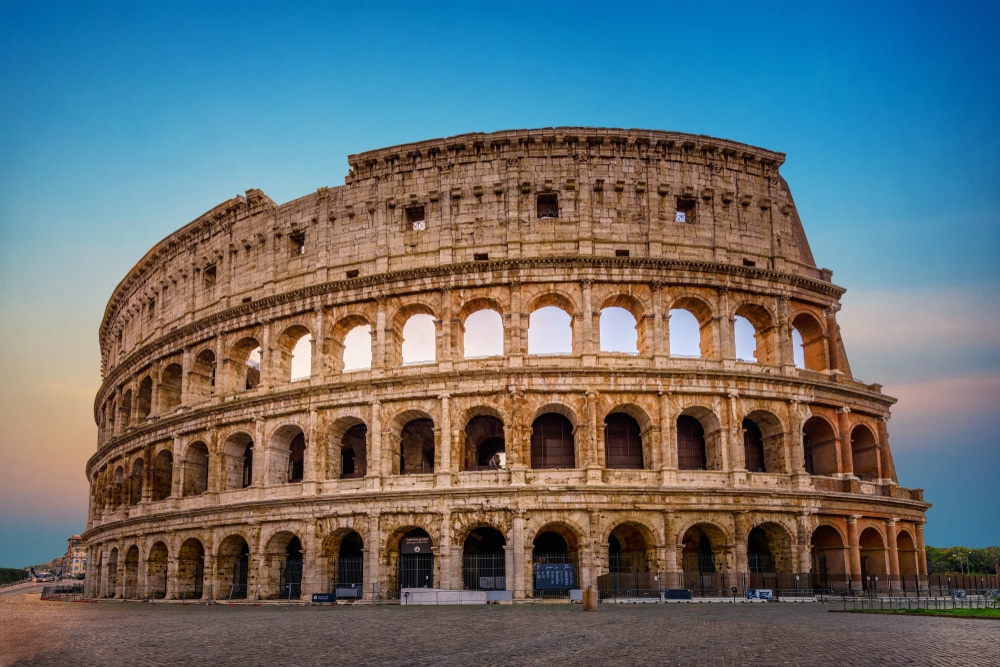
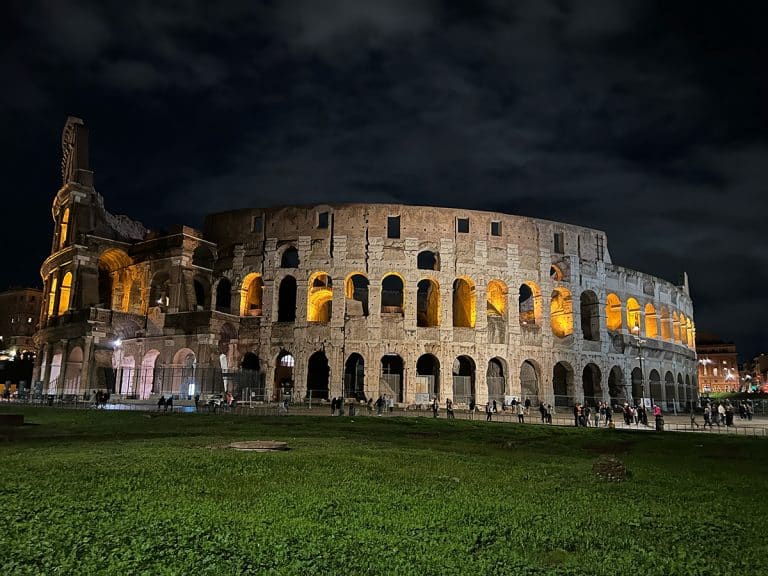
1st place: The Colosseum in Rome
As the capital of Italy, Rome is worth a trip in itself and offers a wealth of sights. The Spanish Steps and Castel Sant’Angelo are just two of them. By far the most tourists, however, go to the Colosseum in Rome, which is the largest enclosed building in Roman antiquity, which is excellently preserved. Today, the Colosseum is not only the landmark of Rome, but of all of Italy and is simply a top sight on a holiday in the country. You should definitely join a guided tour to learn more about the history and especially the spectacular gladiator fights.
Rank 2: The Leaning Tower of Pisa
The cathedral and the leaning tower of Pisa, Image: f11photo / shutterstock
The Leaning Tower of Pisa, which is 56 meters high in total, is the second major attraction in Italy. Shortly after its construction in the 12th century, the tower began to tilt. Today, the slope is about four degrees, which is impressive. The Leaning Tower of Pisa is one of the most famous photo motifs in Tuscany. As for most sights in Italy, the same applies to the tower: Tickets for the ascent are best bought online before the visit. In this way, you can avoid the sometimes very long waiting times on site.
Rank 3: St. Peter’s Basilica
If you are planning a visit to the world-famous Colosseum, you should not miss St. Peter’s Basilica. This is also located in Rome, so that both buildings can be combined well. Located in St. Peter’s Square in Rome, it is one of the most important churches in the world and is a popular pilgrimage site. Above all, its size is impressive: St. Peter’s Basilica can accommodate up to 2,000 people.
4th place: The Trevi Fountain
The Trevi Fountain without water in October 2024, Image: Patrick Jullien / Travel Magazine Online
The Trevi Fountain is another attraction in Rome, and if you look at its visitor numbers, it is also one of the most visited sights in Italy. No wonder, because it is considered the most famous fountain in the world. You should not miss throwing a coin into the fountain, because then you will surely come back to Rome, according to legend. If you throw two coins into the fountain, you will fall in love in the near future. The Trevi Fountain is a whole 50 meters wide and with the figures of Neptune and many other well-known Roman gods a popular photo motif.
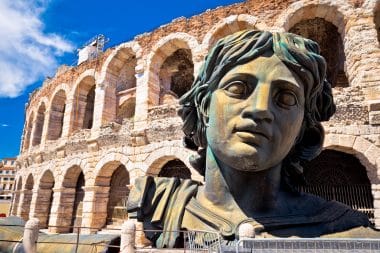
Rank 5: The Arena of Verona
The Arena of Verona, Image: xbrchx / shutterstock
Much like the Colosseum in Rome, the Verona Arena was built for gladiatorial fights. The arena is not quite as big as the Colosseum, but it is still worth a visit. The reason: The amphitheater in Verona is excellently preserved and is still used today for the performance of open-air plays. An opera performance at the Verona Arena is an unforgettable experience!
Rank 6: Lake Garda
Lake Garda is the largest lake in Italy and, because of its mild climate, it is the perfect destination for many tourists. But the picturesque landscape is of course also a reason why so many holidaymakers are drawn to Lake Garda every year. Lake Garda is framed by the imposing peaks of the Alps, which is an excellent photo opportunity. Whether it’s a leisurely beach holiday or active leisure fun: Lake Garda offers something for every taste.
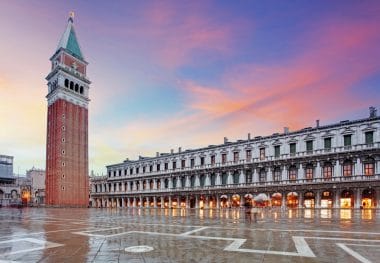
Rank 7: St. Mark’s Square in Venice
St. Mark’s Square in Venice, Image: TTstudio / shutterstock
After Rome, Venice is the city that most tourists choose for a holiday. The central square from which you can start a sightseeing tour is St. Mark’s Square. Known primarily for its numerous pigeons, you can discover many other attractions on it. These include the world-famous Doge’s Palace as well as St. Mark’s Basilica. This is the most important church in the city and definitely worth a visit. The 175-meter-long and 82-meter-wide St. Mark’s Square is best visited in the evening hours, because then the atmosphere is particularly beautiful.
Rank 8: The Cathedral of Milan
The Milan Cathedral, Image: Boris Stroujko / shutterstock
The Milan Cathedral, which took almost six centuries to build and in which Napoleon Bonaparte played a major role, is another top highlight in Italy. You should definitely go to the cathedral terraces here, because the view from here of the fashion metropolis of Milan is incomparable. But even if you don’t want to make the climb, you’ll find beautiful photo opportunities: Equipped with plenty of marble and towers, Milan Cathedral is majestic to look at.
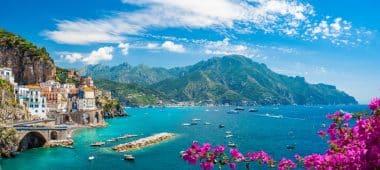
Rank 9: The Amalfi Coast
Atrani on the Amalfi Coast, Image: Balate Dorin / shutterstock
In the southwest of Italy is the beautiful Amalfi Coast. When driving on one of the most popular coastal roads in Europe, you have a fantastic view of the Mediterranean Sea from everywhere. Not to forget the numerous small villages, some of which are picturesquely built into the mountain. Is it any wonder that the Amalfi Coast has been declared a World Heritage Site by UNESCO?
Rank 10: The Cathedral of Florence
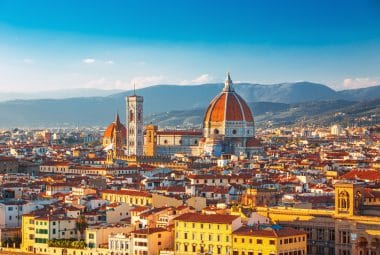
View of Florence and the cathedral, Image: RastoS / shutterstock
If you are interested in imposing buildings, you should also pay a visit to the cathedral in Florence. This Renaissance masterpiece is an incredible 107 meters high. This makes it one of the largest churches in the world. You have a great view over Florence from the church dome. However, you first have to climb 463 steps to get there.
A holiday in Kos combines relaxation, culture and active sports opportunities in an informative, diverse and varied way. Whether it’s a relaxing or active holiday – endless beaches, unspoilt nature, historical sites, an exciting nightlife and the wide range of sports on offer an always charming and convincing holiday flair with guaranteed sunshine. Shallow and fine sandy beaches, ancient buildings, monuments and cultural assets as well as idyllic villages in the interior offer a wide mix for every guest and visitor of this Greek sunny island.
The most popular places and landscapes in Kos
Mountain village of Zia
Zia on Kos, Image: Esin Deniz / shutterstock
The village at the foot of Dikeos (846m altitude) is about 15 kilometers from Kos Town and offers probably the most beautiful sunset view in Greece. In this idyllic mountain village at 300 meters above sea level, various taverns, restaurants, souvenir shops and regular folkloric events provide variety and entertainment.
In addition, a very popular hiking trail begins here, which leads to the summit of the Dikeos Mountains. Here, too, the visitor is offered a fantastic view of Zia, the neighboring islands and the wider mainland.
Tigaki
The beach of Tigaki, Image: wjarek / shutterstock
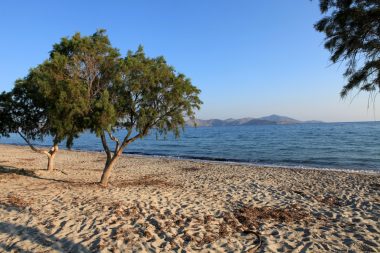
The small village (about 250 inhabitants) is characterized by a spacious sandy beach, which offers a very beautiful panoramic view of the island of Pserimos in the opposite direction. Visitors will never get bored in view of the numerous gastronomic offers on the beach and in the village itself.
Marmari
The popular holiday resort offers a variety of tourist opportunities and fields of activity. The wide and fine sandy beach, the selection of water sports and many taverns, cafeterias and restaurants in the typical style of the country enhance the place as a real “hotspot”.
Kéfalos Peninsula
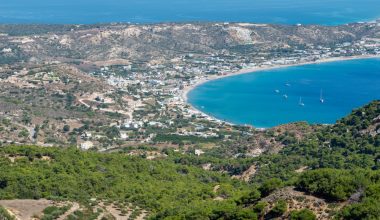
View of Kefalos, Image: Natascha Kaukorat / shutterstock
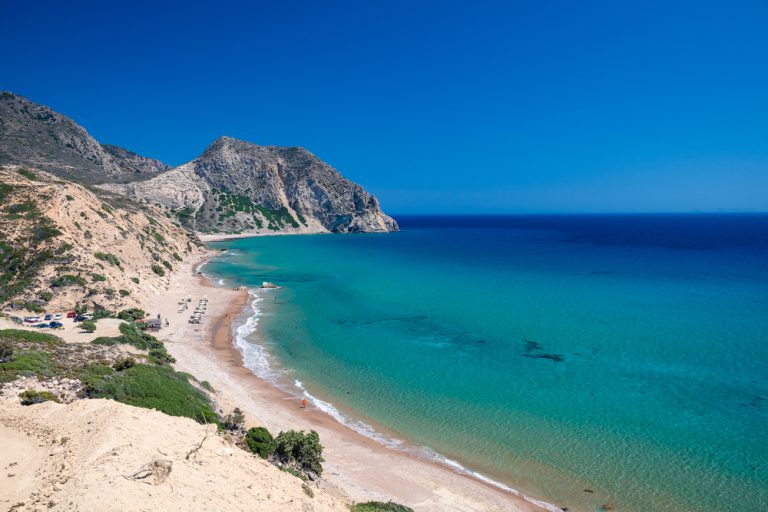
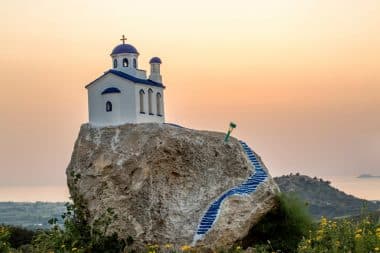
The small peninsula with its main town of Kefalos has still retained a very natural and home-related charm despite all the tourist development and orientation. An abandoned monastery, the ruins of an old castle and a chapel worth seeing bear witness to the history and history of the region.
In the region, you can also visit the traditional coffee house called “Niotis”, the famous “Windmill of Papavassilies” and formerly inhabited cave passages. The clean beaches with crystal clear waters around Kefalos with its narrow and winding streets offer many opportunities for recreation, relaxation and active water sports.
Pyli
The Lion’s Head Fountain, Image: Wojtek Jarco / shutterstock
Located about 17 kilometers from Kos Town, the place is best known for its lion’s head fountain from 1592 in the village center, from which the locals still supply themselves with the precious water. The area near the Dikeos mountain range with its green and fertile slopes is dominated by agricultural cultivation, with the historical ruins of the former city of Palio Pyli above the current location.
In the immediate vicinity of the village square stands a traditional and very well-preserved farmhouse, where visitors can directly and directly experience and practically understand the living conditions of past generations at that time.
Kardamena
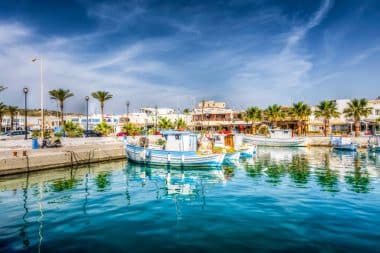
The small harbour of Kardamena, Image: Nejdet Duzen / shutterstock
The former fishing village, about 30 kilometres from Kos Town, offers a spacious beach with azure water, numerous attractive offers of water sports and cultural attractions such as the Temple of Apollo and an ancient theatre. The town, which is rather sleepy during the day, is famous and notorious for its intense and vibrant nightlife.
Numerous bars, British pubs and restaurants offer plenty of variety and entertainment, especially for young people. In addition, the lively clubs and discotheques include exceptionally long opening hours for discerning party fans and persistent night owls.
When you think of Catalonia, the first thing that comes to mind is the breathtakingly beautiful Costa Brava, dazzling Barcelona, the famous architecture of Antoni Gaudí or the picturesque works of Salvador Dalí. But the region in the far northeast of Spain has much more to offer: hidden paradises climb up between lonely bays, small lively villages and wildly romantic mountain ranges that you won’t find anywhere else in Spain. Catalonia has an immense cultural and landscape diversity that will immediately captivate you as a visitor. Book one of the beautiful holiday homes and let yourself be enchanted by the beauty of Catalonia.
Special features in Catalonia
As Catalonia is by far the most varied region of mainland Spain, it is ideal for every type of holiday. From extensive green forests in the low mountain ranges to picturesque high alpine Pyrenees and agricultural lowlands to steep rocky coasts or extensive sandy beaches – in Catalonia you will find everything that makes your holiday heart beat faster.
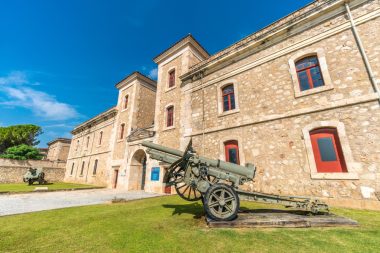
Castell de Sant Ferran in Figueras, Image: Manuel Ascanio / shutterstock
But the region not only inspires with its unique panoramas, but also with its cultural treasures: history lovers will also get their money’s worth on a holiday in Catalonia. Thus, medieval monasteries stand out among dreamlike mountain landscapes and tell the pre-Roman history of Catalonia within their religious walls. So soon listen to the historical legends and heroic stories and set off on the time-honored path of the Iberians. You can then round off your trip through Catalonia with a delicious wine from the region, so that your stay is the perfect end.
But if that’s not enough, you can admire world-famous sights and attractions such as the Sagrada Família in Barcelona or the Castell de Sant Ferran, which will give you wonderful insights into the glorious and progressive architecture of Catalonia at the time. After an exciting sightseeing tour, the day can be ended with a relaxing walk through the romantic mountain landscapes or Park Güell.
Catalonia in a nutshell – What you should know
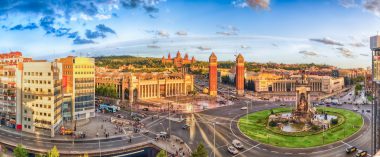
The Place d’Espanya in Barcelona, Image: Marco Rubino / shutterstock
Catalonia is located in the northeast of the Iberian Peninsula and is considered an autonomous Spanish region. While the Pyrenees form the natural border with France in the north, the Mediterranean Sea separates the region from other countries in the east. To the west is the autonomous Spanish community of Aragón, to the south on the southeast coast the region of Valencia.
With an area of about 32,000 square kilometers, Catalonia is about the size of Belgium and is home to around seven million inhabitants. From an economic point of view, the whole region can be considered the strongest area in the whole of Spain , which also plays a leading role in the European market. Together with the regions of Lombardy in northern Italy, the Rhône-Alpes in France and Baden-Württemberg in Germany, Catalonia is one of the four most powerful economic areas in the European Union.
The booming city of Barcelona in particular scores at this point not only with a strong industry and a passable gross domestic product, but also with an extensive tourism sector that can record more than ten million holidaymakers per year. Since you have probably already heard a lot about Barcelona, we would like to introduce you to other Catalan highlights in this article, which are no less worth seeing than the dazzling metropolis.
The coast – the eternal water
A rental car is a fabulous way to start a trip to the white beaches of Catalonia. The Catalan coast has an eternally long and, above all, fantastic route of around 580 kilometres, which literally invites you to drive along and discover.
If you want to avoid the mass tourism on the popular Costa Brava, you can stop at many small fishing villages on your trip, which are typically located on the rocky coast and have still retained their old charm after all these centuries. Divers will also get their money’s worth on this part of the coast, as breathtaking flora will await them in addition to exotic creatures.
South of Barcelona now stretches the second large Catalan coastal section, which is also called Costa Daurada. This section is also popularly known as the Golden Coast , as it has miles of sandy beaches. Accordingly, this part of Catalonia is once again a popular tourist magnet. If you want to make your way south and travel a bit far away from the tourist crowds, you will come across natural spectacles in a class of its own again at some point in the Ebro Delta. The European nature reserve scores with its tranquillity and solitude, which are sometimes interrupted only by rare bird species.
The interior – romantic mountain ranges
If you are more of an active holidaymaker and want to avoid crowded beaches, Catalonia’s mountain ranges are ideal for climbing and hiking. The Pyrenees enchant numerous holidaymakers every year and offer not only an excellent view of the region, but also of neighbouring France.
The rest of the area can also score with numerous smaller mountain ranges. For example, on Montserrat, a bizarre sandstone mountain range northwest of Barcelona, you can visit the Montserrat Monastery, which is still considered a landmark of the region today. The monastery was founded as early as 880 and is still considered a national shrine today.
No matter which place you choose in Catalonia, a trip to the northeast of Spain offers something for every type of holiday, so you will definitely collect unforgettable impressions and memories
Not far from the Sicilian coast lies Salina, the second largest island in the Aeolian archipelago. The small volcanic island in the Tyrrhenian Sea is known for its landscape, beautiful nature and a few tranquil villages. Largely spared from tourism, Salina is considered a special place of peace and bears the beautiful title “Isola Slow”.
Salina – The Green Island
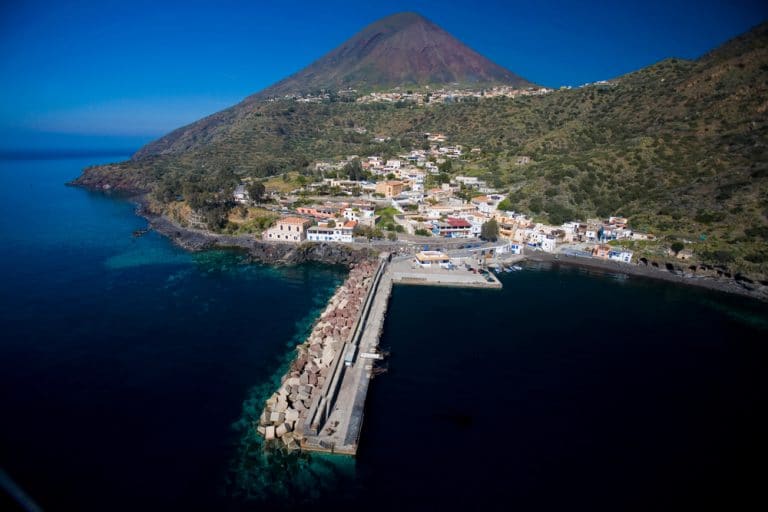
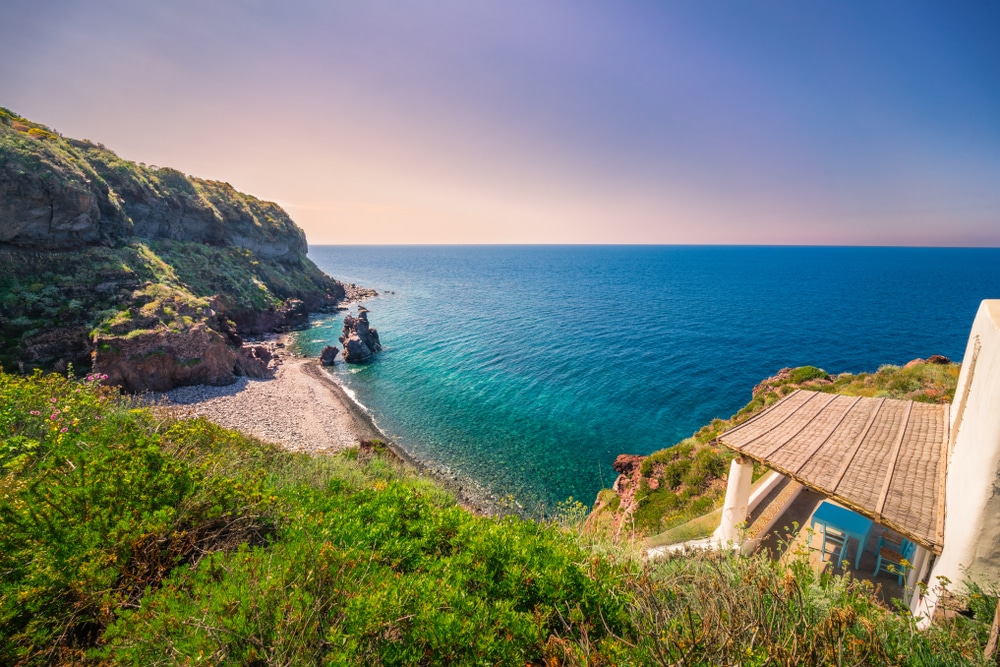
View of the picturesque coast of Salina, Image: Emilio messina / shutterstock Traditionally, Salina is vitiated and capers have also been grown on the small island since time immemorial. More than 30 years ago, the island was placed under nature conservation. The great special feature of Salina is the sustainable tourism concept, because there are no bed castles on the idyllic island and are not planned. Rather, the focus is on preserving the natural beauty and appealing to nature-loving tourists who want to escape the stressful everyday life.
Enjoy with all your senses
Exploring Salina is a special experience, because the green island landscape invites you to long hikes. The landscape is characterized by two volcanoes, whose slopes are now densely overgrown, because the volcanic soil is particularly fertile and ideal for viticulture and agriculture. The lack of beaches makes the island uninteresting for typical beach vacationers, but for nature lovers and those in need of peace and quiet, the island is a paradise. If you still want to enjoy a little cooling in the sea after a hike, you can visit a small swimming strip between Rinella and Lingua. But the charm of the island lies in the fact that you can see, feel and even smell the beautiful nature here. Dreamlike avenues of acacia trees attract visitors to Salina, as do the fishing ports of Santa Marina and Rinella, which are located on the steeply sloping coast and are one of the few villages on the island. If you spend a few days on Salina, you will find that you can also taste nature, because the island’s cuisine relies on the local food, so that the dishes are particularly tasty.
Deceleration – not a conscious decision on Salina
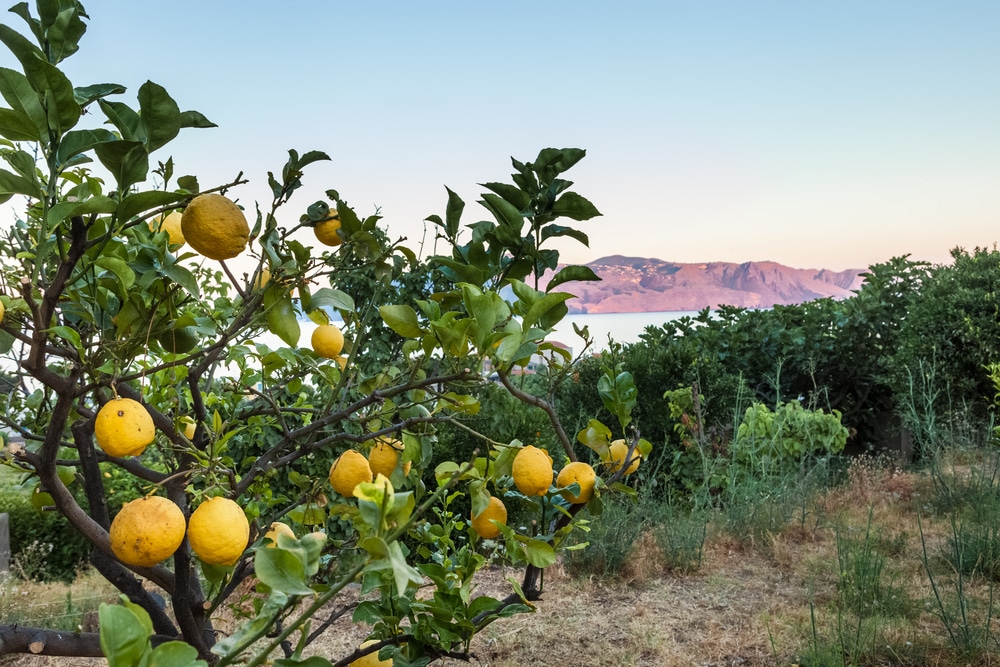
The scent of fresh lemons is in the air, Image: Alfiya Safuanova / shutterstock There are hardly any cars on Salina, because both the locals and the tourists rely on scooters or walk. It is remarkable that everything happens more slowly on Salina. Even if the women perform at their best during the caper harvest, for example, they still seem calm and balanced. However, a lot of patience is required during processing and so the calm heartbeat of the island embraces both the locals and the visitors. Everything is quiet on Salina and there is no noise in the few villages, only the church bells are a bit louder. The pilgrimage church of Madonna del Terzito is also a place of peace and contemplation. It is considered the oldest Marian sanctuary in the archipelago was built on the foundations of a Roman temple. Visitors can enjoy absolute peace and quiet on the way to the volcanic craters of the volcanoes Monte Fossa delle Felci and Monte dei Porri. But hikes also seem to be a little slower on Salina, because again and again beautiful places invite you to linger.
General information
Layer: Salina is part of the Aeolian (or Lipolian) Islands and is located in the Tyrrhenian Sea, north of Sicily, Italy. It is the second largest of the Aeolian Islands.
Area: The island has an area of about 27 square kilometers.
Population: Salina has a population of about 2,500 inhabitants, spread over several villages.
Nature and Environment:
Volcanic origin: The island is of volcanic origin, like all the Aeolian Islands. It consists of two inactive volcanoes, Monte Fossa delle Felci (962 m) and Monte dei Porri (860 m). Monte Fossa delle Felci is the highest point on the island and the highest volcano in the entire archipelago.
Emerald Isle: Salina is often referred to as the greenest island of the Aeolian Islands. The fertile volcanic soils favor the cultivation of wine, capers and olives.
Flora and fauna: The island is rich in vegetation, including dense forests, olive groves, vineyards and fields of caper plants. It is also home to some rare species of birds and endemic plants.
Tourism:
Beaches: Salina has several beautiful beaches with clear waters, including the popular Pollara beach, which is located in a half-submerged volcanic crater and is known for its picturesque sunsets.
Wander: There are many hiking trails that lead through the green hills and mountains of the island. One of the most famous routes is the ascent to Monte Fossa delle Felci, from the summit of which you can enjoy a breathtaking view of the Aeolian Islands and the Tyrrhenian Sea.
Wine and capers: Salina is known for its sweet Malvasia wine and high-quality capers. Many wineries offer tastings, and there are numerous restaurants that offer local specialties.
Pollara: Pollara is a small village and famous as the filming location of the 1994 film “The Postman” (“Il Postino”). It attracts movie buffs who want to experience the stunning setting.
Reachability:
Ferries: Salina is easily accessible by ferries and speedboats. There are regular connections to Salina from the neighbouring islands as well as from Sicily, especially from Milazzo and Messina.
Transportation on the island: The island has a well-developed road infrastructure, and there are bus connections between the villages. Many visitors also explore the island by bike or on foot.
Special features:
Villages: Salina has several charming villages:
Santa Marina: The largest village and main port on the island, known for its shops, restaurants and picturesque streets.
Malfa: Another important village, famous for its wineries and its proximity to the most beautiful beaches.
Leni: A smaller village near Monte Fossa delle Felci, from which hikes start.
Nature reserves: A large part of the island is part of the “Riserva Naturale Orientata delle Montagne delle Felci e dei Porri” nature reserve, which protects the volcanic peaks and the surrounding nature.
Economy:
Agriculture: Salina is famous for the cultivation of capers, which are among the best in the world, as well as for viticulture, especially Malvasia wine. Agriculture is the main source of income on the island, along with tourism.
Tourism: Tourism plays an increasingly important role in the island’s economy, especially sustainable and ecological tourism that respects Salina’s nature and culture.
Culture:
Stronghold: Salina has a rich cultural tradition, and there are many religious and cultural festivals throughout the year. One of the most important is the feast of the patron saint of the island, the Madonna del Terzito, which is celebrated in July.
Culinary tradition: In addition to the famous Malvasia wine and capers, the island is known for its fresh seafood and traditional Sicilian cuisine. Many dishes rely on the local cultivation of ingredients such as tomatoes, olives and eggplants.
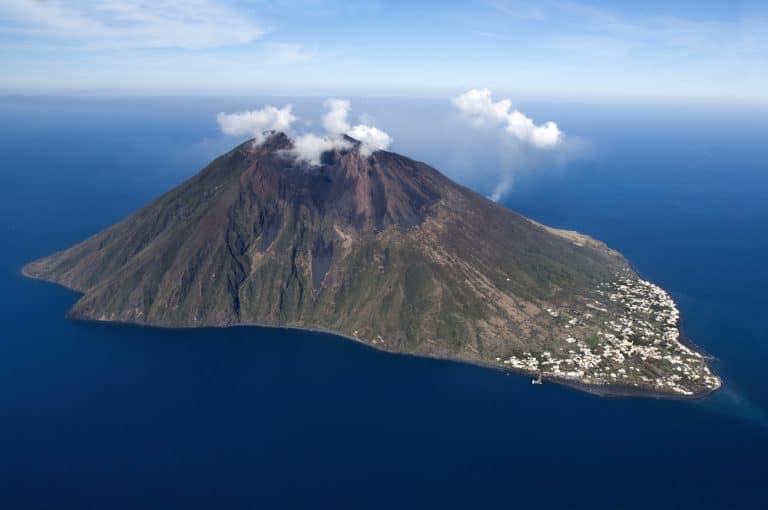
The island of Stromboli is one of the Aeolian Islands and is located off the coast of Sicily. The island is characterized by the Stromboli volcano of the same name, whose volcanic activity allowed the island to tower above sea level in the first place.
Viewed from the sea, the island has the shape of a cone, as the volcano occupies almost the entire area of the island, which is 12.6 square kilometers. The highest point of the island is located at the top of the volcano and is 926 meters above sea level, which is very exceptional for such a small island.
The name of the island comes from Greek and is probably due to sailors from ancient Greece . Translated, the name of the island is said to mean “round island”, as the volcano formed the island in a round shape due to its nature as a stratovolcano.
Stromboli can now be reached by boat from Naples, Milazzo and Messina.
The inhabitants of the island
Image: bierchen / shutterstock
Even today, Stromboli is sparsely inhabited. The volcanic mountain makes it largely impossible to build villages on the island. Since there is no space for fields or pastures, not many people on the island were able to supply themselves with food in the past.
A total of 572 people live on Stromboli spread over two villages. In the northeast of the island is the largest settlement on the island, which is also called Stromboli. Over time, it has grown together from several smaller villages and today forms the center of the island.
In the southwest of the island there is still the village of Ginostra. However, only 30 people live here, isolated by land from the rest of the island’s inhabitants. To get from Ginostra to the village of Stromboli, you would have to climb the volcano. That’s why boats run regularly between the two villages.
There are almost no cars on the island. Only in the larger village of Stromboli there are some cars, but there are also some electric scooters and small trucks here.
Sights of the island
The reason why most people visit the island is because of the volcano. It is one of the few still active volcanoes in Europe and is therefore a popular destination for people who want to experience the power of nature.
The volcanic crater can be reached from the two villages of the island, but an ascent from the village of Stromboli is much more common than from Ginostra.
Image: Alfiya Safuanova / shutterstock
It is forbidden under penalty to climb the volcano alone. Tourists can group up and then climb the volcano under the guidance of a local guide. The ascent takes several hours and is very strenuous, especially in summer under the strong southern Italian sun. So if you are considering the climb, you should have sufficient fitness and safe footwear, as the paths are covered by scree.
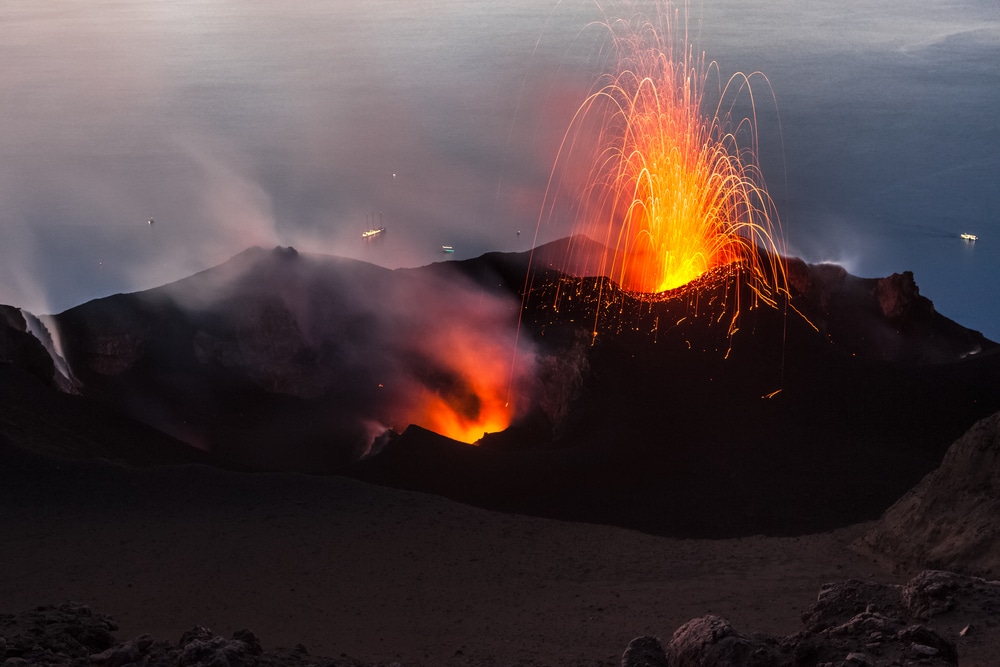
The ascent usually starts in the afternoon so that the summit can be reached at nightfall. Because then visitors can better observe the small, regular eruptions of the volcano. Small lava fountains and clouds of smoke almost always rise in the crater of the volcano.
On the northwest side of the crater, a steep slope has formed, known among locals as the “fire slide”. During larger eruptions, the lava flows from the crater into the sea.
General information
Layer: Stromboli is a small island in the Tyrrhenian Sea, belonging to the Aeolian Islands (or Aeolian Islands), located north of Sicily in Italy.
Area: The island has an area of about 12.6 square kilometers.
Population: Stromboli has around 500 permanent residents, although this number rises sharply in the summer months due to tourists.
Volcano:
Active volcano: Stromboli is known for its active volcano, which is one of the most active in the world and erupts almost continuously. It is often referred to as the “lighthouse of the Mediterranean” because its eruptions are visible from afar.
Activity: The volcano often displays small explosions that eject ash and lava chunks into the air. Larger eruptions occur less frequently, but there is always the possibility of a stronger eruption.
Nature and Environment:
Landscape: The island has a steep, volcanic landscape with black beaches created by the volcano’s lava flows. The highest point of the volcano is about 926 meters above sea level.
Cliffs and coves: In addition to the black beaches, there are also steep cliffs and rocky coves that characterize the coast of Stromboli.
Tourism:
Volcano hikes: One of the most popular activities on Stromboli is the guided hike to the crater rim of the volcano, from where you can observe the volcanic activity at night. The hike requires a certain level of physical fitness and should only be undertaken with a licensed guide.
Beaches: Stromboli also offers some secluded beaches such as the Spiaggia di Ficogrande, known for its volcanic black sand beaches.
Boat: Boat tours around the island are also popular, where you can explore the coastline and the neighboring, uninhabited island of Strombolicchio, a small rock in the sea.
Reachability:
Ferries: Stromboli is accessible by ferry from several cities in Italy, including Naples, Milazzo and Messina. In high season, there are more frequent connections, both by ferry and speedboat.
Transportation on the island: There are no cars on Stromboli, only small electric scooters or bicycles. Most people move along the coast on foot or by boat.
Special features:
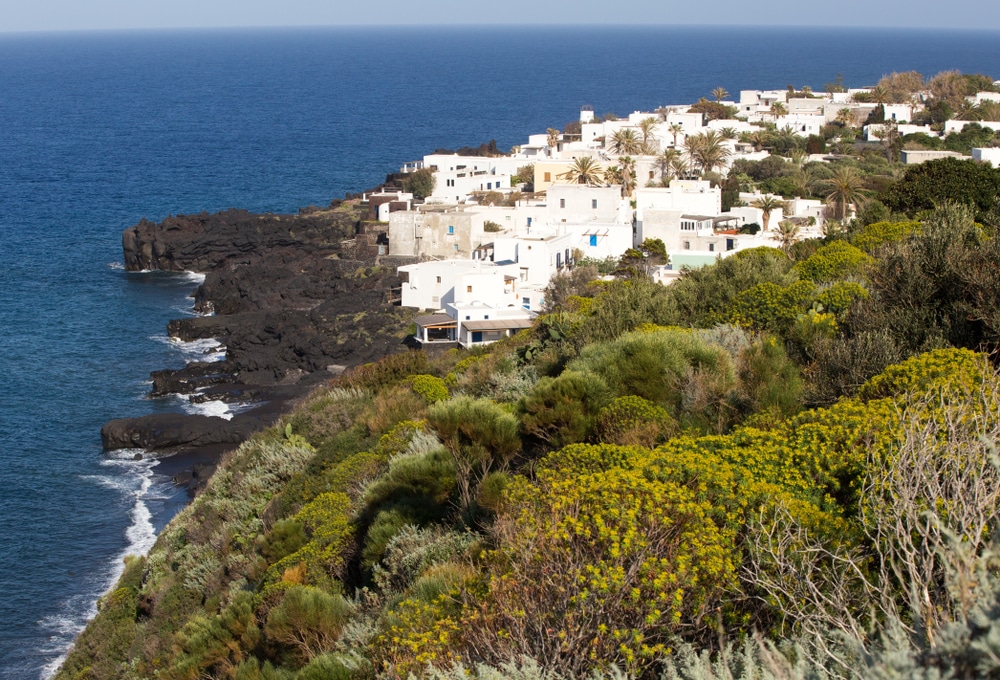
Village of Stromboli: The island’s main village, also called Stromboli, is located on the slope of the volcano and offers charming white houses, narrow streets and a relaxed, idyllic atmosphere. There is also the smaller village of Ginostra, which is only accessible by boat.
Strombolicchio: A small rocky island near Stromboli, on which an old lighthouse stands, is a popular destination for excursions by boat.
Safety: Due to the continuous volcanic activity, there are strict safety guidelines. Volcanologists constantly monitor the eruptions, and there are evacuation plans in case of emergencies.
Culture and history:
Mythology: In ancient Greek mythology, the Stromboli volcano was associated with the god of wind, Aiolos, who lived in the Aeolian Islands.
Celebrity: Stromboli became internationally known through the 1950 film “Stromboli” with Ingrid Bergman, directed by Roberto Rossellini.
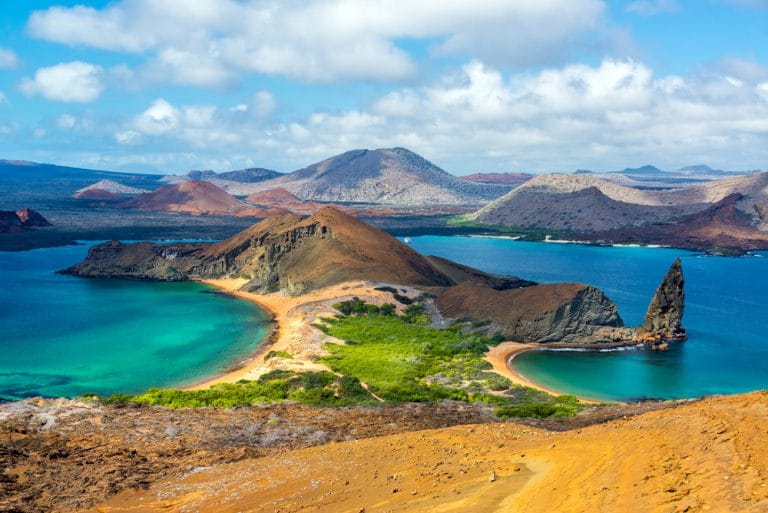
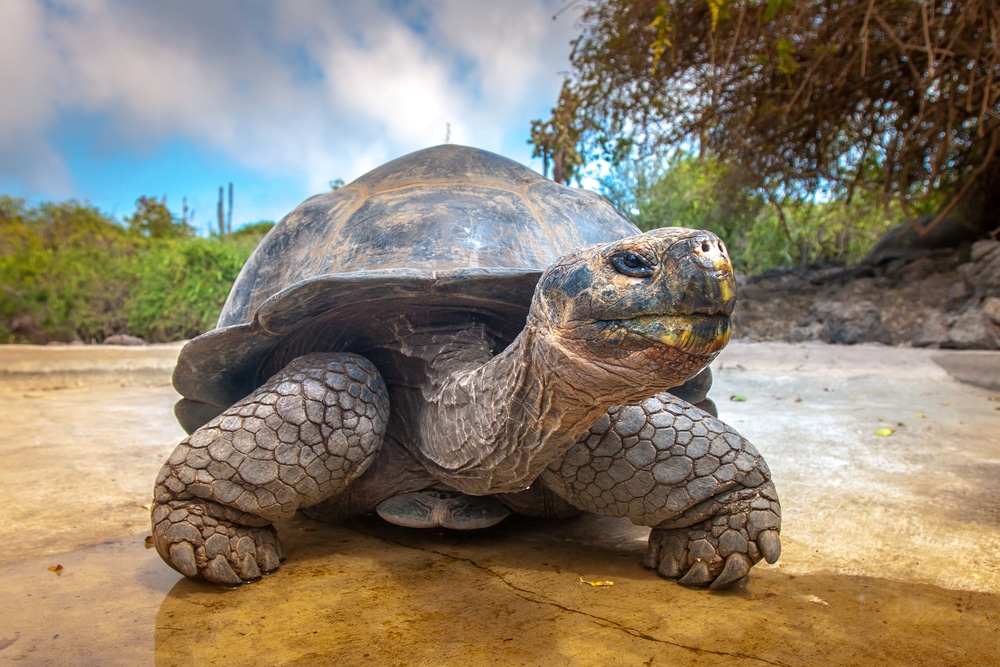
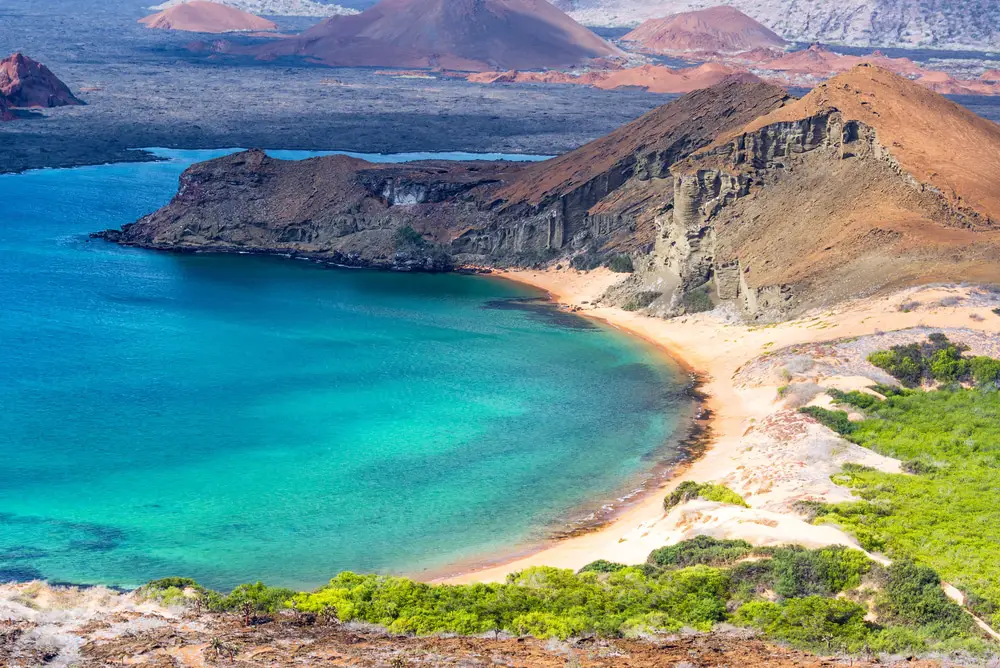
The Galapagos Islands are among the most famous archipelagos in the world. Above all, the extraordinary flora and fauna, which is also a UNESCO World Heritage Site, contribute to the level of fame. In particular, the Galapagos giant tortoises, which only occur on these islands, are well-known. This archipelago also owes its name to them. Galapago is Spanish and means “bulging saddle” and refers to the special shape of the shell of this turtle genus. Even though tourism is now the largest source of income on the Galapagos Islands, they can still be described as an insider tip.
General data about the Galapagos Islands
About 130 islands belong to the Galapagos Islands. However, only 13 of these islands have an area of 10km² or more. In total, the islands cover an area of about 80,000 km². Five of the islands are inhabited: Santa Cruz, San Cristobal, Isabela, Floreana and Baltra. A total of about 25,000 people live here. Baltra has no real settlement, but only a military base for about 400 soldiers.
History of the Galapagos Islands
Simply fascinating, iguanas on the beach of the Galapagos Islands, Image: Discover Marco / shutterstock The archipelago was discovered in 1535 by the Spaniard Tomas de Berlanga (then Bishop of Panama). He lost his way on his way to Peru and stranded on one of the volcanic islands. It is said that large parts of the ship’s crew could only survive by eating sea lions and giant tortoises. In the 17th century, the islands offered excellent hiding places for pirates and buccaneers. 200 years later, the island was taken over for Ecuador and renamed Islas Galapagos. They gained fame above all through the visit of Charles Darwin, who later became famous for his theory of evolution, which was founded on the Galapagos Islands. At the beginning of the 20th century. barely more than 400 people lived on the islands. The population has only been rising steadily for a few decades. As early as 1968, most of the area of the islands was under the protection of national parks. Since 1978, the area has also been part of the UNESCO World Heritage Site. In recent years, the protection of the areas has been continuously strengthened, so that the natural heritage has now been removed from the UNESCO Red List. https://youtu.be/uJbS9KWOIec
Sights of the Galapagos Islands
A holiday on the Galapagos Islands is only complete when a wide variety of archipelagos, some of them tiny, have been visited and a whole army of different animals has been observed. Pure nature is the motto here – because the Galapagos Islands have plenty of it to offer. Among the most interesting islands are:
Isabela
The giant tortoise on the Galapagos Islands, Image: FOTOGRIN / shutterstock Isabela is the largest of the islands, home to one of the three airports, making it the center of most vacations in the Galapagos Islands. But that’s not all, Isabela also has a lot of fantastic natural wonders to offer. Five volcanoes have melted into each other to form this island. The Sierra Negra volcano is one of the most active volcanoes in the entire archipelago. Its crater has a diameter of about ten kilometers. The ascent is long and arduous at just under six hours, but is rewarded with fantastic views. If you want to take it easy, you should definitely take your first boat or snorkel tour through Los Tuneles on Isabela. The variety of marine life is gigantic. Sea turtles, seahorses and fish of all sizes, colours and shapes can be observed here. At Las Intoreras there is also the chance of small crabs and Galapagos penguins, at Concha de Perla even sea lions.
Floreana
This island is known less for its nature than for its history. Of course, that doesn’t mean it’s not beautiful to look at (it’s just that there aren’t unique natural spectacles like on other islands). In the 17th century, Floreana was settled by pirates. There were two main reasons for this choice:
The Spanish gold ships had to pass nearby on their way back to Europe and
The island offered hiding places and even more important: drinking water!
Darwin & Wolf Islands
Image: Jess Kraft / shutterstock The highlight for divers on the Galapagos Islands are the two small islands in the northwest of the group: Each of the two islands has an area of only about 1 km². The islands are named after Charles Darwin and Teodore Wolf, two world-famous naturalists. Very few people live here, but all the more lizards and birds, including the rare vampire finch, which feeds on the blood of other birds. Under water, in addition to sea turtles and manta rays, unusually large schools of hammerhead sharks and whale sharks can be observed. Dolphins, orcas and whales are also frequent visitors. It is particularly important for these islands that very few tour operators have a license to offer tours to these islands, which are under strict nature conservation.
Plaza Sur
A nice little trip can also be made to the island of Plaza Sur. The crater of a volcano forms a natural harbor basin where the excursion boats can dock. A circular hiking trail across the island offers the opportunity to observe sea lions, lizards, birds but also rare plants such as Sesuvium.
Important information for your trip to the Galapagos Islands
1. Travel preparation
Visa and entry: German citizens do not need a visa for Ecuador, including the Galapagos Islands, for stays of up to 90 days. Your passport must be valid for at least six months.
Flights: There are no direct flights from Germany to the Galapagos Islands. Usually, you fly to Quito or Guayaquil in Ecuador and from there on to Baltra or San Cristóbal in the Galapagos Islands.
Transit Control Card (TCT): Upon arrival in Ecuador, you will need to fill out a TCT card (costs about $20 USD). She is checked when entering the islands.
National Park Entrance Fee: Upon arrival in the Galapagos Islands, you will have to pay a fee of USD 100 (as of 2024) for the national park.
2. Health and safety
Vaccinations: Standard vaccinations (such as tetanus, hepatitis A) should be up-to-date. Malaria is not common in the Galapagos Islands, but insect repellent is still advisable.
First-aid kit: Since medical care is limited on the islands, you should bring a well-stocked first-aid kit, including sunscreen, seasickness medication, and gastrointestinal disorders.
Travel insurance: A good travel insurance with repatriation is recommended, as medical emergencies can be costly.
3. Clothing and equipment
Awning: The sun in the Galapagos Islands is intense. Bring high SPF sunscreen, a sun hat, and sunglasses.
Comfortable clothing: Light, breathable clothing for warm weather as well as swimwear and snorkeling equipment (if not provided) are useful. Sturdy hiking shoes are also advisable, as some islands are volcanic and rocky.
Snorkeling and diving: The waters around the Galapagos Islands are world-famous for their rich marine life. If you want to snorkel or dive, you can rent equipment on site, but your own equipment is often more convenient.
4. Environmental awareness
Sustainability: Galapagos is a specially protected area. Make sure to respect the strict environmental regulations. Avoid plastic waste, keep your distance from the animals and do not touch them.
Water scarcity: Fresh water is scarce on the islands. Avoid unnecessary water consumption and use reusable water bottles.
5. Travel time
Best time to travel: The Galapagos Islands can be visited all year round. The warm months (December to May) offer more pleasant temperatures and calmer waters, ideal for snorkeling. The cooler season (June to November) is ideal for wildlife viewing, as more marine life is encountered.
6. Wildlife Observations
Unique wildlife: The Galapagos Islands are home to many endemic animal species, such as the Galapagos giant tortoise, marine iguanas and blue-footed boobies. A guided tour with a licensed naturalist guide is ideal for learning more about the animals.
7. Island hopping
Transport: The islands are only connected by boat or plane. Island hopping is a popular way to explore multiple islands. Find out in advance about ferry times and internal flights, especially in high season.
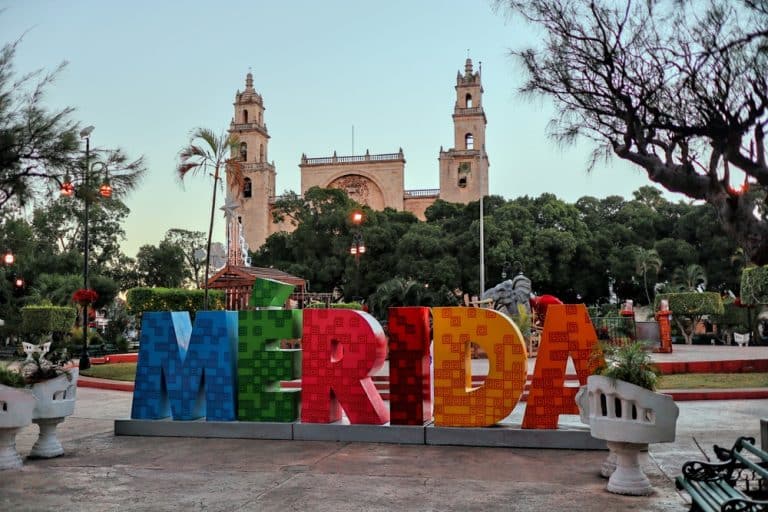
Fascinating history, colourful festivals and beautiful architecture: Mérida should be on the itinerary of a trip to Mexico. The colonial-style city is not as well known to tourists as Cancún – so you should not miss this insider tip. So Vámanos! Let’s go to Mexico!
Mérida has a unique cityscape.
The capital of the state of Yucatán was founded back in 1542. Mérida was built on the ruins of the former Mayan city of T ́Hó. The name “White City” has its origin in the frequent use of white limestone in urban construction. Since Mérida is known as one of the safest cities in Mexico, there is nothing wrong with a city walk where you can admire the well-preserved colonial architecture. You can learn more about its history at the Museo de la Ciudad de Mérida (Museum of the City of Mérida). You should definitely see the cathedral of Mérida: San Ildefonso. The church, which is more than forty meters high, consists of parts of a Mayan temple and is one of the oldest cathedrals on the American continent. The Plaza de la Independencia, a well-known public square, is just a few metres away. From here you can admire another imposing building in the city: the pink Palacio Municipal. The town hall is known for its striking clock tower. The Mercado San Benito street market is also noteworthy. With a little haggling, you can pick up the most exotic fruits here at a reasonable price.
Festivals that you have to see.
In February, the “Carnaval de Mérida“ is cheerful and carefree. Here, people dance and celebrate in the streets in magnificent costumes. The whole of Mérida becomes one big party! In addition to the many parades, many special activities for children are also offered. “Hanal Pixán” refers to the Mayan variant of the well-known “Dia de los Muertos” (Day of the Dead). There are various performances such as the re-enactment of a Mayan ball game. A bicycle parade with make-up and costumed residents drives through the city center and old Mayan stories are read aloud. If it’s not too scary for you, you can also take part in a guided, nocturnal cemetery walk. The celebrations around Hanal Pixán begin in the last week of October and last about two weeks.
Excursions
Chichen Itza
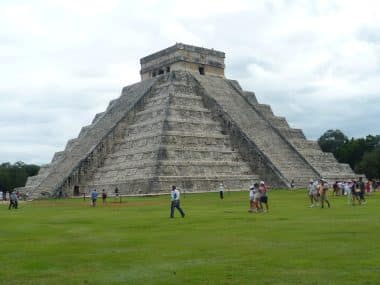
View of the Chichen Itzen excavation site, Image: Ingrid Müller
Every year, about two million visitors visit the most famous excavation site of the Mayan culture: Chichen Itza. The UNESCO World Heritage Site is one of the seven new wonders of the world. The large step pyramid is dedicated to the feathered serpent god Kukulcán. At the equinox, thousands of tourists flock to the 30-meter-high pyramid to see a special phenomenon: a shadow in the shape of a snake seems to snake down the stairs. For the Maya, this was a sign: Kukulcán had arrived. Near the pyramid you will find the large ball court, among other buildings. The ball, which weighs a kilo, only had to be manoeuvred through a stone ring with the hip, elbow or shoulder. A little further away is the Cenote Sagrado. Various rituals were performed in this sacred place. To honour the water god, gold, jewellery and ceramics were thrown into the water of the sink cave.
Celestún
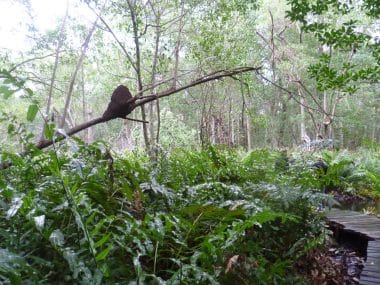
Boat trip through the mangrove landscape, Image: Ingrid Müller
The tranquil fishing village of Celestún has just 7000 inhabitants. Nevertheless, the gem on the Gulf of Mexico is worth a visit. The Ria Celestún Biosphere Reserve is home to more than a thousand exotic animal species. On a boat trip through the mangrove landscape, you can see flamingos or discover an ocelot or jaguar roaming around. Turtles feel at home in the reserve, as does the endangered Geoffroy’s spider monkey. However, you should keep your hands and feet in the boat during the trip: this is also the home of bubonic crocodiles and pointed crocodiles. In Celestún you can also be present at the harvest of sea salt . Fleur de sel has been harvested here for more than 1000 years. Nearby is the Palmar Lighthouse, which is one of the tallest lighthouses in Mexico at 39 meters. Celestún also makes the heart of fish lovers beat faster with its many restaurants.
Arrival and best time to travel to Mérida.
The Mexican city has its own airport and also a well-developed public transport network. If you prefer a rental car, renting from all major providers is possible without any problems. Mérida is best visited in the summer months from April to November. During this time, daytime temperatures will be between 20 and 35 degrees Celsius. In contrast to the winter months, there is almost no precipitation during this period.
Timeless marketing strategies are tactics that retain their effectiveness over time, regardless of technological changes and new trends. One of the most important is content marketing. By creating valuable content such as blog posts, articles, and videos, you can engage and retain your audience. The basic rule is to provide useful information, inform readers, and answer their questions to build trust in the brand and its authority. This improves search engine visibility and creates a lasting relationship with customers. Even with the advent of artificial intelligence and automation platforms, original content creation remains one of the most effective strategies for connecting with audiences.
Promotions and Discount
Promotions and discounts are important marketing tools because they incentivize purchases and create a sense of urgency in the consumer. With targeted promotions, you can attract new customers, retain existing customers, and free up inventory. Promotions can take many forms, such as percentage discounts, “buy one get one free,” free shipping, or special packages, and each type can be tailored to the company’s specific goals. Discounts not only encourage short-term sales, but also improve brand perception and give the impression of a company that values its customers and is willing to give them an exclusive advantage.
In addition, promotions are an effective way to stand out from the competition, especially in highly competitive industries. Regular promotional campaigns, such as seasonal sales or special occasion deals (e.g., Black Friday or Cyber Monday), create expectations among consumers and fuel a desire to take advantage of these opportunities. It’s important to plan promotions carefully so as not to devalue the product or reduce profit margins: overly frequent or poorly managed offers run the risk of making customers less inclined to buy at full price. A well-thought-out advertising strategy therefore helps to generate sustainable sales, increase brand value and strengthen the relationship with the public.
Word of mouth
Using referrals or word of mouth is another example of a timeless strategy. Even today, when online reviews and social media amplify the power of word of mouth, referrals from friends, colleagues, and family are still one of the most effective tools for attracting new customers. Companies can encourage this process through referral programs and reward those who share their positive experiences. Using word-of-mouth in combination with digital platforms is a good way to make this strategy relevant and an integral part of business marketing. Regardless of technological innovations, spontaneous and positive feedback will always be one of the most important drivers of growth.
Don’t forget the freebies
Another pillar of evergreen marketing is the use of personalized promotional items. For example, if you want to l Personalised bags lyou will receive a customer gift that is really useful. If the bag is used for shopping, your brand will gain more visibility, which will allow you to retain the existing customer and arouse interest in new customers at the same time. A technique that has retained its attractiveness and effectiveness over time.
Even in the digital age, physical giveaways such as printed bags offered by vendors such as Stampasi.de remain a valuable means of building brand awareness. Personalized bags are a practical and appreciated customer gift and an efficient medium to increase brand visibility. Bags printed with eye-catching logos and messages open up the possibility of building a lasting connection with the customer every time they are used and keeping the brand in their minds. Since bags are used in a variety of ways in everyday life, they are an ideal promotional item to ensure a long-term presence of the brand. Thanks to the wide range of design options and materials available from suppliers such as Stampasi, companies can find innovative and appealing solutions to showcase their brand while providing customers with functional, durable promotional gifts.
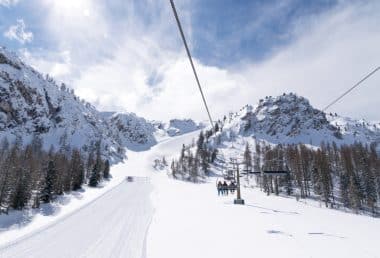
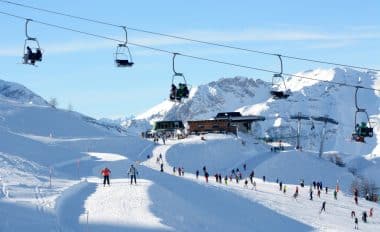
Italy is a popular destination for countless tourists in summer. But in addition to a lot of culture and beautiful beaches, the country also offers many attractions in the cold season. Skiers and snowboarders will find the best conditions for winter sports on the countless ski slopes in the mountains. Italy is bordered by mountains around its northern border.
The Alps separate the country from its northern neighbours Austria and Switzerland and connect the countries equally. One of the most famous mountains, Mont Blanc or “Monte Bianco” in Italy, is located directly on the border between France and Italy. With its height of over 4,800 meters, it is the highest mountain both in the Alps and in the European Union. The most famous part of the Italian Alps are the Dolomites, which are now a UNESCO World Heritage Site.
In this part of the Alps alone, 350 peaks with an altitude of over 3,000 meters await. It is therefore not surprising that some of the best ski slopes are located in the Italian mountains. In total, Italy attracts visitors in winter with over 5,000 kilometres of slopes and a number of more than 1,000 ski lifts. Everything from slopes for beginners to experts is included. In some places, World Cup downhill races take place regularly and the Winter Olympics have also used the well-developed slopes.
The Aosta Valley – Welcome to the highest ski area in Europe
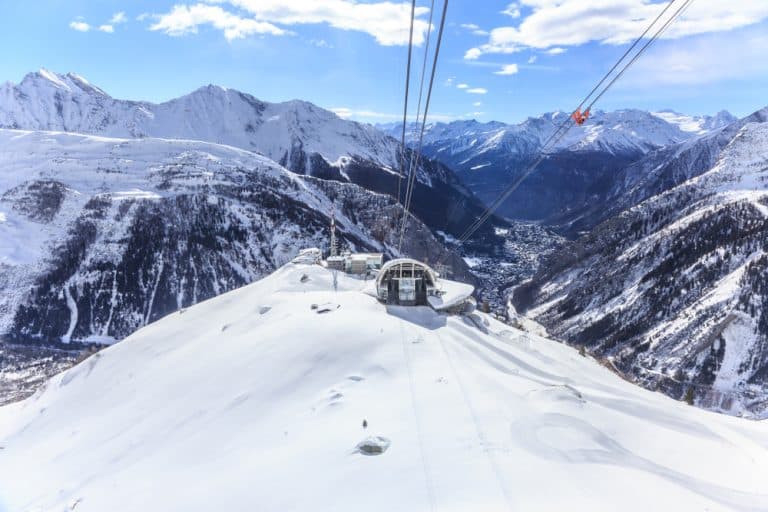
The majority of ski resorts in Italy are located in the Aosta Valley, South Tyrol and Trentino. The Aosta Valley is located in the northwest and borders Switzerland and France. One of the largest ski resorts there is Courmayeur with its 100 kilometres of slopes. From an altitude of 2,200 m, the area offers guaranteed snow between November and April. The Breul-Cervinia ski area is located on the Matterhorn, which is part of the “Matterhorn Ski Paradise”. It is cross-border and belongs to Italy and Switzerland. Together with Zermatt , there are 322 km of ski slopes available, which are very variable with an altitude of between 1,550 and 3,900 metres. This makes it the highest ski area that can be found in Europe.
There are a good 160 kilometres of piste on the Italian side. Most of the slopes are intermediate. Downhill skiers experience particularly long skiing pleasure on a 25-kilometre-long slope. Skiing is also possible here in summer, as the basis of the area is a glacier. 38 km of trails also invite cross-country skiers into the snow.
Dolomiti Superski – World Cup slopes for everyone
Not far from the Austrian border is the Kronplatz ski area with its mountain of the same name. This peripheral area of the Dolomites is the most popular mountain for skiers in South Tyrol. Beginners, children and returners will find a large ski school and suitable slopes to gain confidence in the use of skis and snowboards. 32 lifts distribute the winter sports enthusiasts evenly over the 120 kilometres of slopes, which are located from an altitude of 900 metres upwards. The Val Gardena ski area, which is part of the Dolomiti Superski ski carousel with its more than 500 kilometres of slopes, attracts World Cup professionals as well as beginners and advanced amateur athletes.
The family-friendly slopes are complemented by a ski kindergarten and a 6-kilometre-long toboggan run. Cross-country skiers get their money’s worth here with 126 kilometres of well-groomed trails, as do downhill skiers. Val Gardena also includes the Alpe di Siusi, the largest high alpine pasture on the European continent. There is a snow park here. Like Val Gardena/Alpe di Siusi, Alta Badia is also part of the Dolomiti Superski network. Slalom on a real World Cup slope – this dream can come true in Alta Badia. On the Gran-Risa downhill, the riders of the World Cup in giant slalom usually go downhill. A free ski bus takes winter sports enthusiasts to the 53 lifts. 130 kilometres of slopes await beginners, advanced skiers and experts at an altitude of 1,400 to 2,800 metres.
The “Three Peaks” ski area in the Dolomites is named after the mountains of the same name. If you are looking for a change from skiing, you can climb the famous peaks on snowshoes with a guided tour. The most famous slope in this area is the “Holzriese”. With a gradient of 71%, it is the steepest of all ski slopes in Italy. In addition to the downhill skiers, cross-country skiers and hikers also get their money’s worth at the “Three Peaks”. Not far from here is the nearest World Cup resort: Cortina d’Ampezzo. In 1956, the Winter Games took place in this town. Skiers with a certain know-how appreciate the off-pistes of the winter sports resort, while advanced beginners will also find ideal conditions. A snow park offers snowboarders and skiers the opportunity to practice tricks and jumps. A special experience is offered by the “Passo di Giau”, where snow kiting behind a kite is possible.
Let’s go to Trentino – ski parks and combined ski areas
Trentino also has a World Cup location. Madonna di Campilio is a rather smaller area with 60 km of slopes, but it has cable cars that connect the area with the slopes of Folgarida, Pinzolo and Marilleva. This extends the possibilities for skiers to 150 kilometers of slopes. The Val di Fiemme, or Val di Fiemme, combines four ski areas and is part of the Dolomit Superski. 100 km of ski slopes await skiers here. The Val di Sole is also part of Trentino. There are 100 km of red marked ski slopes with a medium difficulty gradient of less than 40% in this area. On top of that, there is a large area for beginners. Snowboarders will find several well-equipped snow parks in Val di Sole.
The largest Italian ski resort is “Via Lattea” in Piedmont, which is located at an altitude of 1,400 to 2,800 meters. It is located on the border with France in Claviere and unites 400 km on various descents. The slopes of San Sicario and Cesana became known worldwide in 2006 when they were part of the Turin Winter Olympics. Clafiere and Sestrière also belong to this area. Between the months of November and May, Via Lattea is snow-sure. Snow-making facilities are also available. For snowboarders, several snow parks open their doors in Via Lattea.
The most famous ski resorts in Italy
1. Cortina d’Ampezzo (Dolomites)
Location: In the Dolomites, Veneto region
Elevation: 1,224 bis 2,930 m
Km of slopes: 120 km
Lifts: 36
Special features: Cortina d’Ampezzo is a sophisticated ski area, also known as the venue of the 1956 Winter Olympics. Not only does it offer excellent slopes, but it also offers world-class restaurants, shops, and après-ski options.
Difficulty: Slopes for all levels of difficulty.
2. Val Gardena (Val Gardena, Dolomites)
Location: South Tyrol, part of the Dolomiti Superski network
Elevation: 1,236 to 2,518 m
Km of slopes: 175 km
Lifts: 79
Special features: Famous for its fantastic panoramas and the Sella Ronda, a ski circuit around the Sella massif. The area is part of the Dolomiti Superski, one of the largest ski associations in the world.
Difficulty: Very diverse, from beginner slopes to challenging World Cup courses.
3. Livigno
Location: Lombardy, near the Swiss border
Elevation: 1,816 to 2,798 m
Km of slopes: 115 km
Lifts: 31
Special features: Livigno is known for its duty-free shopping, which makes it a popular destination for shopping lovers. In addition, the area offers excellent conditions for snowboarders and freestylers.
Difficulty: Suitable for all skill levels.
4. Cervinia (Matterhorn)
Location: Aosta Valley, on the border with Switzerland
Elevation: 1,524 to 3,883 m (connection to Zermatt, Switzerland)
Km of slopes: 150 km (together with Zermatt over 360 km)
Lifts: 19
Special features: The slopes lead to the famous Matterhorn (Cervino). There is a direct connection to the Swiss ski resort of Zermatt, which makes the area particularly attractive for cross-border skiing.
Level of difficulty: Many long, gentle descents, ideal for beginners and advanced skiers.
5. Sestriere (Via Lattea)
Location: Piedmont, part of the Via Lattea (Milky Way) ski area
Elevation: 1,350 to 2,840 m
Km of slopes: 400 km (Total Via Lattea)
Lifts: 70
Special features: Venue of the 2006 Winter Olympics, Sestriere is part of a large ski area that stretches all the way to France and offers excellent conditions for skiers and snowboarders.
Level of difficulty: Varied slopes for all skill levels.
6. Madonna di Campiglio
Location: Trentino, Dolomiti di Brenta region
Elevation: 1,522 to 2,504 m
Km of slopes: 150 km (connected to Pinzolo and Folgarida-Marilleva)
Lifts: 60
Special features: One of the most elegant ski resorts in Italy, popular with celebrities. It offers a great combination of skiing, luxury and lively nightlife.
Difficulty: Wide variety of slopes, ideal for beginners, advanced skiers and families.
7. Bormio
Location: Lombardy, Valtellina
Elevation: 1,225 to 3,012 m
Km of slopes: 50 km
Lifts: 15
Special features: Bormio is known for its long, challenging slopes and its thermal baths, ideal for relaxation after a day of skiing. It is also a venue for Alpine World Cup races.
Level of difficulty: From easy to very demanding slopes, also for professionals.
Ski associations in Italy
1. Dolomiti Superski
Km of slopes: Over 1,200 km
Lifts: More than 450
Special features: One of the largest ski associations in the world, which includes 12 ski areas in the Dolomites, including Val Gardena, Alta Badia and Cortina d’Ampezzo. A single ski pass allows access to all areas.
2. Via Lattea (Milky Way)
Km of slopes: 400 km
Lifts: 70
Areas: Sestriere, Sauze d’Oulx, Pragelato and Claviere (cross-border with France)
Special features: This area connects Italy and France and is a paradise for advanced skiers and skiers who love long descents.
Important information for skiers in Italy
Best time to visit: The ski season in Italy usually lasts from December to April. High alpine areas such as Cervinia often offer excellent snow conditions until May.
Ski passes: Most ski resorts offer ski passes for individual days, weeks and entire seasons. The Dolomiti Superski Pass allows access to a wide variety of ski areas with just one ski pass.
Equipment: In most Italian ski resorts, there are numerous rental stations for skis, snowboards and other equipment.
Safety and tips
Helmet requirement: In Italy, helmets are compulsory for children under the age of 14 on the slopes.
Sun protection: Due to the sunny and high-altitude ski resorts, you should make sure you have sufficient sun protection (sunscreen and sunglasses).
Ski schools: Italy has many highly qualified ski instructors and ski schools that offer lessons for both beginners and advanced skiers.
Fishermen chug out to sea in their boats, tomato pickers harvest delicious fruits, donkeys pull the ploughs through golden-yellow terraced fields in the mountains, between banana trees the gaze is directed at men who gracefully swing their machetes and traffic jams in the streets of Las Palmas – between mountains and ocean: Gran Canaria begins the day.
Tejeda, Image: kelifamily / shutterstock
The almost circular island in the Atlantic Ocean is not exactly reminiscent of a continent. However, Gran Canaria is often referred to as such, because different levels of vegetation can be found in a very small area: sand dunes as high as houses, many shells ground into sand, cloud rocks, bizarre cliffs, extensive pine forests and burnt-out volcanic craters. Warm and clean sea, white beaches, pleasant temperatures – what the holiday guide promises – the island sticks to it.
Picturesque mountain lakes in the back room, the Atlantic Ocean on the doorstep – Gran Canaria on the Canary Islands in Spain offers both.
Between green hills, wild gorges and magnificent sandy beaches
Let’s start in the north of the island – Las Palmas undoubtedly dominates this terrain. However, the small country towns, lined with extensive banana plantations in the evergreen dress of the north coast, are also worth a trip.
The wonderful landscape of Gran Canaria, Image: canadastock / shutterstock
The Canarian metropolis surprises with its brilliant location as soon as it lands. If you sit on the right side of the plane, you can see the narrow land bridge that connects Las Palmas with a peninsula. While the harbour is the reason for the cosmopolitan character of the island’s capital, the country towns in the green hinterland are decidedly traditional.
International flair next to old town alleys: a stroll through the island’s capital
It’s been a long time – no high-rise building far and wide, you could walk lonely along the beach and out in the waves a caravel rocked by every now and then. Columbus is said to have quickly fled… We linger for a moment!
The old town of Vegueta is the oldest colonial city in Spain. Massive buildings underline the former splendour. Even after 500 years, you can still feel the charm of the founding years here. Vegueta is dominated by the Catedral de Santa Ana on the plaza of the same name. The pulse of the impressive old town beats slowly, especially on weekends when the traffic dries up. Every step echoes on the cobblestones around the cathedral.
A stroll through Las Palmas, about 1 kilometre long promenade lined with Art Nouveau houses, Calle Mayor de Triane, is popular. In the side streets you will find delightful little boutiques.
The Columbus House – beautiful to look at from the outside, an exciting journey into the time of Columbus from the inside. Also worth seeing: The place where Columbus may have prayed – Ermita de San Antonio Abad.
Gourmets will find culinary diversity and excellent cuisine in the ancient city palace. Montesdeoca is on everyone’s lips and is the number one restaurant in Las Palmas.
Tip: Las Palmas is far too spacious for a short walk. With the tourist bus “Guagua Turistica” you can reach the most interesting districts and most important sights stress-free. The colorful double-decker buses start at the San Telmo bus station.
Last but not least, it is worth taking a look at the famous Playa de las Canteras, where bathers strolled over the fine, white sand of the bay of Las Palmas 100 years ago.
Las Palmas is the urban metropolis in front of a green hinterland. A trip to the imposing Cathedral of Arucas is definitely worthwhile. Not far away, a mountain road leads to a 412-metre-high volcanic mountain. From there there is a breathtaking view. The path continues to what is perhaps the most beautiful island valley.
Agaete offers itself as a small Garden of Eden and captivates in an enchanting location. At the end of the valley, Puerto de las Nieves inspires. The small harbour town is a good address for fish lovers.
By the way: For many, Las Palmas is the ideal place to cheat the European winter.
Between almond blossom and rock turmoil – welcome to the center of Gran Canaria!
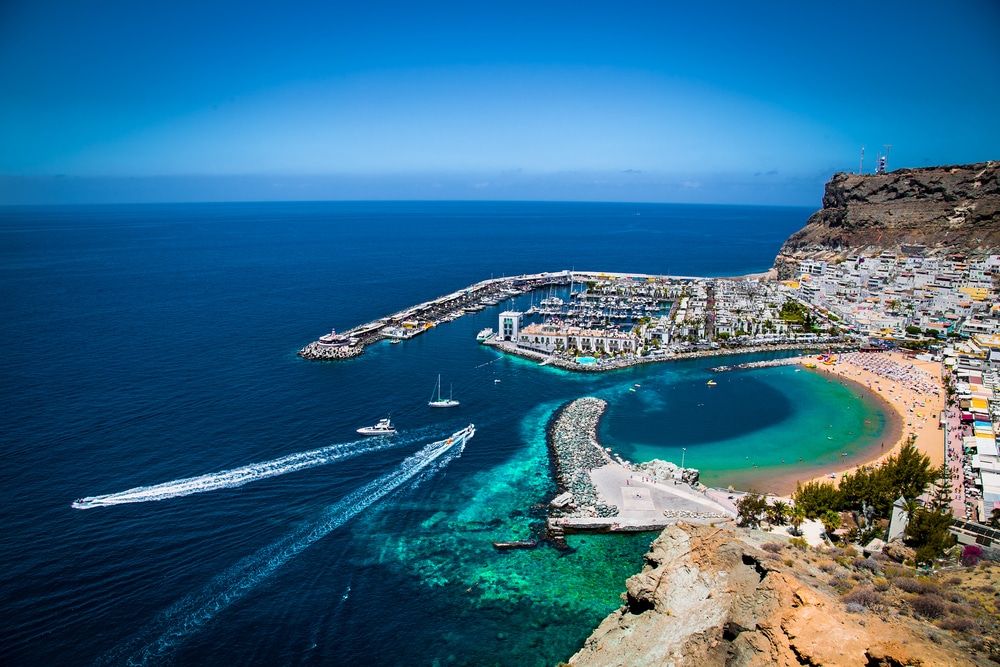
The port of Puerto de Mogán, Image: Aleksandar Todorovic / shutterstock
In the interior of the island, the mountains stretch 2000 meters high into the sunny sky. Impressive monoliths tower over the lonely golden mountains. Cliffs, adventurous gorges and enchanting Canarian palm trees on the slopes give this region its special character. From January, the undemanding almond trees with pink clouds of blossom set delicate accents in a wild landscape. Gorges often present themselves as a subtropical paradise garden with sprawling plants that shine in competition.
What a backdrop! If you appreciate the forest solitude and breathtaking landscapes, you would head for the mountains. It’s hard to understand why very few Gran Canaria visitors get up to discover this magnificent mountain world. It may be because the highest peak in Gran Canaria has temperatures that are 10 to 20 degrees lower than those on the coast.
The beauty of this region is in the mind of the beholder. While the mountain biker is unlikely to have an eye for it on his fast-paced tour, the charm of the local nature opens up to the walker step by step.
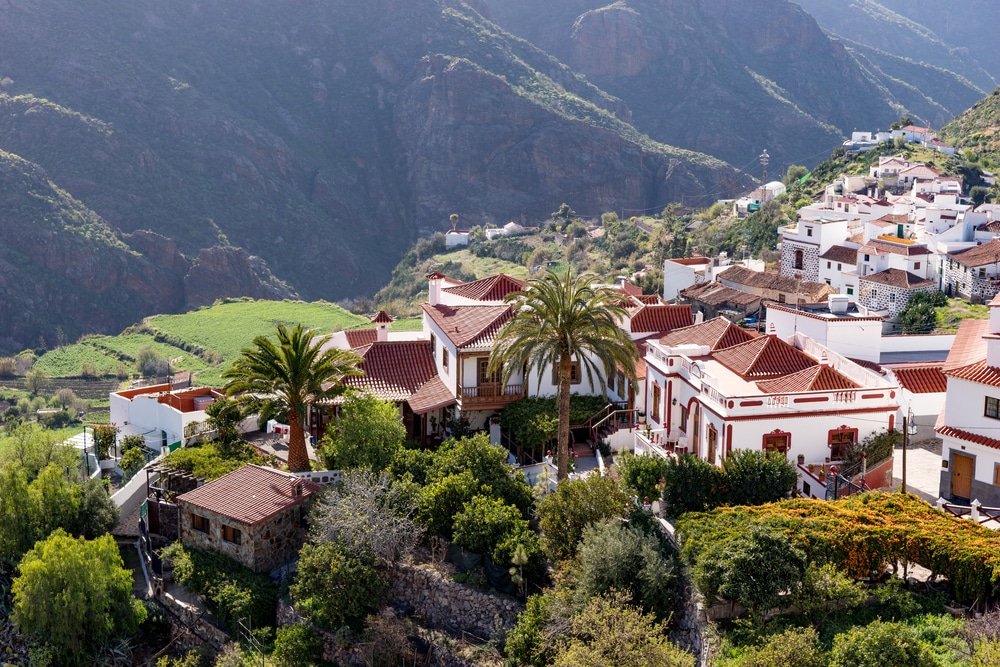
The heart of this region is Tejeda. Here you feel like you’re in another world. The terraced mountain village is representative of the “other Gran Canaria”. The town has rightly been named “one of the most beautiful villages in Spain”.
On the other hand, the country town of Teror, as an important market town with an impressive pilgrimage church, forms the religious centre.
Artenara is a fascinating cave site. To this day, more than 1500 inhabitants still live in the caves. At 1270 meters, Artenara is the highest town in Gran Canaria.
On the sunny side – in the beautiful south of Gran Canaria
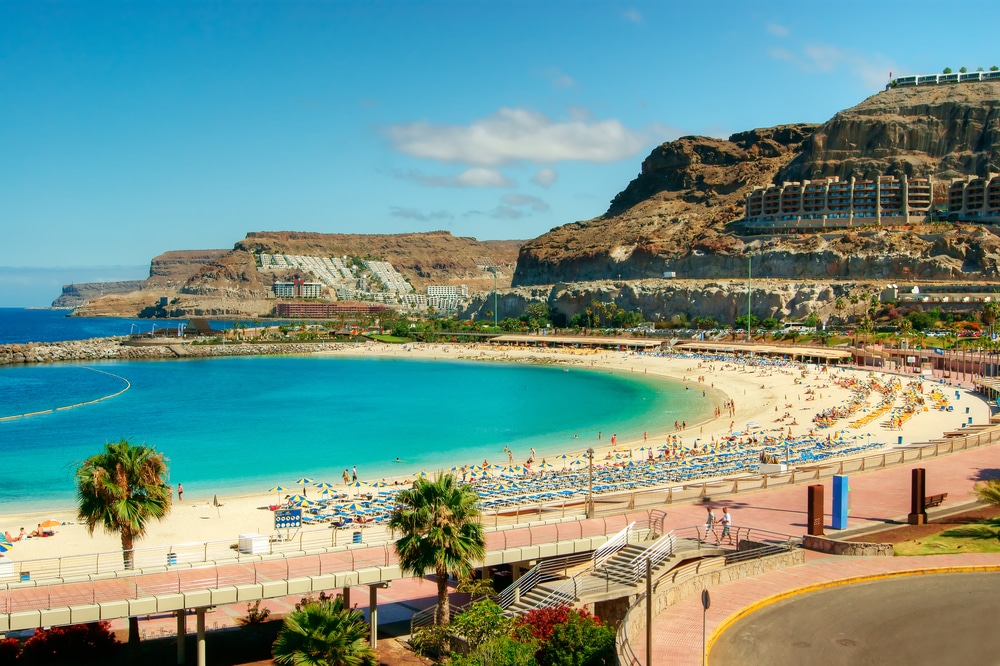
The beach of Amadores, Image: Kalin Eftimov / shutterstock
When the ground greedily absorbs the water, drops bounce off palm leaves and the rivulets swell into streams – then it rains in the south of Gran Canaria. This spectacle only takes place a few times a year. The southern climes of the island are among the Germans’ favourite destinations – plenty of sun, almost all year round. A holiday resort on the Costa Canaria even bears the name “Sonnenland” – the name keeps what it promises.
Costa Canaria is a continuously built-up stretch of coastline that stretches from Bahía Feliz in the east to Pasito Blanco in the west. Further west, the Costa Mogán joins with the main towns of Puerto de Mogán and Puerto Rico .
Highlights on the holiday coast of Gran Canaria with guaranteed sunshine
Playa de Inglés – admittedly: In view of the sprawling hotel landscape and the synonym for mass tourism, the seaside resort could be a nightmare for many a guest. However, the super beach is right on the doorstep and there are countless leisure activities on land and water. Without a doubt, this beach is one of the best beach areas in the Canary Islands.
Dunas de Maspaloma: In the dunes of Maspalomas, the dune ridges tower up to 30 meters high and form one of the most magnificent landscapes in Gran Canaria.
Puerto Rico: The terraced hotel town built into the hillside has made a name for itself as a water sports center. From the sea, the city looks imposing – on closer inspection, the apartment complexes built in 1970 steal its poetry.
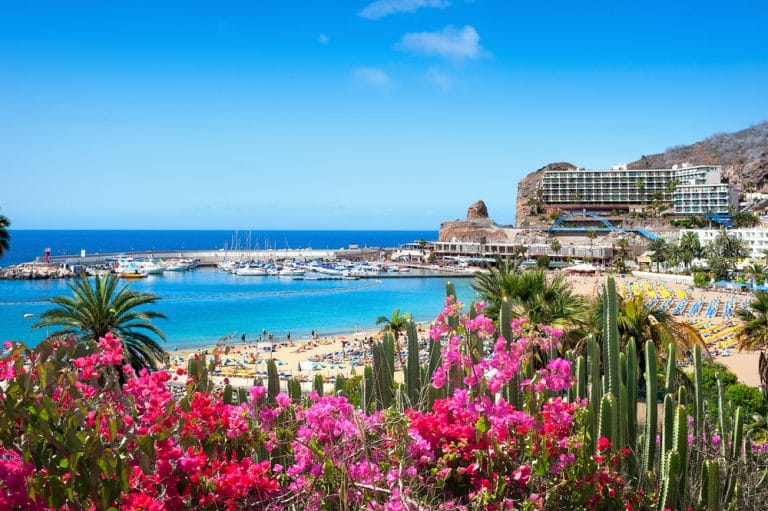
Puerto de Mógan is the westernmost part of the seaside resorts in the south. In front of the former fishermen’s nest, a charming holiday village was built in the 1980s with flat white houses and narrow streets. The village stretches like a semicircle around the bay and enchants with a beautiful beach. The original village rises picturesquely on the northern steep slope.
The most important excursion destinations
1. Dunes of Maspalomas
The extensive sand dunes in the south of Gran Canaria are among the most famous natural wonders of the island. They offer stunning desert scenery that is perfect for long walks.
2. Roque Nublo
This imposing rock monolith is one of Gran Canaria’s most recognizable landmarks. The climb offers spectacular views of the surrounding mountains and valleys.
3. Palmitos Park
A botanical garden and animal park with an impressive variety of birds, reptiles and mammals. Especially the dolphin and parrot shows are a highlight for families.
4. Puerto de Mogán
A picturesque fishing village in the southwest of the island, often referred to as “Little Venice”, with beautiful canals, bridges and colourful houses.
5. Pico de las Nieves
The highest point on the island offers breathtaking views and is a popular spot for hiking and photography.
6. Jardín Botánico Viera y Clavijo
The largest botanical garden in Spain, which is home to a wide variety of endemic plants. A must for nature lovers.
7. Cueva Pintada
An archaeological site and museum in Gáldar that offers an insight into the life of the island’s indigenous people, the Guanches. Here you can marvel at well-preserved cave paintings.
Important telephone numbers
Emergency call (police, fire brigade, ambulance): 112
Police: +34 928 482 680
Fire Brigade: +34 928 320 000
Ambulance service: +34 928 313 370
German Embassy in Madrid (responsible for Gran Canaria): +34 91 557 9000
Gran Canaria Tourist Office: +34 928 219 600
German Doctors
Dr. Andreas Asprion: General Medicine Practice, Playa del Inglés, +34 928 766 449
Dr. Michael Popp: General Practice for General Medicine, Puerto Rico, +34 928 560 016
Opening hours
Shops: Usually Monday to Saturday from 9:30 a.m. to 9:00 p.m., many shopping centers are also open on Sundays.
Supermarkets: Usually daily from 8:30 a.m. to 10:00 p.m.
Restaurants: Lunch from 13:00 to 15:30, dinner from 19:00 to 23:00.
Banks: Monday to Friday from 8:30 a.m. to 2:00 p.m.
Popular Hotels
1. Seaside Grand Hotel Residencia
A luxurious 5-star hotel in Maspalomas with superior service and an exclusive spa. Ideal for those seeking relaxation.
Lopesan Costa Meloneras Resort, Spa & Casino
A resort with an impressive pool area, spa and numerous restaurants, directly on the beach of Meloneras.
3. Hotel Riu Palace Meloneras
A stylish hotel in Meloneras with excellent service, direct access to the beach and a beautiful garden area.
Radisson Blu Resort & Spa, Gran Canaria
A hotel with luxurious rooms and apartments, ideal for families and couples, located right on the beach of Arguineguín.
5. H10 Playa Meloneras Palace
An upscale hotel in Meloneras with elegant rooms, spa, pools and direct access to the beach.
Museums
1. Museo Canario
The Museo Canario in Las Palmas shows archaeological finds of the indigenous people of Gran Canaria, the Guanches, and offers a fascinating insight into their culture.
Opening hours: Monday to Friday from 10:00 to 20:00, Saturday and Sunday from 10:00 to 14:00.
This museum is dedicated to the explorer Christopher Columbus and is located in a beautiful historic building in Las Palmas. It shows his travels and the influence of the discovery of America.
Opening hours: Monday to Saturday from 10:00 a.m. to 6:00 p.m., Sunday and public holidays from 10:00 a.m. to 3:00 p.m.